Inside a Historic Ligonier Manor: Victorian Elegance, Timeless Character, and Architectural Charm
A Remarkable Piece of Indiana History
There are homes that are designed simply to provide a place to live, and then there are homes that seem to tell a story the moment you see them.
This historic Ligonier manor belongs firmly in the second category.
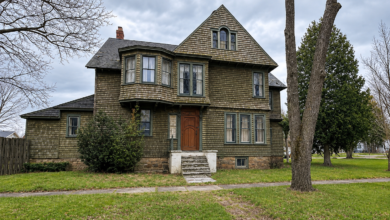
With its grand exterior, traditional Victorian character, original architectural details, and beautifully preserved interior elements, this remarkable Indiana property offers an experience that feels increasingly rare in modern real estate.
From the moment visitors approach the home, the architecture creates a strong first impression. The proportions, historic character, and classic exterior details immediately suggest a property with a long and distinctive past.
Inside, that impression continues. Original woodwork, detailed craftsmanship, spacious rooms, traditional fireplaces, and an elegant staircase create an atmosphere that is difficult to reproduce in a newly constructed home.
For buyers who appreciate historic architecture, this manor represents more than a residential property. It is an opportunity to experience a style of living shaped by craftsmanship, proportion, tradition, and character.
The property could potentially appeal to someone searching for a private residence, a peaceful retreat, or a home with hospitality potential.
The Beauty of Victorian Architecture
Victorian-era homes are often recognized for their attention to detail, distinctive proportions, decorative craftsmanship, and strong architectural personality.
Unlike many modern properties, where clean lines and minimalism dominate the design, historic Victorian homes often contain layers of visual details that reveal themselves gradually.
This Ligonier manor captures that traditional character through its grand exterior and preserved interior features.
The architecture creates a sense of permanence. Rather than feeling like a home built around a particular contemporary trend, the property carries an aesthetic that has remained recognizable across generations.
That timeless quality is one of the major attractions of historic real estate.
For homeowners who value craftsmanship, an older property can offer details that would be expensive or difficult to reproduce today. Original woodwork, hand-finished elements, traditional staircases, fireplaces, and carefully designed rooms can give a historic house an identity that goes far beyond its basic square footage.
A Grand Exterior With Historic Character
The first impression of this Ligonier manor comes from its exterior.
The home’s classic appearance reflects the elegance associated with historic American residential architecture.
Its scale and traditional design give it a presence that immediately separates it from ordinary modern houses.
The exterior feels formal without being cold, creating an inviting transition between the public face of the home and the comfortable interior spaces beyond.
Historic homes often have a special relationship with their surroundings, and this property is no exception.
The surrounding yard and traditional wraparound porch contribute to the feeling that the home belongs to another era while remaining suitable for modern enjoyment.
The result is an exterior that can be appreciated from the street while also providing a private outdoor environment for the occupants.
The Wraparound Porch
One of the home’s most charming exterior features is its classic wraparound porch.
Porches played an important role in traditional American homes, serving as transitional spaces between the interior and the surrounding neighborhood.
They provided a place to sit, relax, talk with family members, welcome visitors, and enjoy fresh air without leaving the comfort of home.
The wraparound porch at this manor contributes strongly to its historic personality.
It creates multiple opportunities for outdoor seating and provides an attractive setting for enjoying the surrounding atmosphere.
Imagine spending a quiet morning on the porch with a cup of coffee, watching the neighborhood come to life, or relaxing in the evening as the day winds down.
This type of outdoor space is difficult to replicate in many contemporary homes, where porches are often smaller and more focused on a single entrance.
Here, the porch becomes part of the home’s architectural identity.
Stepping Into a Different Era
Entering the manor creates a noticeable transition from contemporary life into a world of historic craftsmanship.
The interior retains warm original woodwork and other architectural details that contribute to the home’s old-world atmosphere.
The use of natural wood throughout the interior gives the rooms warmth and visual depth.
Wood has a particularly important role in historic homes because it can reveal the craftsmanship and construction traditions of the period.
Rather than simply functioning as a decorative material, original woodwork often forms part of the architectural structure and visual language of the home.
In this manor, those details contribute to an interior that feels authentic rather than artificially recreated.
Original Woodwork and Detailed Craftsmanship
One of the strongest features of the property is its preserved woodwork.
Original wood details can be among the most valuable characteristics of a historic home because they provide a direct connection to the property’s past.
Modern construction can reproduce certain styles, but authentic historic craftsmanship carries a different visual and tactile quality.
The warm wood tones throughout the interior help create an atmosphere that feels comfortable and welcoming.
They also complement the home’s traditional architecture, allowing the different spaces to feel connected.
For someone interested in historic preservation, these details could be one of the property’s most appealing characteristics.
The woodwork gives the manor a sense of authenticity and helps distinguish it from properties that have undergone extensive modernization.
Elegant Formal Living Spaces
The formal living areas provide an appropriate setting for the home’s historic character.
These rooms are spacious enough to accommodate gatherings while maintaining the sense of elegance associated with a traditional manor.
The formal living room can serve as a comfortable place for conversation, reading, relaxing, or welcoming visitors.
Historic homes often have rooms with distinct purposes, unlike today’s open-plan designs where kitchen, dining, and living areas frequently blend into one large space.
That separation can be appealing to homeowners who enjoy creating different atmospheres throughout their residence.
A formal room can feel intimate and sophisticated while still functioning as a practical part of everyday life.
A Traditional Dining Experience
The formal dining area adds another layer of character to the home.
Dining rooms were historically designed not only for meals but also for social gatherings.
A traditional dining room can transform an ordinary dinner into a more memorable experience, especially in a historic residence where the architecture itself becomes part of the atmosphere.
The space could accommodate family meals, holiday celebrations, dinner parties, or quiet evenings with close friends.
Combined with the home’s original woodwork and traditional architectural details, the dining room provides a setting that feels particularly appropriate for entertaining.
The Sweeping Staircase
A sweeping staircase is another distinctive architectural feature within the manor.
Staircases often serve as major visual elements in historic homes.
Rather than being treated simply as functional connections between floors, traditional staircases were frequently designed as prominent architectural features.
The staircase in this property contributes to the home’s sense of elegance and creates an immediate focal point within the interior.
Its scale and design help establish the vertical connection between the home’s living spaces and upper-level bedrooms.
It is also the type of feature that can become one of the defining visual memories for visitors.
A Charming Fireplace
The fireplace adds warmth and personality to the interior.
Traditional fireplaces have long been associated with comfort and gathering spaces, and in historic homes they can also provide an important architectural focal point.
A fireplace can transform the feeling of a room, particularly during colder months.
In a manor with original woodwork and traditional detailing, the fireplace feels naturally integrated into the overall design.
Rather than appearing as an isolated decorative element, it contributes to the home’s broader historic character.
The combination of fireplace, woodwork, spacious rooms, and classic architectural details creates an atmosphere that feels welcoming throughout the year.
Upper-Level Bedroom Spaces
The upper level offers comfortable bedroom areas with a more private atmosphere.
This separation between public living spaces and private sleeping quarters is characteristic of many traditional homes.
Bedrooms on the upper level can provide a quiet retreat away from the activity of the main floor.
The arrangement also makes the property suitable for families or homeowners who frequently have overnight guests.
The rooms can be furnished in a way that respects the home’s historic character while still accommodating contemporary comfort.
Natural materials, traditional details, and the overall scale of the house provide numerous opportunities for creating warm and personalized private spaces.
A Large Attic With Possibilities
The large attic is another feature that adds flexibility to the property.
Attics in historic homes can serve a variety of purposes.
At the most basic level, an attic can provide valuable storage for seasonal decorations, family belongings, furniture, and other items.
But a spacious attic can also inspire creative possibilities.
Depending on local regulations, structural conditions, utilities, insulation, and other considerations, future owners may explore ways to use the space more actively.
Potential concepts could include a studio, hobby area, reading room, office, creative workspace, or expanded living area.
Any conversion would naturally require professional evaluation and appropriate permits, but the existing size of the attic provides an additional dimension to the property’s potential.
A Peaceful Outdoor Setting
Outside, the manor benefits from an open yard and classic porch.
The outdoor environment complements the historic architecture rather than competing with it.
The open yard provides room for outdoor activities, gardening, landscaping, seating areas, or simply enjoying the property as it is.
For a historic residence, maintaining an appropriate relationship between the house and its surroundings can be particularly important.
The yard helps preserve the sense of openness that complements the home’s large scale.
It also creates an inviting environment for seasonal enjoyment.
Spring gardens, summer gatherings, autumn evenings, and winter views can all give the property a different personality throughout the year.
A Home Designed for Entertaining
The manor’s combination of formal living spaces, dining areas, porch, yard, and spacious interior makes it naturally suited to entertaining.
A historic home can provide a unique setting for gatherings because the architecture itself becomes part of the experience.
Dinner parties, family celebrations, holiday gatherings, afternoon conversations, or intimate events can all take place against the backdrop of the home’s preserved character.
The formal rooms also provide opportunities to separate different activities.
Guests can gather in one room while another remains available for quieter conversation.
This flexibility is one of the advantages of a traditional multi-room floor plan.
The Appeal of Small-Town Indiana
The property’s location in Ligonier adds another important dimension.
Small-town environments can offer a different pace of life from larger metropolitan areas.
Historic neighborhoods often contain homes with architectural styles that reflect the development of the community over many decades.
For buyers interested in historic properties, living in a town with established character can make the experience feel more complete.
Instead of purchasing an isolated historic structure, homeowners can become part of a community environment where traditional architecture and local history remain visible.
Ligonier’s small-town character complements the manor’s architectural style and contributes to its overall sense of place.
A Potential Private Residence
The most straightforward use for the property is as a private residence.
For someone who appreciates traditional architecture, the home offers an opportunity to live within a property where historic details are an everyday part of the environment.
The spacious rooms provide flexibility for different lifestyles, while the upper-level bedrooms create private areas for family members and guests.
The porch and yard expand the usable living environment beyond the interior.
Unlike a modern home designed around standardized layouts, this manor allows its architecture to influence the experience of living there.
A Potential Retreat
The property could also function as a personal retreat.
Its historic atmosphere and spacious rooms create an environment suited to slowing down and disconnecting from the pace of everyday life.
A retreat does not necessarily need to be far from civilization.
Sometimes the character of the property itself creates the feeling of escape.
The combination of a classic porch, open yard, original woodwork, fireplace, spacious rooms, and quiet atmosphere provides many of the qualities people seek when looking for a private retreat.
Hospitality and Creative Possibilities
The manor may also inspire ideas beyond traditional residential use.
Its scale and architectural character could appeal to buyers interested in hospitality-style concepts, subject to zoning, licensing, building requirements, and local regulations.
Historic properties can sometimes provide memorable environments for guests because they offer an experience that differs from standardized accommodations.
The same architectural features that make the home attractive as a private residence could also create an interesting setting for carefully planned hospitality or event concepts.
Any such use would need to be evaluated according to local requirements, but the property’s layout and character provide a strong foundation for creative possibilities.
Why Historic Homes Continue to Attract Buyers
There is a reason historic homes continue to capture the attention of buyers even in an era dominated by new construction.
New homes offer modern systems, contemporary layouts, and the ability to customize finishes.
Historic homes offer something different: authenticity.
A historic staircase, original woodwork, traditional fireplace, or hand-crafted architectural detail cannot simply be purchased from a catalog and installed with the same historical meaning.
These elements are connected to the story of the building.
For many buyers, that sense of continuity is an important part of the appeal.
Owning a historic home can feel like becoming a temporary steward of a piece of local history.
Preservation and Modern Living
Owning a historic property also requires thoughtful maintenance.
Potential buyers should evaluate the condition of major structural components, roofing, plumbing, electrical systems, windows, heating and cooling systems, foundation, drainage, and other important features.
Historic preservation often involves balancing modern comfort with respect for original materials.
The goal is not necessarily to freeze a home in time.
Instead, many owners seek to preserve the architectural details that give the property its identity while making carefully considered updates that improve everyday functionality.
For this reason, professional inspections and appropriate historic-property expertise can be valuable when evaluating a home of this type.
A Rare Architectural Opportunity
The Ligonier manor stands out because of the combination of its historic character, scale, preserved craftsmanship, and traditional outdoor spaces.
The grand exterior establishes the property’s presence.
The wraparound porch creates a connection to the surrounding environment.
Inside, original woodwork, spacious formal rooms, a sweeping staircase, fireplace, and detailed craftsmanship establish a distinctive atmosphere.
The upper-level bedrooms provide private accommodation, while the large attic offers additional possibilities.
Together, these elements create a property with a strong architectural identity.
Final Thoughts
This historic Ligonier manor offers an opportunity to experience a style of residential architecture that is increasingly uncommon.
Its Victorian-inspired elegance, original woodwork, traditional staircase, fireplace, spacious rooms, wraparound porch, and open yard combine to create an atmosphere that feels both grand and welcoming.
The property is not simply defined by its size or number of rooms.
Its greatest characteristic is its sense of history.
Every architectural detail contributes to the feeling that the house has a story to tell.
For someone who values craftsmanship, historic preservation, classic design, and the atmosphere of a traditional American home, this manor offers a distinctive residential experience.
It could serve as a private family residence, a peaceful retreat, or potentially inspire a hospitality-oriented concept, depending on local regulations and the future owner’s vision.
In a real estate market where many new homes share similar layouts and finishes, properties with authentic historic character offer something fundamentally different.
This Ligonier manor provides that difference through its preserved architectural details, graceful exterior, welcoming porch, spacious interior, and unmistakable Victorian personality.
For buyers who believe a home should have character as well as comfort, this Indiana property represents a rare opportunity to own a residence where history and everyday living can exist side by side.


From Zillow