News
I Thought I Was Helping My Daughter Buy Her Dream Home — Until a Family Secret Changed Everything
I Thought I Was Helping My Daughter Buy Her Dream Home — Until a Family Secret Changed Everything

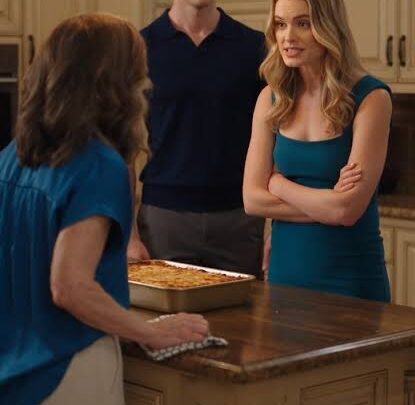
I Thought I Was Helping My Daughter Buy Her Dream Home — Until a Family Secret Changed Everything
Editor’s Note: This fictional, dramatized story explores family relationships, financial trust, property ownership, personal boundaries, and the importance of protecting your financial future.
The House I Never Thought I Would Leave
For forty-three years, I lived in a beautiful house on Ridgeway Road.
It wasn’t an extravagant mansion or a luxurious estate. It was a comfortable family home surrounded by mature trees, a small garden, and a peaceful neighborhood where people still greeted each other by name.
My husband, Harold, and I had purchased the property when we were relatively young.
We spent decades making improvements, maintaining the garden, renovating rooms, and creating memories that could never be measured in dollars.
Our daughter, Paula, learned to walk in that living room. She celebrated birthdays in the backyard and spent countless afternoons helping her father in his workshop.
Every corner of the property held a memory.
When Harold passed away, the house suddenly felt much larger.
The rooms that had once been filled with laughter became quiet. The workshop remained untouched, and his favorite chair sat beside the window exactly where he had left it.
For several years, I continued living there independently.
However, as time passed, maintaining the property became increasingly demanding.
There were property taxes, homeowners insurance premiums, occasional repairs, and the everyday responsibilities of managing an older residence.
That was when my daughter and her husband, Dale, suggested an arrangement that initially seemed perfect.
I would sell my house, help them purchase a larger family property, and move in with them.
We would share expenses, enjoy each other’s company, and create a comfortable living arrangement for everyone.
At least, that was what I believed.
A Financial Decision Based on Family Trust
Selling the Ridgeway property was one of the most emotional decisions I had ever made.
It meant leaving behind decades of memories and accepting that a significant chapter of my life had ended.
Paula assured me that I would always have a place in their new home.
Dale explained that combining our financial resources would allow us to purchase a more comfortable property without placing unnecessary pressure on anyone.
He spoke confidently about mortgage payments, property values, household expenses, and long-term financial planning.
I trusted him because he was my son-in-law.
More importantly, I trusted my daughter.
When the sale was completed, a substantial portion of the proceeds contributed toward the purchase of their new residence.
I believed that my financial contribution would provide stability and security for all three of us.
I wasn’t interested in controlling their household.
I didn’t expect special treatment.
I simply wanted to know that I had a permanent place to live and that the money Harold and I had spent decades building would be used responsibly.
Looking back, I wish we had arranged everything through independent legal and financial professionals.
A written agreement explaining ownership rights, financial contributions, and future living arrangements could have prevented considerable confusion.
But at the time, I believed that family trust was enough.
Unfortunately, the following four years taught me otherwise.
The First Changes I Began to Notice
Initially, life in the new house was pleasant.
I helped prepare meals, maintained parts of the garden, and contributed toward various household expenses.
Paula and I enjoyed spending time together.
We often sat at the kitchen table discussing family memories and future plans.
Dale seemed appreciative during the early months.
However, his attitude gradually changed.
He began discussing household expenses more frequently.
Sometimes, he commented on how much space I occupied or suggested that maintaining a larger residence had become financially demanding.
At first, I assumed he was simply concerned about rising living costs.
After all, many homeowners experience financial pressure associated with mortgage payments, maintenance expenses, insurance, and utilities.
But some of his comments felt increasingly personal.
He occasionally referred to my bedroom as unused financial potential.
He suggested that the household might operate more efficiently if certain living arrangements changed.
Whenever I asked what he meant, he insisted that he was only thinking about the future.
Paula rarely challenged him.
She appeared uncomfortable whenever the subject came up, but she usually changed the conversation before we could discuss it properly.
Eventually, I began wondering whether the home I had helped purchase was still considered my home.
A Growing Concern About My Financial Security
As someone who had spent most of her adult life managing household finances responsibly, I understood the importance of financial security.
Harold and I had always tried to live within our means.
We maintained savings, paid our obligations, and avoided making financial decisions without discussing them together.
After his death, I became even more careful.
I understood that retirement income and savings needed to last.
That was why I had believed the shared family housing arrangement would provide stability during my later years.
Instead, I began feeling uncertain about my future.
I wondered what would happen if Dale decided that I should move elsewhere.
Would I be able to recover any portion of my financial contribution?
Would I have enough money to purchase another property?
What rights did I have under the documents I had signed?
These questions became increasingly difficult to ignore.
Unfortunately, I didn’t have clear answers.
I had relied on conversations and assurances rather than obtaining independent advice.
The experience reminded me that important financial decisions deserve careful consideration, even when they involve people we love.
The Conversations That Changed Everything
Three weeks before the family gathering that would eventually expose the truth, I became concerned about discussions taking place when I wasn’t present.
I made the controversial decision to listen to private conversations using a baby monitor.
Looking back, I recognize that this raised serious privacy concerns.
It was not an appropriate substitute for direct communication or professional legal assistance, and I would not recommend that others respond to similar concerns in the same manner.
Nevertheless, what I learned convinced me that something was seriously wrong.
During one conversation, Dale discussed the possibility of changing my living arrangements.
He appeared frustrated by the financial responsibilities associated with the household.
Paula reminded him that I was her mother.
His response was deeply upsetting.
He described me as a financial burden rather than a family member.
For several days, I struggled with what I had heard.
I wondered whether Paula understood the seriousness of the situation.
I also began questioning whether Dale had accurately explained our financial arrangements when we purchased the property.
Rather than immediately confronting him, I decided to gather the legitimate paperwork connected to the sale of my former home.
I wanted to understand exactly what I had signed.
That decision eventually revealed far more than I had expected.
Contacting an Independent Property Professional
A close friend suggested that I speak with Linda Mercer, an experienced professional familiar with property records and financial documentation.
I contacted her and explained my concerns.
Linda listened patiently.
She asked whether I had retained copies of the closing documents associated with the sale of my Ridgeway residence.
Fortunately, I had kept several important records.
She reviewed the available paperwork and explained that additional documents could help establish a clearer understanding of the transactions.
We discussed property ownership records, mortgage documentation, financial contributions, and the importance of obtaining qualified legal advice.
For the first time in months, I felt that someone was listening without dismissing my concerns.
Linda didn’t immediately make accusations.
Instead, she focused on establishing the facts.
She explained that misunderstandings sometimes developed when family members contributed money toward property purchases without clearly documenting their expectations.
However, she also acknowledged that inconsistencies between financial records deserved careful investigation.
I asked her to continue reviewing the available documentation.
Several days later, she contacted me with unexpected findings.
She believed there were questions that needed to be addressed directly.
The Sunday Lunch Nobody Would Forget
I invited everyone to lunch the following Sunday.
Paula prepared several dishes, while I helped organize the dining table.
My sister, Colleen, also joined us.
She had known Harold for decades and understood how important the Ridgeway property had been to our family.
Dale appeared relaxed when he arrived.
He seemed to believe that it would be an ordinary family gathering.
For a while, we discussed work, the weather, and neighborhood developments.
Then I mentioned that I wanted to talk about our financial arrangements.
Dale’s expression immediately changed.
He asked why I was bringing up such matters during lunch.
I explained that I had several questions about my contribution toward purchasing the house.
He assured me that everything had been handled properly.
Paula looked uncertain.
She had apparently been given a different explanation about how much money I retained after selling my original home.
That was when I realized the extent of the misunderstanding.
My daughter believed I still had substantial savings from the sale.
In reality, a significant portion had been directed toward our shared housing arrangement.
Before Dale could respond further, someone knocked on the front door.
It was Linda.
She had brought the documents we had discussed.
The Property Records That Revealed a Different Story
Linda entered the dining room carrying a briefcase filled with carefully organized paperwork.
She explained that she had reviewed available records relating to the sale of my former residence and the subsequent property purchase.
She placed several documents on the table.
The first was the closing statement from the Ridgeway property.
Paula immediately recognized my signature.
Linda explained how the proceeds had been distributed according to the available financial records.
My daughter looked surprised.
She turned toward Dale.
“You told me Mom kept most of the money.”
Dale hesitated.
He insisted that there had been a misunderstanding.
Linda continued reviewing the paperwork.
Additional documents indicated that the financial arrangements were more complicated than Paula had originally understood.
There were discrepancies between certain statements and the available transaction records.
Paula became increasingly emotional.
For four years, she had believed that I was living with them primarily because it was convenient.
She hadn’t fully understood how much I had contributed toward the purchase of their home.
I reached across the table and took her hand.
I explained that I had never wanted money to damage our relationship.
I had simply expected our original agreement to be respected.
Dale remained unusually quiet.
But Linda had not finished reviewing the documents.
An Unexpected Photograph From 1998
While Linda organized the remaining paperwork, Colleen removed an old photograph from her handbag.
It had been taken in 1998.
The photograph showed several people attending a community gathering.
Among them were Harold, Colleen, Dale, and a woman named Janice Holloway.
I vaguely remembered her from financial seminars that had taken place in the community many years earlier.
She had presented herself as someone interested in helping older homeowners understand financial planning and property matters.
Colleen remembered her differently.
She explained that concerns had developed regarding some transactions associated with Janice’s previous business activities.
Linda recognized the name.
She had encountered historical records involving property disputes and questionable financial arrangements.
Although the existence of those records did not automatically establish wrongdoing by everyone connected to them, the similarities were concerning.
Paula looked toward her husband.
She asked how long he had known Janice.
Dale admitted that they had met when he was nineteen years old.
He explained that he had worked for a relative who operated a bookkeeping business.
At first, the job had involved ordinary administrative tasks.
Over time, however, he became uncomfortable with certain activities connected to the business.
He eventually left.
Paula asked why he had never mentioned that part of his life.
Dale said he had been embarrassed.
Unfortunately, the photograph was only the beginning of what we were about to discover.
The Old Business Registration
Linda produced copies of several historical business documents.
Dale’s name appeared in some of them.
He immediately explained that he had been young and inexperienced when those documents were signed.
He claimed that he had followed instructions without fully understanding the business arrangements.
Linda acknowledged that the circumstances required further investigation.
Being listed in historical documents did not establish the full extent of his knowledge or involvement.
However, it raised questions about why Janice had recently contacted him again.
Paula was particularly concerned about that issue.
She had seen Janice visiting the house several days earlier.
At the time, Dale described her as an old acquaintance.
Now, that explanation appeared incomplete.
As the discussion continued, Dale became increasingly uncomfortable.
He admitted that Janice had contacted him approximately six months earlier.
She had reminded him of their previous business connection.
According to Dale, he feared that revisiting those events could damage his marriage, employment, and reputation.
Instead of discussing the situation honestly with Paula, he had attempted to manage it privately.
That decision created even more problems.
The lesson was becoming increasingly clear.
Avoiding difficult conversations rarely makes complicated situations disappear.
The Notebook That Included My Name
Among the historical documents Linda had reviewed was a copy of an old notebook.
It contained several names and property addresses.
I recognized some of the families listed.
Many had lived in our community for years.
Then I noticed an entry that made me stop reading.
Harold and Marguerite Ellis.
Our names appeared beside the address of the Ridgeway property.
There was also a handwritten note suggesting that someone had been interested in our financial circumstances.
I struggled to understand why.
Harold and I had lived a relatively ordinary life.
We weren’t wealthy investors or owners of numerous properties.
We had simply maintained our home, saved carefully, and prepared for retirement.
Yet our property appeared among records connected to people whose financial activities had previously raised concerns.
Colleen became emotional.
She remembered Harold expressing worries about unfamiliar people showing an unusual interest in neighborhood properties.
At the time, she had believed he was simply being cautious.
Now, she wondered whether his concerns had been justified.
I looked at my husband’s name on the page.
For years, I had thought selling the Ridgeway house was simply a personal decision made after his passing.
I was beginning to realize that there might have been more to the circumstances than I had understood.
A Disagreement Over a $180,000 Check
As the discussion continued, Dale produced an old check for $180,000.
He claimed that he had previously offered the money to me as part of our financial arrangement.
I had never seen the check before.
Paula looked confused.
Linda examined it carefully.
She explained that the existence of an old check did not necessarily establish whether a payment had been offered, accepted, completed, or otherwise resolved.
Additional banking records would be needed to determine what had actually happened.
That was an important distinction.
Documents can sometimes appear convincing when viewed individually.
However, their meaning may depend on related records and the circumstances surrounding them.
Dale continued insisting that he had tried to address the financial arrangement fairly.
I asked why we had never discussed the matter openly.
He had no satisfactory answer.
Paula looked exhausted.
She had spent years trusting both of us.
Now she was discovering that important financial details had not been explained to her accurately.
I told her that I didn’t expect her to resolve everything that afternoon.
What mattered was that we stopped avoiding the truth.
The Property Deed That Raised New Questions
Linda received a telephone call while we were reviewing the paperwork.
Additional property records had become available.
After examining them, she explained that there appeared to be differences between a document retained in the original closing file and another version associated with the recorded property documents.
The differences involved language concerning financial contributions and potential residential rights.
I reviewed the documents carefully.
Although the signature resembled mine, I did not remember signing that particular version.
Linda emphasized that further professional examination would be necessary.
An apparent discrepancy should not be treated as conclusive proof of forgery without appropriate investigation.
Nevertheless, the situation was serious.
If the additional language had been included without my informed agreement, it could potentially affect how my financial contribution and living arrangements were interpreted.
Paula asked whether that meant I could be required to leave the property.
Linda explained that property ownership and residential rights depend on applicable law, valid agreements, and the specific facts of a situation.
She recommended that we obtain independent legal advice rather than relying on assumptions.
For the first time, I understood how vulnerable I had allowed myself to become.
I had contributed a substantial amount of money toward a home without obtaining a clear understanding of my long-term rights.
No matter how much I loved my family, I needed to protect my future.
The Woman Who Arrived With More Answers
The doorbell rang later that afternoon.
Standing outside was Janice Holloway.
She carried a large envelope containing documents and photographs.
Dale appeared visibly uncomfortable.
Janice explained that she had come to discuss matters connected to Harold and the historical property records.
I wasn’t sure whether I trusted her.
Her previous business connections and unexplained visits had already raised significant concerns.
Linda suggested that any documents she provided should be independently reviewed.
Janice agreed.
Among the papers was a copy of a handwritten letter bearing Harold’s name.
The letter appeared to have been written several months before his death.
It expressed concern about future property decisions and emphasized that I should never sign important financial documents without fully understanding them.
Reading those words brought back countless memories.
Harold had always been cautious.
Whenever we purchased property, refinanced a mortgage, or made an important investment decision, he insisted that we understand every detail.
I used to tease him about how slowly he reviewed paperwork.
Now I wished I had followed his example more closely.
Janice also produced an old photograph showing Harold alongside several people connected to the earlier business activities.
One of them was a man named Richard Vaughn.
According to Janice, Richard had played an important role in the circumstances we were trying to understand.
However, her account would need to be evaluated alongside independent evidence.
Remembering Harold’s Concerns
As Janice explained what she knew, Colleen began recalling conversations she had shared with Harold before his passing.
He had apparently been worried about certain individuals expressing interest in properties owned by older residents.
He had encouraged Colleen to support me if I ever considered selling the Ridgeway house.
Unfortunately, those conversations had never been shared with me.
Colleen admitted that she had believed Harold was worrying unnecessarily.
She regretted not taking his concerns more seriously.
I understood why she had remained silent.
Nobody wanted to increase my anxiety during an already difficult period.
Still, I wished someone had explained everything before I made such an important financial decision.
Janice claimed that Harold had preserved additional information connected to his concerns.
She didn’t know exactly what he had collected.
She remembered only that he had mentioned leaving something in a familiar location.
That was when Colleen suddenly remembered Harold’s old workshop.
The Workshop Behind Our Former Home
Harold had built the workshop shortly after we purchased the Ridgeway property.
It became his favorite place.
He repaired furniture, restored clocks, built shelves, and worked on countless household projects.
He often joked that everyone deserved a quiet place where they could concentrate without interruption.
Colleen remembered that he had occasionally stored important personal items there.
Perhaps some of the documents he mentioned had been kept in the workshop.
Linda contacted the appropriate people to determine whether the building remained accessible and whether a lawful search could be arranged with the current property owner’s permission.
Unexpectedly, we learned that someone had recently entered the workshop without authorization.
The matter had already been reported.
We decided not to interfere with the investigation.
Instead, we provided the relevant information to the authorities.
Among the items recovered was an old brass key.
When I saw a photograph of it, a memory immediately returned.
Harold had once given me a similar key as a Christmas gift.
He had jokingly described it as something that might become useful one day.
At the time, I assumed it belonged to one of his furniture projects.
Now, I remembered something else.
A grandfather clock he had restored for our local church.
The Grandfather Clock That Held a Family Secret
Harold had spent several months restoring an antique grandfather clock.
He repaired its wooden cabinet, cleaned the exterior, and worked carefully to preserve its original appearance.
Eventually, the clock was donated to our church.
It had remained there for years.
When I explained the connection, Linda suggested that we contact the church administrator.
We arranged for the relevant parties to examine the clock with permission.
Inside its base, they discovered a small collection of old papers and a sealed envelope.
I recognized Harold’s handwriting immediately.
The documents included notes concerning neighborhood property transactions, correspondence, and information he had gathered while trying to understand the activities that had concerned him.
There was also a personal letter addressed to me.
I opened it with trembling hands.
Harold had written about the importance of financial independence and informed decision-making.
He encouraged me to seek independent advice if anyone ever suggested that I sell the family home or transfer substantial financial resources.
He also reminded me that love did not require surrendering control of my future.
The letter wasn’t a complete explanation of everything that had happened.
However, it provided additional information that could be reviewed by the appropriate professionals.
For me, its greatest value was personal.
Even after all those years, Harold’s words reminded me that my independence mattered.
The Investigation That Followed
Over the following months, independent professionals reviewed the relevant financial and property documents.
The historical records were examined alongside more recent transactions.
Potential discrepancies were referred to the appropriate authorities.
I chose not to speculate publicly about the outcome while the review was ongoing.
There were too many unanswered questions, and I understood the importance of distinguishing concerns from established facts.
Dale was required to explain several aspects of the financial arrangement.
Paula also sought independent legal guidance to understand her position.
For the first time since purchasing the property, we began discussing household finances openly.
Every significant contribution was examined.
Existing obligations were reviewed.
Possible options for resolving the housing arrangement were considered.
It wasn’t an easy process.
There were difficult conversations, emotional disagreements, and moments when I wondered whether our family relationship could recover.
However, I felt more confident knowing that decisions were being made with professional guidance rather than informal promises.
Rebuilding My Financial Independence
Eventually, I decided that I wanted a home of my own again.
I began exploring smaller properties that would be easier to maintain.
I wasn’t interested in purchasing another large residence.
A comfortable cottage with a small garden and convenient access to essential services seemed ideal.
I considered property taxes, homeowners insurance, maintenance expenses, utility costs, and my available retirement income.
This time, I approached every financial decision carefully.
I reviewed documents independently.
I asked questions whenever something was unclear.
I made sure I understood the responsibilities associated with property ownership.
After years of uncertainty, the idea of having my own front door felt surprisingly emotional.
Financial independence wasn’t about possessing an impressive amount of money.
It was about being able to make decisions without constantly worrying that someone else might change my circumstances.
My new home was smaller than the Ridgeway property.
But it offered something that had been missing from my life for years.
Peace of mind.
A New Beginning for My Daughter
Paula and I spent considerable time rebuilding our relationship.
She apologized for not questioning the financial arrangements sooner.
She explained that she had trusted Dale’s descriptions of our situation.
I appreciated her honesty.
I also understood that repairing our relationship would require time and consistent communication.
We agreed that future discussions involving money would be handled openly.
Neither of us wanted financial misunderstandings to damage our family again.
We began meeting regularly for coffee and occasionally spending weekends together.
Sometimes we discussed the past.
Other times, we simply enjoyed each other’s company.
I discovered that rebuilding trust did not require pretending that nothing had happened.
It required acknowledging the difficulties while making different choices moving forward.
Our relationship gradually improved.
Not because every problem disappeared, but because we finally stopped avoiding important conversations.
Why Written Agreements Matter When Buying Property With Family
Purchasing a home with relatives can offer meaningful advantages.
Shared household expenses may make certain properties more affordable, while multigenerational living can provide companionship and practical support.
However, these arrangements also deserve careful financial planning.
Family members may have different expectations concerning ownership, maintenance costs, mortgage payments, inheritance, and future living arrangements.
A written agreement prepared with appropriate professional assistance can help everyone understand their responsibilities.
Important considerations may include:
-
How ownership interests will be documented.
-
Whether financial contributions are gifts, loans, or investments.
-
How mortgage payments and household expenses will be divided.
-
What happens if someone wants to sell the property.
-
How major repairs and property improvements will be funded.
-
What happens if family circumstances change.
-
Whether residential rights or other protections are appropriate.
The specific arrangements will depend on individual circumstances and applicable law.
Obtaining independent legal advice before making substantial financial commitments can help reduce misunderstandings and protect everyone involved.
Protecting Your Retirement Savings and Financial Future
For many homeowners, a primary residence represents one of their most valuable financial assets.
Selling that property can have significant consequences for retirement planning, housing security, and long-term financial independence.
Before using substantial sale proceeds to support a family member’s property purchase, it may be helpful to consider future housing requirements and ongoing living expenses.
Retirement income, healthcare costs, emergency savings, insurance premiums, and inflation can all influence financial stability.
A qualified financial adviser may help evaluate how a proposed contribution could affect long-term plans.
An independent attorney may also help explain ownership rights and contractual obligations.
These precautions are not necessarily signs of distrust.
They can provide clarity and help preserve healthy relationships by reducing uncertainty.
Financial transparency benefits everyone involved.
The Importance of Reviewing Mortgage and Property Documents
Real estate transactions often involve substantial amounts of paperwork.
Closing statements, mortgage agreements, property deeds, insurance policies, and financing documents may contain provisions that have important long-term consequences.
Understanding these documents before signing is essential.
Buyers should feel comfortable asking questions and requesting additional explanations when necessary.
It may also be beneficial to retain copies of important records in a secure location.
Depending on the situation, qualified professionals can help homeowners understand the implications of particular agreements.
My experience taught me that reviewing paperwork carefully is not merely an administrative responsibility.
It is an important part of protecting your financial interests.
Even when a transaction involves trusted relatives, independent guidance can provide valuable reassurance.
Learning to Establish Healthy Financial Boundaries
For most of my life, I believed that supporting my family meant making sacrifices whenever necessary.
I still believe generosity is important.
However, I now understand that generosity should be accompanied by informed decisions and reasonable boundaries.
Helping relatives purchase a home, pursue an education, or manage financial difficulties can be meaningful.
But assistance should not automatically come at the expense of your own housing security or retirement stability.
Healthy financial relationships involve honesty, mutual respect, and clear communication.
People should be able to discuss money without feeling pressured to accept arrangements they do not fully understand.
Saying no to a financial request does not necessarily mean rejecting the person making it.
Sometimes, maintaining reasonable boundaries is what allows a relationship to remain healthy.
That was one of the most valuable lessons Harold had tried to teach me.
The Home That Finally Belonged to Me
One morning, several months after moving into my new cottage, I sat beside the kitchen window holding a cup of coffee.
Sunlight filled the room.
Birds gathered near the garden.
Everything was quiet.
There were no uncomfortable conversations about household expenses.
Nobody was questioning how much space I occupied.
Nobody was discussing my future without including me.
I looked around the small kitchen and smiled.
The cabinets weren’t particularly expensive.
The furniture wasn’t luxurious.
The garden needed considerable work.
But it was my home.
I could invite people when I wanted company.
I could spend an afternoon reading without feeling that I was occupying someone else’s space.
I could make plans without asking permission.
For years, I had believed that financial security meant having enough savings to cover expenses.
Now I understood that it also meant having the freedom to make personal decisions.
That morning, I placed Harold’s photograph beside the window.
I thanked him quietly for the lessons he had left behind.
Final Thoughts: Family Love Should Never Come at the Cost of Independence
My experience changed how I understood family relationships, financial planning, and homeownership.
I discovered that even well-intentioned arrangements can create serious difficulties when expectations are not clearly communicated.
I learned that property ownership deserves careful attention and that substantial financial contributions should be documented appropriately.
Most importantly, I learned that protecting your financial future does not mean you love your family any less.
You can support the people you care about while maintaining reasonable boundaries.
You can offer assistance without surrendering your independence.
And you can forgive someone without ignoring the lessons of the past.
Harold and I spent decades building a life together.
Our greatest achievement wasn’t the Ridgeway house, our retirement savings, or the possessions we accumulated.
It was the understanding that a meaningful life should be built on trust, respect, and the freedom to make informed choices.
Today, I live in a smaller home surrounded by the things that matter most.
I continue spending time with my daughter.
I enjoy working in my garden.
I appreciate the quiet mornings and the freedom to decide how I spend each day.
And whenever someone asks whether I regret selling my original home, I tell them that the experience taught me something invaluable.
A house provides shelter.
Financial security provides stability.
But independence provides the freedom to truly enjoy both.