Unique Properties
$139,000 Virginia Mountain Retreat: 22.65 Acres, an A-Frame Cabin, and Smith River Access
$139,000 Virginia Mountain Retreat: 22.65 Acres, an A-Frame Cabin, and Smith River Access

Secluded Virginia Mountain Property With 22.65 Acres, A-Frame Cabin and River Access for Just $139,000
Finding an affordable mountain property that combines extensive private acreage, mature woodland, an existing cabin, abundant wildlife, and access to outdoor recreation can be a rewarding opportunity for buyers seeking an alternative to conventional residential real estate.
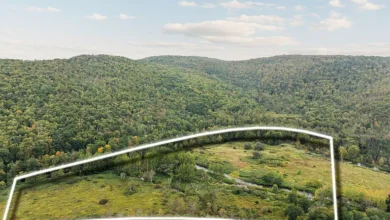
Located at 0 Heidelbach School Road in Stuart, Virginia, this remarkable 22.65-acre mountain property offers a compelling combination of natural beauty, recreational opportunities, privacy, and potential for future improvements.
Currently offered at $139,000 following a substantial $74,000 price reduction reported in the listing, the property may appeal to buyers searching for affordable recreational land, a private hunting retreat, an off-grid mountain getaway, or a long-term rural real estate investment.
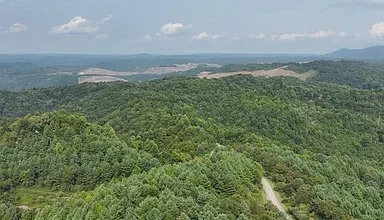
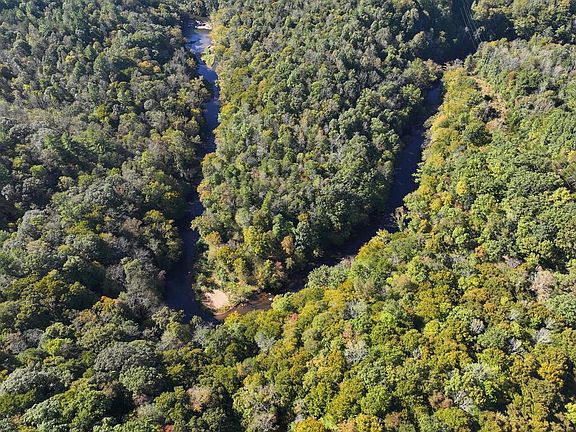
Surrounded by mature hardwood forests and the peaceful mountain landscapes of Patrick County, the property provides an environment where owners can disconnect from the demands of modern life and spend more time exploring nature.
An existing A-frame cabin, access to nearby public lands, proximity to the Smith River, and recreational opportunities around Philpott Lake add to the property’s appeal.
Unlike traditional suburban homes, this mountain retreat offers buyers the opportunity to create a personalized outdoor sanctuary shaped around their interests, financial goals, and preferred lifestyle.
Property Overview: 22.65 Acres in Stuart, Virginia
- Asking Price: $139,000
- Price Reduction: $74,000
- Property Address: 0 Heidelbach School Rd, Stuart, VA 24171
- Property Type: Unimproved Land
- Total Acreage: 22.65 Acres
- Existing Cabin: Approximately 400 Square Feet
- Cabin Construction Year: 2001
- Annual Property Taxes: $326
- Homeowners Association: None
- Parcel Number: 5117117A
- Zoning: NZ, according to the listing
- Water Supply: None
- Sewer: None
- Electricity: Not Available, according to the listing
- Landscape: Wooded Mountain Terrain
- Water View: River
- MLS Number: 112348
A Significant $74,000 Price Reduction Creates an Interesting Buying Opportunity
One of the most noteworthy features of this Virginia mountain property is its substantial price reduction.
With the current asking price of $139,000, the reported $74,000 reduction suggests a previous asking price of $213,000. This represents a decrease of approximately 34.7%, potentially making the property more accessible to buyers who previously considered similar recreational land outside their budget.
Price reductions can provide opportunities for prospective buyers to explore properties that may offer attractive features at a more manageable entry price.
At the current asking price, the property costs approximately $6,137 per acre, including the existing cabin.
However, evaluating rural real estate requires looking beyond the purchase price alone. Road access, utility availability, terrain, timber resources, legal easements, and improvement costs can significantly influence the overall value of a mountain property.
Buyers should compare recent sales of similar acreage in Patrick County and surrounding areas before determining whether the asking price represents favorable market value.
For individuals seeking a substantial amount of wooded land with an existing structure and recreational potential, this property presents an interesting opportunity to investigate further.
Discover the Natural Beauty of Patrick County, Virginia
Patrick County offers a landscape characterized by forested mountains, winding rural roads, scenic waterways, and peaceful countryside.
For buyers who appreciate outdoor recreation and a slower pace of life, the region provides an appealing alternative to densely populated urban and suburban communities.
The property’s location near Stuart places it within a rural environment where natural surroundings remain an important part of everyday life.
Instead of overlooking neighboring houses, busy roads, or commercial developments, owners can enjoy the sights and sounds of a mature mountain forest.
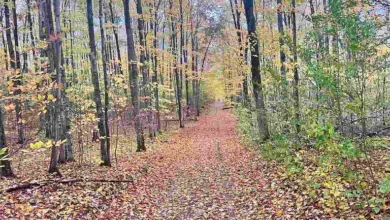
Seasonal changes create an ever-evolving landscape. Spring brings fresh greenery and emerging wildlife, summer offers shaded woodland adventures, autumn transforms the forest into a colorful display, and winter reveals the rugged character of the mountain terrain.
These natural qualities may make the property particularly appealing to individuals interested in photography, camping, hiking, wildlife observation, or simply spending quiet weekends away from crowded environments.
More Than 22 Acres of Private Mountain Woodland
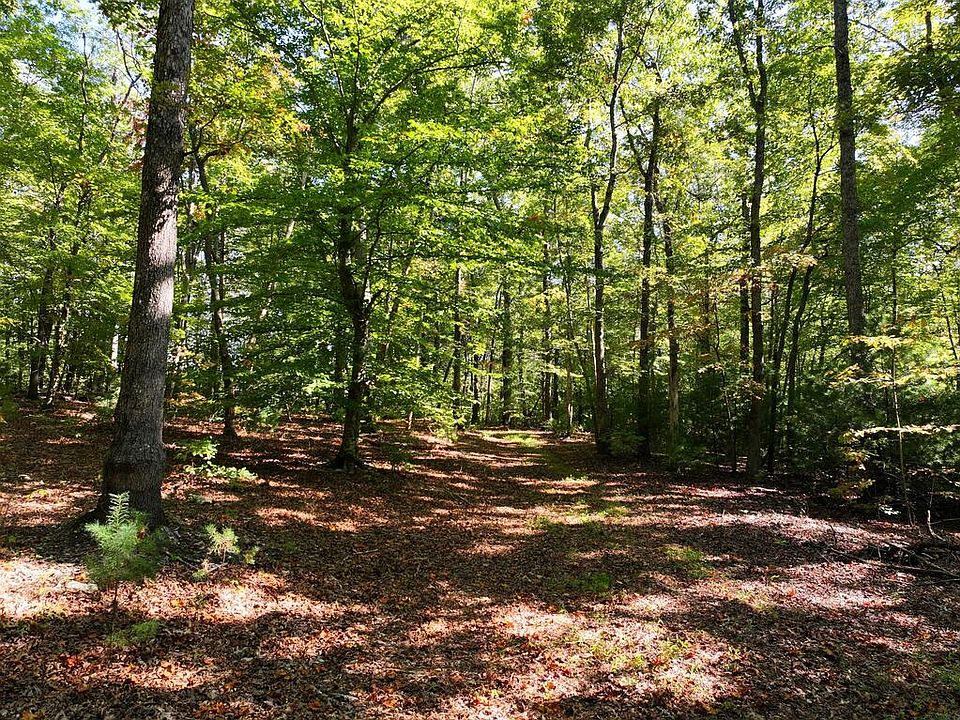
With 22.65 acres of wooded terrain, the property offers considerable space for outdoor activities and personal exploration.
Large acreage provides a level of privacy that smaller residential properties often cannot deliver. Depending on the terrain and legal boundaries, owners may have opportunities to establish walking paths, designated camping areas, wildlife observation locations, or other recreational spaces.
The property’s existing natural landscape is one of its most attractive characteristics.
Rather than purchasing a cleared residential lot that requires extensive landscaping to create privacy, buyers will find an established woodland environment featuring numerous mature trees.
This can allow future improvements to be planned around the natural characteristics of the property instead of dramatically altering the landscape.
Owners interested in preserving the forest may choose to maintain most of the acreage in its natural condition while making limited improvements around the cabin and access trails.
Others may prefer to investigate more extensive trail development or alternative recreational uses, subject to applicable regulations and the physical limitations of the land.
An Existing A-Frame Cabin Surrounded by Nature
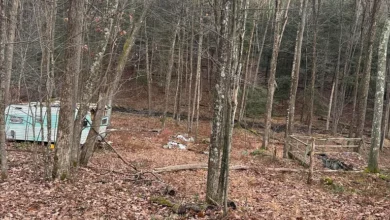
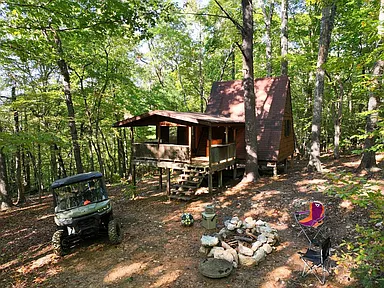
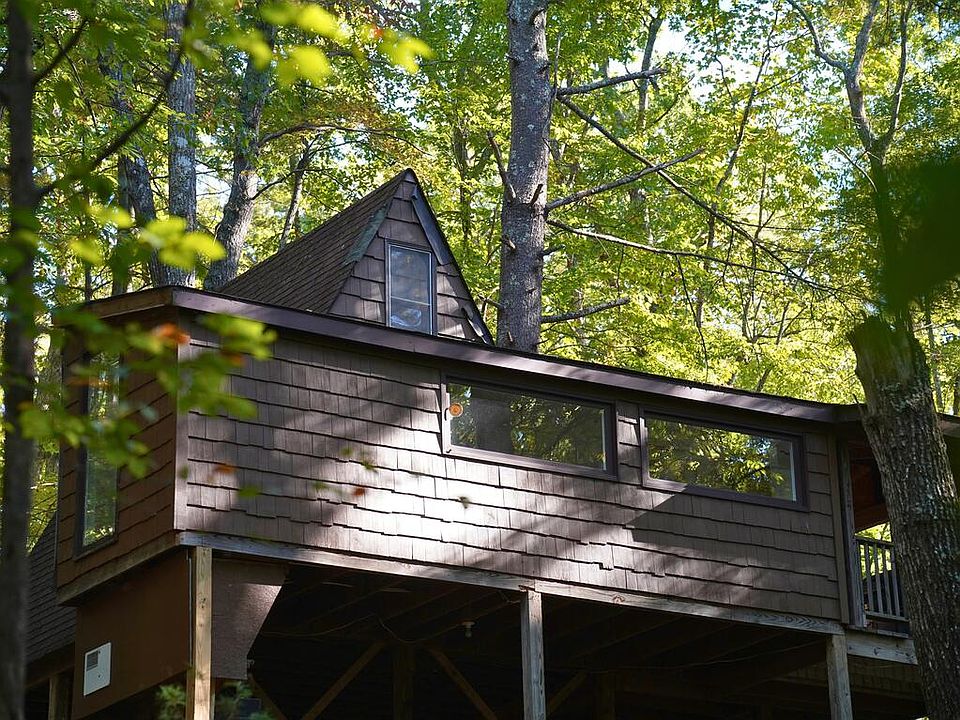
The property includes an approximately 400-square-foot A-frame cabin constructed in 2001.
Although the acreage is classified as unimproved land, the existing structure provides a useful starting point for buyers interested in creating a rustic mountain retreat.
A-frame cabins have long been associated with mountain vacations, woodland getaways, and compact recreational living.
Their distinctive architectural shape often creates a cozy interior atmosphere while allowing the structure to blend naturally into wooded surroundings.
The cabin is positioned along the higher elevations of the property, offering a secluded setting away from the county road.
According to the listing, it features durable cedar siding, Andersen windows, a main-level living area, a loft, and an additional space previously used as a kitchen.
While prospective buyers should arrange a professional inspection to determine its current structural condition, the cabin may offer a foundation for future renovation and recreational use.
A Compact Interior With Rustic Potential
The cabin includes a 16-by-16-foot main-level living area with a loft.
This compact layout may be suitable for buyers who appreciate minimalist spaces and practical cabin design.
With thoughtful improvements, a small recreational cabin can potentially accommodate seating, sleeping arrangements, storage, and basic equipment for outdoor adventures.
The loft could provide additional storage or sleeping space, depending on its condition, dimensions, accessibility, and applicable safety requirements.
The property also includes a 7-by-22-foot area formerly used as a kitchen, with existing plumbing mentioned in the listing.
It is important to note that the presence of plumbing does not establish that the property currently has a functional water supply or wastewater system.
Any plans to restore kitchen facilities would require an evaluation of the existing infrastructure and suitable water and sanitation options.
Cedar Siding and Andersen Windows
The cabin’s cedar siding contributes to its traditional woodland appearance.
Cedar is commonly associated with rustic architecture because of its natural character and ability to complement forested environments.
The listing also identifies Andersen windows as part of the existing structure.
An awning-style rear window provides a vantage point overlooking the surrounding woods, creating an opportunity to enjoy natural scenery from inside the cabin.
Buyers considering renovation should evaluate the condition of the siding, windows, roof, foundation, framing, and weatherproofing before establishing a realistic improvement budget.
An Appealing Opportunity for Off-Grid Living Enthusiasts
One of the property’s most distinctive characteristics is its lack of conventional utilities.
According to the listing, electricity and natural gas are unavailable, and the property does not have an established water supply or sewer system.
For some buyers, these limitations may make the property unsuitable for their needs. For others, they may represent an opportunity to explore off-grid living and recreational independence.
The existing cabin could potentially serve as a basecamp while owners investigate alternative energy and water solutions.
A carefully designed off-grid property may incorporate solar energy, battery storage, rainwater collection where permitted, approved sanitation systems, and energy-efficient equipment.
However, these systems require appropriate planning and should never be assumed to be automatically feasible.
Mountain terrain, heavy tree cover, seasonal weather conditions, and accessibility may affect both installation costs and long-term performance.
Exploring Solar Energy and Alternative Power
Solar power is one possible energy solution for remote recreational properties.
A properly sized solar installation could potentially support basic lighting, charging devices, and selected low-energy appliances.
Because this property contains mature woodland, determining whether sufficient direct sunlight reaches a suitable installation area would be essential.
Battery storage, backup power options, and professional electrical installation may also be necessary.
The total cost of creating a reliable off-grid energy system depends on the owner’s electricity requirements, available sunlight, equipment selection, and the difficulty of transporting materials to the cabin.
Prospective buyers should obtain site-specific estimates before including solar energy in their development plans.
Water Supply and Sanitation Considerations
Reliable access to clean water is an important consideration when purchasing remote land.
The property is listed without an established water supply, meaning buyers would need to investigate suitable options before planning extended stays.
A professionally installed well, approved water storage system, or another lawful alternative may be possible, depending on geological conditions, access, local regulations, and available funding.
Likewise, installing an approved septic system or alternative sanitation solution would require appropriate evaluation and authorization.
Water availability and wastewater management should be among the first subjects discussed with local authorities and qualified contractors.
Mature Timber and a Diverse Woodland Environment
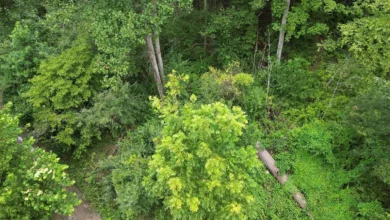
The property features an impressive variety of mature trees, including red oak, chestnut oak, white oak, poplar, white pine, and maple.
This diversity contributes to the character of the landscape while providing habitat for numerous forms of wildlife.
Mature hardwood forests can offer environmental, recreational, and potentially economic benefits.
Large trees create natural shade, contribute to soil stability, and provide food and shelter for birds and other wildlife.
Oak trees, in particular, produce acorns that can become an important seasonal food source for various woodland animals.
Buyers interested in woodland management may consider consulting a professional forester to evaluate the property’s timber resources and overall forest health.
Potential Timber Value and Forest Management
Properties containing mature timber may attract buyers interested in long-term land stewardship.
However, the economic value of standing timber cannot be accurately determined from a listing description alone.
Tree species, size, quality, accessibility, terrain, transportation costs, and local timber markets all influence potential value.
A professional timber assessment would be necessary before assigning a monetary value to the forest.
Selective management may help maintain woodland health, improve habitat conditions, and support specific landowner objectives when carried out responsibly.
Alternatively, owners may decide that preserving the mature forest for its natural beauty and recreational benefits is more important than pursuing timber revenue.
Excellent Potential for Hunting and Wildlife Observation
The property’s wooded acreage and diverse vegetation create an environment that may appeal to outdoor enthusiasts interested in hunting and wildlife observation.
According to the listing, the land offers habitat suitable for deer and wild turkey.
The combination of mature hardwoods, natural cover, and mountain terrain provides numerous opportunities to observe wildlife throughout the year.
For hunters, owning private recreational acreage can provide greater flexibility in managing access and spending time outdoors, subject to state hunting laws, seasonal restrictions, licensing requirements, and applicable safety regulations.
The existing cabin could potentially serve as a rustic gathering place during hunting trips.
Even buyers who do not hunt may appreciate the property’s wildlife habitat.
Birdwatching, nature photography, wildlife observation, and quiet walks through the forest can offer enjoyable ways to experience the natural environment.
Recreational Opportunities Throughout the Property
This mountain tract offers considerable potential for outdoor activities that do not require a conventional residential development.
Its size and woodland setting may appeal to individuals who enjoy spending weekends exploring private land, maintaining trails, or participating in nature-based recreation.
Hiking, camping, mountain biking, and wildlife photography are among the activities mentioned in the listing.
Owners could also investigate creating a network of trails connecting different areas of the property.
Proper trail planning is particularly important on mountain land because steep slopes, drainage patterns, erosion, and unstable ground can affect safety and maintenance requirements.
Camping and Weekend Mountain Adventures
For individuals who enjoy camping, owning private mountain acreage offers the opportunity to return to a familiar natural environment without relying entirely on commercial campgrounds.
The existing cabin may provide shelter during weekend visits, while suitable outdoor areas could potentially accommodate temporary camping arrangements where permitted.
Families and friends may enjoy spending time together away from electronic distractions, exploring the woods, and appreciating the peaceful mountain atmosphere.
Any outdoor fire use should comply with local fire regulations and seasonal restrictions.
Hiking, Mountain Biking, and Trail Development
The property may also appeal to buyers interested in establishing private recreational trails.
A thoughtfully planned trail system could provide access to scenic woodland locations while minimizing unnecessary disturbance to the surrounding forest.
Mountain biking and ATV riding are identified as potential activities in the listing, although the suitability of individual routes would depend on slope, soil conditions, legal access rights, and environmental considerations.
Maintaining trails may require ongoing work, particularly after heavy rainfall or severe weather.
For outdoor enthusiasts who enjoy land improvement projects, developing and maintaining a private trail network could become a rewarding part of property ownership.
Access to the Smith River Adds Recreational Appeal
Another distinctive feature is the property’s reported connection to neighboring U.S. Army Corps of Engineers land.
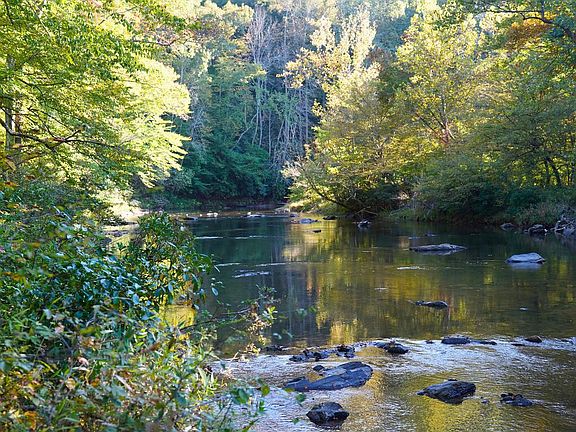
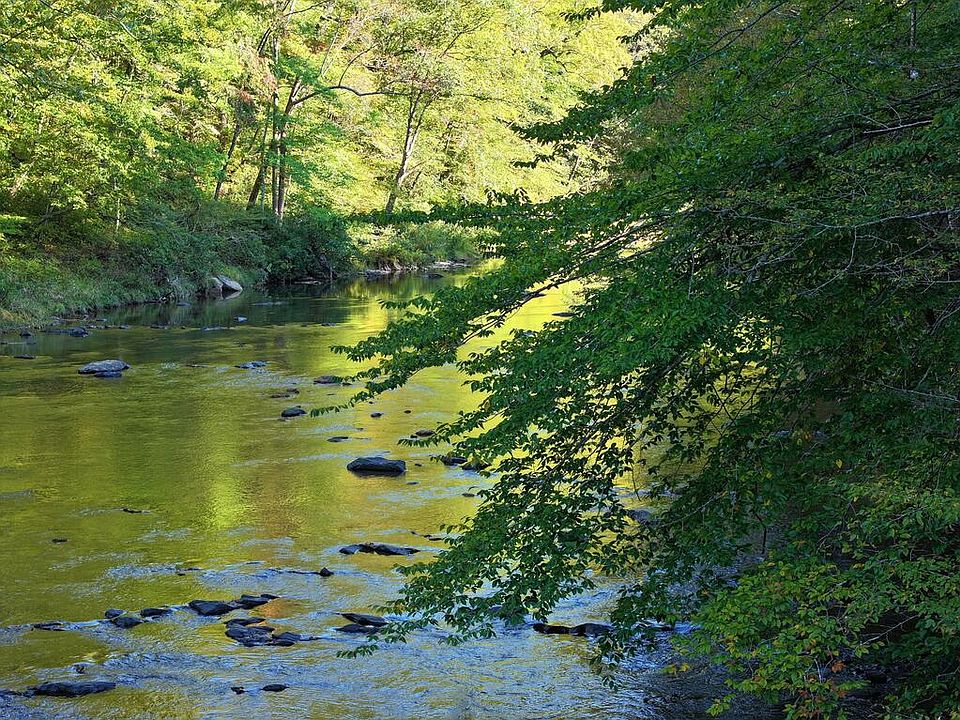
According to the listing, a portion of the acreage adjoins this publicly managed land, providing access toward a secluded bend of the Smith River.
The river offers potential opportunities for fishing, kayaking, floating, and wading.
For buyers who appreciate both mountain landscapes and water-based recreation, this combination may be particularly attractive.
However, prospective purchasers should independently confirm the exact boundary lines, permitted access routes, applicable public-land regulations, and any restrictions governing recreational activities.
Adjoining public land does not automatically establish unrestricted private rights over that land or its waterways.
Fishing and Peaceful River Adventures
The listing identifies bass, trout, and other fish as potential species available in the river.
Fishing enthusiasts may appreciate the opportunity to explore nearby waterways while using the mountain property as a recreational base.
Appropriate Virginia fishing licenses and compliance with seasonal regulations may be required.
River conditions can change due to rainfall, water releases, and other environmental factors, making it important to check local conditions before entering the water.
Kayaking and floating may also provide enjoyable ways to experience the region when conditions are suitable.
Enjoy Boating and Outdoor Recreation at Philpott Lake
The property’s proximity to Philpott Lake is another important advantage for buyers interested in recreational real estate.
According to the listing, a nearby boat ramp provides access to this scenic body of water.
Philpott Lake offers a natural environment characterized by wooded shoreline, peaceful coves, and opportunities for various outdoor activities.
Potential recreational pursuits include boating, swimming in designated areas, fishing, kayaking, and other permitted water activities.
For owners of the mountain property, the lake may provide a convenient change of scenery during extended weekend visits.
A morning spent exploring woodland trails could be followed by an afternoon on the water, depending on travel arrangements, weather, and access conditions.
The combination of a private forested retreat and nearby public water recreation can make this property more versatile than acreage offering woodland activities alone.
A Remote Setting With Exceptional Privacy
Privacy is one of the property’s defining characteristics.
The listing states that the cabin is reached by traveling approximately two miles along a historic trail from the county road.
This remote access arrangement contributes to the secluded atmosphere and separation from everyday traffic.
For buyers searching for a peaceful mountain getaway, the setting may be one of the property’s strongest attractions.
Nevertheless, remote access can also create significant practical challenges.
Transporting construction materials, reaching the property during unfavorable weather, arranging emergency services, and performing routine maintenance may be more complicated than at a conventional residential property.
Buyers should personally inspect the access route and determine whether their vehicles can safely reach the cabin under different seasonal conditions.
Legal and recorded access rights should also be confirmed through a title examination and professional legal review.
Understanding the Financial Benefits and Costs of Rural Land Ownership
At an asking price of $139,000, this acreage may appeal to buyers seeking a lower entry price than many developed vacation properties.
The reported annual property tax amount of $326 is another noteworthy consideration.
Based on that figure, the average monthly equivalent of property taxes would be approximately $27.17, although actual future assessments and tax obligations may change.
The absence of a homeowners association also means the listing does not identify recurring HOA fees.
However, rural property ownership involves expenses that may not be immediately apparent from the purchase price.
Potential costs include property insurance, surveying, legal services, access improvements, cabin repairs, vegetation management, equipment, and utility development.
Buyers should establish a comprehensive ownership budget before completing a purchase.
A property with relatively low taxes can still require substantial investment if major infrastructure improvements are necessary.
Land Financing and Mortgage Considerations
Purchasing unimproved land can involve different financing requirements from purchasing a traditional single-family home.
Because the property lacks conventional utilities and is classified as unimproved land, buyers may need to investigate specialized land financing rather than relying on a standard residential mortgage.
Some lenders offer recreational land loans, rural property financing, or other products designed for undeveloped acreage.
Depending on the lender and the property, these financing arrangements may require larger down payments, different repayment terms, or additional documentation.
For illustration, a 20% down payment on the current asking price would equal $27,800, leaving a potential loan principal of $111,200 before closing costs and other expenses.
Actual financing eligibility, interest rates, repayment terms, and down payment requirements would depend on the lender’s policies and the borrower’s financial qualifications.
The existing cabin may also need to meet specific requirements if a buyer intends to use a financing product designed for residential structures.
Speaking with lenders experienced in rural real estate can help buyers understand their available options.
Could This Property Be a Long-Term Real Estate Investment?
Rural acreage may appeal to investors seeking an alternative to conventional residential rental properties.
Unlike buildings that require regular maintenance and renovation, largely undeveloped land may offer a different ownership experience.
Nevertheless, recreational land is not a guaranteed investment, and its value can increase or decrease depending on market conditions.
Factors that may influence the property’s future marketability include legal access, infrastructure improvements, woodland quality, recreational demand, local development regulations, and broader economic conditions.
The existing cabin and nearby recreational amenities may contribute to buyer interest, but their financial value should be evaluated through comparable sales and professional assessments.
Investors considering this property should establish clear objectives and determine whether the expected holding costs align with their financial strategy.
Purchasing land primarily for personal enjoyment may produce a different definition of value than purchasing it exclusively for future resale.
Potential Vacation Rental Opportunities
Some buyers may wonder whether the existing cabin could eventually become a short-term vacation rental.
The secluded atmosphere and nearby outdoor recreation provide characteristics that could potentially appeal to visitors seeking a rustic mountain experience.
However, the property should not be assumed to be immediately suitable for commercial lodging.
Legal access, building safety, sanitation, reliable water, insurance coverage, emergency access, local regulations, and guest transportation would all require careful consideration.
Any future rental business would also involve marketing, maintenance, cleaning, taxes, and operating expenses.
Buyers should complete a detailed feasibility study before purchasing the property with rental income as their primary objective.
Opportunities to Renovate and Personalize the Existing Cabin
The A-frame cabin may appeal to buyers who enjoy renovation projects and compact living spaces.
Depending on its current condition, the structure could potentially be improved with functional furniture, efficient storage, upgraded insulation, weather-resistant finishes, and carefully selected interior materials.
Natural wood finishes could complement the surrounding forest while creating a warm interior atmosphere.
Large windows and thoughtful furniture placement may help maximize the experience of living in a small space.
Before beginning cosmetic improvements, owners should prioritize structural integrity, roof condition, moisture protection, ventilation, and fire safety.
The property’s remote location could also influence the cost of transporting materials and hiring contractors.
A realistic renovation plan should include contingency funds for unexpected repairs.
Important Due Diligence Before Purchasing This Mountain Property
Although the listing highlights numerous attractive features, purchasing remote acreage requires thorough investigation.
Prospective buyers should confirm the property’s surveyed boundaries, recorded acreage, legal access rights, zoning classification, and applicable land-use regulations.
The historic trail mentioned in the listing deserves particular attention because legal access and physical accessibility are separate considerations.
A route may physically exist without providing every legal right necessary for future development or commercial use.
The property is described as unrestricted, but this should not be interpreted as an exemption from building codes, environmental regulations, deed restrictions, or other applicable legal requirements.
Buyers should also investigate whether the existing cabin was constructed with required approvals and whether it can legally be occupied for their intended purposes.
A professional inspection, title search, survey, and consultation with local authorities can help identify potential risks before closing.
Who Might Find This Virginia Mountain Property Most Appealing?
This property may be particularly attractive to buyers who prioritize privacy, outdoor recreation, and natural surroundings over modern residential conveniences.
Individuals interested in hunting, fishing, hiking, camping, woodland management, and off-grid projects may appreciate its distinctive characteristics.
It could also appeal to buyers searching for a private weekend retreat rather than a conventional primary residence.
Creative individuals, photographers, and nature enthusiasts may find inspiration in the changing seasons and peaceful woodland scenery.
However, buyers requiring immediate access to electricity, running water, paved roads, and modern household amenities may find the property’s current condition challenging.
Understanding personal priorities is essential when evaluating a remote mountain property.
Frequently Asked Questions
How much does this Virginia mountain property cost?
The supplied listing identifies an asking price of $139,000 following a reported $74,000 price reduction.
How many acres are included?
The property contains 22.65 acres according to the listing details.
Is there a cabin on the property?
Yes. The listing describes an approximately 400-square-foot A-frame cabin constructed in 2001, featuring cedar siding, Andersen windows, a loft, and an area formerly used as a kitchen.
Does the property have electricity or running water?
The listing identifies electricity as unavailable and states that there is no established water or sewer system. Buyers would need to investigate alternative utility solutions.
Are there annual HOA fees?
No homeowners association is identified in the listing.
What are the annual property taxes?
The reported annual property tax amount is $326. Future tax obligations should be independently confirmed.
Can the property be used for hunting and camping?
The listing describes hunting, camping, and other recreational opportunities. Actual activities must comply with applicable laws, regulations, and property access rights.
Is the property near a lake or river?
Yes. The listing describes access toward the Smith River through neighboring U.S. Army Corps of Engineers land and access to Philpott Lake through a nearby boat ramp. Buyers should verify the permitted access arrangements.
Can another house be built on the property?
Future construction may be possible, but buyers must investigate local building requirements, zoning, access, water availability, sanitation, and site suitability before making development plans.
Final Thoughts: A Unique Mountain Escape in the Virginia Countryside
Offered at $139,000, this 22.65-acre property in Stuart, Virginia, presents an intriguing opportunity for buyers searching for private woodland, recreational acreage, and a rustic mountain retreat.
The existing A-frame cabin, mature hardwood forest, abundant wildlife habitat, reported river access, and proximity to Philpott Lake create a distinctive combination of features.
The substantial $74,000 price reduction may encourage buyers who previously considered recreational acreage beyond their preferred budget to explore this opportunity.
Whether envisioned as a private hunting retreat, a weekend mountain getaway, an off-grid basecamp, or a long-term recreational land holding, the property offers numerous possibilities for individuals who appreciate the outdoors.
Its remote location and lack of utilities require careful planning, but these characteristics may also appeal to buyers who value independence, simplicity, and separation from crowded residential environments.
For the right buyer, this Patrick County property could become a personal sanctuary where forest trails, quiet mornings, outdoor adventures, and peaceful evenings provide a refreshing alternative to everyday life.
Property Listing and Contact Information
Property Address: 0 Heidelbach School Rd, Stuart, VA 24171
Asking Price: $139,000
Lot Size: 22.65 Acres
Listed By: Justin Rolfe
Agent Phone: 704-998-1013
Brokerage: Mossy Oak Properties Land and Luxury
Brokerage Phone: 540-299-7238
Listing Source: SWVAR
MLS Number: 112348
Property showings are by appointment only.
Disclaimer: This article is provided for informational purposes and is based on the supplied real estate listing. Property prices, availability, taxes, features, and access conditions may change. Prospective buyers should independently verify all information with the listing agent and qualified professionals before making purchasing, financing, or investment decisions.



From Zillow