At ninety-five years old, I believed most of the important chapters of my life had already been written. My husband was gone, my children were grown, and the memories of my childhood in Poland had become distant echoes.
Then one ordinary afternoon, my granddaughter brought home a small package.
Inside was a copper ring I had not seen in eighty-seven years.
Along with it came a message from a boy I once promised I would never forget.
His name was Stanislaw.
And suddenly, a promise made in 1939 was asking me to make a decision in 2026.
Life at Ninety-Five Was Never Quiet
My name is Zofia, although everyone in America calls me Zoe.
I am ninety-five years old, and my daughter Margaret believes that number gives her the right to supervise nearly every part of my life.
“Mom, you cannot have chocolate cake for breakfast,” she announced one morning.
I looked at the slice on my plate.
“Margaret, I am ninety-five. What exactly am I saving my arteries for?”
“That isn’t funny.”
“Neither is oatmeal.”
She shook her head, but I could see her trying not to smile.
Since my husband, Michael, passed away five years earlier, Margaret had insisted that I move into her home.
“You need someone looking after you,” she explained.
“What I need is someone to stop looking after me every five minutes. I still cook, walk, and play cards with three terrible cheaters.”
She never knew what to say to that.
Last Tuesday, she even canceled my weekly card game because she thought I looked tired.
“Mom, you should rest today.”
“That’s my face, darling. It’s ninety-five years old.”
I didn’t argue further. After all, there comes a point when arguing about every little thing becomes more exhausting than simply letting it go.
However, there was one thing in my life I never allowed anyone to touch.
It was a small metal box containing a few objects from my childhood.
My granddaughter Emma once asked about it.
“Grandma, what’s inside?”
“Things that belonged to another lifetime.”
“Like treasure?”
“Something considerably more troublesome.”
I had no idea how true that answer would become.
The Boy Who Made Me a Promise
I was born in Warsaw, Poland.
Before the war changed everything, my world was small and familiar. I knew the streets around our home, the neighbors who greeted my parents, and the children who walked to school with me.
My closest friend was the boy next door.
His name was Stanislaw.
We spent nearly every afternoon together. We argued about school, competed over silly games, and made plans that only children could believe would last forever.
One afternoon, he appeared with a tiny ring made from twisted copper wire.
“Zofia, marry me.”
I examined his creation.
“You don’t even have a job.”
“I’m ten!”
“Then you’re terribly unprepared.”
He looked offended.
“I’ll marry you when we’re grown.”
I slipped the little ring onto my finger.
“Fine. But don’t forget.”
“I never forget anything.”
“Except your schoolbooks.”
“Those don’t count!”
We laughed until our sides hurt.
To us, that promise was serious. We didn’t understand marriage, adult responsibilities, or how quickly the world could change.
We only knew that we wanted to remain friends forever.
The Day I Left Poland
In 1939, everything changed.
My parents announced that we were leaving Poland.
At first, I didn’t understand what that meant. I had heard adults whispering about danger, but nobody explained the full situation to me.
One evening, I finally asked my father.
“Where are we going?”
“America,” he answered.
I stared at him.
“What about Stanislaw?”
My mother pulled me into her arms.
“We cannot wait, sweetheart.”
I understood that my parents were frightened. I also understood that arguing would not change their decision.
Before we left, I found Stanislaw and returned the copper ring.
“Keep it until I come back,” I told him.
He held it carefully.
“Will you?”
“I’ll try.”
Neither of us knew what the future would bring.
We didn’t have a proper goodbye. There were no promises about letters, addresses, or telephone calls.
There was only a little copper ring and two children who believed they would see each other again.
We were wrong about how long it would take.
A New Life in Chicago
My family eventually settled in Chicago.
I spent years asking my parents whether anyone had written from Poland.
“Has there been a letter?”
“Not yet,” my mother would answer.
I asked again months later.
The answer never changed.
Eventually, I stopped asking.
Life continued, as it does even when a part of your heart remains somewhere else.
I grew older, made friends, learned English more confidently, and built a new life.
Then I met Michael.
He was kind, patient, and absolutely hopeless at dancing.
One evening, he asked me to marry him.
I raised an eyebrow.
“Only if you never dance in public again.”
“That’s unreasonable!”
“Then perhaps you should reconsider your proposal.”
He laughed.
We married anyway.
Michael became my closest companion, the father of our daughter Margaret, and the person with whom I shared the ordinary moments that eventually become the most precious memories.
“You’re stuck with me now,” he joked after our wedding.
“Good,” I replied. “I wouldn’t have it any other way.”
I loved him deeply.
Stanislaw became a memory from a childhood that seemed to belong to someone else.
At least, that’s what I believed.
The Package That Changed Everything
The message arrived on a Thursday evening.
My granddaughter Emma, who was twenty-seven, came home looking unusually serious.
“Grandma, something strange happened today.”
I looked up from my tea.
“Did your boss finally discover you’re smarter than him?”
“No. An elderly man approached me outside work.”
My daughter immediately became concerned.
“Did he bother you?”
“Not exactly. He asked whether my grandmother’s name was Zofia.”
My hand stopped halfway to my mouth.
“Exactly what did he say?”
“He asked whether I was Emma and whether my grandmother had originally come from Poland.”
“Did he give you his name?”
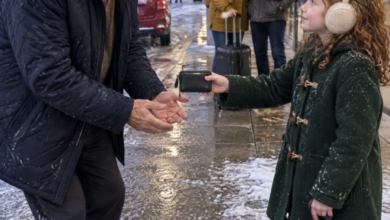
“No. But he gave me this.”
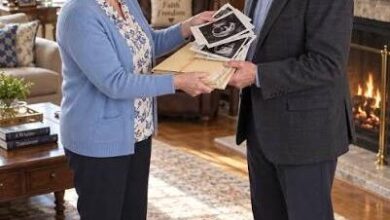
She placed a small package on the table.
Then she added something that made my heart begin to race.
“He said you must keep your promise.”
I carefully opened the package.
Inside was a tiny copper ring.
For several seconds, I couldn’t speak.
“Grandma?” Emma asked. “Are you all right?”
I lifted the ring.
“I know this.”
“Are you sure?”
I turned it between my fingers.
“I would recognize those crooked bends anywhere. Even after eighty-seven years.”
It was the ring Stanislaw had made for me.
Beneath it was an envelope.
The address printed on the front was our old Chicago apartment.
I stared at it.
“Mom, what is it?” Margaret asked.
“Look at the address.”
She leaned closer.
“That’s where you lived before Dad bought the house.”
I turned the envelope over.
There was a date written on it.
My heart sank.
“He found me,” I whispered. “All those years ago.”
Emma looked confused.
“Then why didn’t he contact you?”
I had no answer.
The ring had returned, but the mystery surrounding it was suddenly much larger.
My Daughter Was Not Convinced
Margaret immediately became suspicious.
“This could be somebody playing a trick.”
I looked at her.
“Then somebody has an extraordinary memory.”
“Mom, I’m serious. You don’t know who this man is.”
“I know who he says he is.”
“That’s not the same thing.”
Emma explained that the man had approached her outside a coffee shop near her office. She had seen him there several times before.
“He said he found an old family photograph online,” she explained. “He couldn’t locate your current address.”
“Why didn’t he simply ask you to contact me?”
“He said he had been trying to work up the courage.”
Margaret folded her arms.
“That sounds disturbing.”
“Possibly,” I replied. “Which is why I’m going to ask him about it.”
My daughter shook her head.
“Mother, you should stay away from him until we know more.”
“Margaret, I’m already involved.”
She looked frustrated.
“You don’t even know whether this is the same boy.”
“Then I’ll find out.”
For years, everyone had treated my memories as harmless stories from another time. Now, one of those memories had returned with physical proof.
I wasn’t going to ignore it.
The Man at the Coffee Shop
The following morning, Emma drove me to the coffee shop.
I described the elderly man to the woman behind the counter.
“Oh, the gentleman with the newspaper?” she said. “He usually comes around ten.”
“Wonderful. Two coffees, please.”
While we waited, Margaret called.
“Mom, please tell me you’re not actually looking for him.”
“I’m having coffee with Emma.”
“You know what I mean!”
“Then you know my answer.”
At ten fifteen, the door opened.
An elderly man entered carrying a folded newspaper.
He stopped when he saw me.
His fingers tightened around the paper.
“Zofia?”
I slowly stood.
“Stanislaw?”
He nodded.
For a moment, neither of us moved.
Emma looked between us.
“I think you two need a moment. I’ll wait in the car.”
She quietly stepped outside.
I didn’t rush toward him. I didn’t embrace him or burst into tears.
Instead, I asked the question that had haunted me since the package arrived.
“Why didn’t you come?”
He looked at me as though he had been preparing an answer for sixty years.
“Before I explain,” he said, “may I show you something?”
He reached into his coat and produced a tiny wooden horse.
One ear was missing.
I stared at it.
“You kept that?”
“You broke its ear.”
“You told me it looked better that way!”
He smiled.
We had carved that little horse together as children.
There was no longer any doubt.
“Sit down, Stanislaw.”
He obeyed.
“Now explain.”
The Truth About 1964
Stanislaw told me that he had survived the war and eventually emigrated.
For years, he had tried to trace my family.
“I found your Chicago address in 1964,” he explained.
I stared at him.
“Then why didn’t you knock?”
“I went there, Zofia. I stood across the street and saw you.”
“You saw me?”
He nodded.
“And you didn’t even knock?”
He lowered his eyes.
“You were outside with a little girl. Your husband said something, and you laughed.”
“Michael?”
“He lifted your daughter onto his shoulders. You kissed him.”
I remembered that afternoon.
Margaret had been small. Michael had been making her laugh, and I had been standing beside them.
“We were happy, Stanislaw.”
“I could see that.”
“And you decided I didn’t need to know you were alive?”
“I thought appearing would be selfish.”
I placed my coffee cup on the table.
“You decided that for me?”
“I was afraid of disrupting your family.”
“You could have written!”
“I know.”
“You could have sent one letter. You could have told me you survived.”
“I know that too.”
For several seconds, we sat in silence.
Then he whispered the words I had waited decades to hear.
“I was wrong.”
I looked at the little wooden horse.
“You were wrong,” I repeated. “And you let me believe you were gone.”
“I never forgot you.”
“Remembering someone isn’t the same as allowing them to know you’re alive.”
He nodded.
“I understand that now.”
I wanted to be angry. Part of me was angry.
Yet another part understood that fear can make people do things they spend the rest of their lives regretting.
Still, I had one more question.
“Why did you approach Emma instead of contacting me directly?”
“I only had your old address. When I found her photograph online, I hoped she could help me reach you.”
“You could have simply asked her.”
“I know. Apparently, growing old hasn’t made me any braver.”
I laughed despite myself.
“You crossed an ocean to find me, then decided what was best for me without asking.”
“I know. I was wrong.”
“Funny. My family does the same thing.”
He looked at me.
“Does it?”
“Every day.”
The Promise I Had Forgotten
After a long silence, Stanislaw asked whether I remembered the evening his grandfather died.
I closed my eyes.
“We sat by your bedroom window.”
“I was frightened,” he said.
“Of what?”
“Growing old alone.”
I remembered now.
He had been unusually quiet that evening. His grandfather had died, and he was trying to understand something no child should have to understand.
“You told me we’d both be old someday,” he continued.
I smiled faintly.
“And?”
“You promised that if either of us ended up completely alone, the other wouldn’t let them stay that way.”
I looked at him.
“You remembered that?”
“Every word.”
I had forgotten.
He hadn’t.
Then he told me that his wife, Helena, had died four years earlier.
“She was wonderful,” he said. “We never had children, but we had a good life together.”
“I’m sorry, Stanislaw.”
“Thank you.”
I told him that Michael had died five years before.
He nodded.
“I know.”
We sat quietly, remembering the people who had shared our lives.
Then he smiled sadly.
“We finally became the two old people we used to joke about.”
My eyes filled with tears.
“Apparently.”
“I don’t want a wedding, Zofia. I just hoped we might have coffee again.”
I reached across the table and placed my hand over his.
“Then you should have asked for coffee.”
“I wasn’t certain you’d remember me.”
“Next time, try using your name.”
We laughed.
For the first time in eighty-seven years, the boy from next door and the girl who had promised to return were sitting together again.
Margaret Asked the Question I Couldn’t Ignore
When I told Margaret and Emma what had happened, Emma wiped her eyes.
“Grandma, that’s beautiful.”
Margaret remained quiet.
Then she asked a question I hadn’t expected.
“Why now?”
“Because we’re old, darling.”
“No. He knew where you lived decades ago. Why appear now?”
“He explained that.”
“Did he?”
I looked at her.
“Margaret.”
“Mom, you inherited Dad’s savings and this house. We don’t know what this man wants.”
The room became quiet.
“You think he’s after my money?”
“I don’t know. That’s the problem.”
I hated admitting that she had a point.
The ring and the childhood memories were meaningful, but they didn’t automatically prove that everything about this situation was safe.
I turned toward my daughter.
“You’re all discussing me as though I’m not sitting here.”
“We’re protecting you.”
“Then protect my right to make my own decisions.”
Margaret looked hurt.
I softened my voice.
“I understand why you’re worried. I really do. But being ninety-five doesn’t mean I’ve stopped thinking.”
She took a breath.
“Will you promise to be careful?”
“I’ve survived ninety-five years. I know how to ask uncomfortable questions.”
One More Honest Conversation
The following afternoon, I met Stanislaw again.
This time, I wanted no romantic conversation and no childhood stories.
I wanted one honest answer.
“Why now?”
He considered the question carefully.
“After Helena died, I couldn’t face disturbing the past. Recently, my doctor reminded me that I shouldn’t keep postponing things that matter.”
“Are you ill?”
“Nothing dramatic. Just old.”
“That’s a condition I know well.”
I paused before asking my next question.
“Do you know I have savings?”
He looked surprised.
“I assumed so.”
“Are you interested in them?”
He laughed, but then noticed I wasn’t smiling.
“Zofia, you’re serious.”
“Completely.”
His expression changed.
“Then tomorrow, I’d like to show you something. Afterward, you can decide whether you want to see me again.”
“You do realize you’re making yourself sound more suspicious?”
“I know.”
“Then I hope whatever you’re planning is worth the trouble.”
He smiled.
“I hope so too.”
The House and the Two Tickets
The following morning, Stanislaw collected me in his car.
Emma knew where we were going and had his contact information.
Twenty minutes later, we stopped outside an enormous house.
“Whose house is this?”
“Mine.”
Inside, he showed me photographs of Helena and told me about their life together.
They had sold their business years earlier and had spent much of their retirement traveling.
I looked around the beautiful home.
“You’ve done rather well for yourself.”
He laughed.
“I’m fortunate.”
“May I ask how fortunate?”
He named a figure.
I nearly dropped my handbag.
“Stanislaw, you’re considerably wealthier than I am!”
“Does that disappoint you?”
“Only because I was preparing to accuse you of stealing my furniture.”
He laughed loudly.
For a moment, the room felt lighter.
Then he opened a drawer.
Inside were two airline tickets.
I picked them up.
They were tickets to Poland.
Both had been purchased before we met again.
I looked at him.
“What are these?”
“An invitation.”
“You bought tickets without asking me?”
“I hoped you’d agree. If not, I’d lose the money.”
“That’s rather foolish.”
“I’ve had eighty years to become foolish.”
I examined the destination again.
“Why Poland?”
He looked directly at me.
“Remember what we always said as children?”
I swallowed.
“That we’d return to our street someday.”
“Together.”
I touched the tickets.
Suddenly, I understood.
He hadn’t returned to take anything from my present. He wanted to help me revisit a place I had been forced to leave as a child.
He wanted to give me the chance to see where our story began.
I picked up one ticket.
“I’m keeping this.”
“And the other?”
“You keep it, under one condition.”
“Anything.”
“No more decisions on my behalf.”
He smiled.
“Agreed.”
My Daughter Didn’t Approve
When I announced that I planned to travel to Poland, Margaret nearly exploded.
“Poland? At ninety-five?”
“Yes.”
“With a man you barely know anymore?”
“And my granddaughter, apparently.”
Emma raised her hand.
“I’d love to come.”
Margaret turned toward her.
“You think this is a good idea?”
“I think Grandma would regret it forever if she didn’t go.”
My daughter looked back at me.
“Mom, we lost Dad five years ago. What if something happens to you over there?”
I softened.
“Darling, something could happen to me right here.”
“That doesn’t make me feel better!”
“I know.”
I reached for her hand.
“I’m not asking you to stop worrying. I’m asking you to trust me.”
Emma joined the conversation.
“Mom, Grandma isn’t asking us for permission. She just wants us to help her do this safely.”
Margaret sighed.
“You’re both impossible.”
“It’s hereditary,” I replied.
However, I wasn’t planning to travel recklessly.
I contacted my doctor, arranged a consultation, checked my documents, and discussed the practical details of the journey.
We made sure that the travel arrangements were suitable and that Margaret knew where we would be staying.
When everything was settled, my daughter still looked worried.
“Mom, are you absolutely sure?”
I held her hand.
“In 1939, my parents put me on a journey I didn’t choose. They saved my life, and I’ll always be grateful.”
“I know.”
“But this time, I get to decide where I’m going.”
She hugged me tightly.
“Just promise you’ll call.”
“Every day.”
“And don’t overdo anything.”
“Margaret, you’re ruining my reputation.”
The Ring Came Out of Its Box
On the morning of our departure, I opened the small metal box I had kept for so many years.
Inside were objects from another lifetime.
I reached for the copper ring.
Emma watched me carefully.
“Are you wearing it?”
“Yes.”
“Getting married?”
I looked at her.
“Not until I find out whether he snores.”
“I do,” Stanislaw called from the doorway.
“Then absolutely not!”
We all laughed.
I slipped the ring onto my finger.
Michael had been the love of my life. Nothing could change that.
Stanislaw was not replacing my husband, and I wasn’t trying to turn an old childhood promise into a different kind of relationship.
He was an old friend I had finally found again.
As we prepared to leave, Margaret called from behind us.
“Don’t forget your medication!”
I waved.
“Darling, I’ve remembered a promise for eighty-seven years. I can manage my pills.”
Returning to Warsaw
Two days later, we stood on our childhood street in Warsaw.
I looked at the buildings, the windows, and the familiar shape of the road.
So much had changed.
Yet something inside me recognized the place.
“That’s where you proposed,” I said.
Stanislaw smiled.
“And you demanded I get a job.”
“I’m still waiting!”
He offered me his arm.
“Where to now, Zofia?”
I looked down the street.
For decades, I had imagined returning to Poland. Sometimes I wondered whether the streets would still exist or whether my memories had changed the place into something it never really was.
Now I was standing there.
The boy who had made me a copper ring was beside me.
My granddaughter was nearby, taking photographs.
And for the first time in a very long time, I felt that I wasn’t simply looking backward.
I was living something new.
“Wherever I like,” I answered.
Stanislaw smiled.
“And if I have a suggestion?”
“You may suggest. I’ll decide.”
He laughed and offered his arm again.
We began walking.
At Ninety-Five, I Finally Understood the Promise
People sometimes believe that life becomes smaller as we grow older.
They assume that our dreams should become quieter, that our decisions should belong to younger relatives, and that our most important memories should remain safely in the past.
I understand why families worry.
Margaret loves me. Her concern comes from wanting to keep me safe.
But love should not mean taking away another person’s voice.
At ninety-five, I still have the right to ask questions, make plans, change my mind, and decide what matters to me.
I also learned something about promises.
Some promises are not fulfilled in the way we imagine when we are children.
Stanislaw and I never married. We built separate lives, loved other people, and experienced happiness and loss.
Yet the kindness we promised each other survived.
He had carried a little copper ring across decades of memories. I had kept the same promise in a metal box without even remembering all the words.
Perhaps that was enough.
As we walked down our old street, Stanislaw looked at me.
“Are you happy to be back?”
I squeezed his arm.
“Very.”
“And what happens now?”
I looked ahead.
“Now we have coffee. Then perhaps lunch. After that, we’ll see.”
He smiled.
I had spent most of my life believing that the past was something we could only remember.
But sometimes, if we are fortunate, it finds its way back.
And sometimes, the most beautiful part isn’t discovering what we lost.
It’s realizing that we still have the freedom to choose what happens next.
At ninety-five, I had returned to where my story began.
This time, the next chapter was mine to write.