News
The Tiny Casebearer on Your Wall: Why It’s There and How to Clear It for Good
The Tiny Casebearer on Your Wall: Why It’s There and How to Clear It for Good


You bend down to pick up a stray scrap of lint resting against the floorboard, only to freeze mid-reach. The tiny grey speck just moved. It looks almost like an elongated pumpkin seed or a flattened grain of rice, camouflaged by dust, bits of hair, and stray rug fibers. Before panic sets in and you start worrying about strange household pests taking over your hallways, take a steady breath.
You are looking at a household casebearer. Spotting plaster bagworms in the house is a surprisingly common discovery, particularly in warm, humid regions or quiet rooms where moisture gathers. They are strange little creatures, part builder and part squatter, dragging their handmade shelters across walls and trims. Discovering them can make your skin prickle, but handling them does not require harsh chemical sprays or an expensive exterminator call.
Let us walk through what these tiny builders are doing, whether your favorite sweaters are in danger, and how to gently reclaim your space using simple, everyday methods.
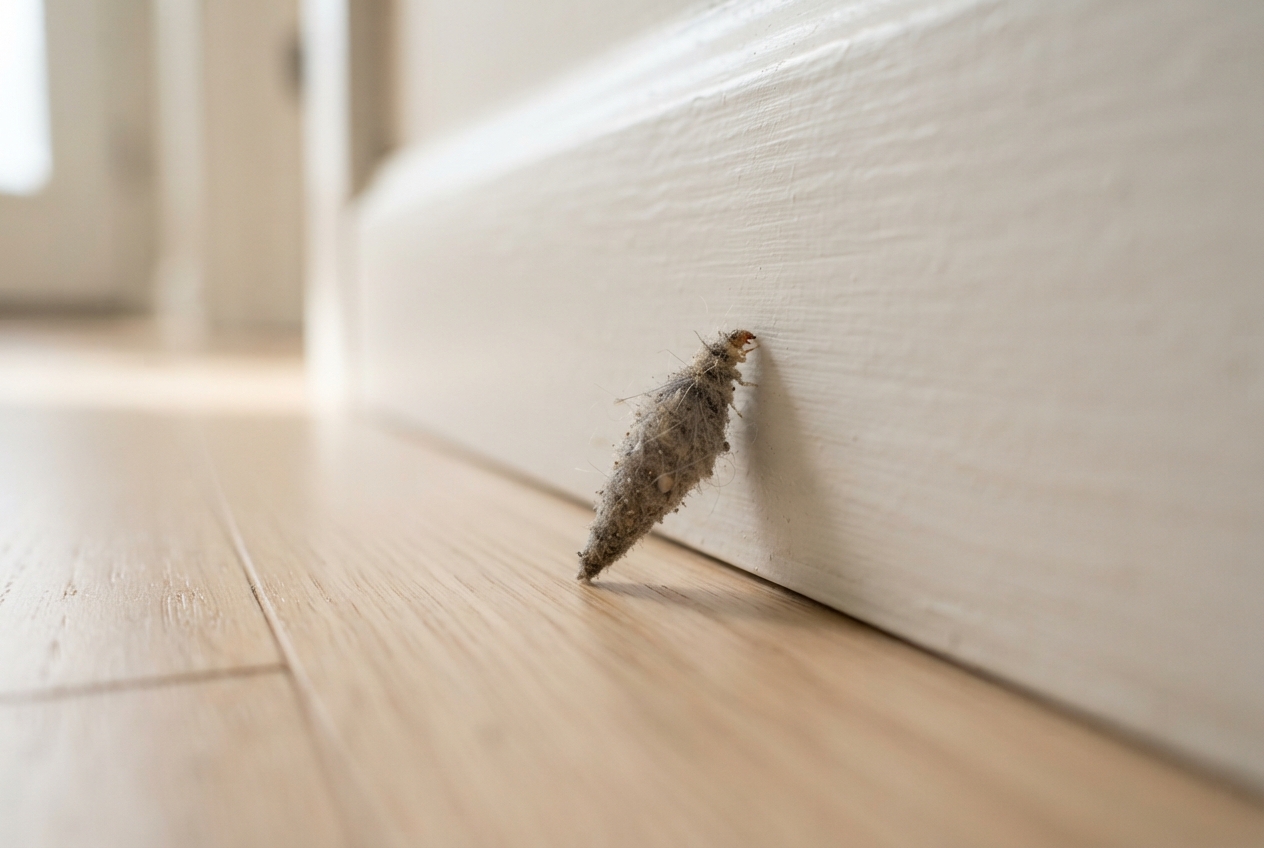
A close look at the spindle-shaped case of a plaster bagworm resting quietly along a baseboard seam.
What Are Plaster Bagworms in the House (and Why Are They Here)?
To deal with an unwanted guest, you first have to understand what brought them through the door. The creature you see inching along your drywall is the larval stage of a small moth known scientifically as Phereoeca uterella. Often confused with its cousin, the case-bearing clothes moth (Tinea pellionella), this larva constructs a protective silk sleeve covered in whatever grit it finds across your floors.
Notice the clever design of their portable shell. It is tapered at both ends, slit open like a tiny envelope. This allows the larva inside to poke its head out of either side, reversing direction without turning its entire body around in tight crevices. It is impressive engineering, certainly, but not something you want crawling across your living room paint.
These critters thrive where two specific conditions meet: ambient humidity and settled organic debris. They love warm climates, poorly ventilated laundry rooms, damp bathrooms, and shadows behind heavy wooden credenzas. If indoor humidity consistently climbs above fifty percent, you have set out a welcome mat. They feed on stray cobwebs, shed pet hair, dried insect fragments, and fine room dust. They settle down wherever the vacuum cleaner rarely visits.
Do Plaster Bagworms Bite, Harm Pets, or Ruin Clothes?
The immediate fear whenever a new insect appears is whether it poses a hazard to your family, your pets, or your wardrobe. Take heart: plaster bagworms do not bite, sting, or carry infectious pathogens. Your dog sniffing around the floorboards is completely safe from harm.
Their appetite, however, does warrant a watchful eye. Outdoors, bagworm larvae feed primarily on spiderwebs and discarded insect remnants. Indoors, they stick to a similar diet, actively grazing on cobwebs tucked beneath baseboards. When natural debris runs scarce, they will test out animal-based textiles. Wool carpets, felt rug pads, silk pillowcases, and vintage cashmere can suffer minor nibbles if these larvae wander inside storage closets.
Unlike severe clothes moth infestations that leave swaths of destruction overnight, plaster bagworms move slowly and feed sparsely. The greater issue is what their presence signals about your home environment. A cluster of bagworms on a wall is a biological moisture meter. They are whispering that damp air, condensation, or stagnant corners are lingering in that room.

Keeping natural knitwear clean and safely stored on open shelves with aromatic cedar blocks helps ward off fabric-grazing pests.
A Step-by-Step Natural Removal Routine
Clearing these little architects away does not require aerosol bug sprays that leave sticky residues on your trim. A methodical, non-toxic routine will clear them out quickly while leaving your home smelling fresh and clean.
1. The Precision Vacuum Sweep
Your vacuum cleaner is your most potent tool against casebearers. Snap on the narrow crevice attachment and systematically run it along every floorboard, closet edge, and door frame. Do not forget to vacuum behind the washer, dryer, and low-slung dressers where loose lint settles. Empty the vacuum canister directly into an outdoor trash bin so no stragglers crawl back out.
2. Wipe Down with Castile Soap and Vinegar
Once loose debris is gone, wipe the baseboards down with a warm, damp microfiber cloth. Mix a quart of warm water with a tablespoon of liquid castile soap and half a cup of plain distilled white vinegar. This gentle wash lifts the microscopic organic film that bagworms feed on, while dissolving the subtle silk anchor points they use to adhere to walls.
3. Clear Away Stray Spiderwebs
Since spider silk is a favorite snack and primary building material for plaster bagworms, grab a long-handled duster and clear high corners, crown molding, and spaces behind floor-length curtains. Removing their primary food source indoors breaks their life cycle naturally.
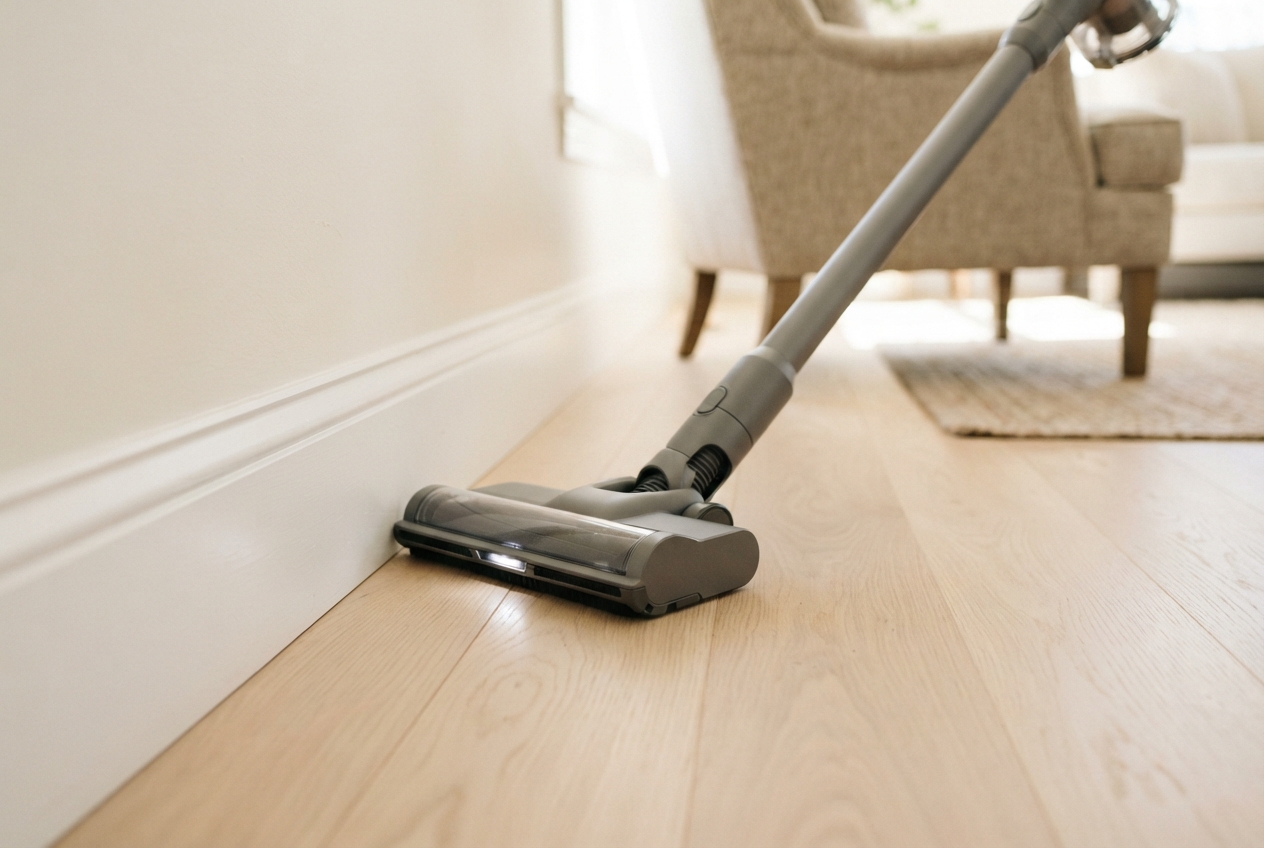
Using a slender vacuum attachment along floor trims removes fine lint and pet hair before larvae can build their cases.
Controlling Indoor Moisture to Stop Their Return
Because plaster bagworms are humidity hounds, lowering ambient moisture is the secret to keeping them away permanently. If the air inside your home stays dry, their delicate larval bodies dehydrate, and their eggs fail to hatch.
A dry room is an uninviting room for plaster bagworms. Keeping indoor humidity below fifty percent shuts down their life cycle without a drop of pesticide.
Start by inspecting your problem spots. Bathrooms without strong exhaust fans, uninsulated crawlspaces, damp basements, and laundry utility closets are prime gathering spots. Run your bathroom vent fans for at least twenty minutes after every shower to clear lingering steam. In naturally humid months, place a compact dehumidifier in damp hallways or basements. You will notice an immediate difference in how clean and light the air feels.
Keep large furniture pulled just an inch away from exterior-facing walls. That small gap allows room air to circulate freely, preventing cold spots and micro-condensation where larvae love to congregate.
Safeguarding Closets and Natural Fabrics
If you store beloved woolens, linen throws, or vintage quilts, take a few thoughtful steps to keep them safe. Prevention here doubles as an excuse to make your closet spaces look and smell wonderful.
First, never pack away unwashed garments at the end of a season. Even trace amounts of body oil, perspiration, or skin flakes act as an irresistible dinner bell for case-bearing larvae. Wash washable knits in gentle soap or have special pieces cleaned before putting them away for warm weather.
Store off-season textiles in zippered cotton garment bags or airtight canvas containers rather than loose cardboard boxes, which absorb ambient humidity. Place sanded cedar blocks or dried lavender bundles along your closet shelves. The pleasant herbal aroma repels foraging moths while keeping your wardrobe smelling like a summer garden.
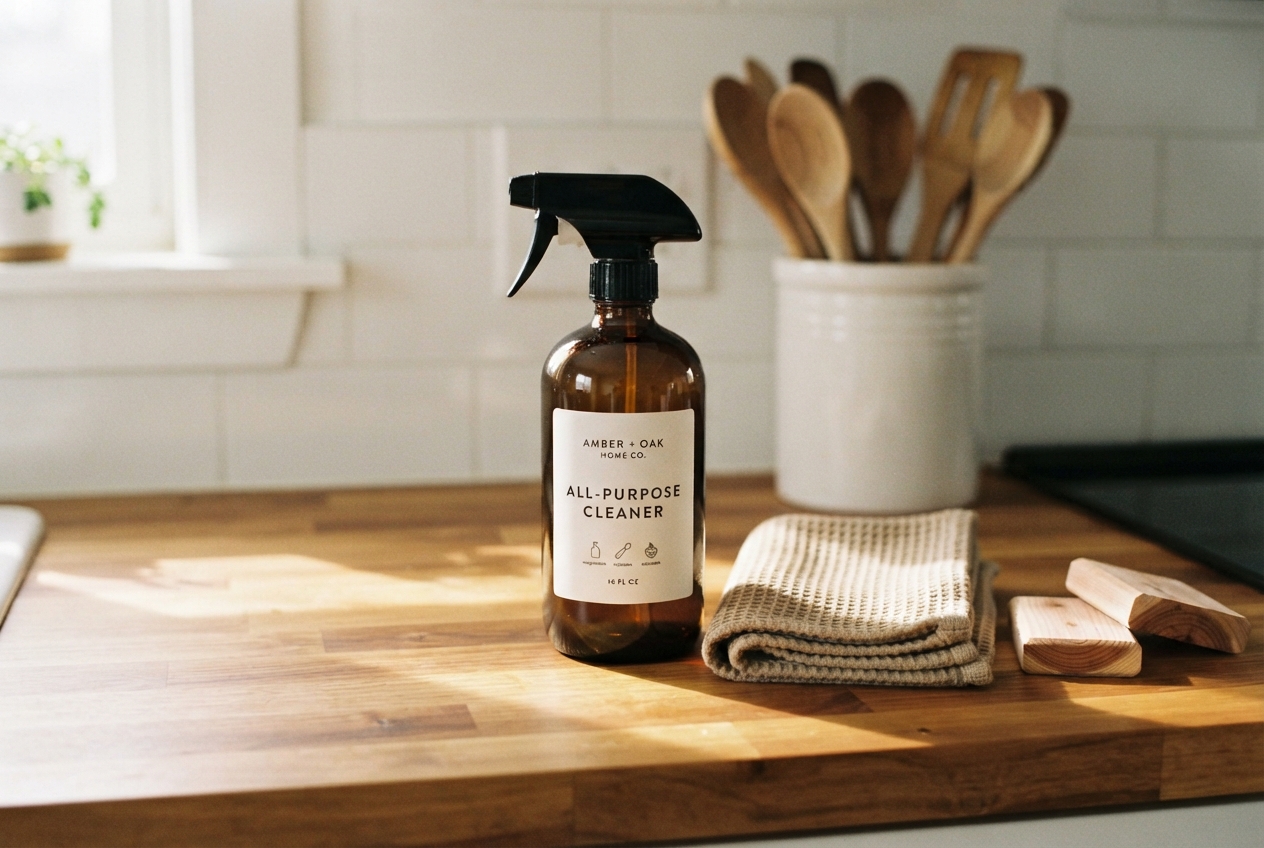
A simple cleaning setup with distilled vinegar, soft cloths, and aromatic cedar keeps storage spaces refreshed and protected.
Managing Plaster Bagworms in the House for Good
Discovering plaster bagworms in the house can be jarring when you first spot them inching along the drywall. Yet managing them really comes down to rhythmic, mindful homemaking rather than aggressive pest control. These little spindle-shaped cases are simply a reflection of the dust and moisture that naturally gather in quiet corners.
Set a monthly habit to slide the sofa forward, run the vacuum hose behind the laundry hamper, and wipe down shadowed baseboards with a splash of soapy water. Open the windows on breezy, dry afternoons to flush out humid air. By tending to those quiet corners with simple care, you create a bright, airy home where unwanted builders simply cannot find a foothold.