News
Can You Crack This Spot the Difference Puzzle? Only One Tiny Detail Changed
Can You Crack This Spot the Difference Puzzle? Only One Tiny Detail Changed

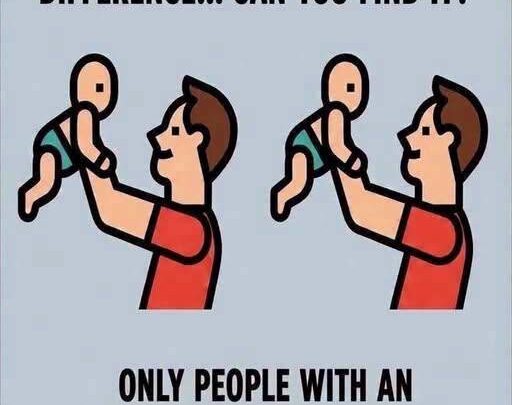
Spot the Difference Puzzle Can You Find the Tiny Change Between This Dad and Baby
Some picture puzzles seem almost too simple to deserve a second look. There are no crowded backgrounds, complicated patterns, or dozens of objects competing for your attention. You see two cheerful illustrations, recognize the same scene in both, and expect the answer to appear immediately.
Then you look again.
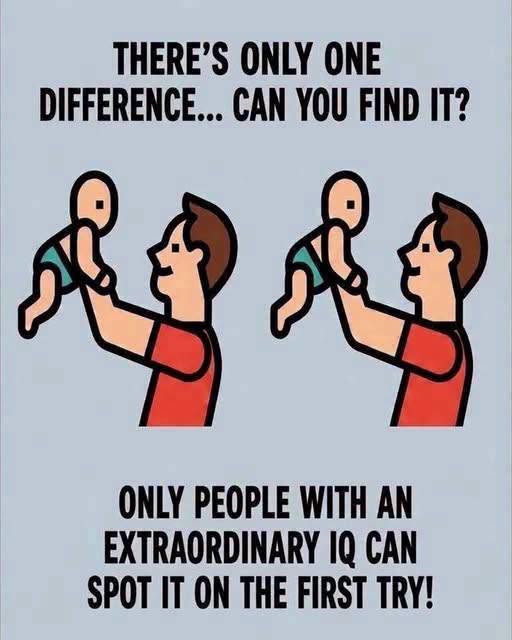
This spot the difference puzzle features a smiling dad lifting his happy baby into the air. The scene is playful, the colors are easy to recognize, and there are only a few main features to compare. Yet one small detail separates the two pictures.
Your challenge is to find that detail before reaching the answer below.
Take your time and enjoy the search. Whether you notice the change immediately or need a more careful comparison, the puzzle offers a chance to slow down and examine something closely. Below, you will find a simple scanning method, a few optional hints, and the final reveal.
The Challenge Is to Find One Small Difference
The two illustrations show the same basic moment: a dad wearing a red shirt holds his baby above him. Both characters look happy, making the scene feel warm and familiar.
At first glance, the pictures appear identical. The dad has the same hairstyle, the baby is in the same position, and the main colors match. Nothing seems obviously missing or out of place.
That is what makes the challenge interesting. You are searching for a small change within an otherwise matching illustration.
Before reading further, spend a little time comparing the images on your own. You can set a timer if you enjoy a challenge, but there is no need to rush. Finding the difference is the goal; the number of seconds it takes is simply part of your experience.
Give Yourself an Uninterrupted First Attempt
Start with one honest look before using any hints.
Look at the complete scene, then allow your attention to move naturally between the two pictures. Does a particular feature seem slightly different? Is there a line that looks longer, shorter, or positioned differently?
Treat your first impression as a possibility rather than a confirmed answer. Once something catches your attention, compare that exact feature in both images.
This distinction matters because an illustration can contain details that look unusual even when they match perfectly. A curved arm or a tiny foot might seem suspicious until you check its counterpart.
If nothing stands out, you have not missed your chance. You have completed the first stage: becoming familiar with the scene. Now you can move from a general impression to a more organized comparison.
Why Similar Pictures Can Be Difficult to Compare
Recognizing the subject of an image and checking every detail are different tasks.
It takes only a glance to understand that this illustration shows a father playing with his baby. Finding the altered detail requires something more specific: comparing the shape and position of individual marks.
The broad similarity between the pictures can make it tempting to move too quickly. You recognize a face, a shirt, or a hand and immediately continue to the next feature without examining its outline.
That is a useful thing to notice about your own approach. If you keep looking at the scene without making progress, try changing the task you give yourself.
Instead of asking, “What looks different?” ask, “Does this particular line match?”
That smaller question gives your attention a clear target and makes the search easier to organize.
Use a Simple Grid to Guide Your Search
One practical approach is to divide each picture into imaginary sections.
You do not need to draw anything. Think of the image as a grid containing a few manageable areas. Compare one area with its matching area before moving to the next.
Begin at the top left and move across the image. Once you finish the upper section, continue through the middle and then the bottom.
The benefit is straightforward: you have a route to follow. You are less likely to repeatedly examine the same feature while leaving another part unchecked.
A grid does not guarantee an immediate solution, but it gives you a way to track your progress. When you finish, you can identify the areas you compared instead of wondering whether you overlooked an entire section.
Compare the Baby One Feature at a Time
The baby provides a useful starting point because the figure contains several distinct features.
Begin with the head and face. Compare the outline, the visible facial marks, and the direction of each small curve. Then move to the arms and hands.
Continue through the body, diaper, legs, and feet. Focus on one feature at a time rather than trying to compare the entire figure at once.
You can use this short checklist:
- Compare the head shape and facial details.
- Check the arms and the positions of the hands.
- Follow the diaper outline.
- Examine the bends in the legs.
- Compare the shapes of the feet.
If a feature appears to match, move on. You can return later if necessary, but repeatedly checking the same area without a reason can make the search feel longer than it needs to be.
Give the Dad the Same Careful Attention
After checking the baby, apply the same method to the dad.
Start with the larger shapes, including his head, arms, and shirt. Then inspect smaller details such as his ear, eye, hairline, and facial expression.
Faces are worth examining carefully because we tend to recognize an expression as a whole. Both illustrations clearly show a happy dad, but matching emotions do not necessarily mean that every line is identical.
Check the hands as well. Follow the outlines where the fingers and arms meet other parts of the drawing. Overlapping shapes can be difficult to compare when you look too quickly.
Finally, examine the red shirt. Compare the neckline, sleeve edges, and any visible folds or outline marks. The aim is to give each part a deliberate check.
Look at Lines as Well as Objects
A spot the difference puzzle does not always remove an object or change a color. Sometimes the difference is contained within a single line.
That means counting visible features may not be enough. Both images can have the same number of hands, feet, and facial features while still containing a small alteration.
When checking an outline, notice where it begins and ends. Does it curve in the same direction? Does it extend equally far in both pictures?
These questions are particularly useful in simple cartoons, where a short mark can define an expression or separate two shapes.
Try following a suspicious line with your eyes from one end to the other. Then repeat the process in the second picture. Comparing endpoints can be easier than judging the overall appearance.
Make Sure the Picture Is Comfortable to View
Before deciding that the puzzle is impossible, check how you are viewing it.
On a small phone screen, tiny lines may be difficult to distinguish. If the image can be enlarged, use a comfortable zoom level and compare the same area in both pictures.
Avoid enlarging it so much that you lose track of where you are. Excessive zoom can also make edges appear rough, which may create distracting differences in how the image looks on your screen.
Screen glare and an awkward viewing angle can make comparison less comfortable, too. A small adjustment may help you see the illustration more clearly.
The aim is to give yourself a fair view of the original puzzle. You do not need special software or image editing tools to enjoy the challenge.
Take a Brief Break if You Feel Stuck
If you have checked the picture several times without finding anything, pause.
Look away from the screen, relax, and return when you feel ready. A short break can help you stop repeating an unproductive search pattern.
When you return, choose a different starting point. If you previously began with the baby, start with the dad. If you focused on colors, compare outlines instead.
This gives your next attempt a clear purpose. You are trying a different approach rather than simply staring longer.
A break is optional, of course. If you are enjoying the search, continue. The puzzle is meant to be entertaining, and there is no required way to solve it.
Does Solving This Puzzle Quickly Prove a High IQ
The promotional claim that only people with an extraordinary IQ can solve a picture puzzle should be treated as part of the challenge’s presentation.
This activity does not provide a meaningful basis for judging someone’s intelligence. There is no standardized assessment here, and the time taken to notice one altered illustration detail cannot support such a conclusion.
Your viewing conditions and search approach also affect the experience. Someone might happen to look directly at the changed feature first. Another person might carefully inspect every other part before reaching it.
Enjoy a quick solution if you find one, but do not attach too much meaning to the timer.
The useful question is whether you identified the actual difference and can point to it in both pictures.
Three Hints Before the Final Reveal
If you would like some help without immediately reading the answer, use the following hints one at a time.
Hint One Focus on the Dad
Move your attention away from the baby and examine the father more closely. Compare his features instead of continuing to search the full scene.
Hint Two Examine His Face
You can narrow the search further. Look at the marks that create the dad’s expression, comparing their shapes and endpoints.
Hint Three Check the Mouth
The difference involves a small line associated with his smile. Look carefully at how far that line extends in each illustration.
Pause here if you want another attempt. The next section reveals the answer.
The Answer Is the Dad’s Smile Line
The changed detail is the dad’s smile.
In the left picture, the small smile line is longer and extends farther back into his cheek. In the right picture, the corresponding line is shorter and ends sooner.
It is a subtle difference because both versions still communicate the same cheerful expression. Recognizing that both dads are smiling can make it easy to overlook the length of the mark itself.
Return to the original comparison and focus only on the mouth. Locate the end of the smile line on the left, then check the equivalent point on the right.
Once you compare those endpoints directly, the intended difference becomes much easier to understand.
Check Your Answer Against the Original Picture
Whether you found the difference independently or used a hint, take a moment to verify it.
A good solution should be specific. “Something about his face” is a useful observation, but “the smile line extends farther in the left image” identifies the actual change.
This final check helps distinguish a correct answer from a general impression.
It also provides a satisfying end to the search. You can see exactly why the pictures differ and understand why the detail was easy to pass over.
If you guessed another feature, compare it again before dismissing your attempt. Small display effects can sometimes make matching details seem different. Use the original puzzle and the supplied answer image as your references.
Turn the Puzzle Into a Friendly Shared Challenge
This picture can also be a simple activity to enjoy with someone else.
Show the original comparison to a friend or family member without revealing the answer. Let them choose whether they want a timed attempt or a relaxed search.
If they become stuck, offer the hints gradually. Starting with “look at the dad” preserves more of the challenge than immediately pointing to his mouth.
You can also compare approaches afterward. Did they study the faces first? Did they begin with the baby? Did they notice the difference by chance or through a systematic scan?
Those details can make the conversation as enjoyable as the reveal itself.
A Simple Approach for Your Next Picture Puzzle
The next time two images appear identical, begin with a clear route through the picture.
Compare small sections, check individual features, and pay attention to the ends of lines. If you stop making progress, change your starting point or take a brief pause.
For this dad and baby puzzle, the answer was a tiny difference in the father’s smile. The larger scene remained so similar that the altered line could easily escape an initial glance.
Whether you solved it immediately or needed the final hint, you now know what to look for when another small visual change is hiding in plain sight.
Share the puzzle with someone who enjoys a lighthearted challenge, keep the answer out of view, and let them have their own moment of discovery.