News
What Does a Yellow Ribbon on a Dog Mean? Why Giving Space Matters
What Does a Yellow Ribbon on a Dog Mean? Why Giving Space Matters

What Does a Yellow Ribbon on a Dog Mean? Why Giving Space Matters
You are walking along a neighborhood sidewalk when a beautiful dog catches your attention. Its coat looks soft, its tail is moving, and its owner is standing nearby. You smile and begin to approach.
Then the owner asks you to stay back.
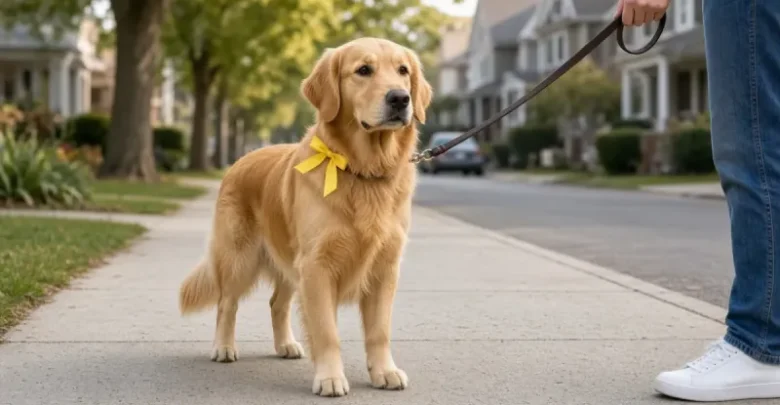
Before assuming they are being unfriendly, look more closely. A small yellow ribbon may be attached to the dog’s leash, collar, or harness. That accessory may be carrying an important message: this dog needs space.
Yellow ribbons and similar yellow accessories are used in awareness campaigns to help communicate that a dog should not be approached. The Pet Professional Guild Australia describes the Yellow Dog Project as an initiative encouraging people to recognize this request and avoid closing the distance.
Understanding the signal can make an ordinary walk easier for everyone. It also introduces a useful habit that applies even when no ribbon is visible: ask before interacting, listen to the answer, and allow unfamiliar dogs their personal space.
The Basic Message Behind the Yellow Ribbon
The message is simple: give the dog and handler extra room.
A yellow marker may appear as a ribbon, bandanna, leash sleeve, vest, or another visible accessory. Its purpose is to communicate before someone gets close enough to create an unwanted interaction.
However, yellow is not a universally understood code. Some people have never encountered the campaign, and a yellow collar may simply be a color choice.
If you are uncertain, remain at a comfortable distance and follow the handler’s instructions. There is no need to move closer to investigate the accessory.
The most helpful response is to make passing easy. A person walking a dog should not have to explain the animal’s history before others respect a request for space.
What the Yellow Dog Project Promotes
The Yellow Dog Project is associated with public education about dogs that need distance from people, other animals, or particular situations.
Organizations supporting the idea use the visual marker to make that need easier to communicate. Veterinary guidance on the campaign identifies dogs in training, recovering from surgery, or undergoing rehabilitation among those who may benefit from additional room.
The accessory itself does not explain the reason. It is a brief message rather than a full description of the dog’s circumstances.
That is part of its usefulness. A passerby does not need to decide whether the reason is sufficiently important. They can simply leave room and continue their walk.
The request can be honored without a conversation, a greeting, or an examination of the dog’s behavior.
A Yellow Ribbon Does Not Automatically Mean Aggression
One of the most common misunderstandings is that a yellow ribbon labels a dog as aggressive.
The campaign covers a broader range of needs. Some dogs require space because of health, recovery, training, or discomfort around unfamiliar situations.
At the same time, the ribbon should not be interpreted as reassurance that a dog could never bite. It does not provide a behavioral guarantee in either direction.
The practical response remains the same: do not test the animal to discover whether the request was necessary.
Saying “dogs usually love me” or “I know how to handle them” does not change the handler’s instruction. Personal confidence cannot reveal everything about an unfamiliar dog’s current needs.
Giving space avoids turning a simple boundary into a challenge.
Why a Wagging Tail Is Not Permission
A moving tail can attract attention, but it is not an invitation to touch.
The American Veterinary Medical Association explains that tail wagging can occur in different emotional contexts. A dog may be playful, anxious, or nervous, and people do not always interpret its body language accurately. Size and breed also cannot reliably predict whether a dog will bite.
This matters when a dog has a friendly appearance or belongs to a breed people commonly associate with sociability.
The handler may know information you cannot see. A calm-looking animal may still need to pass without stopping.
Rather than trying to judge the entire situation from a wag or facial expression, use the information already available: the request for space and the person’s words.
How to Pass a Dog Wearing Yellow
When you notice the marker, leave a generous gap where it is safe to do so.
On a narrow path, you might pause in a wider area and allow the dog and handler to pass. Avoid blocking their route while deciding whether to ask about the ribbon.
Keep your movements calm. There is no need to call the dog, whistle, crouch toward it, or attract its attention.
If you are already approaching when the owner speaks, stop and allow more distance. A brief acknowledgment is enough.
You do not need to apologize at length or explain that you meant well. Those conversations can prolong the encounter the handler is trying to avoid.
The easiest successful interaction may be one in which everyone simply continues on their way.
Do Not Reach Out “Just to Let the Dog Sniff”
Many people have learned to offer a hand before petting a dog. However, reaching into an unfamiliar dog’s space is not a necessary first step.
The ASPCA advises asking the owner before reaching toward an unfamiliar dog and notes that a hand suddenly presented near the face may frighten it. AVMA guidance also recommends allowing the dog to approach rather than reaching into its personal space.
With a dog whose handler has requested distance, there is no reason to begin a greeting at all.
Keep your hands to yourself and let the pair pass.
Do not offer food, either. A treat does not create permission to interact, and the handler should decide whether any food or contact is appropriate.
Your Friendly Dog Still Needs Permission
Owners sometimes respond to a request for space by calling out, “It’s okay—mine is friendly!”
That may describe their own dog accurately. It does not answer whether the other dog wants an encounter.
An eager approach can still be unwanted. The other handler may be working to maintain distance, and a greeting can interfere with that effort even when no conflict was intended.
Keep your dog under control and prevent it from entering the other animal’s space. If necessary, change your route or wait somewhere suitable.
A walk does not need to include a meeting with every dog encountered.
Dogs in Need of Space, an advocacy resource separate from the yellow-ribbon campaigns, emphasizes responsible handling and respect for all dogs’ personal space—not only those wearing a marker.
Teaching Children a Simple Routine
Children often respond enthusiastically when they see a dog. A clear routine can help them manage that excitement.
Teach them to stop at a distance, remain beside their accompanying adult, and ask before approaching. The question should come before a hand reaches toward the animal.
If permission is refused, the interaction ends there.
AVMA guidance recommends teaching children to ask the owner and allow the dog to approach first. It also stresses active adult supervision, including around familiar family dogs.
Parents can practice the words at home: “May I pet your dog?”
They can also practice the response to a refusal: “Okay, thank you.”
This makes hearing “no” part of the routine rather than an unexpected rejection. The child has followed the rule successfully even without touching the animal.
A Refused Greeting Is Not a Personal Insult
It can feel disappointing when someone declines an enthusiastic greeting, particularly if a child was looking forward to petting a dog.
But the owner’s answer is information about that interaction. It does not need to become a judgment about the person asking.
Avoid asking repeatedly, negotiating for a quick touch, or suggesting that the handler make an exception.
New York State’s dog-bite prevention guidance advises people to ask permission and wait for the owner to agree before petting. Asking is therefore more than a polite phrase; it requires being willing to accept the answer.
A calm response also sets a useful example for children. They learn that enjoying animals includes respecting limits.
Admiring a dog from a distance can be a perfectly pleasant encounter on its own.
What Owners Can Do to Communicate Clearly
A yellow ribbon can help, but owners should expect that some people will not recognize it.
Choose a visible accessory that does not interfere with the dog’s equipment or movement. Plain wording such as “Needs Space” may help explain the request.
Be ready with a short sentence: “Please give us room,” or “No greetings today, thank you.”
Try to communicate before someone is within touching distance. If a location is becoming crowded, consider whether there is a practical route that avoids a close pass.
The ribbon is a communication aid rather than a complete management plan. Caring Hands Animal Hospital’s discussion of the project specifically notes that it is not an excuse to bypass training.
Where behavior is difficult to manage, professional support may be appropriate.
When Professional Advice May Help
A dog that regularly appears frightened or behaves aggressively around people or other animals may need more support than a visible marker can provide.
New York City’s animal-care guidance recommends seeking professional help when owners need assistance understanding or managing fearful or aggressive behavior. A veterinarian can also be part of that conversation.
The appropriate approach depends on the individual dog and its circumstances.
For the public, there is no need to diagnose what is happening. Respecting distance is still the immediate task.
For the owner, recognizing that additional help is needed can be a constructive step. A ribbon may make some encounters easier, while a broader plan addresses the recurring difficulty.
These tools serve different purposes and can work alongside one another.
Why Dogs Without Ribbons Need the Same Courtesy
The absence of yellow does not mean a dog is available for petting.
Some owners do not know about the campaign. Others may use a different message or rely on spoken instructions.
The basic rule should therefore remain consistent: ask before interacting with an unfamiliar dog.
Even when an owner agrees, pay attention to whether the dog wants to participate. Ottawa Public Health recommends considering the animal’s body language and checking whether it continues to welcome attention during petting.
Permission to begin is not a reason to ignore a dog moving away.
This wider habit makes the yellow ribbon easier to understand. It adds emphasis to a courtesy that should already apply.
Be Careful With Dramatic Stories Online
Social media posts sometimes explain the ribbon through a dramatic account of an angry owner, an upset parent, or a child who wanted to pet a puppy.
Such stories can attract attention, but an anonymous caption is not enough to establish exactly what happened.
An educational article does not need an unverified confrontation to make its point.
The useful questions are straightforward: what does the signal request, and how should someone respond?
Focusing on those questions helps readers avoid taking sides in an incident they cannot assess.
It also keeps the message useful beyond one story. Whether the people involved were cheerful, distracted, or abrupt, respecting the request for space remains the practical action.
Frequently Asked Questions
Does every yellow collar mean “stay back”?
No. Yellow can simply be a color choice. A ribbon, written message, or handler’s request may provide more context. When uncertain, remain at a distance and ask rather than approaching.
Should I ask why the dog needs space?
You do not need to know the reason to respect the request. The owner may prefer to keep moving or may not want to discuss private details.
Can I talk to the handler?
Possibly, if they appear comfortable and you can do so without crowding them. They may also need to concentrate on their dog, so allow them to continue without conversation.
What if I already started reaching out?
Stop, withdraw your hand calmly, and give more room. A short acknowledgment is enough.
Can children still enjoy seeing the dog?
Yes. They can notice its color, size, or accessories from a distance without needing to approach or touch it.
A Small Signal With a Practical Message
A yellow ribbon asks for something simple: a little more room.
Recognizing it can prevent unnecessary approaches and make shared spaces easier to navigate. The response does not require specialist knowledge. Pause, keep your distance, control your own dog, and follow the handler’s instructions.
Most importantly, carry the same courtesy into encounters where no ribbon is present.
Ask first. Accept the answer. Let the dog and its owner continue comfortably.
This article provides general information about respectful interactions with dogs. A visual marker does not replace responsible handling, supervision, or individualized professional advice.