News
Angela Lansbury and Peter Shaw: A Lasting Marriage and the Life She Built After Loss
Angela Lansbury and Peter Shaw: A Lasting Marriage and the Life She Built After Loss

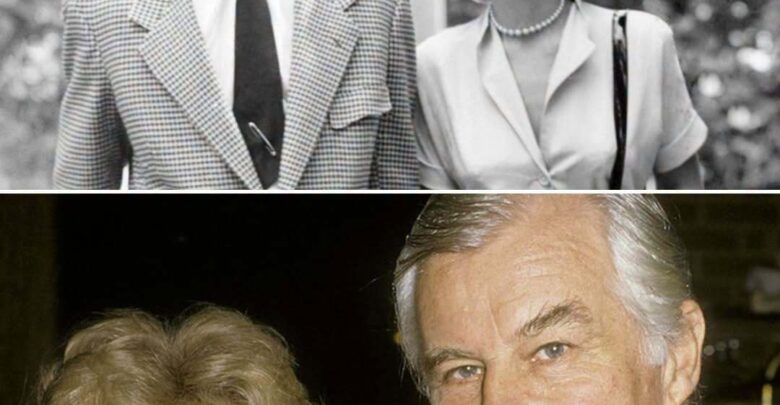
Angela Lansbury and Peter Shaw: A Lasting Marriage and the Life She Built After Loss
For generations of television viewers, Angela Lansbury was Jessica Fletcher: observant, composed, and remarkably good at finding answers. Through Murder, She Wrote, she became a familiar presence in homes around the world.
Her own life, however, included experiences that could not be resolved within an hour of television. Among the most difficult was the death of her husband, Peter Shaw, after more than five decades of marriage.
Their relationship began long before Jessica Fletcher became a household name. They married in 1949, raised a family, and built careers that increasingly overlapped. By the time Shaw died in 2003, their lives were connected through years of shared work, parenting, decisions, and companionship.
Lansbury later spoke openly about the difficulty of continuing without him. Her account was moving partly because it did not make grief sound simple. She described needing time before she could begin participating fully in her professional life again.
Their story offers a fuller picture of a celebrated performer whose greatest achievements existed alongside a deeply important private relationship.
A Career That Began Before Adulthood
Angela Lansbury’s professional story started unusually early.
Born in London in 1925, she studied drama before moving to North America with her family during the Second World War. Her path eventually brought her to Los Angeles, where she worked while pursuing acting opportunities.
Her breakthrough came with Gaslight, released in 1944. Playing the maid Nancy alongside established stars, she earned an Academy Award nomination for supporting actress.
A second nomination followed for The Picture of Dorian Gray, and a third came years later for The Manchurian Candidate. The Academy’s account of her career documents an actress whose range was apparent well before her later television success.
That early recognition is important to understanding her life. Lansbury did not become a performer only after meeting Shaw, and her professional identity was already developing when their relationship began.
Their marriage would become part of a long career rather than its starting point.
An Early Marriage That Did Not Last
Before marrying Peter Shaw, Lansbury had a brief marriage to actor Richard Cromwell.
She was nineteen when they married in 1945. The relationship ended the following year.
It is tempting to treat an early disappointment as a convenient opening chapter in a later love story. Real lives are less tidy. A relationship that ends can remain meaningful without existing solely to prepare someone for a more lasting marriage.
What can be said with confidence is that Lansbury’s first marriage was short, while her second became a central part of her adult life. Accounts of her life also note that she and Cromwell remained on friendly terms after their separation.
The contrast between those marriages is striking, but it does not require speculation about private conversations or unrecorded emotions.
The documented dates already show how differently the two relationships unfolded.
Who Was Peter Shaw?
Peter Shaw was British-born and worked in several areas of the entertainment industry.
Although often introduced through his connection to Lansbury, he had a professional identity of his own. His work included acting, talent representation, studio responsibilities, and television production.
He later became involved in producing Murder, She Wrote, bringing his business experience into the professional world surrounding his wife’s best-known television role.
An obituary published after his death described him as a retired agent, studio executive, and co-producer of the series. It also recorded that the couple married in London in 1949.
Understanding his background makes their partnership easier to appreciate.
This was a marriage between two people familiar with the opportunities and demands of entertainment work. Their careers were different, but they shared knowledge of the industry in which much of their life together took place.
A Marriage That Spanned More Than Five Decades
Lansbury and Shaw remained married from 1949 until his death in January 2003.
That period covered enormous changes in entertainment and in Lansbury’s own work. Her career moved across film, musical theater, television, and voice performance.
A marriage of that length also encompasses experiences that do not appear in a filmography: changes in household routines, family responsibilities, health concerns, and decisions about where to live.
Public audiences can see photographs, interviews, and professional milestones. They cannot see every ordinary day that connects those moments.
That distinction matters when discussing a relationship remembered with affection. Longevity alone does not explain a marriage, but it establishes the scale of the life the couple shared.
Their story is compelling because Lansbury continued to speak warmly about that shared life after Shaw was gone.
Raising a Family Alongside Their Careers
Their household included Anthony and Deirdre, the children Lansbury and Shaw had together, and David, Shaw’s son from an earlier relationship.
These family connections formed a substantial part of their lives beyond public appearances.
Retrospectives of the couple’s marriage describe a family whose story extended across homes, careers, and the changing needs of their children.
For readers, that helps place the marriage in a more human setting.
A lasting relationship is lived through arrangements that may look unremarkable from the outside. Parenting, discussing plans, responding to difficulties, and maintaining connections all take time.
It would be impossible to reconstruct every aspect of their family life from public reporting. Still, including their children prevents the story from becoming merely a sequence of glamorous photographs.
They were a working couple with a family, as well as recognizable figures in entertainment.
What Angela Said About Their Partnership
In a 2014 interview with CNN’s Christiane Amanpour, Lansbury described shared interests and joint professional decisions as important to the marriage.
Discussing her move into television, she explained that Shaw’s involvement allowed them to undertake the demanding project together. She also recognized his established business career and the choice he made to support that phase of her work.
Her explanation is more informative than a broad claim that they were simply a perfect couple.
She described a partnership with practical dimensions: work, planning, and an understanding of what a major commitment would require.
That does not provide a universal formula for marriage. It does reveal what she considered important when looking back at her own.
Her account places cooperation near the center of the relationship.
Jessica Fletcher and a New Chapter of Fame
Murder, She Wrote introduced Lansbury to audiences who might not have known her earlier films or stage performances.
The series began in 1984 and ran through 1996. Her portrayal of Jessica Fletcher earned twelve consecutive Emmy nominations, according to the Academy’s career biography.
The character’s continuing appeal helps explain why Lansbury’s personal story still attracts interest.
For many viewers, she represented intelligence, independence, and a reassuring familiarity. Those associations can make it surprising to hear her discuss uncertainty or emotional pain.
Yet the distinction between performer and character is essential.
Lansbury brought Jessica Fletcher to life. She was also a person whose own experiences included grief and dependence on relationships that mattered deeply to her.
Recognizing both aspects makes her achievements more understandable, rather than less impressive.
Peter Shaw’s Death in 2003
Shaw died on January 29, 2003, at the age of eighty-four. Contemporary reporting identified congestive heart failure as the cause.
For Lansbury, his death ended more than fifty-three years of marriage.
The dates provide a factual outline, but they cannot convey the full meaning of losing someone who had been present through so much of adulthood.
Her later comments are therefore especially valuable. They allow readers to hear how she described the experience instead of relying entirely on assumptions made by others.
There is also a reason to resist presenting bereavement as a dramatic turning point followed immediately by triumph.
The years after a loss contain ordinary days as well as public milestones. A successful appearance does not reveal everything about the person making it.
Her Honest Account of Finding a Way Forward
In the CNN interview, Lansbury explained that she needed to wait until she felt able to engage with life and work again.
She reflected on what Shaw would have wanted and believed he would have encouraged her to continue.
As she put it, “I just kind of had to wait before I was able to do it.”
The directness of that statement gives it its emotional weight.
She did not describe an immediate solution. She acknowledged an interval during which continuing was something she understood in principle but could not yet fully do.
For a biographical account, that is enough. There is no need to invent scenes of private despair or claim knowledge of how she felt every morning.
Her own words communicate the difficulty clearly.
The Invitation to Appear in Nanny McPhee
Lansbury also identified Nanny McPhee as an important professional experience after Shaw’s death.
In her conversation with Amanpour, she explained that Emma Thompson invited her to participate. She recalled enjoying the role’s elaborate appearance and the experience of doing the work.
The significance comes from Lansbury’s own recollection, rather than a claim that one film resolved her grief.
An invitation can provide an opportunity without guaranteeing what someone will feel afterward. A role can demand attention, introduce new collaborators, and make use of familiar abilities.
In this instance, Lansbury remembered the project positively and connected it to her return to activity.
That makes it a meaningful part of her later career as well as her personal account of continuing after loss.
A Later Career With Substantial Achievements
Lansbury’s work after 2003 was not limited to occasional appearances.
She returned to Broadway in Deuce in 2007. In 2009, her performance in Blithe Spirit brought her another Tony Award.
Further stage work included A Little Night Music and The Best Man. She also performed in Driving Miss Daisy in Australia and returned to London in Blithe Spirit in 2014.
The Tony Awards’ career summary records these later performances alongside the earlier roles that established her theatrical reputation.
These credits show continued professional engagement across many years.
They should not be used to measure how completely someone has recovered from a loss. Their significance is that Lansbury remained an active artist with work still to contribute.
Her later life contained achievement alongside remembrance.
Recognition Across Film and Theater
In 2013, Lansbury received an honorary Academy Award.
The Academy recognized a career that had begun with her teenage film debut and continued across decades of memorable performances. Its announcement also recalled her three supporting-actress nominations.
She received her damehood at Windsor Castle in 2014, with the honor recognizing services to drama and charitable work and philanthropy.
In 2022, the Tony Awards honored her with a Special Tony Award for Lifetime Achievement in the Theatre.
Together, those honors illustrate the breadth of her contribution.
They also offer a useful reminder that Jessica Fletcher, however beloved, represented only one part of her professional identity.
Film audiences, theatergoers, and television viewers encountered different aspects of the same performer.
Her Death and the Legacy She Left
Angela Lansbury died on October 11, 2022, at the age of ninety-six.
Her family announced that she died peacefully in her sleep at home in Los Angeles, five days before her ninety-seventh birthday.
The tributes that followed reflected how many generations had grown up with her work.
Some remembered Broadway performances. Others thought first of Gaslight, The Manchurian Candidate, or her voice as Mrs. Potts in Beauty and the Beast. Millions remembered Murder, She Wrote.
Her marriage to Shaw belongs within that larger life story.
It was neither a footnote to her career nor the only meaningful part of her identity. It was a lasting relationship that she described as central to how she lived and worked.
Why Their Story Continues to Resonate
The story of Angela Lansbury and Peter Shaw does not require an invented final message or a hidden revelation.
Its most affecting elements are already documented: a marriage lasting more than five decades, professional cooperation, family connections, a painful loss, and Lansbury’s candid description of needing time before she could continue.
Her later achievements do not erase the importance of Shaw. Likewise, remembering their marriage does not diminish the independent talent and determination she brought to her work.
Both parts belong in the account.
For readers who admired her, that combination offers a fuller understanding of the woman behind familiar characters. She could acknowledge how much she had lost while still accepting another role, working with new colleagues, and contributing performances that audiences would remember.
Her career continued. Her affection for her husband remained part of how she explained the life they had shared.