News
Steve Harvey ‘Fired’ From Family Feud? The Viral Story Was a Scam — Here’s What Really Happened

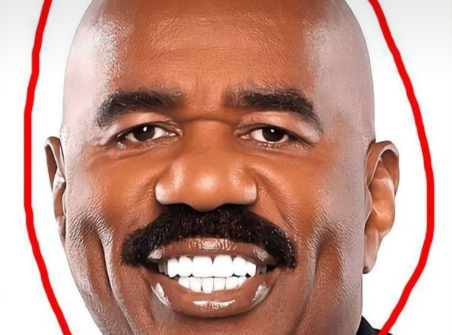
A shocking headline began circulating online claiming that Steve Harvey had been abruptly fired from Family Feud following an explosive television moment involving Oprah Winfrey.
The story sounded dramatic. It appeared to contain quotes, photographs, references to major television networks, and even what looked like a legitimate news report.
But there was one major problem.
It wasn’t real.
The viral story was part of a much larger pattern of fake celebrity endorsement scams designed to attract attention, generate clicks, and ultimately persuade readers to purchase questionable products.
And although the rumor originally circulated years ago, versions of the same story continue to resurface because scammers can easily change a headline, replace a photograph, purchase another social-media advertisement, and send thousands of people toward a new fake website.
As of 2026, there is no credible evidence that Steve Harvey was fired from Family Feud because of the alleged Oprah interview or because of any supposed CBD endorsement. In fact, the official Family Feud website identifies Harvey as the show’s host, and the program recently entered its 50th anniversary season with Harvey returning to the podium.
So what was really happening behind those alarming headlines?
The Headline Was Designed to Make You Click
The scam followed a formula that has become increasingly familiar across social media.
A post would appear in a Facebook feed with an emotionally charged headline suggesting that Steve Harvey had experienced a major career disaster.
Some versions used phrases such as:
“Steve Harvey Fired From Family Feud.”
Others suggested that he had been involved in an embarrassing on-air incident or had revealed a controversial health problem during an interview with Oprah Winfrey.
The combination was carefully chosen.
A famous celebrity.
A beloved television program.
A supposed scandal.
A recognizable media personality.
And a shocking career consequence.
The goal wasn’t necessarily to convince you immediately.
The goal was to make you curious enough to click.
Once someone clicked the advertisement, they could be taken to a website designed to resemble a legitimate news publication.
The page might contain familiar-looking logos, photographs, fake quotations, fabricated comments, and even a layout intended to imitate a major media organization.
To someone scrolling quickly on a phone, it could look surprisingly convincing.
But appearances are not evidence.
The Fake CNN Connection
One of the most important warning signs in stories like this is the use of a recognizable news organization’s branding without a legitimate connection to that organization.
The Steve Harvey rumor was presented in a format designed to make readers believe that CNN had published the story.
But a real CNN article would be hosted on CNN’s legitimate web infrastructure.
A strange domain name, unfamiliar URL, unusual spelling, or website that simply imitates a major news organization should immediately raise questions.
Scammers understand that people often recognize the visual appearance of a news site before they inspect the actual web address.
That is why fake articles may contain:
- Familiar television photographs
- Professional-looking headlines
- Fake reporter names
- Invented quotations
- Fake social-media comments
- Imitation network logos
- Artificial “breaking news” banners
- Countdown timers
- Fake product discounts
- Claims that an offer is about to disappear
The more familiar elements the page contains, the easier it becomes to create an illusion of credibility.
But a convincing design does not make a story legitimate.
The Steve Harvey CBD Claim
Another major component of the rumor involved an alleged endorsement of CBD gummies.
The fake story attempted to connect Steve Harvey with a product marketed as a solution to a supposed health problem.
This is an especially common tactic in online advertising scams.
A celebrity’s photograph is placed next to a health-related product, creating the impression that the celebrity personally recommends it.
The celebrity may have never heard of the product.
They may never have used it.
They may never have discussed the medical condition mentioned in the advertisement.
Yet the fake article is written as though the celebrity personally revealed the product during a television interview.
That is what made the Steve Harvey story particularly deceptive.
The supposed interview with Oprah Winfrey was used to make the advertisement appear even more legitimate.
The story wasn’t simply saying that Steve Harvey liked a product.
It created an entire fictional television conversation around it.
That fictional conversation then became the justification for the product promotion.
In reality, the celebrity controversy and the endorsement were part of the same fabricated marketing narrative.
Why Oprah Winfrey’s Name Appeared
Oprah Winfrey is one of the most recognizable media personalities in the world.
That makes her name extremely valuable to scammers.
For years, fraudulent advertisements have attempted to associate Oprah with weight-loss products, supplements, skincare products, CBD products, financial opportunities, and other commercial offers.
The strategy is straightforward.
If consumers believe Oprah personally recommended something, they may be more willing to investigate it.
Scammers therefore borrow her credibility without her permission.
The same technique can be used with actors, athletes, doctors, television hosts, musicians, and other recognizable public figures.
The celebrity becomes the bait.
The product becomes the sale.
And the fake news story becomes the bridge connecting the two.
Steve Harvey Was Not Fired From Family Feud
The simplest part of the rumor to verify is also the most important.
Steve Harvey remains associated with Family Feud.
The official Family Feud website describes Harvey as the show’s host and notes that he took over the program in 2010. It also describes him as the show’s longest-running host.
More recently, Family Feud celebrated its 50th anniversary season, with new episodes beginning September 28, 2026. The official announcement specifically identifies Steve Harvey as host and says he would surpass 3,000 episodes as host during the milestone season.
ABC has also continued to identify Harvey as the host of Celebrity Family Feud. The network announced the 2026 season with Harvey returning to the program.
Those official sources directly contradict the viral claim that Harvey was suddenly removed from his long-running hosting position because of the alleged Oprah controversy.
Why Fake Celebrity Stories Keep Returning
If a rumor has already been debunked, why does it keep appearing?
Because the internet is extremely good at recycling successful scams.
A fraudulent advertisement doesn’t necessarily disappear permanently when a website is removed.
The people behind the campaign can create another domain.
They can rewrite the headline.
They can use a different celebrity photograph.
They can purchase another advertisement.
The basic structure remains the same.
This is why people sometimes see almost identical stories involving different celebrities.
One version may claim a television host was fired.
Another may claim an actor revealed a secret health treatment.
Another may claim a famous doctor discovered a miracle supplement.
Another may claim a celebrity was “silenced” after exposing a product.
The details change.
The underlying business model often doesn’t.
The Psychology Behind the Click
There is a reason these stories are written in such dramatic language.
Words such as “goodbye,” “breaking news,” “shocking,” “fired,” “confession,” “exposed,” and “you won’t believe what happened” create emotional urgency.
People are naturally more likely to click when they believe something important has just happened.
A headline saying:
“Steve Harvey continues hosting Family Feud”
is factual, but it isn’t particularly exciting.
A headline saying:
“Goodbye Steve Harvey! Family Feud Announces Shocking Decision”
creates an immediate question.
What happened?
That question is the click.
And once a reader clicks, the scammer has accomplished the first objective.
Fake News Websites Can Look Surprisingly Professional
Many people assume they would immediately recognize a fraudulent website.
Unfortunately, that isn’t always true.
Modern website templates make it easy to create pages that resemble professional publications.
A fake article may include a large headline, an author profile, a publication date, social-sharing buttons, photographs, a comments section, and advertisements.
It can even contain a fake “CNN” or “ABC” visual style.
But there are several clues readers can look for.
Check the web address
The URL is often the easiest place to start.
If a story supposedly comes from CNN but the address belongs to an unrelated domain, that is a major warning sign.
The same principle applies to ABC, NBC, CBS, Fox News, USA Today, People, or any other established publication.
Don’t judge the website by its appearance.
Check where the page actually lives.
Search for the story elsewhere
If Steve Harvey had genuinely been fired from Family Feud because of a major television scandal, other reputable publications would likely be discussing it.
Search the headline or key claim.
Look for reporting from established news organizations.
Check the official network.
Check the show’s official website.
If the only place reporting the “breaking news” is an unfamiliar website promoted through a Facebook advertisement, skepticism is justified.
Look for the original interview
The fake story may claim that Oprah interviewed Steve Harvey.
Ask a simple question:
Where is the interview?
Is there a video?
Is there a transcript?
Was it broadcast by a legitimate network?
Was it discussed by reputable entertainment publications?
If none of those things exist, the story becomes even less credible.
Social Media Ads Can Make Scams Look More Legitimate
Another reason these stories spread so effectively is paid advertising.
People sometimes assume that if something appears as a sponsored advertisement on a major social platform, the platform must have verified every claim in the advertisement.
That assumption is unsafe.
Scammers can attempt to exploit advertising systems just as they exploit search engines, email, text messages, and websites.
The FTC has repeatedly warned about fraud originating on social media. Its data show that consumers reported losing billions of dollars to scams that started on social platforms. For 2024, the FTC reported $1.9 billion in reported losses from fraud where social media was identified as the contact method.
The FTC’s newer data show the problem became even larger in 2025, with reported social-media scam losses reaching approximately $2.1 billion.
That doesn’t mean every advertisement is fraudulent.
It does mean that a sponsored post should not automatically be treated as proof that the underlying claim is legitimate.
The Health-Product Warning Sign
Health products deserve an additional level of caution.
When an advertisement claims that a celebrity discovered a revolutionary solution for a medical problem, slow down before purchasing anything.
Be especially careful when the story includes claims such as:
- “Doctors don’t want you to know”
- “The product is being banned”
- “Only a few bottles remain”
- “The celebrity was fired for revealing it”
- “This secret treatment changed everything”
- “Government agencies are trying to stop it”
- “Order before midnight”
- “Free trial”
These phrases are designed to create urgency and reduce the amount of time you spend evaluating the claim.
A legitimate health decision should never depend on a countdown timer in a Facebook advertisement.
The Real Cost Can Come After the Click
The most dangerous part of these scams may not be the fake celebrity story itself.
It can be what happens afterward.
A reader may enter an email address.
Then a phone number.
Then a shipping address.
Then credit-card information.
Some fraudulent offers advertise a supposedly inexpensive trial and later reveal recurring charges in the fine print.
Others may sell products that don’t match the advertisement.
Some websites may simply collect personal information.
This is why the fake Steve Harvey story should be understood as more than ordinary celebrity gossip.
It represents a common pathway from attention to deception to a potential financial transaction.
Don’t Let Familiar Faces Make the Decision for You
A celebrity endorsement should never substitute for independent research.
Even if a famous person genuinely recommends something, that doesn’t automatically mean the product is appropriate for everyone.
And when the endorsement appears only in a suspicious advertisement, it should be treated with even greater caution.
The photograph may have been copied.
The quote may have been invented.
The interview may never have happened.
The product may have nothing to do with the celebrity.
The entire story can be manufactured.
What to Do If You Already Clicked
If you clicked a suspicious advertisement but didn’t provide any personal or financial information, simply close the page and avoid interacting with it further.
If you entered an email address, be alert for additional suspicious messages.
If you entered payment information, contact your financial institution promptly and monitor your account for unexpected charges.
If you believe you were defrauded, consider reporting the incident to the appropriate consumer-protection authorities.
And if you see the advertisement again, report it through the platform’s reporting tools.
Most importantly, don’t feel embarrassed.
Scams are specifically designed to manipulate normal human behavior.
Being curious about a shocking headline doesn’t make someone foolish.
The important thing is recognizing the warning signs before the curiosity becomes a financial loss.
Why the Rumor Feels So Believable
The Steve Harvey story is a perfect example of how several psychological triggers can be combined into one fake narrative.
First comes familiarity.
You know Steve Harvey.
You know Family Feud.
You recognize Oprah Winfrey.
Then comes surprise.
Something supposedly happened that you weren’t expecting.
Then comes urgency.
The headline suggests that the event happened suddenly.
Finally comes authority.
A fake news layout gives the story an appearance of legitimacy.
Put those ingredients together and the reader may react emotionally before stopping to verify the facts.
That is exactly why slowing down matters.
The Bigger Lesson Behind the Steve Harvey Hoax
The most important lesson isn’t simply that one fake story about Steve Harvey was false.
It is that the internet has made it incredibly easy to manufacture credibility.
A photograph can be copied in seconds.
A quote can be invented.
A fake article can be published almost instantly.
A social-media advertisement can send thousands of people toward it.
And once the story begins circulating, readers may share it without ever checking the original source.
Within hours, a fictional story can begin to feel like common knowledge.
That is how misinformation works.
It doesn’t necessarily become believable because it is true.
It can become believable because people see it repeatedly.
What the Evidence Shows Today
The current evidence is straightforward.
Steve Harvey continues to host Family Feud. The show’s official website identifies him as host, and its 2026 anniversary announcement confirms his return for the program’s 50th season.
ABC likewise continues to identify Harvey as the host of Celebrity Family Feud.
The viral claim that he was fired because of a supposed Oprah interview and CBD endorsement therefore does not match the official record.
The story should be treated as a fraudulent or fabricated celebrity endorsement narrative rather than legitimate entertainment news.
Final Takeaway: Stop Before You Share
The next time you see a dramatic celebrity headline on Facebook, don’t immediately share it.
Pause.
Read the URL.
Search for the story.
Look for the original interview.
Check the celebrity’s official channels.
Check the network or program’s official website.
And most importantly, never allow a shocking headline to pressure you into purchasing a health product or entering your financial information.
Steve Harvey did not suddenly disappear from Family Feud because of the fictional controversy described in these advertisements.
The bigger story is the scam itself.
The fake article, the fabricated interview, the celebrity photograph, and the supposed miracle product all serve the same purpose: convincing a reader that something extraordinary happened so that the reader will click.
In today’s online environment, skepticism isn’t negativity.
It is protection.
A familiar face doesn’t prove an endorsement. A professional-looking webpage doesn’t prove a story. A sponsored advertisement doesn’t prove a claim.
And when a headline seems almost too shocking to be true, that’s often the perfect moment to stop, take a breath, and verify it before believing—or sharing—it.
The real Steve Harvey story is much less dramatic, but much easier to confirm: he remains a central part of Family Feud, while the viral “fired” story belongs in the growing collection of celebrity scams that rely on fabricated news and borrowed trust.