Unique Properties
The Forgotten Victorian Mansion: A Mysterious House Left Behind by Time
The Forgotten Victorian Mansion: A Mysterious House Left Behind by Time

The Forgotten Victorian Mansion: A Mysterious House Left Behind by Time
An original fictional story inspired by an abandoned Victorian-style house. The events, characters, and history described below are imaginary.
There is something fascinating about an abandoned house. Its broken windows, faded walls, and empty rooms often make people wonder who once lived there and why they left. Some buildings disappear quietly into history, while others remain standing for generations, becoming mysterious reminders of the past.
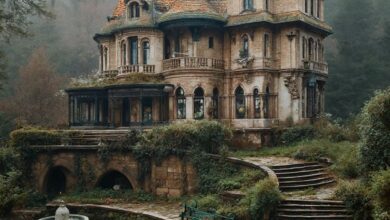
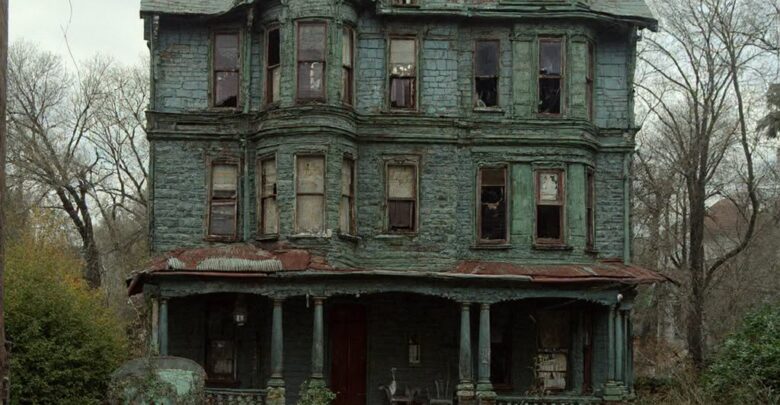
At the end of a quiet street, surrounded by old trees and an overgrown garden, stands a remarkable Victorian-style mansion. Its tall central tower, decorative rooflines, weathered green exterior, and wide front porch give it an appearance that seems almost untouched by time.
Although the building has clearly experienced many years of neglect, traces of its former elegance remain visible.
This is the fictional story of a once-beautiful family residence, the people who called it home, and the circumstances that eventually left it abandoned.
A Beautiful Beginning in the Late 19th Century
Our story begins in 1892, when a successful businessman named Edward Whitmore decided to build an extraordinary residence for his growing family.
Edward had made his fortune through manufacturing and regional trade. After years of living in a modest home, he wanted a property that would represent his achievements and provide a comfortable future for his wife, Margaret, and their three children.
He purchased a large piece of land near the edge of a developing town. The location offered privacy, beautiful scenery, and enough space for an impressive garden.
Construction began during the spring of 1892 and continued for nearly two years.
The completed mansion became one of the most recognizable houses in the neighborhood.
Its architecture reflected the elaborate Victorian designs popular during that period. The exterior featured decorative wooden details, steep rooflines, tall windows, and a distinctive central tower.
Inside, the mansion contained spacious bedrooms, elegant sitting rooms, a formal dining area, and a grand staircase connecting the main floors.
The family also maintained a library filled with books, a music room with a piano, and a large kitchen where household staff prepared meals for visitors.
For many years, the Whitmore residence was associated with celebrations, family gatherings, and community events.
However, like many grand homes built during the nineteenth century, its future would eventually be shaped by changing economic conditions and personal circumstances.
The Family’s Changing Fortunes
By 1910, the Whitmore children had grown older, and the family business was facing increasing competition.
New factories had opened in nearby cities, and changing transportation networks made it difficult for smaller manufacturers to remain profitable.
Edward attempted to modernize his operations, but the improvements required significant investment.
Over the following decade, the family’s financial situation became increasingly uncertain.
Maintaining the mansion was expensive. The property required constant repairs, heating costs were high, and the decorative exterior needed regular attention.
Margaret suggested selling the house and moving into a smaller residence closer to the town center.
Edward resisted the idea.
To him, the mansion represented decades of hard work and personal achievement. He believed that abandoning it would mean giving up everything he had built.
Despite his determination, the family’s circumstances continued to deteriorate.
In 1921, Edward retired from business following a period of poor health. His eldest son moved away to pursue employment, while the other children gradually established lives elsewhere.
The mansion, once filled with activity, became noticeably quieter.
Large rooms remained unused for months, and the household staff was reduced to only a few employees.
The building was slowly becoming too large for the people who remained inside it.
The Final Years of the Whitmore Family
Edward passed away in 1926, leaving Margaret responsible for the property.
Although she had many happy memories of the mansion, maintaining such an enormous building became increasingly difficult.
The roof developed leaks during heavy rain, several windows needed replacement, and the heating system required costly repairs.
Margaret continued living there for another five years.
During this period, neighbors occasionally noticed that the curtains remained closed throughout the day and that only a few rooms were illuminated at night.
These changes were not necessarily mysterious. They reflected the practical difficulties of maintaining a large property with limited resources.
In 1931, Margaret finally decided to leave.
She moved to a smaller home near her daughter, taking only essential furniture, family photographs, and several treasured possessions.
The remaining belongings were placed in storage or sold.
For the first time since its construction, the mansion stood completely empty.
Margaret hoped that another family would purchase the property and restore its former beauty.
Unfortunately, the economic conditions of the period made finding a buyer extremely difficult.
The house remained on the market for years.
A Mansion Slowly Forgotten
Throughout the 1940s and 1950s, ownership of the property changed several times.
Different investors considered converting the building into apartments, a boarding house, or a small private institution.
However, none of these proposals developed into a completed project.
The cost of renovating the mansion continued to increase as its condition deteriorated.
Water entered through damaged roofing materials, causing sections of the wooden interior to weaken.
Paint began peeling from the exterior walls, while moisture affected several rooms.
Without regular heating and ventilation, the building became increasingly vulnerable to seasonal changes.
During the winter, freezing temperatures caused additional damage to exposed surfaces.
In warmer months, vegetation grew around the porch and along the property boundaries.
By the early 1960s, the mansion had lost much of its original appearance.
The once-beautiful garden was overgrown, and the decorative wooden details had begun to decay.
Nevertheless, its impressive architectural silhouette remained visible from the street.
The tall tower and unusual rooflines continued to attract attention from people passing through the neighborhood.
Some residents remembered the building from their childhood, while younger generations knew it only as the old abandoned mansion.
The Stories That Grew Around the House
As the years passed, local residents began sharing stories about the empty building.
Some remembered hearing that the mansion had once hosted elaborate dinner parties.
Others claimed that valuable antiques had been left inside when the final occupants departed.
There were also imaginative stories about hidden rooms, forgotten letters, and unusual noises coming from the upper floors.
These accounts became part of the neighborhood’s folklore.
However, no reliable evidence supported the more dramatic claims.
Old houses often produce unfamiliar sounds because of changing temperatures, wind, loose materials, and structural movement.
A damaged window can create a whistling sound, while wooden floors may creak as humidity changes.
Even so, the mansion’s appearance made it an ideal setting for mysterious stories.
Its dark windows seemed to watch over the street, and the narrow tower stood above the surrounding trees.
On cloudy afternoons, the faded green exterior gave the building a particularly atmospheric appearance.
For local children, walking past the property became an adventure.
For older residents, it was a reminder of how quickly prosperous neighborhoods and family fortunes could change.
An Unexpected Discovery
In the fictional autumn of 1987, a local historical researcher named Daniel Harris became interested in documenting the mansion’s past.
Daniel was studying the architectural development of the town and believed the property represented an important example of late Victorian residential design.
After obtaining permission from the owner, he arranged a supervised inspection with a building specialist.
The interior was in poor condition.
Several rooms contained damaged plaster, fallen ceiling materials, and fragments of old wallpaper.
The grand staircase was still visible, although parts of its railing had become unstable.
In what had once been the library, Daniel discovered a wooden cabinet containing old papers.
Most were ordinary household documents, including maintenance receipts, handwritten shopping lists, and correspondence related to the family’s business.
Among them was a small notebook believed, within this fictional account, to have belonged to Margaret Whitmore.
Its pages described daily life in the mansion, including family celebrations, gardening activities, and the difficulties of maintaining the property during the family’s later years.
One passage was especially memorable:
“A house can be filled with beautiful things, but it is the people inside who make it a home.”
For Daniel, the notebook transformed the abandoned building from an architectural curiosity into a deeply human story.
The mansion was no longer simply an empty structure.
It was a place where people had experienced happiness, disappointment, ambition, and change.
Why Restoration Never Happened
Following Daniel’s research, several community members expressed interest in preserving the mansion.
Its unusual architectural features made it a potential candidate for historical recognition.
However, restoration presented major challenges.
The building required extensive structural evaluation, roof repairs, electrical improvements, and interior reconstruction.
Many original decorative features had also suffered from decades of exposure to moisture.
Specialized craftspeople would have been needed to reproduce damaged architectural details.
The estimated costs exceeded the resources available to local preservation groups.
Potential investors were also concerned about the property’s long-term maintenance requirements.
As a result, restoration discussions continued without producing a practical agreement.
The mansion remained standing, but its condition gradually worsened.
The House in the Modern Era
By the early twenty-first century, the property had become a familiar landmark for people interested in abandoned architecture.
Its appearance offered a striking contrast between former elegance and visible deterioration.
The roof still displayed its elaborate Victorian shapes, although sections showed significant weathering.
The central tower remained the building’s most distinctive feature.
Several windows were broken or boarded, and the front porch showed signs of prolonged neglect.
A metal fence separated the property from the public sidewalk.
Photographers occasionally stopped outside to capture the mansion’s unusual appearance.
For some, the building represented the beauty of historic architecture.
For others, it illustrated the consequences of leaving older properties without regular maintenance.
The house also encouraged conversations about preservation, community history, and the importance of documenting buildings before they disappear.
Despite its deteriorated condition, the mansion continued to attract curiosity.
The Meaning Behind an Abandoned Home
Abandoned houses often inspire stories because they create a visible connection between the past and the present.
A building that once contained everyday routines can eventually become completely silent.
Bedrooms that once belonged to children may stand empty for decades.
Dining rooms that hosted celebrations can slowly lose their original purpose.
Yet these spaces remain important because they reflect the lives of previous generations.
The fictional Whitmore mansion demonstrates how economic changes, family decisions, and maintenance costs can transform a prestigious residence into an abandoned property.
Its story does not require supernatural explanations to be compelling.
The passage of time provides enough mystery on its own.
Every weathered window and damaged wall suggests that something existed there long before the present moment.
A Final Reflection
Today, in our imagined account, the old Victorian mansion still stands behind its iron fence.
Its garden is overgrown, its porch is weathered, and its windows reveal little about the rooms inside.
The building no longer represents the wealth and success its original owner hoped to celebrate.
Instead, it has become a symbol of memory, change, and the fragile nature of human achievements.
Perhaps one day the mansion will be carefully restored and given a new purpose.
Perhaps its history will survive only through photographs, documents, and stories.
Whatever happens, its appearance continues to remind us that every abandoned building was once someone’s home.
And sometimes, the most interesting mystery is not what happened inside an old house, but how a place that once meant everything to someone could eventually be forgotten.