News
The 15-Second Winter Puzzle: Why Your Brain Misses the Obvious Clue in the Snow
The 15-Second Winter Puzzle: Why Your Brain Misses the Obvious Clue in the Snow

Early winter mornings have a special kind of stillness. The house is quiet, the furnace hums down in the basement, and steam curls slowly off a fresh mug of ginger-lemon tea. It is my favorite window of the day to wake up my mind before the avalanche of emails, to-do lists, and household chores begins.
A few days ago, while sitting at the kitchen table waiting for the kettle to whistle, I stumbled across a vintage brain teaser. At first glance, it felt like an ordinary, charming illustration of an afternoon stroll through the countryside. But as I leaned in closer, something felt strangely off balance. This classic visual observation puzzle seems straightforward on the surface, yet it trips up nearly everyone who takes a quick pass at it.
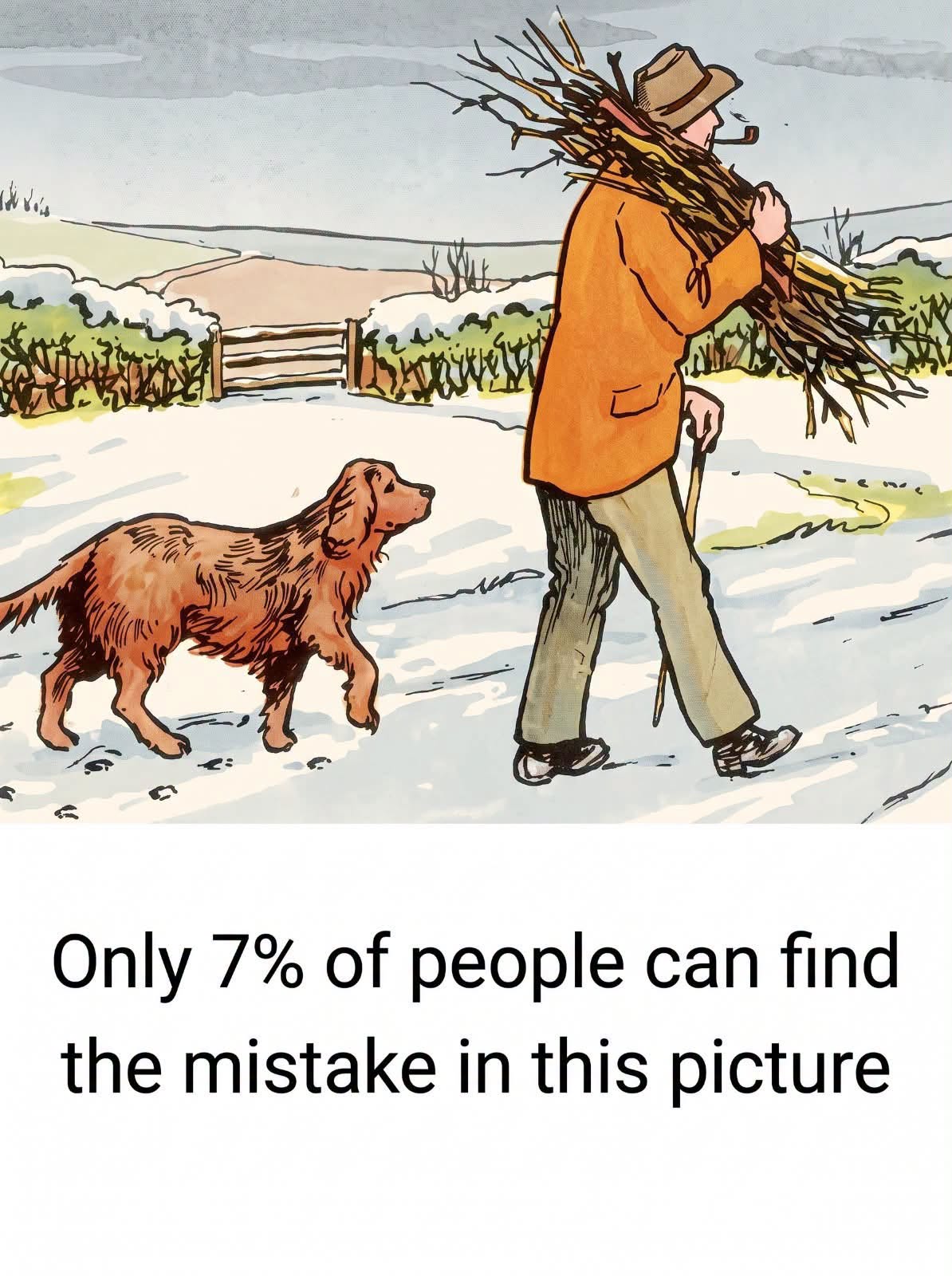
Take a close look at this vintage countryside scene—can your eyes catch the glaring physical discrepancy hidden in the snow within 15 seconds?
Can You Beat the 15-Second Clock?
Set a timer on your phone for fifteen seconds. Look at the illustration above without scrolling down to the explanation. Do not let your gaze drift aimlessly across the page. Give the scene a deliberate, focused sweep.
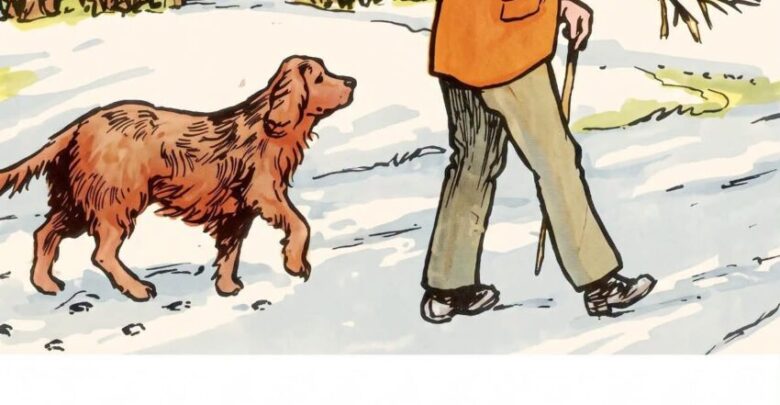
Here is what the image presents. A golden-brown dog trots happily along a country lane blanketed in fresh, powdery snow. Behind the hound walks a man in a rust-colored overcoat, brimmed hat, and trousers. A wooden pipe rests in his mouth, an upturned walking cane swings in his right hand, and a heavy bundle of freshly cut kindling balances across his shoulder. In the backdrop, a rural fence borders a hedgerow beneath a chilly grey sky.
Everything feels cozy, pastoral, and entirely familiar. Nothing jumps out as bizarre or grotesque. There are no flying horses or upside-down trees. Yet there is a glaring physical contradiction sitting directly in front of you. Did you catch it before the seconds ticked away?
The Hidden Flaw Revealed: Look Beneath Their Feet
If you spent your fifteen seconds inspecting the man’s pipe, counting the twigs in his woodpile, or checking whether the gate latch was drawn correctly, you fell straight into the illustrator’s clever trap. The anomaly has nothing to do with what the traveler is wearing or carrying.
The entire mistake is down on the ground. Look closely at the snow behind both figures. The dog has left a clear, staggered trail of paw prints pressed firmly into the white path. But behind the walking man, the snow is smooth, undisturbed, and unbroken. He leaves no boot prints whatsoever.

Quiet morning rituals like studying brain teasers over warm spiced cider help reset our attention spans before the daily digital rush.
Think about the basic laws of physics for a moment. If the snow is damp and soft enough to register the shallow, lightweight stride of a medium-sized dog, a grown adult carrying forty pounds of dry firewood would leave deep, distinct impressions with every step. His cane would also punch small, round dimples into the slush. Instead, he glides through the scene like a winter phantom.
Why the Human Brain Fails a Simple Visual Observation Puzzle
Why do so many of us stare directly at this drawing and fail to spot an impossible feat of levitation? The answer lies in how our visual cortex processes complex scenes under everyday conditions.
Our brains are astonishing pattern-recognition engines designed to conserve mental fuel. When you look at an image, your optic nerves do not scan every square millimeter like a flatbed scanner. Instead, your mind relies on top-down processing. It glances at the man, the bundled twigs, the dog, and the fence, quickly categorizing the scene under an internal file labeled “peaceful winter walk.”
Once your subconscious accepts that the story of the picture makes logical sense, it stops questioning the small structural details. It automatically fills in what should be there.
Psychologists refer to this phenomenon as an error of omission. When an image contains something added that does not belong—such as a microwave sitting in an 18th-century barn—our eyes dart to it almost instantly because it violates our stored mental blueprint. But when an element is simply missing, our internal logic quietly paints it in for us. You expect footsteps in snow, so your brain convinces you that you have already seen them.
Snow Physics and What Real Outdoor Tracking Teaches Us
Anyone who spends time tending a cold-weather garden or walking pets on frost-bitten trails knows that real snow rarely lies. It acts like nature’s own sheet of carbon paper, recording weight, pace, and purpose with startling clarity.
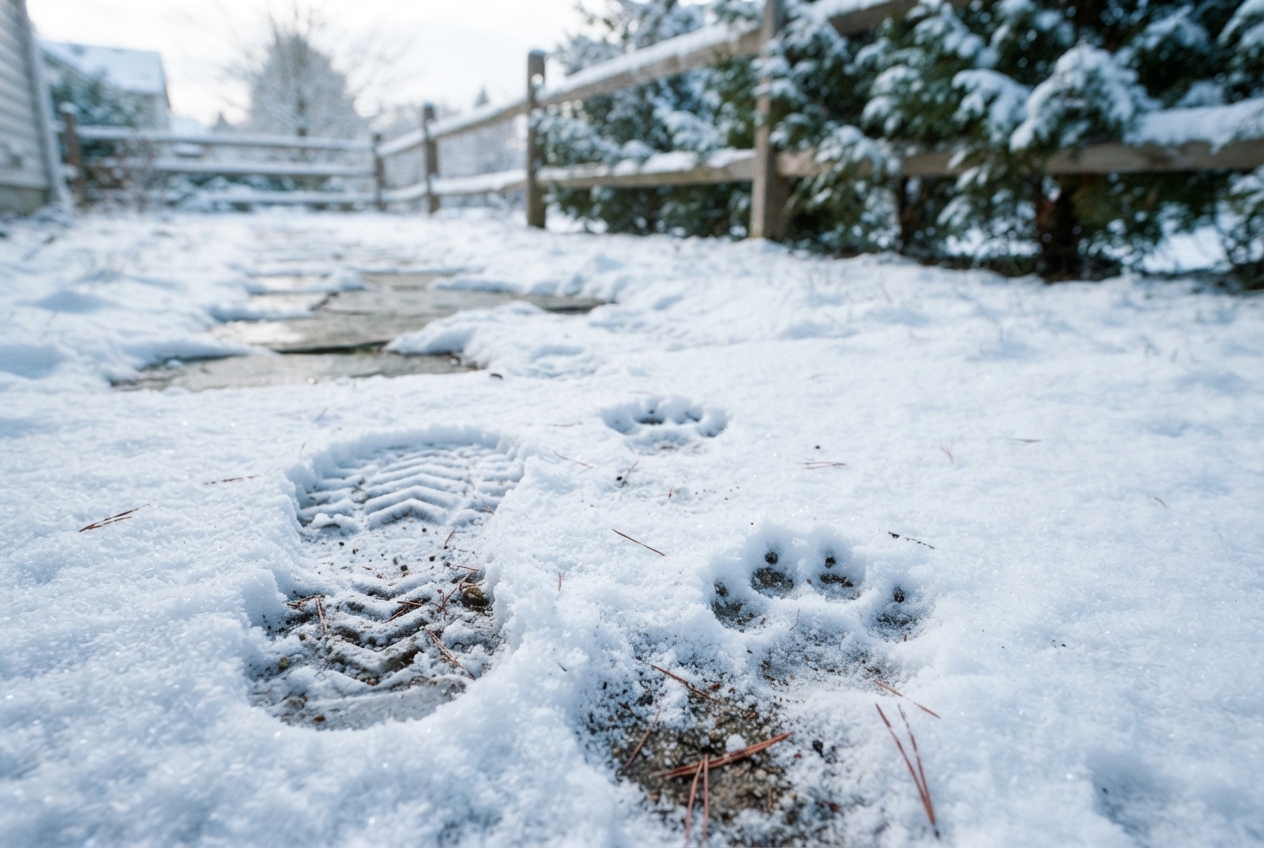
Real winter snow tells a dynamic story through depth, weight distribution, and foot strike patterns that our rushed eyes easily take for granted.
A sixty-pound retriever exerts roughly five to ten pounds of pressure per square inch as it steps. That is plenty of downward force to compress loose powder, push through morning crust, and reveal darker frozen mud underneath. A two-hundred-pound person carrying a load of timber, by contrast, exerts far more concentrated heel-to-toe pressure. In real life, those boot treads would have churned up slush, left sharp heel ridges, and scattered bits of bark.
When we spend our days staring at smooth glass phone screens, we slowly lose touch with these tactile, physical rules of the natural world. Engaging with visual riddles is a great reminder to slow down, question our immediate assumptions, and re-engage with physical reality.
Five Mindful Observation Habits to Practice at Home
Visual awareness is not just a parlor trick for solving drawings in magazines; it is a muscle that makes daily homemaking, cooking, and gardening far richer. When you train your eyes to catch subtle inconsistencies, you notice the early yellowing on houseplant leaves before root rot sets in. You catch the faint hairline crack in a baking dish before it splits in the oven.

Taking five minutes to jot down subtle room details and outdoor shifts exercises the brain and cultivates daily presence.
Here are five simple, screen-free observation exercises you can fold into your home routine:
- The Morning Window Scan: Before picking up your phone, spend two uninterrupted minutes looking through your kitchen or porch window. Try to find three things that changed overnight—a drooping branch, a bird feeder knocked askew, or fresh animal tracks crossing the garden beds.
- The 60-Second Pantry Inventory: Open your spice drawer or pantry shelf. Stare at it for fifteen seconds, close your eyes, and name five jars from left to right. It is a wonderful workout for short-term spatial memory.
- Negative Space Looking: Instead of focusing on objects in your living room, consciously shift your attention to the gaps between them. Notice the shape of the wall framed by your favorite armchair and floor lamp.
- Tactile Texture Checks: While folding laundry or wiping down wooden countertops, mentally describe the physical texture using three distinct words. Engaging touch sharpens your visual discernment.
- The Two-Minute Memory Sketch: Pick an ordinary object on your desk—a brass pair of scissors or a ceramic pitcher. Look at it for thirty seconds, turn around, and draw its outline on scratch paper from memory. You will quickly see which details your mind tends to edit out.
Hosting a Cozy, Screen-Free Puzzle Evening
If you want to bring friends or family together on a chilly weekend evening without defaulting to another streaming movie, paper brain teasers make fantastic entertainment. They break the ice, trigger plenty of spirited debate, and get people laughing at their own perceptual blind spots.
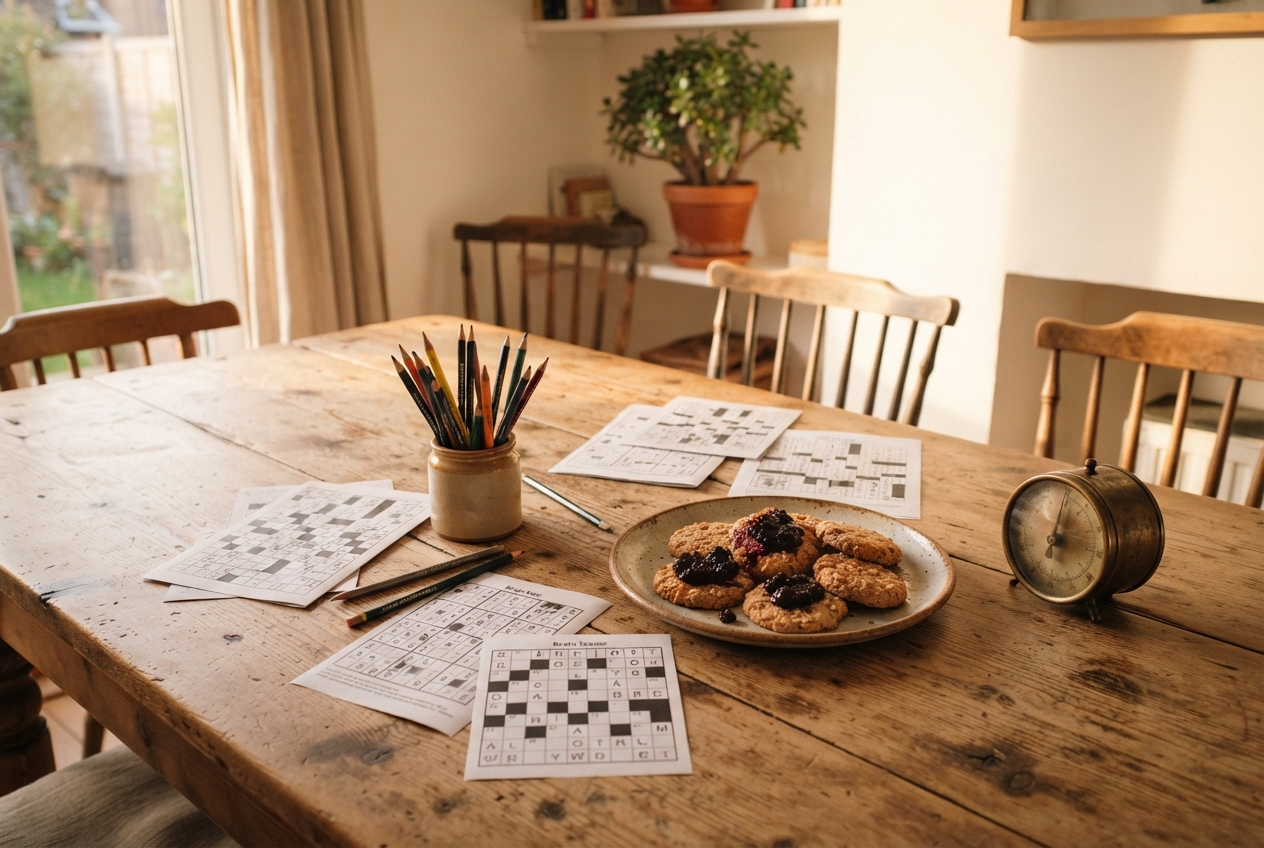
Gathering around printed brain teasers with warm drinks creates relaxed, laughter-filled evenings without the glow of digital screens.
Set a welcoming mood by brewing a large batch of hot spiced apple cider on the stove. Simmer fresh pressed cider with cinnamon sticks, cracked nutmeg, orange slices, and whole allspice berries until the whole house smells like sweet comfort. Set out a wooden tray with porcelain mugs, a pot of local honey, and warm oat biscuits fresh from the oven.
Print four or five vintage visual mysteries on cardstock and scatter them across the dining table alongside a few wooden pencils and an old-fashioned sand timer. Break your guests into pairs and give each team thirty seconds to discover the hidden flaw. You will be amazed at how quickly friendly competition takes over when people realize just how easily their eyes get fooled.
Sharpening Our Sight in a Distracted World
Modern life trains us to skim. We scroll past hundreds of social media posts, skim headlines, and breeze through our daily routines on autopilot. It is no surprise that an unprinted footprint in a cartoon snowdrift slips past our notice.
Taking five quiet minutes at your kitchen counter with a good visual observation puzzle is more than just a playful diversion. It is a gentle nudge to pause, take a deep breath, and look at the world with fresh curiosity. When you step outside into your own yard today, look down at the soil, the porch steps, and the garden path. Notice what is there—and take a second look for what might be missing.