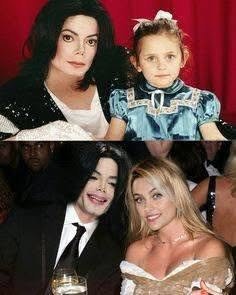
Paris Jackson has spent much of her life being introduced through the name of her father, Michael Jackson. Yet the story she now tells is not simply about growing up inside a famous family. It is about surviving grief, addiction, trauma, and relentless public attention while learning to build an identity that belongs to her. Her openness has made clear that privilege and recognition do not protect a young person from pain.
The years after Michael Jackson’s death were especially difficult. Paris has spoken about developing substance-use problems at a young age and attempting suicide several times by the time she was 15. She was eventually sent to a therapeutic school in Utah, an experience she later described as abusive. She has also discussed diagnoses including post-traumatic stress disorder, major depressive disorder, and obsessive-compulsive disorder.
Rather than hiding those chapters, Paris has addressed them in interviews and social-media posts. In January 2026, she marked six years of sobriety from heroin and alcohol. She stressed that sobriety did not make every problem disappear. Without substances as a survival mechanism, she had to learn new ways to manage ordinary life, uncomfortable emotions, and memories she had previously tried to numb.
The physical consequences have not vanished either. Paris revealed that past drug use left her with a perforated septum that can create a whistling sound when she breathes. By showing the damage publicly, she turned a detail that might have been used to shame her into evidence of how far she had come. Her message was not that recovery is easy, but that a person can acknowledge lasting consequences without surrendering to them.
Creative work became part of that recovery. Paris pursued modeling and acting, signed with IMG Models in 2017, appeared in major fashion publications, and walked in Jean Paul Gaultier’s haute-couture show. Music, however, appears to be the medium through which she feels most directly heard. Her 2020 debut album, Wilted, was written during her first year of sobriety, when she described herself as learning how to live again.
Her musical path deliberately avoids copying her father. Paris has worked on a second album with songwriter and producer Linda Perry and has described discovering her own sound as a beautiful experience. Touring and opening for Queens of the Stone Age placed her before audiences as a working musician rather than only as a member of a celebrated family. That distinction matters to someone whose identity has been interpreted by strangers since childhood.
Paris still has a complicated relationship with the Jackson legacy. She has defended her father against abuse allegations and participated in disputes connected with his estate, while also insisting that she should not be reduced to his daughter. Reports in 2025 said she received a substantial distribution from the estate after raising questions about its management. She has nevertheless said that money and fame are not how she wants her life measured.
When asked how she hoped to be remembered, Paris focused on being of service to the people she loves. That answer fits her willingness to discuss mental health, recovery, and the dangers of institutions that claim to help vulnerable teenagers. She continues therapy and does not present healing as a completed transformation. Her account recognizes that recovery can contain progress, setbacks, grief, work, and joy at the same time.
Her experience also complicates the way audiences talk about celebrity children. Outsiders may assume that wealth removes hardship, but intense visibility can amplify trauma and make ordinary mistakes permanent public records. Paris grew up grieving a parent while millions of people debated that parent’s life. Finding a private sense of self inside that noise required boundaries as well as courage.
The most important part of Paris Jackson’s story is therefore not a dramatic secret allegedly revealed about Michael Jackson. It is the voice she has developed for herself. She is a singer, model, actor, advocate, and person in long-term recovery who refuses to let either a legendary surname or a painful past provide the final definition. Her journey remains unfinished, but it is being written on her own terms.