News
For Twelve Years, I Cared for My Father-in-Law — His Final Gift Taught Me the True Meaning of Family
For Twelve Years, I Cared for My Father-in-Law — His Final Gift Taught Me the True Meaning of Family

For Twelve Years, I Cared for My Father-in-Law — His Final Gift Taught Me the True Meaning of Family
An inspirational fictional story about family, compassion, gratitude, and the lasting value of everyday kindness.
When I married my husband at the age of twenty-six, I imagined that our life together would be filled with familiar milestones. We would build a comfortable home, raise a family, celebrate birthdays, and gradually create traditions of our own.
What I could not have imagined was that one of the most meaningful relationships of my life would be with my father-in-law, Harold.
For twelve years, I helped care for him as he grew older. Our days were rarely extraordinary. Most were filled with simple responsibilities, quiet conversations, warm meals, and small moments of companionship.
Yet those ordinary years would eventually teach me a lesson that no amount of money could ever replace.
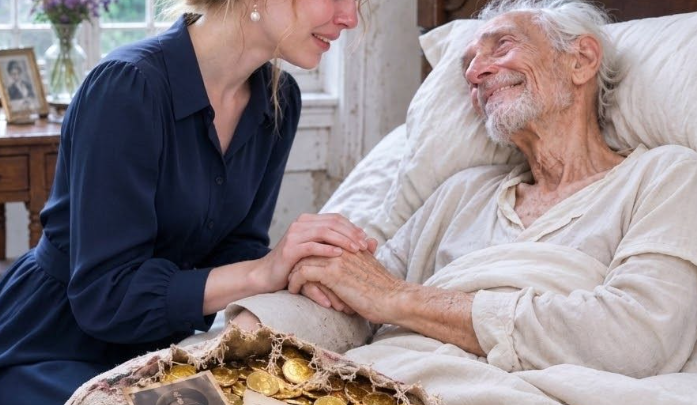
Shortly before Harold passed away, he entrusted me with an old pillow that he had owned for many years. It was faded, worn around the edges, and hardly something anyone would consider valuable.
But inside that pillow was a letter, a collection of family keepsakes, and the carefully arranged details of a gift that would change our family’s future.
More importantly, it contained a message that helped me understand just how deeply our everyday actions can affect the people around us.
Becoming Part of Harold’s Family
My name is Willa, and when I first met Harold, I was immediately struck by his quiet nature.
He was not the kind of person who filled a room with conversation. He preferred listening, observing, and offering a few thoughtful words whenever he felt they were needed.
He had spent most of his adult life farming in rural Ohio, growing corn and soybeans on land that had been part of his family’s history.
His hands carried the marks of decades of honest work. He understood the changing seasons, the importance of patience, and the satisfaction that came from completing a difficult task.
Harold had lost his wife many years before I married his son. After her passing, he had continued working while raising their four children.
Life had not always been easy for him, but he rarely spoke about his difficulties.
Instead, he enjoyed telling stories about his children when they were young. He remembered their first days at school, the afternoons they spent playing outdoors, and the family dinners his wife had prepared.
Whenever he spoke about her, his expression softened.
“She always knew how to make a house feel like home,” he once told me.
I could hear the affection in his voice, even after so many years.
By the time I joined the family, his children had grown up and established lives of their own. They had careers, responsibilities, and families to look after.
Their visits gradually became less frequent.
Harold understood that adulthood brought responsibilities. He never wanted his children to feel obligated to spend every weekend with him.
Nevertheless, I sometimes noticed how much he enjoyed receiving a telephone call or an unexpected visit.
Even a short conversation seemed to brighten his entire afternoon.
A New Chapter in Our Home
As Harold grew older, maintaining his house and managing everyday responsibilities became increasingly difficult.
My husband and I discussed the situation and agreed that it would be better for Harold to live with us.
We prepared a comfortable bedroom for him, arranged his favorite furniture, and made sure he had a pleasant place to sit near the window.
He brought only a modest collection of belongings.
There were several framed photographs, some books, a wooden clock, a few carefully folded sweaters, and an old pillow that had followed him from his previous home.
At first, I wondered why he insisted on keeping that particular pillow.
It had clearly seen better days.
The fabric was faded, and several sections had already been repaired.
But Harold seemed attached to it, so I never questioned his decision.
During those first months, we established a comfortable routine.
He enjoyed oatmeal in the mornings, usually accompanied by a cup of tea. On pleasant afternoons, he liked sitting on the porch and watching the neighborhood.
Sometimes our young son joined him.
They would spend time talking about birds, trees, and the weather.
Harold seemed particularly happy when explaining something to his grandson.
He taught him how to recognize different plants and why farmers paid such close attention to the sky.
Watching them together reminded me that older generations carry knowledge that cannot always be found in books.
My son learned more than facts about farming. He learned patience, curiosity, and the importance of listening.
The Everyday Responsibilities of Caregiving
My husband frequently worked extended shifts in Chicago.
His job provided stability for our family, but it also meant that he spent considerable time away from home.
As a result, much of Harold’s daily care became my responsibility.
I prepared his meals, helped him organize his belongings, assisted him whenever he needed support, and accompanied him to appointments.
Some mornings were peaceful.
Others required more patience and energy than I had expected.
There were days when I barely finished one household responsibility before another needed my attention.
Between looking after our son, managing the house, and helping Harold, I occasionally found myself wishing for a quiet afternoon.
I loved my family, but love did not automatically make every responsibility easy.
Caregiving required organization, understanding, and the willingness to adjust plans when circumstances changed.
Over time, I learned that caring for another person also meant recognizing my own limits.
Whenever possible, my husband helped during his time at home.
We arranged our schedules around Harold’s appointments and discussed how to make daily life easier for everyone.
Harold appreciated these efforts.
He often apologized when he needed assistance, even though there was no reason for him to feel embarrassed.
One morning, after I brought his breakfast, he looked at me and smiled.
“You already have enough to do, Willa.”
I placed the bowl on the table beside him.
“Families help each other, Dad.”
He nodded thoughtfully.
It was a simple exchange, but it reflected the relationship we had gradually built.
He was not merely someone living in our home.
He had become an important part of our daily lives.
The Moments Nobody Else Saw
When Harold’s other children visited, they usually found him sitting comfortably in his favorite chair.
They brought fruit, shared family updates, and asked how he was feeling.
Their visits were often brief, but Harold enjoyed them.
I understood that everyone had responsibilities.
Still, there were moments when I wished they could see more of what everyday life involved.
They did not always witness the evenings when Harold needed extra companionship.
They did not see how disappointed he sometimes felt when he could no longer complete tasks that had once been effortless.
For a man who had spent decades working independently, accepting help represented a significant change.
I tried to preserve his sense of independence whenever possible.
If he wanted to choose his own clothes, I gave him time.
If he wanted to help fold a towel, I welcomed his contribution.
If he had an opinion about dinner, I listened.
These small decisions mattered.
Harold had spent much of his life making choices for himself and supporting others. Growing older did not change the importance of treating him with dignity.
Some evenings, we looked through old photographs together.
He explained who the people were, where the pictures had been taken, and what he remembered about each occasion.
There was one photograph of Harold and his wife standing beside their farmhouse shortly after their wedding.
He looked proud, and she was smiling brightly.
“We didn’t have much back then,” he told me. “But we had plans.”
He described how they had gradually built their life through determination, cooperation, and careful spending.
Listening to those memories helped me understand the man behind the daily responsibilities.
Harold was not defined by his age or his need for assistance.
He was a father, a husband, a grandfather, a farmer, and a person with an entire lifetime of experiences.
A Conversation I Never Forgot
One evening, after a particularly busy day, I sat beside Harold’s bed.
The house had finally become quiet.
Our son was asleep, the dishes had been washed, and the following day’s responsibilities were already running through my mind.
Harold noticed that I seemed unusually tired.
“Everything alright, Willa?” he asked.
I considered giving him my usual reassuring answer.
Instead, I decided to be honest.
“Sometimes I feel overwhelmed, Dad. I want to take good care of everyone, but there are days when I don’t know how to manage everything.”
Harold listened without interrupting.
Then he reached for my hand.
“You’ve done more for me than you probably realize.”
I looked at him.
He continued speaking slowly.
“Being kind doesn’t mean you never get tired. It means you remember that people matter, even when life is difficult.”
His words brought me unexpected comfort.
I had been measuring my efforts against an impossible standard, believing that I needed to complete every responsibility without ever feeling exhausted.
Harold reminded me that kindness did not require perfection.
It required sincerity.
That conversation stayed with me throughout the years that followed.
Whenever I felt frustrated by an unexpected change of plans or disappointed by something I had forgotten to do, I remembered his gentle advice.
Our relationship became even stronger after that evening.
Harold felt comfortable sharing his thoughts with me, and I learned that I could express my own feelings without worrying that he would misunderstand.
We became family in a deeper sense than I had expected when I first married his son.
Finding Happiness in Ordinary Days
Years passed, and our household developed its own traditions.
On Sunday mornings, we often prepared breakfast together.
Harold enjoyed sitting at the kitchen table while my son helped arrange plates.
Whenever my husband was home, he made pancakes.
There was nothing particularly elaborate about these mornings, but they became some of my favorite memories.
During spring, Harold liked watching the trees outside begin to blossom.
In summer, we opened the windows and enjoyed the warm afternoon air.
Autumn reminded him of his farming years.
He would talk about harvesting crops, preparing equipment, and watching the fields change color.
Winter was his favorite season for storytelling.
With a warm blanket across his knees, he described holidays from decades earlier, when his children were small and the farmhouse was filled with activity.
My son listened with fascination.
“Did you really have to wake up before the sun?” he once asked.
Harold laughed.
“Most days. The farm didn’t have an alarm clock, but it certainly had a schedule.”
These conversations gave our home a sense of continuity.
They connected our son’s childhood with a world that had existed long before he was born.
Harold’s presence taught us that a meaningful life is not necessarily measured by expensive possessions or remarkable achievements.
Sometimes its greatest treasures are the stories that one generation passes to the next.
Twelve Years of Shared Memories
By the time twelve years had passed, it was difficult to imagine our home without Harold.
His favorite chair had become a permanent part of the living room.
His photographs decorated the hallway.
His familiar wooden clock marked the passing hours.
Even his old pillow had become an ordinary sight.
We had celebrated birthdays, holidays, school achievements, and family milestones together.
Our son had grown from a small child into a thoughtful young person who enjoyed hearing his grandfather’s opinions.
My husband had continued working long hours, hoping that one day he could find a position closer to home.
And I had gradually learned that caregiving, while demanding, could also create remarkable moments of connection.
I never expected Harold to leave me anything valuable.
As far as I knew, he lived on modest resources and had few possessions beyond his personal belongings.
He had never discussed retirement savings with me.
He rarely talked about money at all.
Whenever I purchased something for him, he expressed appreciation, whether it was a new sweater or his favorite biscuits.
I assumed that most of his financial resources had been used during his working years and while raising his family.
That assumption never affected the way I treated him.
His value to me had nothing to do with what he owned.
Looking after him was not an investment from which I expected a return.
It was simply part of the relationship we had built.
Harold’s Final Winter
The final winter of Harold’s life was quieter than the previous ones.
He spent more time resting and had less energy for long conversations.
We adjusted our routines to help him remain comfortable.
Some afternoons, I read aloud from the newspaper.
Other days, we simply sat together near the window, watching the snow settle across the neighborhood.
Harold seemed to appreciate the quiet companionship.
One afternoon, he asked me to help him sit more comfortably in bed.
I adjusted the familiar old pillow behind him.
He placed his hand against its fabric and slowly traced one of the seams.
For several moments, he appeared to be remembering something.
“Would you like me to repair that pillow?” I asked.
He smiled.
“Not just yet.”
I thought his response was unusual, but I respected his wishes.
Perhaps the pillow reminded him of his previous home or of the years he had shared with his wife.
I had learned that objects could carry emotional significance that was not immediately obvious to others.
A simple photograph, an old watch, or a familiar piece of fabric could represent an entire chapter of someone’s life.
Harold was particularly attached to belongings associated with his family.
I assumed the pillow was another example of that attachment.
Later, I brought him a warm drink and asked whether he needed anything else.
He thanked me and said he was comfortable.
Before I left the room, he looked at the pillow once more.
At the time, I had no idea why.
A Gift I Promised to Keep
That evening, the house was especially peaceful.
Our son had gone to bed, and the winter wind moved softly outside.
I sat beside Harold, keeping him company.
After a while, he opened his eyes and looked toward me.
“Willa?”
“I’m here, Dad.”
He gently pointed toward the old pillow.
“I want you to keep that.”
I looked at it, then back at him.
“Of course. I’ll take good care of it.”
“For you,” he repeated.
His expression was calm, and his words carried a sense of purpose.
I assured him that I understood.
Although I did not know why the pillow mattered so much, I recognized that keeping it was important to him.
Sometimes the most meaningful promises are also the simplest.
I remained beside him, holding his hand and remembering the many years we had shared.
Harold passed away peacefully.
In the days that followed, I found myself noticing how many parts of our routine had been connected to him.
There was no longer a reason to prepare his usual breakfast.
His favorite chair remained empty.
The hallway seemed unusually quiet.
I missed our conversations and the gentle humor he occasionally shared.
Twelve years of ordinary companionship had created a place in my heart that could not easily be filled.
The Family Comes Together
After Harold’s passing, his children gathered at our house.
We spent time sharing memories, organizing photographs, and discussing the belongings he had left behind.
Everyone remembered different parts of his life.
One of his children recalled learning to ride a bicycle near the farmhouse.
Another remembered helping him prepare the garden.
My husband talked about the lessons Harold had taught him regarding responsibility and hard work.
Listening to these stories reminded me that Harold had played a different role in each of our lives.
Eventually, we began sorting through his personal belongings.
Some items were set aside for family members.
Others were prepared for donation.
When one of my brothers-in-law picked up the old pillow, he examined its faded fabric.
“I suppose this can go,” he said.
I immediately reached for it.
“I’d like to keep that one.”
He appeared surprised.
“Are you sure? We could easily replace it with a new pillow.”
I smiled gently.
“It isn’t about replacing it. Harold asked me to keep this particular one.”
My sister-in-law looked at the worn seams.
She could not understand why I wanted something so ordinary.
But I did not feel the need to explain further.
Harold had entrusted it to me.
That was reason enough.
I carried the pillow into another room and placed it somewhere safe.
The Discovery Inside the Pillow
Later that evening, after everyone had left, I returned to the kitchen.
The house was quiet again.
I placed Harold’s pillow on the table beneath the warm light.
Examining it carefully, I noticed a section where the seam had started to separate.
Several feathers were visible through the opening.
I decided that I would repair the fabric before storing it.
As I gently moved the stuffing away from the damaged edge, my fingers touched something unexpected.
It felt firm and distinctly different from the soft feathers surrounding it.
Curious, I carefully widened the existing opening and reached inside.
After a moment, I withdrew a small canvas pouch.
It was secured with a piece of faded twine.
I placed it on the table and studied it.
The pouch appeared to have been there for a long time.
I carefully loosened the knot.
Inside was a folded linen handkerchief embroidered with the initials of Harold’s late wife.
Wrapped within the handkerchief were three objects.
There was a brass key, a small jewelry box, and a sealed envelope.
My name was written on the front of the envelope in Harold’s familiar handwriting.
For several moments, I simply looked at the collection of objects.
I remembered his insistence that I keep the pillow.
Suddenly, his request made sense.
He had wanted me to discover something that he had deliberately placed inside it.
A Collection of Family Treasures
I opened the jewelry box first.
Inside rested a simple gold wedding band and a delicate silver locket.
The jewelry was modest but beautifully preserved.
When I opened the locket, I discovered a small black-and-white photograph of Harold and his wife on their wedding day.
They looked young, hopeful, and deeply happy.
I recognized the photograph from the stories Harold had shared.
He had spoken about their early years together many times.
He remembered the farmhouse, their first furniture, and the excitement of preparing for their growing family.
The jewelry represented far more than its material value.
It carried memories of a marriage that had lasted through decades of change.
I held the locket carefully, imagining how often Harold might have looked at the photograph after his wife passed away.
His decision to entrust it to me was deeply meaningful.
Then I turned my attention to the envelope.
I opened it carefully and unfolded several sheets of handwritten paper.
Alongside the letter were property documents and an old credit union passbook.
I recognized Harold’s handwriting immediately.
Every sentence had been written slowly and deliberately.
He had clearly devoted considerable time to preparing the message.
I took a moment before beginning to read.
Harold’s Letter
Dear Willa,
If you are reading this letter, then you have discovered the little collection I placed inside my old pillow.
I hoped you would keep it, although I understood that it probably did not look particularly valuable.
For many years, people assumed that I had very little because I lived simply.
In some ways, they were right. I never needed expensive clothes, impressive furniture, or possessions that required constant attention.
The things I valued most were always connected to my family.
After my wife passed away, I sold a portion of our farmland to settle the expenses that had accumulated.
I placed the remaining money in a local credit union and continued saving whenever I could.
My original intention was to divide everything among my four children.
I loved them then, and I will always love them.
However, as time passed, I began thinking differently about the purpose of what I had saved.
I wanted my remaining resources to support the people who had become such an important part of my later years.
That is why I have made arrangements for you.
You welcomed me into your home when maintaining my own household became difficult.
You made room for me in your family’s daily routine.
You listened to stories that I had probably told more than once.
You made sure I was included in birthdays, holidays, and ordinary Sunday breakfasts.
Most importantly, you never treated me as though my best years were the only years that mattered.
You respected me as a person, even when I needed help with things I had once done independently.
I noticed these kindnesses, Willa.
I noticed them every day.
Please never believe that an ordinary act of compassion is insignificant simply because nobody else sees it.
The documents I have included explain the arrangements I made concerning my remaining property.
The key belongs to a safe deposit box at the bank, where additional paperwork has been placed.
I have tried to organize everything carefully so that you will have the information needed to understand my wishes.
Please seek the appropriate professional guidance when completing the arrangements.
I hope this gift will make life a little easier for you, your husband, and my grandson.
Perhaps it will allow my son to spend more time at home.
Perhaps it will help my grandson pursue his education.
And perhaps it will give you the opportunity to enjoy some of the quiet afternoons you have spent making sure everyone else was comfortable.
The locket belonged to my wife.
She believed that the strength of a family could be found in its everyday kindness.
I saw that same quality in you.
Thank you for welcoming me into your home.
Thank you for listening.
Thank you for making these twelve years meaningful.
With love and gratitude,
Dad.
Understanding Harold’s Intentions
After reading the letter, I remained at the kitchen table for a long time.
I read several passages again.
Harold had remembered moments that I had almost forgotten.
The breakfasts, the conversations, the photographs, and the quiet afternoons had all meant something to him.
I had often considered those moments ordinary.
He had considered them precious.
The documents revealed that Harold still owned a parcel of timberland in Ohio.
The property had attracted interest because of potential infrastructure development in the surrounding area.
He had also maintained savings through his local credit union.
For years, he had lived modestly while quietly preserving these resources.
I was surprised by his careful planning.
But what affected me most was the thoughtfulness behind his decision.
Harold had spent time considering how his savings could improve our family’s future.
He understood the challenges created by my husband’s demanding work schedule.
He knew how important education was to our son.
And he recognized that the responsibilities of caregiving had sometimes left me with little time for myself.
His final gift reflected an understanding of our family that had developed through years of shared experiences.
I carefully returned the jewelry to its box and placed the documents somewhere secure.
Then I called my husband and told him about the letter.
He listened quietly.
When I finished, he said something that brought tears to my eyes.
“Dad always knew more about what was happening around him than people realized.”
I agreed.
His quiet nature had never meant that he was unaware.
He had been observing, appreciating, and remembering.
Visiting the Bank Together
When my husband returned home, we arranged a visit to the bank.
We brought Harold’s documents and explained the situation.
Rather than assuming that the letter alone established ownership, we asked the appropriate professionals to review the paperwork and explain the necessary steps.
Harold had made formal arrangements before his passing.
His documents provided information about the accounts, the property, and his intended beneficiaries.
There were administrative matters to complete, and we understood that these processes required patience.
Over the following weeks, we worked through the necessary arrangements with professional guidance.
It became clear that Harold had managed his resources with remarkable care.
The combination of his savings and the value of his remaining property represented a meaningful financial foundation for our family.
It was enough to help reduce our household obligations and support our son’s future education.
My husband and I discussed how we could use the gift responsibly.
We did not want to make rushed decisions.
Harold had spent decades building his savings through discipline and patience.
We wanted our choices to reflect those same values.
We agreed that our priorities would be financial stability, education, and spending more meaningful time together as a family.
The inheritance was not an invitation to abandon the principles we had lived by.
It was an opportunity to strengthen them.
A Difficult Family Conversation
Eventually, Harold’s other children learned about the arrangements he had made.
Some were surprised.
Others felt disappointed that his decisions differed from what they had expected.
Their reactions were understandable in the sense that family inheritances can bring complicated emotions to the surface.
We had all lost someone important.
Everyone was processing that loss differently.
When they contacted me, I explained that Harold had prepared his instructions personally and that we were following the appropriate procedures.
I did not want the conversation to become a competition over who had cared more or who deserved recognition.
Harold’s life was too meaningful to reduce to a disagreement about property.
I shared the relevant parts of his letter, hoping that his own words would help them understand his intentions.
His decision did not erase the years he had spent raising his children.
It did not change the memories they had shared or the love he felt for them.
It simply reflected the choices he had made concerning his remaining belongings.
Not everyone accepted those explanations immediately.
Some conversations required time and patience.
My husband and I agreed that we would communicate respectfully while honoring Harold’s properly documented wishes.
We also recognized that forgiveness, understanding, and family relationships could not be forced.
Sometimes people need time to work through disappointment.
Our responsibility was to behave with integrity and avoid making an already emotional situation more difficult.
Building a Future with Gratitude
Over the following months, our household gradually entered a new chapter.
My husband began exploring employment opportunities that would allow him to spend more time closer to home.
We reviewed our financial responsibilities and considered how Harold’s gift could provide lasting stability.
We also established plans to support our son’s education.
These decisions were not particularly exciting in the way people often imagine an unexpected inheritance might be.
There were no extravagant purchases or dramatic lifestyle changes.
Instead, there was something we had wanted for many years: greater flexibility.
My husband could consider opportunities based not only on income but also on how they would affect our family’s time together.
Our son could think about his future with fewer financial worries.
And I could occasionally enjoy an afternoon without feeling that every moment needed to be devoted to completing another responsibility.
Harold had understood the value of time.
After spending much of his life working, he knew that financial security was most meaningful when it allowed people to be present for those they loved.
His gift encouraged us to reconsider what we wanted our lives to look like.
We wanted more family dinners.
More weekend walks.
More conversations without checking the clock.
More opportunities to participate in our son’s important milestones.
These were the things that had always mattered to us.
Harold had simply given us additional freedom to pursue them.
Repairing the Old Pillow
Several months after Harold’s passing, I finally repaired the pillow he had entrusted to me.
I selected a piece of fabric that complemented its original colors and carefully stitched the damaged section.
I could have replaced the entire cover, but I wanted to preserve as much of the original material as possible.
Its faded appearance was part of its history.
When the repair was complete, I placed it on Harold’s favorite armchair in our living room.
Visitors occasionally noticed it.
To them, it was simply an old pillow that had been neatly repaired.
To me, it represented twelve years of memories.
Whenever I looked at it, I remembered the conversations Harold and I had shared.
I remembered his appreciation for a warm meal, the joy he found in spending time with his grandson, and the thoughtful advice he offered whenever I felt uncertain.
I also remembered the evening when he asked me to keep it.
His words had been simple.
Yet behind those words was a carefully considered expression of gratitude.
The pillow reminded me that meaningful gifts do not always arrive in impressive packaging.
Sometimes they are hidden inside ordinary objects that have quietly accompanied someone through years of life.
Its true value was not determined by what had once been concealed inside it.
Its true value came from the relationship it represented.
What Caregiving Taught Me About Family
Looking back, I recognize that the twelve years Harold spent in our home changed me in ways I could not have anticipated.
Before he arrived, I thought of caregiving primarily as a collection of practical responsibilities.
I imagined meals, appointments, household tasks, and assistance with daily activities.
Those responsibilities were certainly part of the experience.
But caregiving also taught me about communication.
It taught me to notice when someone wanted companionship without knowing how to ask for it.
It taught me that listening could sometimes be more helpful than offering advice.
It taught me to recognize the importance of independence, dignity, and personal choice.
Most of all, it taught me that people continue to need meaningful relationships throughout every stage of life.
Harold wanted to be included.
He wanted to hear about our son’s school activities.
He wanted to share his memories.
He wanted to know that his experiences still mattered.
None of these things required expensive gifts.
They required attention.
I also learned that caregivers need support of their own.
Looking after another person should not mean ignoring one’s own well-being.
Families can strengthen their relationships by sharing responsibilities, communicating openly, and recognizing when additional assistance is necessary.
Kindness becomes more sustainable when everyone understands that care is a shared responsibility rather than an obligation placed entirely on one person.
That is a lesson I hope our son carries into his own adult life.
The Importance of Appreciation
One of the most meaningful aspects of Harold’s letter was how specifically he expressed his gratitude.
He did not simply thank me for looking after him.
He remembered individual moments.
He remembered being included in family celebrations.
He remembered conversations near the window.
He remembered the occasions when I listened to his stories.
His words reminded me how powerful it can be to acknowledge the efforts of another person.
Many people provide support to their families without receiving much recognition.
Parents organize complicated schedules.
Grandparents offer companionship and guidance.
Partners support each other’s responsibilities.
Friends make time for conversations during difficult periods.
These contributions can gradually become so familiar that others stop noticing them.
Yet familiarity does not make them unimportant.
Harold had noticed the ordinary things.
His letter encouraged me to do the same.
I began making a greater effort to thank my husband for the responsibilities he carried.
I acknowledged our son’s willingness to help around the house.
I expressed appreciation whenever someone offered a thoughtful gesture.
Gratitude does not need to wait for a special occasion.
A sincere thank-you, offered at the right moment, can strengthen relationships in ways that are difficult to measure.
Harold’s letter demonstrated that the kindness people receive may remain with them long after the person offering it has forgotten the occasion.
A Legacy Greater Than an Inheritance
People sometimes think of a legacy as something financial.
Property, savings, jewelry, and valuable belongings can certainly form part of what one generation leaves to another.
But Harold’s most important legacy was not written in his property documents.
It was present in the values he demonstrated throughout his life.
He believed in working carefully, spending thoughtfully, respecting others, and remembering the people who had supported him.
He understood that family relationships require attention.
He knew that appreciation should be expressed rather than merely assumed.
His choices encouraged us to consider what we would eventually leave behind for our own son.
Of course, we wanted to provide him with educational opportunities and financial stability whenever possible.
But we also wanted him to remember a home where people treated one another with respect.
We wanted him to understand that success did not require overlooking the needs of others.
We wanted him to recognize the importance of helping someone simply because that person mattered.
Harold had taught him many things during their afternoons together.
Some lessons had involved farming and the changing seasons.
Others had involved patience and responsibility.
The most important lessons, however, had come from watching how people cared for one another inside our home.
Those were the lessons that would remain long after the financial details of Harold’s inheritance had become distant memories.
Remembering Harold Today
Today, Harold’s old pillow remains on the armchair in our living room.
The silver locket is carefully stored alongside other treasured family belongings.
Occasionally, I open it and look at the photograph of Harold and his wife.
I think about the young couple who once stood outside their farmhouse, filled with hope for the future.
They could not have known everything that life would bring.
They could not have predicted all the challenges, accomplishments, changes, and relationships that would become part of their story.
Yet the family they created continued to grow across generations.
Harold’s grandson now carries memories of those quiet conversations and afternoons spent learning about the natural world.
My husband remembers the determination his father demonstrated throughout his working years.
And I remember the gentle man who became an unexpected source of wisdom and companionship.
There are still moments when I wish I could sit beside him and share another conversation.
I would tell him how much his grandson has grown.
I would explain how thoughtfully we have approached the opportunities his gift provided.
And I would thank him for trusting me with such a meaningful part of his family’s history.
Although those conversations are no longer possible, his influence remains present in the choices we make.
He continues to be part of our family through the memories, traditions, and values he shared.
Final Thoughts: The Quiet Power of Kindness
When Harold first moved into our home, I did not know that the following twelve years would become one of the most meaningful chapters of my life.
I was simply trying to help someone who needed support.
There were beautiful days and demanding ones.
There were moments of laughter, moments of reflection, and occasions when I wondered whether I was managing everything as well as I could.
Through all of them, our relationship gradually grew stronger.
Harold’s final gift was a reminder that the things we do for other people can have a lasting significance, even when those actions seem ordinary at the time.
His letter showed me that kindness does not disappear simply because it happens quietly.
It becomes part of someone’s memories.
It shapes relationships.
It helps create a sense of belonging.
The financial opportunities Harold left us were deeply appreciated.
But the greatest gift was knowing that he had felt welcomed, respected, and loved during the years we shared.
His old pillow will always remind me of that.
Not because it once contained a key, important documents, or valuable family keepsakes, but because it represented the trust that had developed between us.
Family is not measured only by shared names or biological connections.
It is strengthened through presence, understanding, patience, and the willingness to support one another.
Sometimes the most meaningful contributions are the ones nobody publicly celebrates.
A warm breakfast.
A thoughtful conversation.
A shared afternoon.
A familiar hand held with affection.
These simple moments can become the foundation of a legacy that lasts for generations.
And that is the lesson Harold left behind.
Author’s Note: This is an adapted fictional story created for inspirational and entertainment purposes. It explores the themes of caregiving, family relationships, gratitude, and compassion. It is not a verified account of an actual inheritance or a substitute for professional legal or financial advice.
The End.