News
My Husband Left Me With 3000 After 37 Years of Marriage
My Husband Left Me With 3000 After 37 Years of Marriage

Fictional Story — This emotional family drama is a work of fiction. The characters, financial events, and conversations are invented for storytelling purposes and are not presented as a verified real-life account.
At 65, I Went to Withdraw $3,000 — What the Bank Manager Revealed Changed Everything
For five years, I kept a bank card in a small wooden box beside my bed.
My ex-husband had given it to me on the day our divorce became final. He told me there was $3,000 in the account, enough to help me start over after thirty-seven years of marriage.
I never used it.
Not when the Minnesota winters became so cold that I slept beneath two blankets. Not when I struggled to pay rent. Not even when I went to bed hungry because my cleaning jobs hadn’t brought in enough money.
To me, that bank card represented the price Gregory had placed on everything we had shared.
Then, at sixty-five, my health began to deteriorate.
One morning, I nearly collapsed outside my apartment. A doctor told me I needed further treatment and couldn’t continue ignoring the warning signs.
For the first time in five years, I opened the wooden box.
The card was still there.
I decided that staying alive mattered more than my pride.
The next morning, I walked into the bank and asked to withdraw the money.
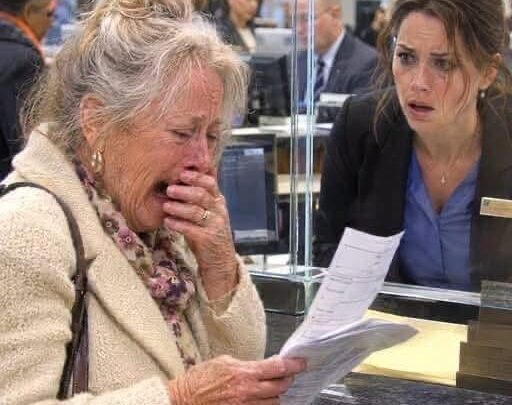
The young teller examined my account, typed something into her computer, and suddenly stopped smiling.
“Ma’am,” she said, “this account doesn’t contain $3,000.”
I felt my stomach tighten.
Had Gregory lied to me one final time?
Then the bank manager appeared carrying a sealed envelope with my full name written across the front.
And what I learned that morning changed the way I understood my marriage, my divorce, and the future I thought I had lost.
Thirty-Seven Years of Marriage Ended With a Bank Card
My name is Eleanor Bennett, and for most of my adult life, I believed marriage meant building something together.
Gregory and I married when I was twenty-three.
We were young, hopeful, and convinced that love would carry us through whatever difficulties life brought.
In the beginning, we lived in a small apartment in Minneapolis. Gregory worked long hours developing his business, while I worked part-time and managed our household.
Eventually, we bought a house and raised two children.
There were birthdays, school performances, family vacations, and countless evenings spent around the dinner table.
Our marriage wasn’t perfect.
We argued about money, work, and the responsibilities that came with raising a family.
But I believed we were committed to one another.
As Gregory’s business grew, he took greater control of our finances. He handled investments, business accounts, and most major financial decisions.
I trusted him.
When he said money was tight, I adjusted our household budget.
When he needed more time at work, I took care of things at home.
I gave up opportunities because I believed we were working toward a shared future.
I never imagined that, after nearly four decades, Gregory would decide our future no longer included me.
The Day Gregory Walked Away
Our divorce was finalized on a cold morning in Minneapolis.
I remember standing outside the courthouse, holding a folder filled with documents I barely understood.
Gregory approached me with the same serious expression he wore during business meetings.
He took a bank card from his wallet.
“Keep this,” he said.
I stared at it.
“What is it?”
“There’s $3,000 in the account. It should help you get by.”
For a moment, I thought he was joking.
Thirty-seven years.
Two children.
A house we had worked so hard to maintain.
And he was speaking as though our marriage could be reduced to a small amount of money.
“Is that all I receive?” I asked.
Gregory looked uncomfortable.
“The financial arrangements have been handled, Eleanor.”
“What about the house?”
“Everything is in the agreement.”
I wanted to ask more questions, but he was already turning away.
“Gregory, please.”
He stopped.
For one brief moment, I hoped he might say something kind.
Instead, he repeated, “You’ll be fine.”
Then he walked down the courthouse hallway without looking back.
I stood there holding the card, wondering how someone who had known me for thirty-seven years could suddenly speak to me like a stranger.
Starting Over With Almost Nothing
After the divorce, I moved into a small rented room.
The ceiling had water stains, the windows rattled in winter, and the heating system worked inconsistently.
It was nothing like the home where I had raised my children.
I found cleaning jobs wherever I could.
Some days, I scrubbed kitchen floors.
Other days, I cleaned bathrooms, washed windows, or organized storage rooms for people who barely noticed I was there.
The work was tiring.
My knees hurt, my hands became rough, and I often returned home too exhausted to prepare a proper meal.
But I was determined to support myself.
My children offered assistance whenever they could.
Both had families and financial obligations of their own.
I accepted occasional groceries and help with transportation, but I rarely told them how difficult things had become.
“Mom, are you managing okay?” my daughter would ask.
“Of course, sweetheart,” I always replied.
I wanted her to believe I was strong.
But there were nights when I sat beside the window, watching snow fall over the street, wondering whether I had made a terrible mistake by keeping my struggles to myself.
Why I Refused to Touch the $3,000
The bank card remained inside a wooden box that had once belonged to my grandmother.
I kept it with a few old photographs, a wedding invitation, and a faded birthday card from my children.
Every time I saw the bank card, I remembered Gregory’s expression outside the courthouse.
He hadn’t asked whether I was frightened.
He hadn’t asked where I would live.
He simply handed me the card and walked away.
I came to see the $3,000 as an insult.
Using it felt like accepting his judgment that our marriage had been worth so little.
Looking back, I can recognize that my pride wasn’t always helping me.
Money I was legally entitled to use did not define my value.
But at the time, the card carried too many painful memories.
So I left it untouched.
When grocery prices rose, I worked extra hours.
When my winter coat needed replacing, I repaired the lining.
And when the rent increased, I moved into a smaller room.
I told myself I was proving something.
In reality, I was exhausting myself trying to win an argument Gregory wasn’t even there to hear.
The Winter That Changed My Health
The fifth winter after our divorce was especially difficult.
I had been feeling tired for months.
At first, I blamed my age and the physical demands of cleaning houses.
Then I began experiencing dizziness.
Sometimes I needed to sit down halfway through a job.
Other days, I found myself short of breath after climbing the stairs to my room.
I ignored the symptoms because I was worried about medical expenses.
One morning, I nearly collapsed outside my front door.
A neighbor saw me struggling and helped me into a chair.
She insisted that I visit a clinic.
The doctor examined me, reviewed my test results, and explained that I needed treatment and follow-up care.
I listened quietly while she discussed the next steps.
The most important thing she told me was that waiting could make my situation more difficult.
That evening, I sat at my kitchen table and considered what I could afford.
I had already delayed too many things.
My health could not become another sacrifice.
For the first time, I thought seriously about Gregory’s bank card.
The Morning I Finally Entered the Bank
The next morning, I put on my best cardigan and a pair of carefully repaired shoes.
I placed the bank card in my handbag and took the bus downtown.
The bank was bright, warm, and quiet.
Customers stood in line checking their phones.
Employees greeted familiar visitors.
I felt uncomfortable, as though everyone could tell I didn’t belong there.
When my turn came, I approached a young teller.
“Good morning,” she said. “How can I help you?”
I placed the card on the counter.
“I’d like to withdraw the money from this account.”
She asked for identification and began checking the records.
For several moments, everything seemed ordinary.
Then her expression changed.
She typed again.
Looked at another screen.
And finally turned toward me.
“Ma’am, were you expecting a particular amount?”
“Three thousand dollars,” I replied.
She paused.
“This account doesn’t contain $3,000.”
My chest tightened.
“Is there less?”
She hesitated.
“Could you wait here for just a moment?”
Before I could answer, she picked up the telephone.
I watched her speak quietly to someone.
Then she asked me to take a seat.
The Manager With the Sealed Envelope
A few minutes later, a woman in a navy suit approached me.
She introduced herself as Margaret Lawson, the branch manager.
“Mrs. Bennett?”
“Yes.”
“Would you mind coming into my office? There’s some information connected to this account that I’d like to explain privately.”
I followed her down a short hallway.
Her office had a wooden desk, two comfortable chairs, and a window overlooking the street.
Margaret offered me water.
Then she placed a sealed envelope on the desk.
My name was written across the front.
Eleanor Bennett.
I recognized the handwriting immediately.
Gregory.
“Where did you get that?” I asked.
Margaret explained that the envelope had been placed in the bank’s records under special instructions.
Before opening it, she needed to complete some identity and authorization checks.
I nodded, too nervous to speak.
Once the verification was finished, she explained that the account had a history I might not know about.
I gripped the edge of my chair.
“How much is in it?”
Margaret looked at me gently.
“Mrs. Bennett, the available balance is a little over $214,000.”
For a moment, I thought I had misheard her.
The Money I Never Knew Existed
“Two hundred and fourteen thousand?” I repeated.
Margaret nodded.
I stared at her.
“That can’t be right.”
She turned the computer screen slightly so I could see the account summary.
The balance was real within the fictional events of this story.
I sat back in my chair.
I had spent years struggling to afford groceries.
I had worn the same coat through five winters.
I had delayed medical treatment.
And all that time, an account connected to my name had contained far more money than I imagined.
“How did this happen?” I whispered.
Margaret explained that the account had been funded through a financial arrangement established during the divorce process.
The original balance had been considerably larger than $3,000.
Additional funds had been deposited over time, and the account had earned interest.
The details were recorded in documents prepared with the assistance of legal and financial professionals.
I could hardly understand what she was saying.
“Gregory told me there was only $3,000.”
Margaret glanced toward the sealed envelope.
“I believe this letter may explain some of your questions.”
My hands trembled as I picked it up.
The Letter Gregory Had Left Behind
I carefully opened the envelope.
Inside were several pages written in Gregory’s familiar handwriting.
The first line made my eyes fill with tears.
“Eleanor, if you’re reading this, then you’ve finally decided to use the account.”
I stopped.
For five years, I had imagined that Gregory never thought about me.
Yet he had written a letter knowing there was a possibility I would return to the bank someday.
I continued reading.
He explained that the account had been arranged as part of the financial settlement.
He claimed that he had wanted to provide more than the amount he mentioned outside the courthouse.
But he knew I was angry and would likely reject anything that appeared to come directly from him.
His words made me uncomfortable.
He had known how deeply he had hurt me.
Yet instead of having an honest conversation, he had created another secret.
The letter described how funds had been placed into the account and how additional transfers would follow under the agreed arrangement.
Then I reached a paragraph that made me stop.
“I never told you the full truth about why our marriage ended.”
I sat motionless.
After five years, there was still something I didn’t know.
The Secret Behind Our Divorce
Gregory’s letter explained that his business had experienced serious financial difficulties during the final years of our marriage.
He had made risky decisions, borrowed heavily, and hidden the extent of the problems from me.
He was afraid of losing the company and ashamed that the future he had promised me was becoming uncertain.
Instead of discussing the problems openly, he became distant.
He worked longer hours.
He avoided conversations about retirement.
And eventually, he told me he wanted a divorce.
He admitted that part of his reasoning had been selfish.
He wanted to separate his life from the consequences of decisions he was unwilling to confront honestly.
The letter did not excuse his behavior.
He acknowledged that he had treated me coldly and allowed me to believe our marriage meant very little to him.
He also explained that, as the business situation improved, he arranged additional financial provisions intended for me.
Some of the money represented assets or payments connected to the divorce agreement.
Other transfers reflected later arrangements he had documented.
I looked up at Margaret.
“Why didn’t anyone tell me?”
She explained that the bank could confirm the account records but could not fully answer questions about the divorce itself.
For those, I would need to review the legal documents.
The Difference Between Money and an Apology
I sat in Margaret’s office reading Gregory’s letter for nearly half an hour.
I wanted to feel relieved.
Part of me was.
The account balance meant I could seek medical care without the same immediate financial fear.
It meant I could replace my worn coat.
I might even be able to move into a safer, more comfortable apartment.
But another part of me was angry.
Gregory had allowed me to struggle while important information remained unclear.
He had given me a card and said there was $3,000 on it.
He had not explained the account.
He had not made sure I understood my rights.
He had left me believing I had been given almost nothing.
His letter expressed regret, but regret could not return the five years I had spent worrying about every dollar.
I folded the pages carefully.
Then I asked Margaret a question.
“Does he think this money makes everything right?”
She shook her head.
“I can’t speak for him, Mrs. Bennett.”
I looked down at the letter.
Neither could I.
All I knew was that financial security and emotional forgiveness were two different things.
What the Bank Manager Helped Me Understand
Margaret explained the practical steps I could take next.
She encouraged me to review the account information carefully and obtain copies of the relevant records.
Because the arrangement involved divorce-related documents and later transfers, she recommended consulting an independent attorney or qualified financial professional.
I appreciated her caution.
The account balance was substantial, but I didn’t want to make decisions based on excitement or confusion.
For decades, I had allowed Gregory to handle complicated financial matters.
I no longer wanted to rely on someone else’s summary of my own situation.
I asked about access to the funds.
After confirming the account’s terms and my authority, Margaret explained which amounts were available for withdrawal and which records I should review.
I decided not to take everything out at once.
Instead, I arranged access to enough money to address my immediate needs while keeping the remainder safely in the account.
For the first time in years, I felt as though I had choices.
Not because money could solve every problem.
But because I no longer had to make every decision out of desperation.
The First Person I Called
When I left the bank, I stood outside for several minutes.
The sky was gray, and people hurried past me along the sidewalk.
Everything looked exactly as it had that morning.
But I felt different.
I took out my phone and called my daughter, Claire.
“Mom?” she answered. “Are you okay?”
I had spent years pretending that I was managing perfectly.
This time, I told her the truth.
“I need to talk to you.”
Her voice became concerned.
“What’s happened?”
I explained that I had gone to the bank and discovered an account balance I hadn’t known about.
At first, she thought I was confused.
Then I described the manager, the letter, and the documents.
Claire became quiet.
“Mom, why didn’t you tell us how hard things had gotten?”
I looked toward the street.
“Because I didn’t want to worry you.”
“You’re our mother. We want to know when you need help.”
Her words brought tears to my eyes.
For five years, I had believed hiding my struggles was an act of love.
Now I understood that I had also denied my children the opportunity to support me.
A Conversation With My Children
That weekend, Claire and my son, Daniel, came to visit.
We sat around my small kitchen table.
I showed them the account statements and Gregory’s letter.
Daniel read the first page twice.
Then he looked at me.
“Dad should have explained this.”
Claire agreed.
I told them I was planning to consult an attorney and review the financial settlement documents.
I also told them something I had never admitted before.
There had been nights when I couldn’t afford a proper dinner.
Claire began crying.
Daniel looked devastated.
“Mom, you could have called us.”
“I know,” I whispered.
“I thought I was protecting you.”
Claire reached across the table.
“We have our own responsibilities, but that doesn’t mean you’re a burden.”
For the first time, I allowed myself to believe her.
We talked about my health, my living situation, and the decisions I needed to make.
They didn’t tell me what to do.
They simply listened.
And after years of feeling alone, that meant more than I could explain.
The Legal Documents I Finally Read
A few days later, I met with an independent attorney.
I brought every document I had kept from the divorce, along with the bank records and Gregory’s letter.
The attorney carefully reviewed the settlement agreement.
She explained that the legal arrangement involved more than the simple $3,000 amount Gregory had mentioned outside the courthouse.
Some provisions had been described in documents I had signed, but I had not fully understood them at the time.
Other questions required further clarification.
The attorney helped me request appropriate records and understand the difference between the account’s current balance, the original settlement provisions, and later deposits.
It was a difficult experience.
I felt embarrassed that I had allowed so much to remain unclear.
But the attorney treated me with respect.
She reminded me that complex financial documents can be difficult to understand, especially during an emotionally painful divorce.
I left her office with a clearer picture of my circumstances.
More importantly, I had begun taking responsibility for understanding my own finances.
I no longer wanted shame or fear to keep me from asking questions.
The Call I Never Expected From Gregory
Two weeks after the bank visit, Gregory called.
I hadn’t spoken with him in years.
When I saw his name on the screen, I almost ignored it.
Then I answered.
“Hello, Eleanor.”
His voice sounded older.
“Gregory.”
There was a long silence.
“I heard you went to the bank.”
“Yes.”
“Did you read the letter?”
“I did.”
He sighed.
“I hoped it would explain things.”
I looked around my apartment.
“It explained some things. It didn’t explain why you let me believe I had almost nothing.”
Gregory remained quiet.
Then he said, “I handled everything badly.”
I waited.
He continued.
“I was ashamed of what had happened with the business. And I was afraid you’d refuse the money if I tried to explain it.”
“Then you should have told me anyway.”
“I know.”
His voice trembled.
I realized that for decades, I had always tried to make difficult conversations easier for him.
This time, I didn’t.
I let the silence remain.
What I Told the Man Who Had Left Me
Gregory eventually asked whether we could meet.
I considered his request carefully.
Part of me wanted to confront him about every lonely winter and every unpaid bill.
Another part simply wanted to move forward.
I agreed to one conversation in a public café.
When I arrived, Gregory was already sitting at a table.
He looked older than I remembered.
His hair had turned gray, and his posture seemed less confident.
For a moment, I thought about the young man I had married.
Then I remembered the way he had walked away outside the courthouse.
We spoke quietly.
He apologized for the financial confusion and the way he had treated me.
He said he had been unable to face his own failures.
I listened.
Then I told him what I needed him to understand.
“You didn’t just end our marriage, Gregory. You left me believing that everything I gave to our life had no value.”
His eyes filled with tears.
“I never believed that.”
“Then you should have acted differently.”
He nodded.
I didn’t offer forgiveness.
I didn’t promise friendship.
I simply told him I was going to take care of myself.
For once, that was enough.
A New Beginning at Sixty-Five
With my immediate financial situation more stable, I began making changes.
The first was medical care.
I scheduled the treatment and follow-up appointments I had been postponing.
I followed the plan my healthcare team recommended and began paying closer attention to my health.
The next change was my living situation.
I found a small, comfortable apartment with reliable heating, large windows, and an elevator.
The first night I slept there, I lay beneath a soft blanket and listened to the quiet hum of the heating system.
I didn’t have to worry about icy air entering through a broken window.
I didn’t have to wonder whether I could afford the next month’s rent.
For the first time in years, I slept through the night.
I also reduced the number of physically demanding cleaning jobs I accepted.
I didn’t stop working entirely.
I liked feeling useful, and some of my longtime clients had become friends.
But I no longer needed to push myself beyond my limits simply to survive.
The changes were modest.
Yet each one made my life feel more manageable.
Learning to Make Decisions for Myself
For most of my marriage, I had relied on Gregory to make major financial decisions.
After the divorce, I had responded by avoiding financial questions altogether.
Now I wanted a healthier approach.
With professional guidance, I reviewed my expenses, savings, and future needs.
I learned to read account statements carefully.
I asked questions when something was unclear.
I kept records and made a plan for maintaining an emergency fund.
I also learned that financial security wasn’t the same as having a large balance displayed on a screen.
It involved understanding what I owned, what I owed, and how to make decisions that supported my needs.
I didn’t become a financial expert overnight.
There were terms I had to ask someone to explain more than once.
But I no longer felt ashamed.
Every new skill gave me a little more confidence.
And that confidence became one of the most valuable things I gained during the months after visiting the bank.
The Small Things I Had Forgotten to Enjoy
When life becomes a struggle to pay for essentials, ordinary pleasures can start to feel unnecessary.
For years, I had stopped buying books.
I avoided meeting friends for coffee because I worried about the cost.
I rarely visited museums or attended community events.
There was always another bill to consider.
As my circumstances improved, I began allowing myself small pleasures again.
I joined a library reading group.
I bought a warm winter coat that actually fit.
I visited a botanical garden with Claire.
One afternoon, Daniel took me to lunch at a little restaurant overlooking the Mississippi River.
We sat by the window and talked about his children.
Nothing extraordinary happened.
There were no dramatic revelations.
No unexpected envelopes.
Just a peaceful afternoon with my son.
And I realized how much I had missed ordinary happiness.
For years, survival had consumed all my energy.
Now I was beginning to live again.
The Wooden Box I Finally Put Away
One evening, while organizing my new apartment, I found the wooden box that had held Gregory’s bank card.
I opened it slowly.
Inside were old photographs, a birthday card, and the faded wedding invitation I had saved for decades.
The bank card was no longer there.
I had transferred it to a folder with my financial documents.
For years, the box had reminded me of humiliation.
Now it felt different.
It held memories of a life that had shaped me, even though that life had ended.
I looked at a photograph from our wedding.
Gregory and I were smiling beneath a summer sky.
I didn’t hate the young woman in the picture for trusting him.
She had loved sincerely.
She had built a family.
She had done the best she could with what she understood at the time.
I placed the photograph back inside.
Then I closed the lid.
I wasn’t erasing thirty-seven years of my life.
I was simply choosing not to let those years determine everything that came afterward.
The Birthday That Felt Like a Second Chance
On my sixty-sixth birthday, Claire and Daniel organized a small family dinner.
My grandchildren decorated the table with paper flowers.
There was a chocolate cake with uneven frosting and far too many candles.
One of my grandsons asked whether I wanted help blowing them out.
I laughed.
“At my age, I might need the entire family.”
Everyone joined in.
Later, Claire handed me a small wrapped gift.
Inside was a framed photograph of all of us together.
On the back, she had written:
“We’re grateful you’re here, Mom.”
I read those words several times.
For years, I had measured my value by what I could provide for other people.
Meals.
Clean clothes.
A comfortable home.
Emotional support.
Now I understood that my family valued me for something simpler.
They loved me because I was part of their lives.
I didn’t have to earn my place at the table.
And I didn’t have to pretend I was never struggling.
That birthday was the first in many years when I felt genuinely hopeful about growing older.
What the Bank Account Really Changed
When people hear that I discovered a large amount of money in an account I believed contained $3,000, they often imagine the happiest moment was seeing the balance.
But the truth is more complicated.
The money helped me obtain medical care and improve my living situation.
It gave me room to make decisions without constant financial panic.
Those changes mattered enormously.
But the deeper transformation came from the things I learned afterward.
I learned to ask questions.
I learned to accept help.
I learned that pride could become harmful when it prevented me from caring for myself.
And I learned that the end of a marriage did not mean the end of my value as a person.
Gregory’s letter gave me additional information about our past.
It did not erase the pain.
The bank account offered financial security.
It did not automatically provide emotional healing.
Both truths could exist at the same time.
Why I No Longer Measure My Life by Gregory’s Decisions
I spent five years believing the divorce had reduced my life to something small.
I thought about the house I had lost and the future we had planned.
I wondered whether the sacrifices I made during our marriage had been meaningless.
Now I see things differently.
Thirty-seven years of marriage were not worthless simply because the relationship ended painfully.
I raised two children I am proud of.
I cared for people I loved.
I contributed to our household and supported our family’s goals.
Those experiences remain part of my life.
Gregory’s choices changed my circumstances, but they did not erase everything I had done.
At sixty-five, I began learning how to build a future that belonged to me.
It was not the future I had imagined at twenty-three.
But it was still worth living.
And that realization gave me more peace than any apology ever could.
Frequently Asked Questions About Eleanor’s Story
Is this a true story?
No. This is a fictional emotional drama written for entertainment. Eleanor, Gregory, and the events described are imaginary.
Why did Eleanor refuse to use the bank card?
She associated the card with the humiliation and sadness of her divorce. Over time, refusing the money became a way of expressing her anger, even though the decision caused her additional hardship.
How much money did Eleanor discover?
In this fictional story, the bank manager reveals an account balance of a little over $214,000. The amount is part of the invented narrative, not a documented banking case.
Why did Gregory hide the information?
The story portrays Gregory as ashamed of financial problems and unwilling to communicate honestly. His later letter explains his reasoning, but it does not excuse the harm caused by his choices.
Did Eleanor forgive Gregory?
The story does not present a complete reconciliation. Eleanor listens to his explanation but chooses to focus on her own health, independence, and future.
What is the main message of the story?
The central themes are self-worth, financial independence, accepting support, and the possibility of beginning again later in life.
Final Thoughts: It Was Never Only About the Money
When I entered that bank at sixty-five, I expected to withdraw $3,000.
I believed I was finally surrendering my pride because I needed medical care.
Instead, I discovered an account that had been waiting for me and a letter containing explanations I had never received.
The experience changed my circumstances.
But it also forced me to confront the way I had spent five years punishing myself for a marriage that had already ended.
I had believed refusing the money would preserve my dignity.
Eventually, I understood that dignity wasn’t measured by how much hardship I could endure.
It was reflected in how I treated myself and the people I loved.
I could accept help without losing my independence.
I could use financial resources without agreeing with Gregory’s actions.
And I could acknowledge the pain of my past without allowing it to control my future.
Today, the wooden box still sits on a shelf in my apartment.
But I no longer open it with anger.
It reminds me of a woman who survived years of uncertainty and eventually found the courage to ask for what she needed.
At sixty-five, I went to the bank believing I had reached the end of my strength. Instead, I discovered that my next chapter was only beginning.