News
Shark in Beach Photo? The Viral Family Snap Everyone Is Zooming Into
Shark in Beach Photo? The Viral Family Snap Everyone Is Zooming Into

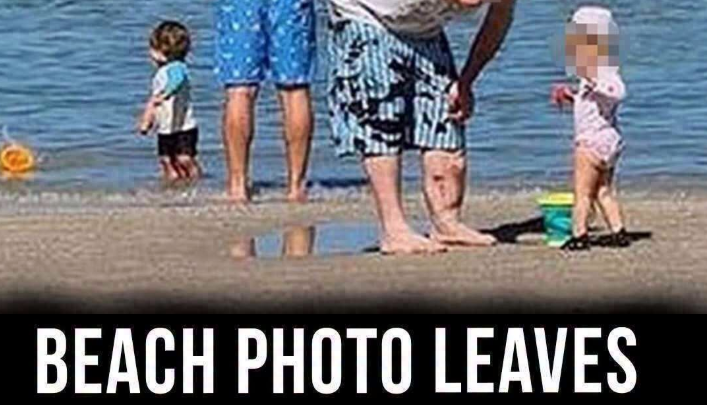
Shark in Beach Photo? The Mystery Behind a Family’s Carrum Beach Picture
A family photograph usually captures something simple: a smile, a special occasion, or a moment that parents hope to remember years later. Occasionally, however, a detail in the background becomes more talked about than the people standing in front of the camera.
That is what happened with a photograph taken at Carrum Beach in Melbourne, Australia. A father and his young daughter appeared in an ordinary seaside scene, but a dark shape in the water drew attention after the family reviewed their pictures.
Was it a shark’s fin? A ray’s wingtip? Or something that looked more dramatic in a still photograph than it had in real life?
The shark in beach photo mystery became an online talking point because the image offered just enough detail to raise questions, while leaving too much hidden to provide a definite answer.
The story is intriguing, but its most interesting feature is the uncertainty. Understanding what was reported, what an expert suggested, and what the photograph cannot establish makes the picture more revealing than any frightening headline.
The Family Photograph That Sparked the Debate
Contemporary reporting places the story in January 2023. According to a 7NEWS article published on January 11 that year, the photograph showed a father and toddler during the child’s first beach visit at Carrum Beach.
The family noticed the unusual object after returning home and looking through their pictures. The image was subsequently shared by the SES Chelsea Unit, bringing the background detail to a much wider audience.
What makes this setup so compelling is its familiarity. Parents regularly take several pictures during a child’s first experience somewhere new. Their attention naturally rests on the child’s face, expression, and movements.
Something at the edge of the scene can easily escape notice until later. Once discovered, that detail changes the way everyone looks at the photograph. A happy family moment becomes a visual puzzle.
Why a Nearby Shark Report Added to the Concern
The picture did not circulate without context. SES Chelsea had also discussed a reported shark sighting offshore between Bonbeach and Chelsea. The unit raised the question of whether the object in the family’s photograph could be connected, while acknowledging uncertainty about its identity.
That connection made the image more attention-grabbing, but it did not establish what appeared in the photograph.
A reported sighting and an unidentified shape are two pieces of information that might be related. They are not automatically evidence of the same animal.
This distinction matters whenever a photograph spreads alongside a warning. The warning can be legitimate while the image remains inconclusive. Treating one as proof of the other creates a stronger story than the available evidence supports.
An Older Story That Continues to Resurface
One detail readers should keep in mind is the age of the incident. This photograph was already receiving news coverage in early 2023.
When an older image appears again on social media, the accompanying caption may omit the original date. Readers can then mistake a historical discussion for a new incident or assume that an old warning describes present conditions.
That is particularly relevant to beach safety. A photograph from a previous summer cannot tell someone whether a beach is open, patrolled, or subject to a warning today.
The image remains interesting as a wildlife mystery. For decisions about entering the water, however, current local information is what matters.
Checking the publication date is therefore more than a fact-checking habit. It helps separate an engaging story from information that might influence someone’s immediate plans.
What the Photograph Actually Shows
The central feature is a dark, pointed shape at the water’s surface. That is the observation on which the entire debate rests.
Calling it a “shark fin” adds an identification that the photograph itself does not conclusively provide. Calling it a “fin-like shape” leaves room for other explanations.
The distinction may sound small, but it changes the meaning of the story. A fin-like object invites investigation. A confirmed shark fin would require enough visible evidence to identify it reliably.
Several useful details are missing from a single frame. Viewers cannot see a complete body, follow the object’s movement, or watch how it changes position over several seconds.
Without that context, confidence should remain limited—even when the outline seems familiar.
The Expert Explanation: A Southern Eagle Ray
Later coverage reported that Professor Charlie Huveneers, a shark researcher associated with the Southern Shark Ecology Group, considered a southern eagle ray a more likely explanation.
According to that coverage, he thought the shape was more consistent with a ray’s wing than a shark’s dorsal fin. He also acknowledged that the quality of the photograph prevented certainty.
That qualification is essential. The assessment offered an informed interpretation, rather than a definitive identification.
An expert can judge whether a visible shape fits an animal’s anatomy, but expertise cannot reveal details that the camera failed to capture. A cautious conclusion is therefore a useful result, even when it does not completely solve the mystery.
The ray explanation gives viewers another way to understand the image without pretending that every question has been answered.
Why a Ray Could Produce a Fin-Like Shape
A ray’s broad pectoral fins create the wing-like outline that makes these animals so recognizable underwater. Seen only in part, however, that outline can be much harder to identify.
The Fishes of Australia species account describes the southern eagle ray as having a disc wider than it is long, with angular tips. It also records the species in habitats including sandflats, shallow seagrass bays, estuaries, and harbours. Those characteristics help explain why a pointed part of a ray could be considered a plausible interpretation in a shallow coastal scene.
The challenge is that the photograph shows an isolated shape rather than the animal’s full form. An angular tip at the surface can look very different from the broad silhouette visible to someone watching from above.
That possibility supports the expert’s explanation without proving that a ray was present.
Why Shallow Water Does Not Solve the Mystery
Much of the online discussion focused on how shallow the water appeared. Some viewers felt that a shark large enough to produce the visible shape would have been obvious.
It is a reasonable question, but depth is difficult to establish from a distant photograph.
The water around a person in the foreground does not necessarily indicate the depth farther behind them. The seabed may slope, and the photograph may compress distances in ways that are difficult to judge.
The apparent size of the object is uncertain for similar reasons. Without knowing its distance from the camera, viewers cannot reliably calculate its dimensions.
Shallow water may influence an interpretation, but it does not provide a complete identification. It is one piece of context among several missing pieces.
Why the Lack of a Visible Reaction Proves Little
Another common argument asks why nobody in the photograph appears alarmed.
That observation has limits. A still image cannot show what every person noticed before or after the shutter was pressed. People may be looking elsewhere, concentrating on their children, or paying attention to someone taking a photograph.
Equally, a calm scene should not be transformed into a dangerous encounter simply because an unusual object appears in the background.
The sensible conclusion is narrow: the photograph does not show an obvious reaction to the object. It does not explain why.
Reading fear, danger, or awareness into someone’s posture can turn an ambiguous picture into a story the image never actually recorded.
Why Zooming In Does Not Always Reveal the Answer
Enlarging a photograph feels like a natural next step. Sometimes it helps, especially when the original image contains detail that is difficult to see at a smaller size.
However, making an image bigger does not automatically add information.
If an object occupies only a small part of the original picture, enlarging it may simply produce larger blurred edges. Sharpening can make those edges more pronounced without establishing what caused them.
This is especially relevant when viewers circulate screenshots of screenshots. Each version may contain less useful detail than the original file.
A dramatic close-up can therefore feel more convincing while providing no stronger basis for identification. The best question is whether the enlarged image reveals a genuine feature, rather than merely a clearer-looking outline.
How Captions Influence What People See
Imagine seeing the photograph under two different captions.
One says that a family noticed an unusual animal in the background. The other announces that a shark was swimming behind a toddler.
The second caption gives the viewer a specific answer before they have examined the picture. Attention shifts immediately toward finding the expected fin.
This does not mean everyone who sees a shark is being careless. A dark triangle on the water naturally resembles a familiar image of a shark’s dorsal fin.
It does mean that wording matters. A headline can direct attention helpfully, or it can turn an interpretation into an apparent fact.
For readers, briefly separating the image from its caption is a useful exercise. Describe what is visible first, then consider possible explanations.
What Would Make an Identification More Reliable?
Additional evidence could help resolve a photograph like this.
A sequence of original pictures might show the object from slightly different positions. Video could reveal movement, changes in shape, or another part of the animal’s body. A clear observation recorded at the same location and time could provide further context.
The quality of those materials would matter. Several blurry images do not necessarily establish more than one blurry image, particularly if they all show the same limited feature.
Independent observations would also need to match the relevant time and place. A shark sighting elsewhere along the coast cannot fill every gap in an unrelated photograph.
These are the kinds of details that distinguish a plausible explanation from a reliable identification.
Practical Beach Safety Matters More Than an Online Verdict
The photograph does not need a definitive answer to support a sensible reminder about beach awareness.
For Victorian beaches, the Victorian Fisheries Authority recommends checking current shark-hazard alerts through VicEmergency and choosing patrolled beaches where swimmers can stay between the flags. It also advises against swimming alone and encourages caution about conditions such as poor visibility and recent heavy rainfall.
These actions are more useful than trying to settle a years-old argument in a comments section.
Conditions can change, and a photograph captures only one moment. Before entering the water, beachgoers should look for current signage, check available local information, and follow instructions from the people responsible for beach safety.
Keeping Children Close During a Beach Visit
For families, the most practical lesson is to give the beach visit itself full attention.
Taking photographs is part of enjoying a memorable day, but it helps to decide which adult is actively watching a young child while another handles the camera.
Royal Life Saving Australia advises that children under five should remain within arm’s reach of an adult around water. For young children, supervision needs to be active and continuous rather than an occasional glance from farther away.
The point is to make room for both enjoyment and attention. A child’s first experience of the sea can be exciting, unfamiliar, and distracting for everyone involved.
A few pictures can preserve the occasion, while attentive supervision remains the priority throughout it.
Respecting Rays and Other Marine Wildlife
The possibility of a ray offers a different perspective on the scene. An unfamiliar animal near shore can be interesting without being evidence of an impending attack.
Nevertheless, describing a ray as completely harmless would go too far. The southern eagle ray has a venomous spine on its tail, according to Fishes of Australia. Wildlife should be given space rather than approached, touched, or followed for a closer photograph.
Respectful observation benefits both people and animals. It also allows an encounter to remain what it may have been in the first place: an ordinary moment in a shared coastal environment.
The animal, if that is what the picture shows, was part of that environment before anyone began debating its identity.
The Most Accurate Answer to the Shark in Beach Photo Mystery
The Carrum Beach photograph remains an intriguing picture with an uncertain background detail.
The material discussed here does not establish a confirmed shark encounter. An expert assessment reported in later coverage favored a southern eagle ray, while recognizing the limits of the image.
That leaves a less dramatic but more useful conclusion: there is a plausible explanation, and there is still uncertainty.
The photograph’s appeal does not depend on claiming that a family narrowly escaped danger. It already contains a memorable family occasion, an unexpected detail, and a question that encourages people to look more carefully.
For anyone encountering the image again, the best approach is to check its date, distinguish observation from interpretation, and resist treating a confident caption as proof.
A dark shape can raise a reasonable question. Answering that question takes more than a striking outline.