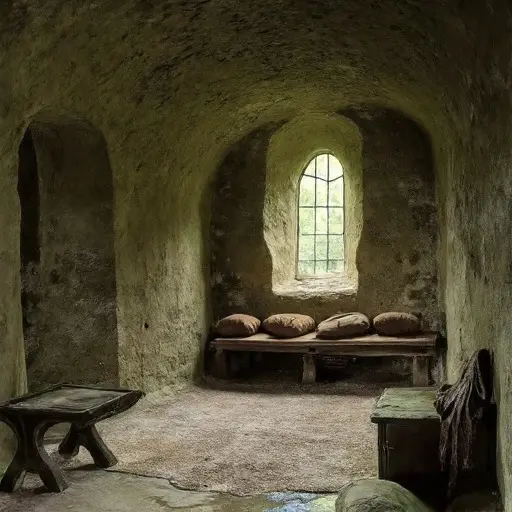
The dwelling was constructed in the late 19th century by a small upland farming community that relied on sheep grazing and seasonal quarry work in the surrounding valley. Built primarily from rammed earth tinted with local mineral deposits, the structure was reinforced with pale limestone bands that stabilized its long, curved profile along the slope. Its Folk Gothic character emerged through deeply recessed lancet windows and a fragmented slate roof that appeared almost improvised against the rugged terrain.
Rather than imposing itself upon the hillside, the house was designed to follow the natural gradient, allowing the building to settle visually and physically into the landscape over time. For decades it housed multiple generations of the same family, serving as both residence and seasonal shelter during harsh upland winters.
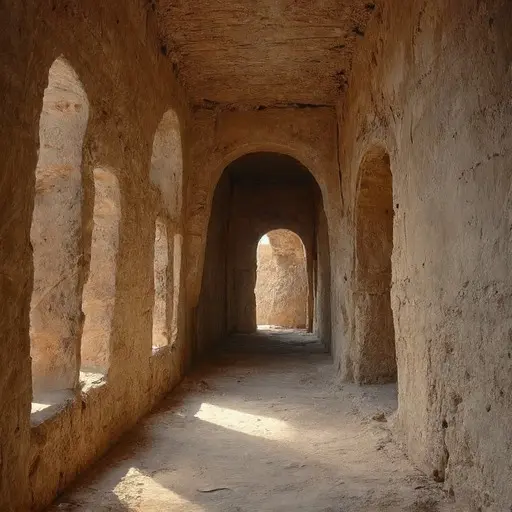
The decline began gradually as younger generations moved toward industrial towns, leaving the hillside dwelling increasingly underoccupied. Maintenance of the fragmented slate roof became inconsistent, allowing water ingress to affect upper sections where roof planes folded at irregular angles. Seasonal freeze-thaw cycles widened minor cracks in the rammed earth walls, especially along transitions between limestone bands. The building’s gentle curvature, once an aesthetic response to terrain, began to concentrate structural stress in unexpected areas. As agricultural activity in the valley diminished, the house lost its functional purpose, and portions of the upper floors were closed off to reduce repair demands. Eventually, the remaining occupants left permanently, unable to justify the cost of stabilizing the structure in such an exposed location.
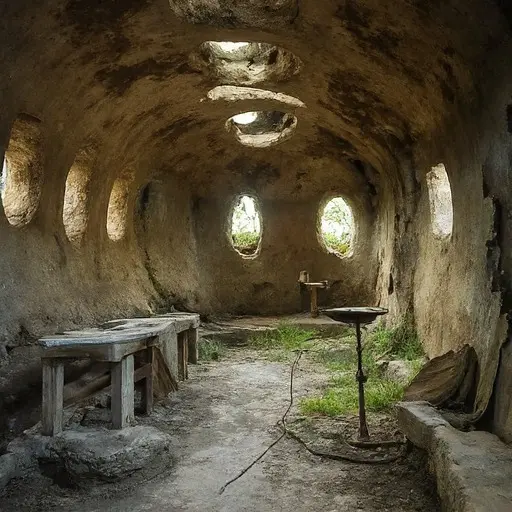
By the mid-20th century, the Folk Gothic hillside dwelling was fully abandoned. No restoration was attempted due to its remote upland position and the extensive material-specific degradation of rammed earth exposed to prolonged weathering. The rusted iron swing frame remains standing alone in the yard, and the cracked stone bench is slowly being overtaken by grass. Today the house continues to settle imperceptibly into the slope, its softened stone buttresses and uneven slate roof dissolving further into the valley landscape, with no confirmed plans for repair, reuse, or return.