The Morning Everything Changed
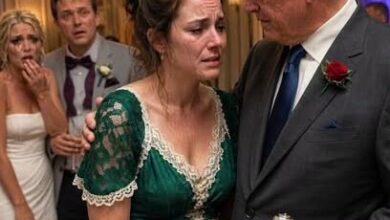
The note was written in purple ink on a torn page from a spiral notebook. By the time Jennifer Moretti reached the front steps of the house across the street, she had crushed it into a ball in her trembling hand.
Behind her, her husband was calling her name.
“Jennifer! Jen, wait. Please!”
But she couldn’t stop.
She climbed the three concrete steps to the red front door, passed the yellow mums sitting beside the entrance, and raised her shaking hand to knock.
At fifty-one, Jennifer had never imagined herself standing on a stranger’s doorstep, ready to confront someone she barely knew. Yet something had happened that morning that made her question everything she thought she understood about her marriage.
Just minutes earlier, she had watched her husband, Tony, receive a folded piece of paper from their young neighbor, Dakota. She had seen his expression change as he read it. The easy smile she had known for nearly three decades disappeared, replaced by a look of shock and fear.
When Jennifer asked what the note said, Tony had refused to tell her.
Now she was standing outside Dakota’s house, desperate to understand why.
She had no idea that the truth behind that little piece of paper would change her family forever.
To understand what happened next, however, it is necessary to go back to the beginning—to a quiet street, a few cups of coffee, and a young woman who seemed to have taken an unusual interest in Jennifer’s husband.
The New Neighbor Across the Street
Dakota arrived at the end of August.
She moved into a small gray house on Maple Court, a quiet neighborhood where eleven homes stood along a horseshoe-shaped street. The property had belonged to an elderly man for decades before his children moved him into assisted living and put the house on the market.
Jennifer and Tony watched the moving truck arrive from their front porch.
They had been married for twenty-five years and lived on Maple Court for more than two decades. They knew their neighbors, recognized the familiar rhythm of the street, and had grown accustomed to noticing when something changed.
Dakota’s arrival was difficult to miss.
The movers carried in a couch, a drafting table, a bed, and several boxes. Then a young woman stepped out of a small blue Honda with Arizona license plates.
She appeared to be in her late twenties. Her dark hair was pulled beneath a knitted beanie, despite the unusually warm weather. She stood on the sidewalk, studying her new home before turning toward Jennifer and Tony’s house.
Her gaze lingered on Tony for several seconds.
“Friendly,” Tony remarked.
“Maybe she’s just tired,” Jennifer replied.
Two days later, Dakota knocked on their door carrying homemade chocolate chip cookies.
She introduced herself politely and explained that she had recently moved from Phoenix. She worked as a graphic designer and had wanted a change of scenery.
Tony welcomed her warmly. He was fifty-four, worked as an electrician, and owned a small company employing six people. He had the easygoing personality of someone who was accustomed to helping others solve problems.
When Dakota learned that Jennifer and Tony had no children, her expression briefly changed.
“Oh,” she said quietly. “I’m sorry. I shouldn’t have asked.”
Jennifer reassured her that it was all right. She had answered that question for years and had learned how to make the subject sound less painful than it really was.
After Dakota left, Tony enjoyed another cookie and declared that their new neighbor seemed nice.
Jennifer agreed, although she had noticed something unusual about the way Dakota looked at him.
It wasn’t the ordinary admiration of a younger woman finding an older man attractive.
It was something more complicated, almost as though Dakota were trying to memorize his face.
Jennifer didn’t understand why.
For a while, she didn’t think much about it.
The Coffee That Became a Daily Ritual
At first, Dakota behaved like any other friendly neighbor.
She waved when collecting her mail, asked about the best grocery stores, and occasionally stopped to chat when Jennifer and Tony were outside.
Then she began paying more attention to Tony.
If he mowed the lawn, Dakota would find a reason to water the flowers outside her house. If he washed his truck, she might approach him with a question about her electrical panel.
Jennifer noticed, but Tony was the sort of person neighbors naturally approached for help.
Then came the coffee.
Tony left for work at precisely 6:50 every morning. It was a routine he had maintained for thirty years. He would kiss Jennifer in the kitchen, collect his thermos, and walk to his truck while she finished her own coffee by the window.
One Monday morning, Dakota’s red door opened just as Tony stepped outside.
She crossed the street carrying two paper cups from a local coffee shop.
“Morning!” she called. “I bought an extra by mistake. Do you want it? It’ll just go to waste.”
Tony looked surprised but accepted the drink.
“Thank you. That’s real nice.”
The following morning, it happened again.
By Wednesday, Jennifer had begun watching from the kitchen window. By Friday, Dakota seemed to know exactly how Tony liked his coffee.
“Two sugars, no cream, right?” she asked.
Tony stopped beside his truck.
“How did you know that?”
“Lucky guess,” Dakota replied with a small smile.
That evening, Jennifer joked that their neighbor had developed a crush on her husband.
Tony laughed and dismissed the idea.
“She probably feels lonely,” he explained. “She’s new here. She doesn’t know anybody.”
Jennifer teased him about his morning deliveries, and he played along. Their marriage had always included humor, even through the most difficult years.
They had learned to laugh together because they knew what it felt like to grieve together.
Jennifer wasn’t genuinely worried at first. Tony had never encouraged Dakota’s attention, and he seemed convinced that she was simply looking for friendship.
But their neighbor Marlene, who lived at number seven, had a different opinion.
According to Marlene, the entire street had noticed the daily coffee deliveries.
“I’m just saying, honey,” she warned Jennifer. “It starts with coffee. Next thing you know, somebody’s husband is moving into a condo with another woman.”
Jennifer laughed off the comparison.
“Tony isn’t moving to Sandusky, Marlene.”
Still, that conversation planted a small seed of doubt.
How had Dakota known Tony’s coffee order?
And why did she seem so determined to see him every morning?
The Note That Destroyed Every Assumption
Jennifer eventually decided to speak to Dakota.
She approached her while they were collecting their mail and gently explained that the coffee was unnecessary. Tony already had his thermos, and the neighborhood was beginning to gossip.
Dakota’s smile faded.
For a moment, Jennifer saw something that looked less like embarrassment than grief.
“I’m just trying to be nice,” Dakota replied softly.
“I know you are,” Jennifer said.
Dakota apologized and promised to stop.
For nearly a week, she kept her distance. Her red front door remained closed each morning, and Tony returned to leaving for work with his thermos.
Jennifer expected to feel relieved.
Instead, she felt strangely guilty.
Dakota always seemed sad, and Jennifer couldn’t help wondering what the young woman might be going through.
Then, on a cold October morning, everything changed.
Jennifer stood at the kitchen window, watching Tony walk toward his truck. Across the street, Dakota emerged from her house carrying a folded piece of paper.
She crossed the road and handed it to him.
Tony looked surprised. He glanced toward the house before unfolding the note.
Jennifer watched his face.
She knew the expressions of the man she had loved for twenty-seven years, including two years of dating and twenty-five years of marriage. She knew his tired expression, his amused smile, and the look he made when the Cleveland Browns lost.
But she had never seen him look like this.
His face went pale.
He read the note again, slowly, his lips moving as he absorbed the words. Then he looked at Dakota with an expression that seemed to contain disbelief, fear, and a pain Jennifer couldn’t explain.
Dakota said something quietly before returning to her house.
The moment her door closed, Jennifer rushed outside.
“What did she write?”
Tony folded the paper into a small square and closed his hand around it.
“It’s nothing.”
“Tony, I saw your face.”
“Jen, please. Let me handle this.”
His refusal only made her more determined.
Tony had never been a secretive husband. He told Jennifer when he made mistakes, when business was difficult, and when something troubled him. Their marriage had survived painful experiences because they had learned to face them together.
Now he stood in their driveway with tears in his eyes, refusing to explain a note from their neighbor.
Jennifer demanded to see it.
Finally, Tony opened his hand.
She unfolded the paper and began to read.
A Daughter He Never Knew Existed
The note began with an apology.
Dakota explained that the coffee had been her attempt to get close enough to Tony to understand what kind of man he was before asking him for something important.
Then she introduced herself fully.
Her name was Dakota Reyes. Her mother’s name had been Lisa Reyes, a woman Tony had known in San Diego during the summer of 1996, when he was serving in the Navy.
Lisa had worked at a coffee shop near Shelter Island. She remembered Tony’s coffee order because he had joked that coffee without sugar was punishment for people who had done something wrong.
Before Lisa died two years earlier, she had given Dakota a box of letters. One had been addressed to Tony, but it had been returned unopened in 1997.
Dakota had been born in March 1997.
Tony, the note explained, was her father.
But the revelation was only the beginning.
Dakota had acute myeloid leukemia. The disease had returned for a second time, and her doctors had recommended a stem cell transplant.
They had not found a suitable match through the donor registry. Her medical team explained that a biological parent could sometimes be a half match.
That was why she had searched for Tony.
She had not come to destroy his marriage or demand a place in his life. She simply wanted the chance to meet her father before she died.
“I didn’t want to die without meeting you at least once,” she wrote.
Jennifer reached the final line, and the paper trembled in her hands.
The young woman she had suspected of pursuing her husband was actually his daughter.
A daughter he had never known existed.
Jennifer turned toward Dakota’s house and crossed the street without thinking.
When Dakota opened the door, she was no longer wearing her beanie. Her head was nearly bare, covered only by a soft layer of dark hair beginning to grow back.
She looked younger than Jennifer had imagined.
“Is it true?” Jennifer whispered.
“Yes,” Dakota answered.
She showed Jennifer an old photograph of a young sailor standing beside a smiling woman on a pier.
The sailor was Tony.
Jennifer recognized the chipped tooth he had repaired years earlier and the familiar expression on his face.
Tony arrived moments later.
“Lisa,” he whispered, recognizing the woman in the photograph. “I didn’t know. I swear, Jen. I didn’t know.”
Jennifer believed him.
But believing Tony did not make the revelation painless.
She returned to her house, closed the door, and sat on the kitchen floor, crying harder than she had in seventeen years.
The Grief That Never Really Disappeared
Jennifer and Tony’s marriage had been built through love, patience, and a grief that few people fully understood.
They met in 1999 at a friend’s barbecue in Akron. Tony accidentally spilled beer on Jennifer’s shoe and spent much of the evening apologizing. By the end of the night, Jennifer had already begun imagining a future with him.
They married in June 2001.
A year later, they began trying to have a child.
At first, they assumed pregnancy would happen naturally. When it didn’t, they sought medical advice. Tests led to specialists, treatments, injections, and repeated attempts at fertility treatment.
In 2004, after their second round of in vitro fertilization, Jennifer became pregnant.
They learned they were expecting a girl and chose the name Grace.
Tony painted the spare bedroom yellow and built a wooden crib in the garage. Jennifer bought a tiny white dress decorated with ducks.
They began imagining all the ordinary things parents take for granted: birthdays, school mornings, family holidays, and the sound of little feet running through their home.
Then, at twenty-two weeks, they lost Grace.
Jennifer held her daughter in a hospital room for two hours. Grace was tiny, perfect, and heartbreakingly fragile. She had Tony’s chin.
The loss changed both of them.
They tried again three more times, enduring more treatments and more disappointment. Eventually, their doctor gently explained that it was time to stop.
They considered adoption, but the process was exhausting, and they had little emotional strength left. They were grieving Grace and the children they had hoped to welcome.
Eventually, Tony dismantled the crib and put it in the attic. Jennifer painted the yellow bedroom blue and turned it into a sewing room, although she rarely used the sewing machine.
They built a good life together.
They traveled to Italy for their twentieth anniversary, spent August at a shared cabin on Lake Erie, enjoyed Sunday crossword puzzles, and laughed at the small frustrations of everyday life.
They were happy.
Yet the loss never entirely disappeared.
There had always been a quiet space in their lives where a daughter should have been.
Now a twenty-nine-year-old woman stood across the street with Tony’s chin, his expressions, and his eyes.
Jennifer wasn’t crying because Tony had betrayed her. He hadn’t. His relationship with Lisa had occurred years before they met.
She was crying because the one thing she had wanted most in life had suddenly appeared, and she didn’t know how to make room for it without reopening an old wound.
She had spent years grieving the daughter she had lost.
Now she was being asked to welcome a daughter she had never expected to find.
A Difficult Decision About Life and Family
When Tony finally came into the kitchen, he wrapped his arms around Jennifer and held her tightly.
“I didn’t know,” he repeated. “I swear to God, Jen.”
“I know you didn’t,” she answered.
Tony explained that he and Lisa had spent three months together in San Diego. When his Navy assignment changed, he wrote to her several times but received no reply. He later returned to the coffee shop, only to learn that Lisa had left.
He had tried to find her, but the search had gone nowhere.
He had no reason to believe she had given birth to his child.
Jennifer believed him, but the truth left them both struggling to understand how much had changed in a single morning.
Eventually, Tony looked at his wife.
“I have to get tested,” he said. “If I can help her, I have to try.”
Jennifer knew he was right.
Still, the decision was emotionally complicated. Dakota was a stranger who had arrived carrying the news of a hidden family connection and a potentially life-threatening illness.
Jennifer was also afraid of what would happen if she opened her heart and lost another child.
But she remembered Grace.
She remembered the helplessness of holding her daughter and wishing desperately for more time.
Somewhere in Arizona, Lisa had raised Dakota alone, working night shifts and building a life for her daughter. Now Lisa was gone, and Dakota faced another battle with cancer.
Jennifer couldn’t change the past, but she could decide what to do with the present.
“Call her doctor,” she told Tony.
He arranged testing through the Cleveland Clinic. The medical team collected blood samples and a cheek swab to determine whether he could donate stem cells.
The results would take time.
During the wait, Tony began visiting Dakota. They talked about Lisa, old movies, childhood memories, and the years they had missed.
Dakota learned about her father’s work and the life he had built with Jennifer. Tony learned about the mother who had raised his daughter, the stories she had preserved, and the photographs she had kept close.
For the first time, father and daughter began building a relationship that should have started decades earlier.
Then the test results arrived.
Tony was a possible half match.
The transplant team believed they could proceed.
The Moment Jennifer Finally Reached Across the Street
Before the transplant could happen, Dakota had to continue treatment. Her weakened immune system made even a seemingly minor infection dangerous.
One Saturday morning, Jennifer was raking leaves in the front yard when she saw Dakota collecting her mail.
Dakota stopped suddenly, braced herself against the mailbox, and collapsed onto the concrete.
Jennifer dropped the rake and ran.
Dakota insisted that she was fine, but she was burning with fever and could barely remain conscious.
Jennifer helped her into the car and drove straight to the emergency department.
Doctors diagnosed neutropenic fever, a dangerous complication in someone whose white blood cell count had fallen dramatically during chemotherapy. They started intravenous antibiotics and explained that the infection could have become much worse if she had not received prompt care.
When a doctor asked Jennifer whether she was family, she hesitated.
Then she answered, “Yes.”
She sat beside Dakota’s hospital bed, wearing a protective gown, gloves, and mask. Dakota eventually woke and found Jennifer still there.
“Why?” Dakota whispered.
Jennifer didn’t have a perfect explanation.
She only knew that she couldn’t leave.
Dakota apologized for the coffee, the note, and the disruption she had brought into Jennifer’s life. She admitted that she knew about Grace because Tony had explained why the revelation had frightened him.
“I never wanted to hurt you,” Dakota said.
Jennifer looked down at her hands.
Then she told Dakota about Grace. She explained that her daughter had lived for only a few minutes and that she had spent years carrying the grief quietly.
“She had his chin,” Jennifer said.
Dakota reached across the bed and took Jennifer’s hand.
For the first time, the two women cried together—not as rivals, not as strangers, but as people connected by love, loss, and circumstances neither had chosen.
When Tony arrived, he found them holding hands.
He pulled up a chair, took Dakota’s other hand, and sat beside them.
Nobody needed to explain what had changed.
Becoming Family One Ordinary Day at a Time
Dakota remained in the hospital for nine days.
After her fever resolved, she continued preparing for the transplant. Jennifer began visiting her regularly, bringing soup, crackers, ginger ale, and anything else that might make the difficult days more bearable.
Soon, those visits became part of their routine.
Jennifer drove Dakota to appointments when Tony was working. She helped with meals, cleaned the house when Dakota was too exhausted, and sat beside her during nights when nausea and anxiety made sleep impossible.
They watched old black-and-white movies together and talked for hours.
Dakota told Jennifer about Lisa, who had worked nights at a nursing home for twenty years so she could be home when her daughter returned from school. Money had often been tight, but Lisa always found a way to provide a birthday cake.
When Lisa developed breast cancer, Dakota left her job to care for her. She held her mother’s hand in hospice during her final days.
Before she died, Lisa asked Dakota to find her father.
“Your father was a good man,” she had told her daughter. “Find him. Don’t be alone.”
Dakota eventually went into remission after her first battle with leukemia. She intended to find Tony when she felt stronger, but the disease returned before she could make that happen.
She arrived in Ohio frightened, sick, and uncertain whether her father would welcome her.
The coffee had been her way of delaying the moment when she would have to reveal the truth.
Jennifer finally understood.
One afternoon, Dakota asked whether she was family.
Jennifer looked at her thoughtfully.
“Ask me again after the transplant,” she replied.
It wasn’t rejection. It was honesty. Jennifer needed time to understand what she felt and how to move forward.
Yet the question stayed with her.
She had spent so many years protecting herself from grief that she had almost forgotten how to welcome new love.
The Transplant That Gave Them Hope
The transplant took place in December.
Tony underwent several days of injections to encourage his body to release stem cells into his bloodstream. The medical team then collected the cells through a process that took several hours.
When the procedure ended, a nurse showed him a small bag containing the collected cells.
“That’s what will help save her?” he asked.
“That’s it,” the nurse replied.
Tony stared at the bag, overwhelmed by the thought that something so small might give his daughter a future.
The following morning, the medical team began the transplant.
Dakota had undergone intensive chemotherapy to prepare her body. She was exhausted, weak, and struggling with painful side effects.
But when Tony entered her room, she managed a smile.
“Hi, Dad,” she said.
It was the first time she had ever called him that.
Tony stopped walking.
For a moment, he couldn’t speak. Then he managed to answer.
“Hi, kiddo.”
Jennifer held one of Dakota’s hands while Tony held the other. They watched as the donated cells entered her bloodstream.
The procedure was quiet and ordinary in appearance, yet it carried enormous emotional weight.
Dakota’s medical team had explained that the following weeks would be difficult. Her immune system would be extremely weak, and complications were possible. The transplant would need time to work.
The next several weeks tested all three of them.
Dakota developed a high fever, and her blood pressure dropped. Doctors transferred her to intensive care and warned Jennifer and Tony that the next forty-eight hours were critical.
Jennifer remained beside her whenever she could.
She remembered the hospital room where Grace had died. She remembered the helplessness of that experience and the fear of losing another daughter.
This time, however, she refused to surrender hope.
One night, a nurse checked Dakota’s blood results and noticed that her white blood cell count was rising.
The donated cells were beginning to take hold.
It was an important milestone, though recovery was not guaranteed and continued medical monitoring remained essential.
Gradually, Dakota improved.
Her blood counts recovered, she left intensive care, and she eventually began eating small meals again. After more than a month in the hospital, her medical team allowed her to return home.
She was not out of danger, but she had taken a significant step forward.
For Jennifer and Tony, the relief was almost impossible to describe.
Their daughter had a chance.
And somewhere along the way, Jennifer had begun to think of her as more than Tony’s daughter.
She had begun to think of her as family.
One Hundred Days That Changed Everything
Dakota needed close support after leaving the hospital. Because of the risks associated with her transplant, she could not safely live alone during the early recovery period.
Jennifer took leave from work and moved into Dakota’s spare room.
Tony stayed in their own house across the street, visiting every morning and evening while continuing to manage his electrical business.
Jennifer helped Dakota follow her medication schedule, drove her to appointments, prepared meals, and watched for symptoms that required medical attention.
The work was tiring, but it gave her a purpose she had not expected to find.
The two women learned the details of each other’s lives.
Dakota learned about Jennifer’s childhood, her mother, her sister in Indiana, and the dog she still missed. Jennifer learned that Dakota hated mushrooms, loved old movies, and filled sketchbooks with drawings she rarely showed anyone.
Dakota had once dreamed of becoming an architect but had been unable to afford the education she wanted. As her health improved, she began talking about studying again.
Jennifer encouraged her to keep that dream alive.
They also talked about Grace.
One evening, Dakota asked whether she could see a photograph of Jennifer’s daughter. Jennifer kept one in her wallet, behind her driver’s license.
It showed Grace wrapped in a white blanket and wearing a small knitted cap.
Dakota studied the photograph carefully.
“She’s beautiful,” she said.
“She was,” Jennifer replied.
Then Dakota spoke with a gentleness Jennifer would never forget.
“I know I’m not her. I’ll never be her, and I don’t want to be. But I don’t want you to look at me and only see what you lost. I want you to look at me and see me.”
Jennifer took a long breath.
“I do see you,” she answered. “That’s what scares me.”
“Why?”
“Because I’d forgotten how much I could love somebody.”
After Grace died, Jennifer had closed off a part of herself. She had not stopped loving her husband or enjoying her life, but she had learned to keep certain feelings behind a door she rarely opened.
Dakota had opened that door simply by arriving.
And Jennifer was discovering that love did not have to replace the person she had lost. It could exist beside the grief, giving her life something new without erasing the past.
A New Beginning Across the Street
One hundred days after the transplant, Dakota’s doctors determined that she was well enough to spend time alone again, while continuing the necessary follow-up care.
Her blood counts had recovered, and her body had accepted Tony’s donated cells. She was in remission, although her doctors made clear that remission did not mean she was permanently cured.
The coming years would require regular monitoring.
Still, the future looked brighter than it had when Dakota first arrived in Ohio.
Jennifer returned to her own home.
On her first morning back, she stood in the blue sewing room and looked at the machine she had barely touched in fifteen years. Then she went downstairs and made coffee.
At 6:50 the following morning, she poured two cups.
One was black, without sugar.
The other had two sugars and no cream.
She crossed the street and knocked on Dakota’s red door.
Dakota opened it in her pajamas, her dark hair beginning to grow back in soft curls.
Jennifer held out the cup.
“I made an extra by mistake,” she said. “Do you want it? It’ll just go to waste.”
Dakota stared at her for a moment before laughing and crying at the same time.
Across the street, Tony emerged from their house with his thermos. He stopped in the driveway and watched his wife and daughter embrace.
For the first time since the note arrived, his face held no fear.
Only relief.
A Year Later: The Meaning of Family
A year later, Dakota was still living in the gray house across the street. She bought the property, painted the shutters green, and planted tomatoes in the side yard.
Tony built her a fence to protect the garden from rabbits.
Her orange cat, Pancake, eventually arrived from Phoenix and quickly became the neighborhood’s most judgmental resident.
Dakota returned to freelance design work and began taking architecture classes online. She brought her drawings to Jennifer and Tony’s house on Sunday afternoons, spreading them across the dining room table while Tony pretended to understand the technical details.
Jennifer made lasagna.
Dakota called Tony “Dad,” and although it took him months to stop becoming emotional whenever he heard the word, he eventually learned to answer without his voice breaking.
She usually called Jennifer by her first name.
Jennifer understood that family relationships could not be forced into a particular shape. They needed time, patience, and room for each person to decide what felt right.
Then came Dakota’s one-year medical checkup.
Her doctor entered the room with a smile and good news. The tests showed no sign of the disease.
The result did not eliminate the need for continued monitoring, but it gave the family another reason to celebrate.
That evening, they held a small party. Dakota insisted on two cakes because she now had two birthdays: the day she was born and the day she received Tony’s donated cells.
The gathering included neighbors, friends, and Bev, the nurse who had cared for Dakota during her hospitalization.
Even Marlene came, bringing zucchini bread and claiming she had always known Dakota was a sweetheart.
After the guests left, Dakota helped Jennifer wash the dishes while Tony fell asleep on the couch during Jeopardy.
Then Dakota pulled a folded piece of paper from her back pocket.
Jennifer’s heart skipped.
“Please tell me that’s not another note,” she said.
Dakota laughed and handed it over.
The paper was written in the same neat purple handwriting as the first one.
This time, the message was different.
Dakota explained that when she moved across the street, she had been searching for the father she had never known. She had believed that finding him was the only family she had left to discover.
She had not expected to find a mother, too.
She acknowledged that Jennifer was not her biological mother and that Grace could never be replaced. Lisa would always be her mother, and nothing could change that.
But Jennifer had crossed the street when she didn’t have to. She had sat beside Dakota in the hospital, held her hand when she was frightened, and stayed through the long days of recovery.
Dakota did not know exactly what to call that kind of love.
But she knew what her mother would have called it.
Family.
Jennifer read the note three times before looking up.
She remembered the question Dakota had asked months earlier, sitting together on the couch while an old movie played in the background.
“Am I family?”
At the time, Jennifer had asked her to wait until after the transplant.
Now the answer was clear.
“Yes,” Jennifer whispered. “You’re family. You were always family. I just had to walk across the street to find out.”
She wrapped her arms around Dakota and held her close.
In the living room, Tony continued snoring through the television. Outside, Pancake meowed at the back door.
The ordinary sounds of home surrounded them.
And for the first time in years, Jennifer felt that the empty space in her life was no longer quite so empty.
Grace would always be part of her story. Lisa would always be part of Dakota’s. Neither woman had to be forgotten for this new family to exist.
Love had not erased their losses.
It had given them something to carry alongside them.
The Coffee That Brought Them Together
The next morning, at 6:50, Dakota entered Jennifer’s kitchen carrying two cups from the Daily Grind.
“I bought an extra by mistake,” she said, setting one in front of Jennifer. “Black. No sugar. Right?”
Jennifer looked at her and smiled.
“How did you know that?”
Dakota returned the smile.
“Lucky guess.”
They sat across from each other at the kitchen table and drank their coffee while the sun rose over Maple Court.
Outside, the maple tree in Jennifer’s front yard had turned red overnight, just as it did every autumn.
At first, the coffee had seemed like a harmless habit. Then it had become a source of suspicion, gossip, and misunderstanding. Finally, it had led to a truth that changed three lives.
Jennifer had thought she was protecting her marriage when she confronted Dakota. Instead, she discovered that the stranger across the street was carrying a desperate hope, a painful secret, and a request that could not easily be refused.
The experience taught her that appearances rarely reveal the full story. What looks suspicious may conceal fear. What feels like an intrusion may become an unexpected connection. And a family can grow in ways no one could have planned.
Jennifer had spent years believing that the door to motherhood had closed forever.
Then one morning, a young woman carrying two cups of coffee crossed the street.
And Jennifer opened the door again.