Uncategorized
She Cleaned One Woman’s Home for Eight Years—Then a Shoebox Revealed a Gift That Changed Her Daughter’s Future

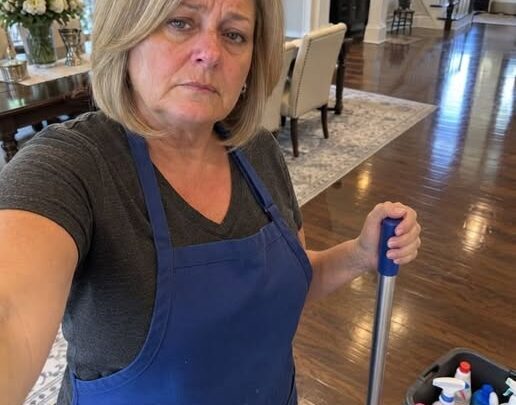
For eight years, Carly cleaned the same house every Thursday.
She knew which windows stuck in winter, which floorboards creaked near the hallway, which towels belonged in the guest bathroom, and which photographs on the piano were never to be moved.
She also knew that Margaret Whitaker was a private woman.
They were not close friends in the traditional sense. Carly was the housekeeper, and Margaret was her client.
At least, that was how their relationship had begun.
But over the years, something more meaningful developed between them.
There were conversations over coffee, handwritten notes left on the kitchen counter, stories about family, and quiet moments when neither woman needed to explain what she was thinking.
Still, Carly never expected Margaret to change her life.
Especially not on the final day she cleaned the house.
Margaret had one unusual request.
“Come back Saturday,” she told her. “But don’t bring your cleaning supplies.”
Carly assumed Margaret wanted to say goodbye before moving away.
She had no idea there was a shoebox waiting for her—and inside it was a story that stretched back generations.
The Phone Call That Started Everything
Eight years earlier, Carly was standing in a grocery-store parking lot when her phone rang.
It had been raining.
She had a nine-year-old daughter, Willa, sitting in the car, and only forty-one dollars in her checking account.
Her marriage had recently ended.
Her husband had moved out three weeks earlier, taking many of his belongings with him.
Oddly enough, one of the things he had taken was their best vacuum cleaner.
Carly had been trying to start a small house-cleaning business, so losing the vacuum felt almost symbolic.
She had spent the day putting handwritten advertisements on community bulletin boards.
The message was simple:
House Cleaning. Honest. Reliable. Thorough. References Available.
Her references weren’t impressive.
She had two neighbors and a former employer from a dental office where she had worked before becoming a mother.
But they were honest.
That mattered to Carly.
When the phone rang, she nearly ignored it.
Instead, she answered.
A woman introduced herself as Margaret Whitaker.
She had seen Carly’s advertisement at the library.
“I have a four-bedroom house,” Margaret explained. “I need someone once a week. Are Thursdays available?”
Carly almost laughed.
Every day was available.
“Thursday works,” she replied.
Margaret gave her an address and asked her to come the following morning.
Then she paused.
“You’re crying.”
Carly was embarrassed.
She hadn’t realized her voice had given her away.
“I’m sorry.”
“I can hear the rain,” Margaret said. “That’s probably why.”
Then she gave Carly the time and ended the call.
Carly returned to the car.
Her daughter immediately asked who had called.
“A woman who might give us our first real cleaning job.”
Willa smiled.
“Is she nice?”
Carly thought about the conversation.
“I don’t know yet.”
The House on Linden Street
The next morning, Carly arrived at a large home on Linden Street.
It was far bigger than any house she had ever cleaned.
The property had a wide front porch, white columns, an old oak tree, and a blue front door with a brass pineapple-shaped knocker.
Margaret opened the door before Carly could knock.
She was around seventy, neatly dressed, and carried herself with the confidence of someone who liked things organized.
She showed Carly through the house.
There was a long wooden hallway, a living room with an old piano, a formal dining room, a large kitchen, four bedrooms, three bathrooms, and a claw-foot bathtub.
Margaret explained that she and her husband had purchased the house decades earlier.
They had raised their daughter, Susan, there.
Susan now lived in Oregon.
Margaret’s husband had died two years before.
“The house is too large for one person,” Margaret admitted.
Carly assumed she was preparing to sell.
But Margaret shook her head.
“I’m too stubborn.”
They sat at the kitchen table.
Margaret offered Carly a weekly arrangement.
One hundred dollars every Thursday.
Nine in the morning until two in the afternoon.
For Carly, that money represented more than a cleaning job.
It meant groceries.
It meant part of the rent.
It meant she could begin rebuilding her life.
Margaret handed her a brass key.
“You’ll need this.”
Carly hesitated.
“You don’t really know me.”
Margaret smiled.
“I called your references.”
She had learned that Carly once drove nearly an hour to return a wallet someone had accidentally left behind.
Another reference had told her that Carly had watched a neighbor’s dog without accepting payment.
Margaret looked at her carefully.
“People who intend to steal from you usually don’t apologize for crying.”
Carly smiled for the first time that week.
Eight Years of Thursdays
The first Thursday went well.
Margaret left instructions on the kitchen counter.
Some were practical.
Others were surprisingly specific.
Don’t use bleach on the original kitchen floor.
Don’t move the photographs on the piano.
Use the white towels with blue stitching for guests.
Carly followed every instruction.
She cleaned the bathrooms, scrubbed the kitchen, dusted the furniture, washed floors, and carefully cleaned the oven.
When Margaret returned, she inspected the house.
She didn’t say much.
“Thank you, Carly.”
That was enough.
For almost a year, their communication consisted mainly of short notes.
There would be a note about a window.
Another about towels.
Another about a visiting relative.
Carly eventually began leaving notes too.
She would mention a dripping faucet, a missing earring, or something that needed attention.
The relationship remained professional.
But gradually, it became personal.
The Girl Who Counted the Windows
One of the earliest moments that changed things involved Willa.
One winter day, Willa’s school closed because of heavy snow.
Carly had no childcare.
She called Margaret and apologized for asking.
Margaret simply said:
“Bring her.”
Willa sat quietly at the kitchen table with a sketchbook.
Margaret eventually noticed the drawings.
“What are you drawing?”
“Houses,” Willa answered.
Margaret became interested.
Willa explained that she liked designing rooms and deciding where windows should go.
Margaret asked her about the house.
“How many windows do you think there are?”
Willa immediately wanted to find out.
She walked from room to room counting them.
By the end of the day, she had counted forty-two.
She also drew the rooms.
Margaret kept the drawings.
Carly assumed the drawings would eventually disappear into a drawer.
She didn’t know how important they had become.
Life Didn’t Become Easier Overnight
Carly’s business slowly grew.
She gained more clients.
She learned how to manage appointments, taxes, transportation, supplies, and difficult customers.
But life continued to bring challenges.
Willa eventually experienced a serious asthma episode that resulted in a hospital visit.
The medical expenses were frightening.
Carly worked extra hours to keep up.
Margaret noticed.
She had a way of recognizing things Carly didn’t say.
One Thursday, Margaret watched Carly mop the same part of the kitchen floor three times.
“You’re worried about something.”
Carly finally admitted that Willa had been ill and that the medical bills were becoming difficult.
Margaret didn’t make a dramatic offer.
Instead, she simply listened.
That was the beginning of a deeper trust.
The Day Margaret Fell
Several years into their arrangement, Carly arrived one Thursday morning and immediately sensed something was wrong.
Margaret’s car was in the driveway.
Her purse was inside.
Her glasses were on the kitchen counter.
A cup of cold tea sat untouched.
Margaret never left tea in a cup for long.
Carly called out.
There was no answer.
She searched the house.
Eventually, she found Margaret on the bathroom floor beside the claw-foot tub.
Margaret had fallen and injured her hip.
She had been unable to reach the phone.
Carly immediately called for emergency assistance.
At the hospital, a nurse asked Carly whether she was family.
“No,” Carly explained. “I clean her house.”
But by then, that description didn’t capture the relationship.
Carly called Susan.
She stayed until Margaret’s daughter could arrive.
When Margaret woke after surgery, she looked surprised to see Carly.
“You’re still here.”
Carly smiled.
“Of course.”
Margaret later admitted that during the long hours after her fall, she kept thinking about Thursday.
She knew Carly would come.
That knowledge gave her comfort.
A Relationship Beyond a Paycheck
After Margaret recovered, their relationship became warmer.
Margaret asked more questions about Willa.
How was school?
What subjects did she enjoy?
Was she still drawing?
The answer was always yes.
Willa grew older.
The little girl who had once counted Margaret’s windows became a teenager interested in architecture and design.
She took art classes.
She studied mathematics.
She entered a design competition.
Eventually, she began applying to universities.
Her goal was to study architecture.
The problem was cost.
Carly was proud of her daughter but worried about how they would pay for school.
She worked more cleaning jobs and helped Willa complete scholarship applications.
She didn’t ask Margaret for money.
Margaret was her client.
That boundary mattered to Carly.
Margaret Announces Her Move
Then, after eight years, Margaret announced that she was moving.
Her daughter wanted her closer to Oregon.
Margaret had found an apartment that was easier to manage and more suitable for her age.
The Linden Street house had been sold.
Carly understood.
Still, the news hurt.
For eight years, Thursday had meant Margaret’s house.
It had become part of Carly’s routine and part of her identity.
On the final Thursday, most of the furniture was already gone.
The piano was gone.
The dining room table was gone.
The walls showed pale rectangles where photographs had hung for years.
Carly cleaned everything one last time.
At the end of the afternoon, she removed the brass key from her key ring and offered it to Margaret.
Margaret didn’t take it.
“Come back Saturday.”
Carly looked confused.
“Eleven o’clock.”
“Do you need me to help after the movers?”
“No.”
Margaret paused.
“And don’t bring your cleaning supplies.”
Carly didn’t understand.
Margaret smiled.
“I want you to come as Carly.”
The Final Saturday
Carly arrived on Saturday morning wearing clothes she wouldn’t normally wear to work.
For the first time, she knocked instead of using her key.
Margaret opened the door.
The house was almost empty.
But the kitchen table remained.
There were two plates, cloth napkins, sandwiches, and iced tea.
Carly stared.
“I know you usually eat lunch in your car,” Margaret said.
Carly laughed.
“You knew?”
“I’ve known for years.”
Margaret had watched her from an upstairs window.
She knew Carly often ate a simple lunch in her car rather than use the kitchen.
That small revelation made Carly realize how much Margaret had actually noticed.
They sat together.
Not as client and cleaner.
As friends.
They talked about Willa.
They talked about Susan.
They talked about the house.
Then Margaret brought out an old shoebox.
The Shoebox
The box was filled with papers.
Carly began looking through them.
Then she recognized her own handwriting.
They were all the little notes she had left over the years.
A reminder about a faucet.
A note about a pearl earring.
A message about the garden.
A comment about a window.
Margaret had saved everything.
There were also Willa’s childhood drawings.
The original drawing of the forty-two windows.
The hospital drawing.
Birthday cards.
Little handmade gifts.
Carly couldn’t believe it.
“Why did you keep all this?”
Margaret explained.
After her husband died, people had visited.
They brought food.
They sent cards.
They called.
But eventually, life returned to normal for everyone else.
Margaret remained alone.
Then Carly arrived every Thursday.
Always.
For eight years.
Margaret knew exactly when Carly would come.
She knew someone would enter the house, open the curtains, water the plants, clean the rooms, and eventually sit in the car outside with lunch.
“You thought you were cleaning my house,” Margaret said.
“But you were also keeping me connected to the world.”
Carly cried.
The Envelope at the Bottom
There was one more envelope.
It had Willa’s name on it.
Carly opened it carefully.
Inside was a financial statement.
There was a substantial balance set aside for Willa’s education.
Carly stared at the number.
She couldn’t understand.
Margaret explained that she had been setting aside money for Willa for years.
It wasn’t a single gift.
It had accumulated gradually.
Every Thursday, alongside Carly’s payment, Margaret had put money toward an education fund.
Carly was overwhelmed.
“I can’t accept this.”
Margaret shook her head.
“You aren’t accepting it.”
She pointed toward the envelope.
“Willa is.”
Carly asked why.
Margaret finally told her the story she had kept private for decades.
The Story of Rose
Margaret’s mother had once cleaned houses.
Her name was Rose.
She worked for wealthy families for many years.
Margaret remembered watching her mother leave home carrying cleaning supplies.
As a teenager, Margaret had wanted something different.
She eventually dreamed of becoming a school principal.
But college seemed financially impossible.
Then something unexpected happened.
One of her mother’s longtime clients, a woman named Alice Ashford, had quietly created an education fund for Margaret.
Alice paid for her education.
There was no publicity.
No announcement.
No expectation of recognition.
Margaret only learned the full story later.
Her mother had once asked Alice why she had done it.
Alice reportedly answered that the gift wasn’t charity.
It was something meant to continue.
Someday, Margaret was supposed to help someone else.
For decades, Margaret carried that promise.
Then she saw Carly’s handwritten cleaning advertisement.
A woman struggling to support a young daughter.
A mother trying to build a new life.
A child who loved drawing houses.
Margaret knew she had found the person she had been waiting for.
The Gift Was About More Than Money
The financial support changed Willa’s options.
But Margaret wanted Carly to understand something else.
The gift wasn’t a judgment about Carly’s ability to provide.
It wasn’t pity.
It wasn’t payment for eight years of cleaning.
It was an extension of something Margaret’s mother had once received.
A kindness passed forward.
A promise kept across generations.
Carly eventually accepted the help for Willa.
But she made Margaret promise something in return.
She had to attend Willa’s graduation.
Margaret agreed.
Willa’s Graduation
Willa was accepted into an architecture program.
The acceptance letter arrived on a Thursday.
Years later, she graduated.
Margaret traveled to attend.
When Willa’s name was announced, Margaret stood beside Carly.
She didn’t make a loud scene.
She simply placed one hand over her heart.
After the ceremony, Willa hugged her.
“Thank you.”
Margaret shook her head.
“Don’t thank me.”
She told Willa about Rose and Alice.
Then she told her something even more important.
“Remember what you received.”
Willa nodded.
“I will.”
Margaret smiled.
“And someday, when you have the opportunity to help someone else, don’t wait too long.”
The Tradition Continues
Carly still cleans houses.
Her business has grown.
She now has several regular clients and has even hired someone to help with the workload.
She still keeps Margaret’s brass key on her key ring.
It no longer opens a door.
But it reminds her of where her life changed.
It reminds her of the woman who trusted her when she was just starting out.
And it reminds her that work that looks ordinary from the outside can carry enormous meaning.
Carly also began treating her clients differently.
She pays attention.
She listens.
She notices when someone has stopped eating properly.
She notices when a house becomes unusually quiet.
She understands that cleaning someone’s home can sometimes mean becoming one of the few people who regularly enters their life.
One of her newer clients was an elderly widower named Harold.
His wife had recently died.
The first Thursday Carly worked for him, she noticed an unused place setting on the dining table.
She didn’t ask about it.
Instead, the following week she brought lunch.
She set two plates on the table.
Harold looked surprised.
“My wife used to set the table like that,” he said.
Carly smiled.
“Then let’s eat lunch the way she used to.”
They talked for nearly an hour.
Harold told stories about his marriage.
He laughed.
It was the first time Carly had heard him laugh.
Before leaving, she wrote a short note.
Your tomato plants needed water. I took care of them. See you Thursday.
Then she added one more sentence.
You’re not alone.
Sometimes the Smallest Acts Last the Longest
Carly once believed she was simply cleaning a house.
Margaret once believed she was simply hiring a cleaner.
Neither woman understood at the beginning that their lives were about to become connected.
The house on Linden Street eventually changed owners.
The furniture disappeared.
The blue door closed for the final time.
But the important things didn’t disappear.
A shoebox survived.
So did handwritten notes.
So did childhood drawings.
So did a promise that had traveled from Rose to Margaret and then to Willa.
Most importantly, a simple Thursday routine became something much larger.
It became friendship.
It became trust.
It became opportunity.
And it became proof that kindness doesn’t always arrive with a dramatic announcement.
Sometimes it comes quietly.
Sometimes it looks like a regular paycheck.
Sometimes it looks like a note left beside a sink.
Sometimes it looks like a woman showing up every Thursday because someone has learned to depend on her.
And sometimes, after years of ordinary work, you discover that someone noticed everything you thought nobody saw.
For Carly, the shoebox wasn’t simply a collection of old papers.
It was a record of eight years of trust.
And the money Margaret saved for Willa wasn’t simply financial assistance.
It was a promise passed from one generation to another.
A promise that said opportunity can be shared.
A promise that said honest work has dignity.
A promise that said a person’s circumstances today don’t have to determine what becomes possible tomorrow.
And perhaps most importantly, it was a reminder that we rarely know how deeply our smallest actions affect other people.
Carly thought she was going to Margaret’s house every Thursday to clean.
Margaret knew she was coming to do much more.
She was coming to make sure someone who lived alone would not feel forgotten.
Eight years later, Margaret finally told her.
And that may have been the greatest gift of all.