Uncategorized
My Husband’s Brothers Kicked Me Out of His Hardware Store—But They Forgot I Owned the Building

My Husband’s Brothers Kicked Me Out of His Hardware Store—But They Forgot I Owned the Building
I had thought he was being overly cautious.
Now I understood.
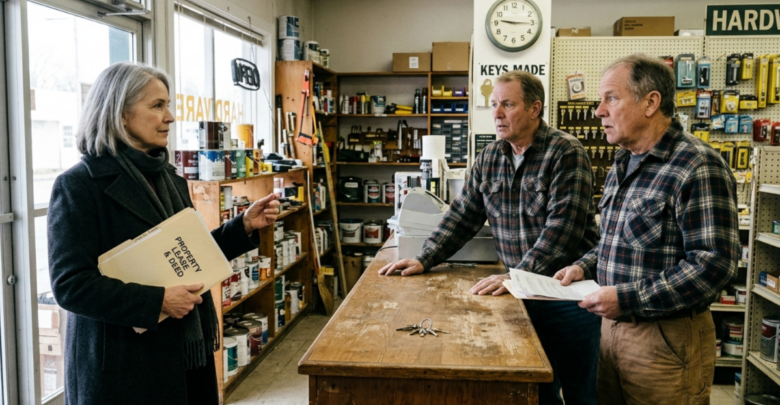
Gary reached for the lease.
“Let me see that.”
I slid it across the counter.
He read the first page, then the second. His eyes moved faster as he reached the final section.
“This says the lease was between the property owner and Don personally.”
“Correct.”
“But the store is still operating.”
“The business may continue operating if it has a valid agreement with the property owner. At the moment, it doesn’t.”
Mike folded his arms.
“Don would never have wanted this.”
I looked at him.
“Don spent thirty-six years paying rent to me. He knew exactly what he wanted.”
Gary pushed the papers away.
“You’re making this complicated for no reason. We’re his brothers. We worked here. We’ve been here longer than anybody.”
“Then you should understand how important written agreements are.”
Neither answered.
I reached into my folder and removed another document.
“This is a formal notice from my attorney. You have until Friday to remove your personal belongings and any property that belongs to you from the premises, subject to the applicable legal requirements. The inventory, fixtures, and business assets will be handled separately.”
Gary’s face turned red.
“You’re evicting us?”
“I’m protecting my property.”
“After everything we did for Don?”
That sentence almost made me laugh.
Not because it was funny, but because of how completely they had rewritten thirty-six years of history in their minds.
I remembered the Christmas mornings when I came to the store at six to prepare payroll because Gary had forgotten to submit his hours.
I remembered the nights I sat at the kitchen table balancing invoices while Don slept in his chair.
I remembered the bank calling about a supplier payment and me driving through a snowstorm to make sure the account was funded.
I remembered Mike borrowing money from the business and promising to repay it.
I remembered every single thing.
But I didn’t list them.
I simply said, “I’m sorry you feel that way.”
Then I turned toward the door.
“Linda!”
Gary’s voice stopped me.
“You’re not seriously going to do this to your own family.”
I turned around.
“Gary, when I handed you those keys on Saturday, you told me I was never really part of the business. You said I was just the woman who did the paperwork.”
He looked uncomfortable.
“I didn’t mean—”
“You meant exactly what you said. So let’s make this simple. You can keep the business decisions. You can keep the hardware knowledge. But you cannot keep a building that belongs to me.”
I walked outside.
For the first time since Don’s funeral, I felt like I could breathe.
But I knew this wasn’t over.
Not even close.
At 10:42 that morning, my phone rang.
It was Jen.
“Mom? Where are you?”
“Across the street.”
“Are you okay?”
“I’m fine, sweetheart.”
She was quiet for a moment.
“Uncle Gary just called me. He’s furious. He says you’re trying to destroy Dad’s business.”
I closed my eyes.
“Did you tell him anything?”
“No. But Mom, I heard something else.”
“What?”
“He said something about the inventory. He said they were going to transfer everything before you could stop them.”
My stomach tightened.
“What exactly did he say?”
“He told Uncle Mike that they needed to move the expensive tools, the contractor accounts, and the equipment before Friday.”
I looked through the front window.
Gary was standing behind the counter with his phone pressed against his ear.
Mike was walking toward the stockroom.
“Jen, listen carefully. Did you hear anything about a sale?”
“Yes. Gary said they had someone interested in buying the inventory.”
I felt a cold sensation move through my chest.
The inventory was not mine personally.
It belonged to the business.
And the business was not automatically theirs simply because they had worked there.
Don’s estate was involved. There were legal documents, financial records, and obligations that needed to be respected.
“Mom?”
“I’m here.”
“Are you going to be okay?”
I looked at the old wooden sign above the entrance.
DON’S HARDWARE.
I had helped paint the letters thirty-six years earlier.
“Yes, sweetheart,” I said. “But I think we need to make a phone call.”
I called my attorney.
His name was Robert Ellis. He had handled our property documents for more than twenty years.
When I explained what Jen had heard, he became very serious.
“Linda, don’t confront them. Don’t touch the inventory. Don’t let them pressure you into signing anything. I’ll review the estate documents and the business records immediately.”
“Can they sell everything?”
“Not without establishing that they have the legal authority to do so. We need to determine who owns the business assets and what Don’s estate documents provide.”
There was a pause.
Then Robert asked something unexpected.
“Have you opened the small envelope Don left with your name on it?”
I frowned.
“What envelope?”
“The one he mentioned when we met last month. He told me he had left it in his study.”
I stared across the street at the hardware store.
“No. I found the blue folder, but I haven’t seen an envelope.”
“Look carefully, Linda. He was very specific about it.”
After hanging up, I drove home.
I went straight to Don’s study.
The metal filing cabinet was still open. The blue folder sat on the desk where I had left it.
I checked the drawers.
Nothing.
Then I remembered something.
Don had a habit of hiding important things inside old books because he knew I rarely touched his collection.
I walked over to the bookshelf.
There were dozens of books about construction, business management, and woodworking.
I pulled out the thickest one.
Something slipped from behind it and landed on the floor.
A small cream-colored envelope.
My name was written across the front in Don’s handwriting.
Linda.
I sat down before opening it.
Inside was a short letter and a small brass key.
I unfolded the letter.
My dearest Linda,
If you’re reading this, then I’ve probably left you before we had the chance to grow old together.
I’m sorry.
I know my brothers. I love them because they’re my family, but I also know how they think. They have always believed that the person who stands behind the counter owns the place.
They never understood that a business is more than the people customers see.
You saved this store in 1991. You paid the debt when my father couldn’t.
You kept the doors open when I thought we would lose everything.
I never forgot.
I want you to know that the store itself was always meant to be yours as much as it was mine. I have made arrangements to ensure that my ownership interest and everything legally belonging to me is handled according to my will.
The key in this envelope opens the bottom drawer of my old desk at the store. There is something inside that I want you to see before you make any decisions.
Please don’t let my brothers turn my death into a reason for you to lose the life we built together.
I love you.
Don.
I read the letter three times.
Then I pressed it against my chest.
For the first time since the funeral, I cried.
Not because I was afraid.
Because even after thirty-six years, even after his heart had stopped beating, Don had somehow found a way to stand beside me.
I wiped my eyes.
Then I looked at the brass key.
What had Don left inside that desk?
And why hadn’t he told me about it while he was alive?
I called Robert again.
He agreed to meet me at the store the following morning.
But before I could explain everything, my phone rang.
It was Mike.
I almost ignored it.
Then I answered.
“Linda, we need to talk.”
“About what?”
“Gary and I have been discussing everything. We think we can work something out.”
“That’s good.”
“We don’t want lawyers involved.”
I said nothing.
He continued.
“Look, Don wouldn’t want his brothers fighting with his wife. We’re willing to give you $10,000 and call it even.”
I stared at the letter on my desk.
Ten thousand dollars.
For thirty-six years of work, the building I had purchased, and a lifetime with their brother.
“Mike, I don’t think you understand what you’re offering.”
“It’s a generous amount.”
“Is it?”
“Linda, don’t be difficult.”
I almost laughed.
“Mike, I have a question.”
“What?”
“Have you ever wondered why Don paid rent every month?”
He went quiet.
“Because every business has expenses.”
“Exactly,” I said. “And every landlord has a name.”
I hung up.
Then I placed the brass key inside my purse.
Tomorrow morning, I would find out what Don had been keeping in that desk.
And something told me Gary and Mike were about to discover that the woman they had dismissed as a paperwork clerk knew far more about their business than they ever imagined.
Tuesday morning arrived with heavy rain.
I parked behind the hardware store at 8:40.
Robert was already waiting beside his car, holding a black umbrella.
“Are you ready?” he asked.
I nodded.
We entered through the back door.
The smell hit me immediately.
Wood, paint, metal, machine oil.
It was the smell of thirty-six years of my life.
The shelves were exactly as I remembered them, although several boxes had been moved.
I noticed that the office door was open.
Gary and Mike weren’t there yet.
“Where is Don’s old desk?” Robert asked.
I pointed toward the small office at the back.
It was an old oak desk with a scratched surface and a drawer that had always stuck during humid weather.
I knelt and found the small brass lock beneath the bottom drawer.
The key fit perfectly.
I turned it.
Click.
The drawer opened.
Inside was a brown envelope, a thick notebook, and a smaller folder marked: DON’S FINAL BUSINESS INSTRUCTIONS.
Robert looked at me.
“Do you want me to open it?”
I shook my head.
“No. Don left it for me.”
I lifted the envelope.
Inside were copies of bank statements, partnership records, business insurance documents, and several signed agreements.
But one document caught my attention immediately.
It was dated eleven months before Don died.
The title read: Ownership and Succession Agreement.
I began reading.
Don had spent the previous year reviewing the business structure with Robert.
The store had been operating under a company registered in Don’s name, with Gary and Mike listed as employees and managers.
They had never been equal owners.
They had received wages, bonuses, and other compensation for their work.
But the ownership interest belonged to Don.
And according to the succession documents, his interest was to pass according to his estate plan.
“Robert, what does this mean?”
“It means your husband’s brothers cannot simply declare themselves the owners. The business assets, company interests, and estate obligations must be handled according to the actual documents.”
I turned another page.
There was a handwritten note from Don.
Linda, if Gary and Mike ever decide that working here makes them owners, please remember that I gave them opportunities because they were my brothers. I never gave away what we built together.
My hands trembled.
Robert continued examining the documents.
Then he stopped.
“Linda.”
“What?”
“There’s another issue.”
He showed me a list of financial transactions.
For nearly two years, several payments had been made from the business account to a separate account.
The amounts were not enormous individually.
Five hundred dollars.
Eight hundred.
Twelve hundred.
Sometimes more.
But together, they added up to a considerable sum.
“Who authorized these?” Robert asked.
I studied the signatures.
Some had been approved by Gary.
Others had been approved by Mike.
I recognized the payment descriptions.
Equipment repairs.
Supplier deposits.
Transportation expenses.
But something was wrong.
Several payments had gone to a company I had never heard of.
“Northfield Commercial Supply,” I read aloud.
Robert wrote down the name.
“Do you recognize it?”
“No.”
“Then we’ll need to investigate.”
I was still staring at the statements when the back door opened.
Gary walked in.
He stopped immediately when he saw us.
“What are you doing here?”
“Looking for something Don left me.”
Gary looked at Robert.
“Who’s this?”
“Robert Ellis. My attorney.”
Gary’s expression hardened.
“Of course. You brought a lawyer.”
Robert calmly introduced himself.
Gary ignored his extended hand.
“Linda, we need to settle this today. Mike and I have already spoken to someone who wants to buy the store inventory.”
Robert closed the folder.
“Who authorized that sale?”
Gary shrugged.
“We’re running the business now.”
“Under what legal authority?”
Gary looked annoyed.
“We’ve been working here for years.”
“That wasn’t my question.”
Gary stepped closer.
“Look, I don’t know what Don told you, but we’re his brothers. We have every right to continue what our father started.”
Robert remained calm.
“Then you should have no difficulty providing the documents establishing your ownership.”
Gary’s mouth tightened.
He looked at me.
“You’re really doing this?”
I placed Don’s letter back inside the envelope.
“Gary, I gave you the keys because you asked for them. I didn’t give you ownership of anything.”
Mike entered a moment later.
He looked from me to Robert, then noticed the documents spread across the desk.
“What are those?”
“Your brother’s business records,” Robert answered.
Mike walked over.
“Give me those.”
“No,” I said.
He stopped.
For the first time, he seemed to realize I wasn’t going to move out of his way.
“Linda, you’re making a terrible mistake.”
I looked directly at him.
“No, Mike. The mistake was believing that because I didn’t stand in front of customers, I didn’t understand what was happening.”
Robert gathered the documents.
“We’ll be communicating through counsel from this point forward.”
Gary slammed his hand against the desk.
“This is ridiculous!”
I flinched, but I didn’t step back.
Then he said something that made the room go completely silent.
“Fine. You want the truth? Ask Linda where the money went.”
I looked at him.
“What money?”
Gary laughed bitterly.
“The money from the store. You handled the accounts for years. You know exactly what I’m talking about.”
For a moment, I couldn’t speak.
He was accusing me of stealing.
Me.
The woman who had paid the employees when the business account was short.
The woman who had used her own savings to keep the doors open.
The woman who had never once taken a dollar without recording it.
Robert stepped between us.
“Be very careful about making accusations you cannot support.”
Gary pointed at me.
“She thinks she’s so clever. But there’s something she hasn’t told you.”
Mike suddenly looked uncomfortable.
“No. I’m tired of pretending.”
Gary turned toward Robert.
“Ask her about the money Don transferred six months before he died.
Ask her why it went into her personal account.”
My heart began beating faster.
I knew the transaction he meant.
Six months earlier, Don had transferred $42,000 to my personal account.
But it wasn’t stolen money.
It was something we had discussed for months.
Still, I hadn’t expected Gary to know about it.
Robert looked at me.
“Linda?”
I took a slow breath.
“Don transferred that money because he wanted to repay me.”
Gary scoffed.
“Repay you for what?”
I looked at him.
“For the money I used to save this store in 1991.”
He laughed.
“That was thirty-five years ago!”
“Yes,” I replied. “And I never asked for it back.”
Mike looked down.
Gary continued.
“You’re making that up.”
I reached into the folder and removed the bank statement.
“Here is the transfer. Here is Don’s signed acknowledgment. And here is the original agreement.”
I placed it on the desk.
Robert examined it.
Then he looked at Gary.
“This document is quite clear.”
Gary said nothing.
But I noticed something.
Mike wasn’t looking at the paperwork.
He was looking at the brown envelope.
The one Don had left inside the desk.
And suddenly I wondered whether he knew something about the missing money that Gary didn’t.
Because when Robert asked him to explain the payments to Northfield Commercial Supply, Mike turned pale.
And for the first time that morning, he looked genuinely frightened.
“Mike,” I said quietly. “What is Northfield Commercial Supply?”
He swallowed.
“Nothing.”
Gary turned toward him.
“What do you mean, nothing? You told me it was your supplier.”
Mike shook his head.
“Not now, Gary.”
Robert placed the financial records on the desk.
“I suggest we discuss this properly. There are payments here that need explanations. If these were legitimate business expenses, the supporting invoices should exist.”
Gary looked at Mike.
“What’s going on?”
Mike rubbed his forehead.
“I was handling some equipment orders.”
“With whose company?”
Mike didn’t answer.
Robert took out his phone.
“I’ll be asking the estate’s accountant to review these transactions.”
Mike suddenly raised his voice.
“Fine! I made some mistakes. That’s all.”
Gary stared at him.
“What mistakes?”
Mike looked at me.
“Linda, you know how things were. We needed money sometimes. The store wasn’t doing well.”
“How much money?”
He looked away.
“About twenty-eight thousand.”
The number hung in the air.
Gary stepped backward.
“Twenty-eight thousand dollars?”
“It wasn’t all for me!”
“Then where did it go?”
Mike finally admitted that he had arranged purchases through a company connected to an old friend. Some equipment had been purchased, but several invoices appeared to be inflated. Other payments had no clear supporting documentation.
I felt sick.
Not because of the money alone.
Because Don had trusted his brothers.
He had given them jobs, opportunities, and a place in the business.
And now, only weeks after his death, they were arguing over who deserved to own it while money was missing.
Robert made a note.
“This will need an independent accounting review. Nobody should move or sell business assets until the estate’s authority and ownership are properly established.”
Gary looked at Mike.
“You told me everything was fine.”
Mike said nothing.
Then Gary turned toward me.
“Linda, you don’t have to do this. We can work it out.”
I almost smiled.
A few days earlier, I had been offered a small monthly payment.
Now the same people were asking me to be reasonable.
“Gary, I am not trying to punish anyone. I am trying to make sure everything is handled correctly.”
He shook his head.
“You’ll ruin the store.”
I looked around the room.
The shelves.
The counters.
The old photographs.
The faded calendar Don had refused to replace.
“No,” I said. “What ruins a business is believing that nobody will ever ask where the money went.”
Robert gathered the records.
“We’ll be in touch.”
Before leaving, I turned toward the desk.
There was one more page in Don’s envelope.
I hadn’t read it yet.
It was a handwritten note addressed to both brothers.
I unfolded it.
Gary and Mike, If Linda is reading this with you, then I hope you have all remembered what this store meant to our family.
I know you both wanted to be more involved. I know you sometimes believed I gave Linda too much responsibility.
But the truth is that she never asked for recognition. She only wanted the business to survive.
I hope you will treat her with the respect she deserves.
If you cannot agree about the business, then do not fight over it. Let her decide what happens next.
You are my brothers. I love you both. But being family does not give anyone the right to take something that belongs to another person.
Don.
I folded the letter.
Gary looked away.
Mike stared at the floor.
For a moment, none of us spoke.
Then I put the letter in my purse.
“I think Don would have wanted us to remember that.”
I walked out with Robert.
But the biggest decision was still ahead of me.
Because I had no intention of simply taking possession of the building and leaving the business to disappear.
I had spent thirty-six years helping it survive.
And I wasn’t ready to let it die.
The next three weeks were difficult.
Robert arranged for an independent accountant to review the business records.
The review confirmed that Mike had authorized approximately $28,000 in questionable payments. Some expenses were legitimate, but others required repayment or further documentation.
Gary was not directly involved in those transactions, although he had failed to question several unusual payments.
The estate’s attorney also confirmed that neither brother had inherited automatic ownership of the business simply because they were Don’s siblings.
Everything had to be handled according to Don’s will and the company’s records.
I didn’t celebrate.
There was nothing to celebrate.
My husband was gone.
His brothers were angry.
And the store that had once been the happiest place in our lives had become the center of a family dispute.
One afternoon, Jen came over with groceries.
She found me sitting at the kitchen table, staring at an old photograph.
It was from 1991.
Don and I were standing in front of the store after the bank had finally approved the payment that saved the building.
I was wearing a blue sweater.
Don had one arm around my shoulders.
We both looked exhausted.
Jen sat beside me.
“Mom, have you decided what you’re going to do?”
“Not yet.”
“You could sell the building.”
“I could.”
“You could retire. You’ve earned it.”
I smiled.
“Your father used to say that too.”
She reached for my hand.
“Then why are you still thinking about the store?”
I looked at the photograph.
“Because I don’t want the last thing your father built to become a battlefield.”
Then she asked, “What if you ran it?”
I laughed softly.
“Me? I’m sixty-four years old.”
“So?”
“I don’t know how to stand behind a counter and sell drill bits.”
Jen smiled.
“You know every invoice, every supplier, every employee, every customer account. You know more about the business than anyone.”
I thought about that.
For years, I had believed my role was to stay in the background.
Don had never made me feel that way.
But his brothers had.
And perhaps, without realizing it, I had allowed their opinions to become my own.
The following morning, I called Robert.
“I want to discuss the possibility of continuing the business.”
He was silent for a moment.
“Are you sure?”
“No. But I want to explore it.”
We spent the next several weeks reviewing the company’s position.
There were outstanding supplier balances, employee obligations, insurance requirements, and the question of who would manage the daily operations.
I made one decision immediately.
The employees would not lose their jobs because of a family argument.
There were seven people working at the store.
Three had been there for more than fifteen years.
One of them, Harold, had started working with Don when the store first opened.
I called him into the office.
“Harold, I want to ask you something.”
He sat down.
“Of course, Linda.”
“If the store continues, would you be willing to help me manage the floor?”
His eyebrows rose.
“You mean you’re keeping it open?”
“I’m considering it.”
He smiled for the first time in weeks.
“Don would be proud.”
I looked down at the desk.
“I hope so.”
Harold leaned forward.
“Can I tell you something?”
“Don always said the store would never have survived without you. He told us that more than once.”
I felt my eyes fill.
“Why didn’t he ever tell me that?”
Harold chuckled.
“Because you were usually too busy making sure everybody got paid.”
I laughed through my tears.
For the first time, I realized something.
Maybe the people who truly knew my contribution had never needed me to stand in front of them and explain it.
They had seen it all along.
Two months later, the business reopened under a new name.
Kowalski Hardware & Home Supply.
The building remained mine.
The business was reorganized under a new legal structure, with the ownership and management arrangements properly documented.
Harold became operations manager.
Jen helped with marketing and bookkeeping.
I worked three days a week, mostly handling finances and customer accounts.
I didn’t need to prove anything to Gary or Mike.
I only needed to build something that I could be proud of.
On reopening morning, I arrived at 7:30.
The sign was already installed.
I stood outside for a long time.
Then I unlocked the front door.
For thirty-six years, I had opened that door beside Don.
That morning, I opened it alone.
But I didn’t feel entirely alone.
I could almost hear his voice.
“Come on, Linda. We’ve got a store to run.”
I didn’t see Gary or Mike for nearly four months.
Then, one rainy Thursday afternoon, Gary walked into the store.
He looked older.
His hair was uncombed, and he wore the same brown jacket I remembered from Don’s funeral.
Harold saw him first.
“Linda, Gary is here.”
I looked up from my desk.
“Let him come in.”
Gary approached slowly.
“Can we talk?”
I nodded toward the chair.
He sat down.
For several seconds, he stared at his hands.
Then he said, “I owe you an apology.”
I didn’t answer immediately.
He continued.
“I was angry after Don died. I thought if I took over the store, I could keep something of him alive.”
I folded my hands.
“Taking over something isn’t the same as keeping it alive.”
“I know.”
He looked around the office.
“I didn’t understand how much you did. I honestly thought you just handled the paperwork.”
I smiled sadly.
“That’s what I wanted you to believe, apparently.”
He lowered his head.
“I was wrong.”
I waited.
Then he said something I hadn’t expected.
“Don told me once that you were the reason the business survived in 1991. He said if you hadn’t used your inheritance, we would have lost everything.”
I looked at him.
“He told you?”
“Yes. Years ago.”
I felt something tighten in my chest.
“Then why did you say I wasn’t part of the business?”
Gary looked ashamed.
“Because I wanted it. And I thought if I made you feel like you didn’t belong, you would leave without asking questions.”
His honesty hurt more than his earlier insults.
But at least now I understood.
“Gary, I can’t pretend those words didn’t hurt me.”
“I know.”
“And I can’t promise everything will go back to the way it was.”
“I understand.”
He stood up.
“I just wanted you to know I’m sorry.”
I nodded.
“Thank you for saying that.”
He started toward the door.
Then I called after him.
“Gary?”
He turned.
“Don loved you. That never changed. But loving someone doesn’t mean giving them everything they ask for.”
He nodded slowly.
“I know that now.”
He left.
A week later, Mike came.
His apology was less polished.
He admitted he had been afraid of losing his position and had allowed money problems to become something worse.
He agreed to cooperate with the accounting review and resolve the outstanding financial issues through the appropriate legal process.
I listened.
I didn’t hug him.
I didn’t tell him everything was forgiven.
But I allowed him to speak.
Sometimes that is the first step.
Not every family relationship can return to what it was.
And sometimes the most honest thing you can do is allow people to face the consequences of their choices.
The following October marked one year since Don died.
I closed the store early that afternoon.
Harold and Jen had arranged a small dinner at my house.
There were sandwiches, potato salad, and a chocolate cake.
The same kind of food we had served at Don’s funeral lunch.
Only this time, the room was filled with people who genuinely wanted to be there.
After dinner, Jen handed me a small box.
“Mom, we found something in Dad’s old office while cleaning.”
Inside was another envelope.
My name was written on it.
I recognized Don’s handwriting immediately.
I opened it carefully.
Linda,
If this letter has reached you, then another year has passed without me sitting beside you.
I hope you’re doing well.
I hope you’re laughing sometimes.
I hope you’re not spending every morning worrying about the store.
I know you will probably keep working because that’s who you are.
But please remember that you are more than the building, the business, and the responsibilities you’ve carried for so many years.
You are my wife.
You are my best friend.
You are the person who made an ordinary little hardware store feel like a home.
I know my brothers can be difficult. I know they sometimes forget that family is not measured by blood alone.
But don’t spend your remaining years trying to convince anyone of your worth.
You already know it.
I loved you when we had nothing.
I loved you when the store nearly failed.
I loved you when we finally paid off the debt.
And I loved you every morning when I watched you make coffee before opening the books.
If you keep the store, make it yours.
If you sell it, don’t feel guilty.
And if you simply decide to sit in the garden and do absolutely nothing, I hope you enjoy every minute.
You have earned that, Linda.
All my love, Don.
I couldn’t finish reading without crying.
Jen wrapped her arms around me.
Harold looked away, pretending to examine the cake.
I held the letter for a long time.
Then I walked into the living room and placed it beside our wedding photograph.
For thirty-six years, I had believed the hardware store was the greatest thing Don and I had built together.
But that night, I understood something.
The store was only a building.
The business was only a collection of shelves, invoices, customers, and inventory.
What we had really built was a life.
And no one could take that away.
The next morning, I arrived at the store at 8:45.
Harold was already there.
“Morning, Linda.”
“Morning.”
He handed me a cup of coffee.
I walked to the front window and looked at the new sign.
KOWALSKI HARDWARE & HOME SUPPLY.
A young couple entered carrying a broken kitchen faucet.
“Good morning,” the woman said. “Could you help us find a replacement?”
I smiled.
“Of course. Let’s take a look.”
And for the first time in a long time, I stood behind the counter without feeling invisible.
I wasn’t Don’s widow.
I wasn’t Gary and Mike’s sister-in-law.
I wasn’t the woman who handled paperwork.
I was Linda Kowalski.
The woman who had saved the building.
The woman who had kept the books.
The woman who had paid the bills.
The woman who had helped build the business.
And I finally understood that I had never needed their permission to belong.
I had belonged there all along.