Affordable Homes
Peaceful Woodland Cabin Retreat in Wayland, New York
Peaceful Woodland Cabin Retreat in Wayland, New York

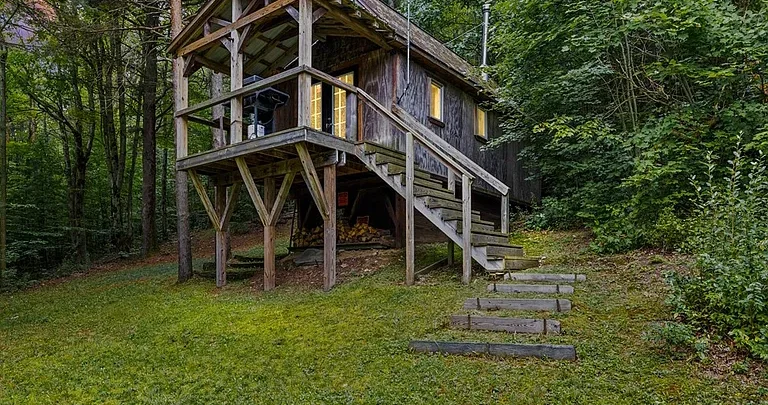
A Peaceful Forest Retreat: Discover Rustic Cabin Charm in Wayland, New York
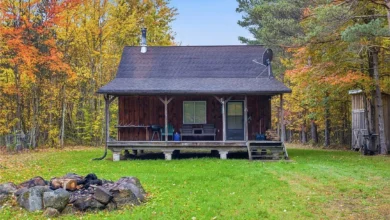
A cabin surrounded by mature trees offers a particular kind of appeal. The setting encourages you to notice what is immediately around you: the shape of a tree trunk, the changing light between branches, or the view waiting beyond the doorway.
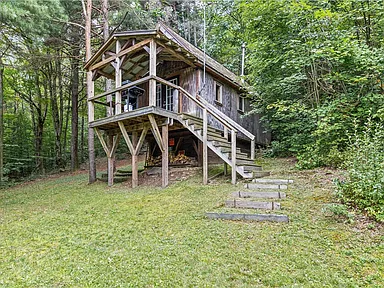
This rustic retreat in Wayland, New York, is described through those simple qualities. Its character comes from a wooded setting, picturesque scenery, a sense of privacy, and opportunities to spend time outdoors.
Rather than presenting an elaborate collection of amenities, the description emphasizes the experience of being close to the forest. The cabin provides a place to pause, while the surrounding landscape gives that pause a distinctive setting.
For readers who appreciate countryside retreats, the attraction is easy to understand. A smaller, informal place can offer a satisfying contrast to busy surroundings without needing to feel grand or complicated.
The following feature explores the cabin’s described character and the possibilities that make a forest retreat appealing. No price, acreage, detailed interior specifications, or current availability has been supplied.
A Wooded Setting That Gives the Cabin Its Identity
The forest is central to how this property is presented.
Mature trees create an established landscape around the cabin, giving the retreat a sense of being settled within its surroundings. Instead of treating the outdoors as something added after construction, the description places it at the heart of the experience.
That relationship influences how someone might enjoy the property.
A short period spent outside could become part of a morning routine. A view of the trees could provide a reason to stop between activities. An afternoon might revolve around exploring rather than traveling to a separate destination.
The precise layout has not been provided, but the overall character is clear: this is a retreat whose appeal depends strongly on its wooded environment.
Understanding that connection is more useful than imagining amenities that have not been mentioned.
Mature Trees and the Sense of an Established Landscape
Mature trees contribute something that newly planted landscaping cannot immediately reproduce.
They bring scale, texture, and variation to the surroundings. Their trunks and branches create a setting that can be appreciated from different positions and at different times of day.
Around a cabin, those features can help the building feel part of a larger landscape.
The supplied description associates the trees with quiet and privacy. That is an appealing quality, although the exact relationship to neighboring properties, roads, and boundaries would need to be understood separately.
Privacy is also an experience rather than a single feature. Someone might value visual separation, a quieter place to sit, or the feeling of being surrounded by vegetation.
Here, the trees provide the strongest described foundation for that atmosphere.
Rustic Character Without Unnecessary Complexity
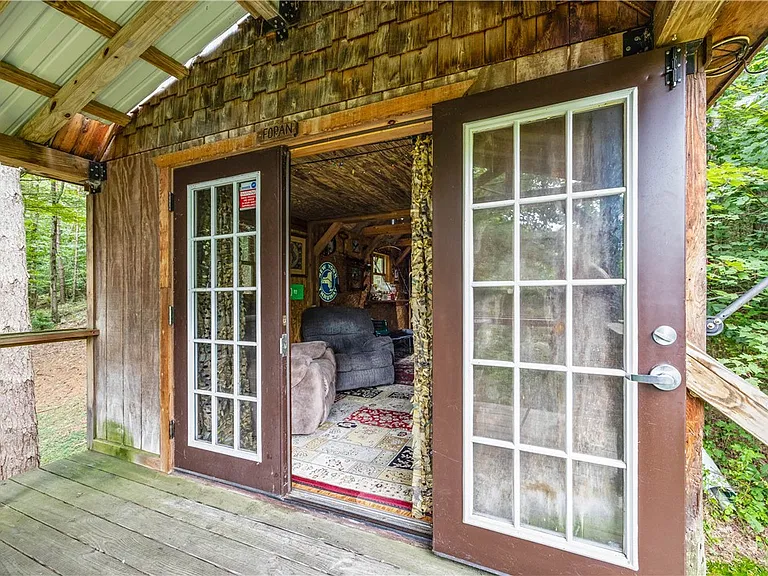
The cabin is described as rustic and cozy.
Those words suggest an informal atmosphere, but they do not establish a particular construction date, floor plan, or collection of finishes.
The appeal can be understood without inventing those details.
Rustic character often works best when a building feels suited to its purpose. A retreat does not need to imitate a large residence to be enjoyable. Its value may come from making ordinary activities feel comfortable in a different setting.
A book, a conversation, or a quiet hour can become the focus of a visit.
That simplicity also leaves room for personal preferences. Someone who enjoys a restrained interior might appreciate allowing the surrounding forest to provide much of the visual interest, rather than filling every space with decoration.
A Retreat That Encourages Time Outdoors
The property description emphasizes outdoor enjoyment.
That matters because a cabin’s appeal extends beyond the building itself. The experience may include the transition between indoors and outdoors, the choice to explore, and the ability to spend time appreciating the immediate surroundings.
An outdoor-focused retreat can support both active and quiet interests.
One visitor might want to walk and observe the landscape. Another might prefer to sit with a notebook or take photographs. A shared visit could include periods together and time spent separately.
The setting does not need to provide an organized activity for every hour.
Its appeal may lie in having choices that are straightforward and close at hand, allowing the day to develop around interest rather than obligation.
Nature Trails Add Another Dimension
Nature trails are mentioned among the retreat’s attractions.
They suggest a way to experience the setting through movement rather than viewing it from one place. Walking can reveal changes in vegetation, different perspectives, and details that may be overlooked during a brief visit.
However, the description does not identify the trails, their length, their condition, or their ownership.
It should therefore not be assumed that they are private trails contained entirely within the property. Access and appropriate use would need confirmation.
For a feature article, the important point is the opportunity described: the surrounding environment offers something to explore.
A trail does not have to be long or demanding to become a meaningful part of a day. Even a modest route can encourage closer attention to a landscape.
Picturesque Views Worth Taking Time to Notice
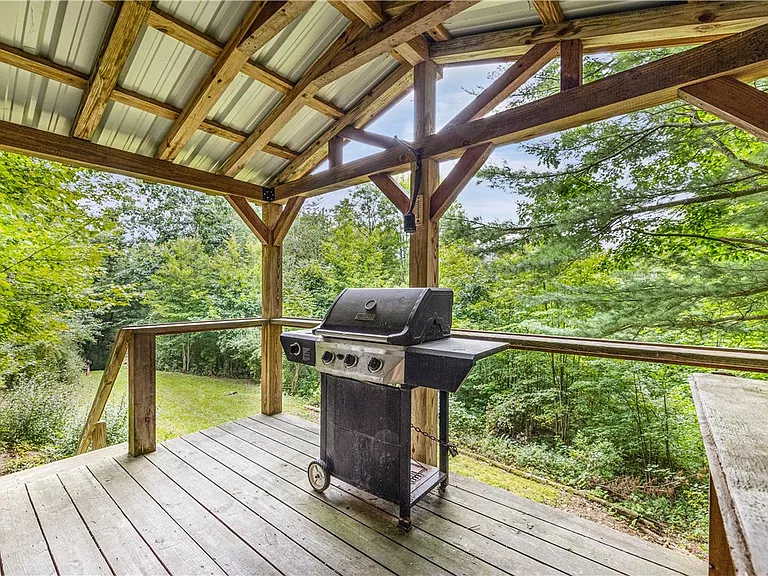
The property is also described as offering picturesque views.
Without photographs or a detailed site description, those views should not be expanded into claims about mountains, water, or distant landmarks.
A wooded view has its own interest.
The arrangement of trees, layers of foliage, and variation in light can give someone plenty to observe. The same outlook may feel different when seen from another position or revisited later in the day.
For a person interested in photography, drawing, or keeping a nature journal, that variation could become part of the retreat’s appeal.
For someone else, it might simply provide a pleasant place to rest their attention.
There is no requirement to turn every attractive view into an activity. Sometimes looking is enough.
A Different Pace for Familiar Routines
One of the most appealing aspects of a countryside retreat is that familiar routines can feel different in a new setting.
Reading a few chapters, sharing a conversation, or making notes about the day may take on greater importance when there is less pressure to move immediately to the next task.
The cabin’s cozy character provides a setting for that kind of use.
The description does not establish particular kitchen facilities, furnishings, or sleeping arrangements, so those should remain outside the factual account.
What it does support is the idea of a relaxing place connected to nature.
The experience need not depend on a dramatic change in lifestyle. It might involve something as manageable as giving an ordinary activity more time and attention than it usually receives.
Creating a Comfortable Cabin Atmosphere
If someone were considering how to furnish a retreat of this character, comfort and usefulness would offer a sensible starting point.
A smaller collection of practical pieces could preserve an informal atmosphere. Seating should suit the activities people actually enjoy, and storage could help keep the space from becoming crowded.
These are design possibilities rather than claims about the cabin’s existing interior.
The surrounding forest could also influence decorative choices. A restrained approach might allow views and natural textures to remain prominent.
There would be little need to introduce an elaborate theme simply to remind visitors that they are in a rural setting.
The landscape already establishes that context.
A comfortable interior would support time spent at the retreat while keeping the outdoors central to its identity.
Quiet Activities Can Be Part of the Adventure
The word “adventure” often suggests a demanding outing, but it can also describe a more modest act of exploration.
Looking closely at an unfamiliar plant, following a route for the first time, or noticing a detail worth photographing can make an ordinary afternoon engaging.
A forest retreat can provide a setting for those interests without requiring every visitor to have the same level of activity in mind.
Some people enjoy keeping records of what they observe. Others prefer to leave their plans open.
The description does not promise particular wildlife sightings or seasonal events, and neither is necessary to explain the appeal.
The opportunity is to become familiar with a place gradually, noticing more as time spent there increases.
Enjoying the Retreat With Other People
A cozy cabin can also provide a setting for shared time.
The attraction is not necessarily hosting a large gathering. It may be the chance to spend a few hours with someone without dividing attention among several competing commitments.
A walk followed by conversation could be enough.
So could an afternoon in which each person enjoys a separate activity before coming back together.
The property description does not provide a guest capacity or accommodation details. Those practical matters would need to be established before planning a stay.
As a lifestyle concept, however, the retreat suggests a setting where the surroundings contribute to the occasion.
The forest gives people something to explore, discuss, and remember without requiring elaborate arrangements.
Respecting the Landscape That Makes It Appealing
A retreat surrounded by natural beauty invites care as well as enjoyment.
For someone spending time there, that could begin with understanding which areas are part of the property and which routes are available for use.
It could also influence future plans.
Before changing a landscape, it is worth identifying the qualities that make it attractive. An appealing wooded setting may benefit from a measured approach rather than an assumption that more clearing or more construction would improve it.
The right balance would depend on the actual site and the intended use.
The broader principle is straightforward: the forest is part of what gives this cabin its identity.
Plans that acknowledge that relationship are more likely to preserve the experience described in the original material.
What the Description Does and Does Not Establish
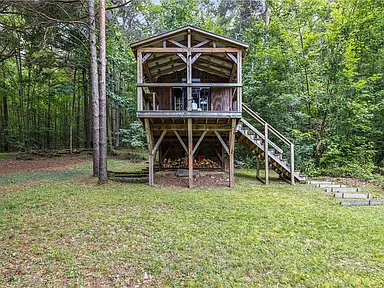
The information available presents a rustic cabin in Wayland, New York, surrounded by mature trees and a peaceful wooded environment.
It highlights picturesque scenery, privacy, nature trails, and the appeal of spending time outdoors.
It does not provide a full address, asking price, acreage, construction date, room count, utility information, or current sale or rental status.
Those omissions do not prevent a character-focused feature, but they do limit what can responsibly be claimed.
This article therefore does not present the retreat as a verified active listing or describe it as suitable for year-round residential use.
A fuller property record could answer the practical questions. The current description communicates the atmosphere and the relationship between the cabin and its surroundings.
A Place to Develop a Personal Connection With Nature
What makes a retreat meaningful is often the way someone uses it over time.
A first visit may be dominated by broad impressions. Later visits can bring greater familiarity: a preferred place to pause, a route worth repeating, or a view that becomes associated with a particular memory.
That connection does not require a large property or a long list of amenities.
It develops through attention and repeated experience.
For this Wayland cabin, the wooded surroundings provide the main described source of interest. The cabin offers a comfortable focal point within that setting.
Together, they suggest a place that could become personally significant through simple habits rather than constant novelty.
The Appeal of This Wayland Forest Retreat
This rustic cabin is described through a clear combination of qualities: a cozy character, mature trees, picturesque surroundings, privacy, and opportunities for outdoor exploration.
Its identity comes from how those elements work together.
The cabin provides a destination, while the forest supplies much of the experience around it. Nature trails introduce the possibility of exploration, and the quieter setting offers room for familiar activities at a less hurried pace.
There is no need to add unsupported luxury features to explain why that combination might appeal.
For readers drawn to countryside cabins, the picture is already engaging: an informal retreat in Wayland, New York, where the landscape is central to the reason for being there.
Additional details would help establish the practical possibilities. The atmosphere described offers a straightforward starting point for appreciating the property.
From Zillow