News
Park Bench Picture Puzzle: Why the Claimed Answer Is Uncertain
Park Bench Picture Puzzle: Why the Claimed Answer Is Uncertain

This park bench picture puzzle arrives with a familiar invitation: look closely and spot what is wrong. Three women appear to be sitting together outdoors, a red oval draws attention to their lower bodies, and the caption promises an unforgettable discovery.
There is a catch, though, and it is not one we should hide until the end. The source claims the bench has no seat. In the supplied picture, horizontal wooden surfaces appear visible beneath and beside the women. That makes the suggested answer questionable rather than confirmed.
So let us enjoy the image without pretending that an uncertain explanation is settled fact. We can examine what the source says, compare it with what the picture actually shows, and keep room for an honest “that does not look proven to me.”

Start With the Actual Picture
The shared image shows three women wearing sunglasses, seated in a park setting. There is a wooden backrest, a supporting frame, and a broad red oval over the seating area and their legs.
Those are visible features we can describe. They do not establish who the women are, when the picture was made, or whether any part was edited. The source supplies no independently checked background that would settle those questions.
Before looking for a trick, separate the image from the dramatic words attached to it. A promise that you will never “unsee” something is an invitation to search. It is not evidence that the stated flaw is really present.

The Source’s Proposed Answer
The article directs readers away from counting legs or studying shoes and toward the bench. Its explanation is that the actual wooden seat is missing, leaving the women apparently unsupported.
That is the published interpretation. It is fair to report it as the source’s claim. It would not be fair to rewrite it as something this image clearly proves when the visible details do not comfortably support it.
Look along the front and sides of the sitting area. Brown horizontal boards appear beneath the figures. They look consistent with seat slats, although overlap and image quality can complicate reading individual parts. At minimum, they prevent a confident declaration that there is plainly no seat.
What We Can and Cannot Confirm
We can confirm that the source offers a missing-seat explanation. We cannot confirm that explanation from the supplied version of the picture. Those two statements can sit beside each other without forcing a different answer into the gap.
There is no need to invent an extra limb, a hidden support, or a story about how the women posed. None of those ideas becomes true simply because the first answer seems doubtful. A weak explanation does not automatically prove its opposite.
It is also possible for an image and its accompanying explanation to become mismatched when shared, but we do not have evidence that this happened here. Treat that as a general possibility, not a discovered history of this particular post.

A Better Way to Inspect the Park Bench Picture Puzzle
First, look at the full image rather than only the red oval. Identify the backrest, armrests, front edge, and visible supports. Then compare the area behind the knees with the exposed sections beside the women.
Second, enlarge the original display if your screen allows. Enlargement can make an existing edge easier to inspect, but it does not create reliable new detail. A blurry patch remains uncertain even when it fills the screen.
Third, describe what you see before deciding what it means. “I can see horizontal brown boards” is a more useful starting point than “they must be floating.” The description leaves room to test an interpretation instead of making the conclusion the first step.

Why a Red Circle Is Not an Answer
A bold marker tells you where someone wants your attention. It does not tell you what is wrong there, or whether anything is wrong at all. That difference is easy to forget when the surrounding caption sounds certain.
In this image, the oval covers a large area that includes legs, clothing, and the bench. A reader could spend time examining any of those features. The marker alone does not identify a single error.
Try covering the caption briefly and asking what you would notice without the prompt. You may still find the picture interesting, or you may see an ordinary scene. Either response is allowed. There is no obligation to discover an impossible detail simply because the headline asks for one.
Do Not Turn Ambiguity Into a New Story
Visual puzzles sometimes inspire elaborate explanations: invisible seats, unusual camera tricks, or people holding uncomfortable poses. Those can be imaginative suggestions, but imagination is not verification.
For this image, we do not have a behind-the-scenes account or an original unmarked photograph that resolves the issue. We should not claim a production method, identify the people, or declare the image manipulated based only on uncertainty about the caption.
The useful stopping point is modest: the source’s intended answer is known, while the picture does not establish it clearly. That gives readers more honest information than replacing one confident guess with another.

Make the Discussion Friendly
If you share the puzzle, let friends know that the suggested answer is disputed by the visible seat-like boards. Ask what they can actually point to, rather than challenging them to accept a reveal they cannot see.
Someone noticing the boards has not necessarily “missed the trick.” Someone initially following the source’s explanation has not failed a test either. A discussion can change when people compare details, and changing your mind is more useful than defending a caption at all costs.
You can even make two short lists: visible features and claims about those features. Keeping them apart is a handy habit for any picture that arrives with a dramatic explanation. It lets a playful activity stay playful without rewarding overconfidence.

One Last Check Before You Share
Read your own description and ask whether it promises more certainty than the picture provides. If you write that the women have nothing beneath them, can you account for the boards visible along the front? If not, soften the claim rather than asking the reader to ignore them.
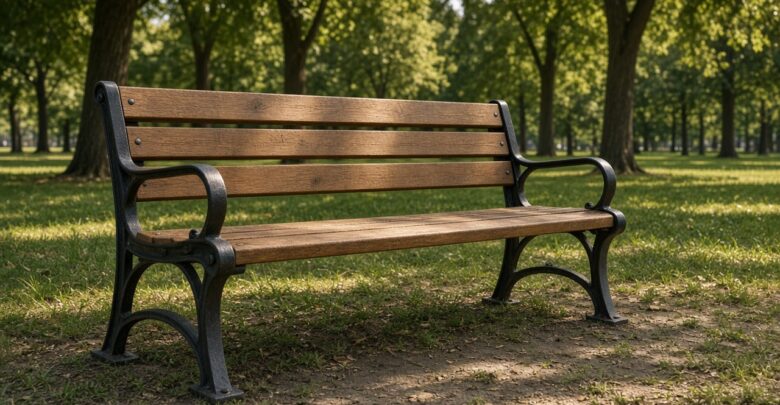
Also keep the generated supporting photos separate from the evidence. The ordinary benches pictured here were made as illustrations. Their construction cannot establish how the bench in the original photograph was built. They help explain the topic, but only the supplied puzzle image is being assessed. That separation prevents a pleasant-looking extra image from quietly becoming a substitute for the one that raised the question in the first place. Clear labels make the whole discussion easier to follow.
The Honest Ending
The answer offered by the source is “the bench seat is missing.” Our finding is narrower: that answer is not confirmed by the supplied image, which appears to show horizontal seating boards.
There is no verified alternative solution to announce. This park bench picture puzzle is best enjoyed as an invitation to look carefully—and to question a reveal when the image does not back it up.
There is a useful distinction between enjoying a visual challenge and endorsing its explanation. You can spend a pleasant minute inspecting the picture, find the proposed solution unconvincing, and still have completed the activity thoughtfully. A puzzle does not need a forced agreement to have value. In this case, noticing a conflict between the visible boards and the written reveal is itself a careful reading of the material. That is a better outcome than confidently repeating something you cannot support.
Thanks for taking a thoughtful second look with us. This image discussion is for entertainment and general information, not professional advice or a test of anyone’s abilities. A friendly question mark is sometimes the most honest finish.