Uncategorized
My Son Accused My Boyfriend of Wanting My Late Husband’s Insurance—Then I Discovered His Secret

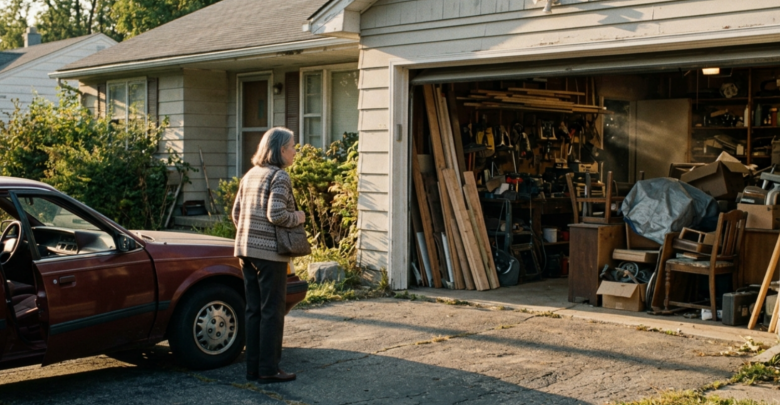
A Widow’s Second Chance at Happiness
At sixty-four, I never imagined I would have to defend my right to fall in love again. After thirty-nine years of marriage, losing my husband, Dwight, had left me with an emptiness I struggled to explain. My children, Zach and Megan, worried about me, and I understood why. But when I began spending time with a kind, quiet man named Wendell, their concern turned into suspicion.
My son accused Wendell of wanting the insurance money Dwight had left me. He questioned my judgment, monitored my financial activity, and treated my new relationship as though it were a threat to everything our family had built.
I tried to be patient. I knew grief could make people afraid of change. Yet I never expected that the man I loved might become the center of a conflict that would force me to protect my independence from my own children.
Then I discovered what Wendell had been hiding in his garage.
It was not a secret bank account or a plan to take my money. It was something far more personal—something connected to his mother, his regrets, and a promise he had carried for years.
What I found that afternoon changed the way I understood Wendell. It also made me realize how much of my own life I had allowed fear and grief to control.
The Secret Behind Wendell’s Garage
I had driven nearly forty minutes down a quiet country road to find out the truth. Zach had convinced me that Wendell was hiding something dangerous, and I could no longer ignore the questions that had been building in my mind.
When I arrived, I noticed the wooden ramp leading toward the house. Inside the garage, photographs were arranged on a wall. Beneath them, written in Wendell’s careful handwriting, were three words:
“For Mama’s comfort.”
I stood there, staring at the photographs, when Wendell appeared in the doorway. He wore an old gray T-shirt, faded jeans, and safety glasses pushed onto his forehead. The moment he saw me, he stopped.
“Winnie? You came out here.”
“I did,” I answered.
He looked at the photographs and then back at me. His expression was not the guilty look I had expected. Instead, he seemed deeply saddened.
“I suppose you deserve to know,” he said quietly.
I crossed my arms. I had spent the drive rehearsing questions, and now they came tumbling out.
“Why won’t you let me see your house? Is there something you’re hiding? Is there another woman?”
Wendell shook his head.
“No, ma’am. There isn’t.”
“Then what is going on?”
He glanced toward the ramp.
“I wanted to finish something first.”
“That isn’t an answer.”
“No,” he admitted. “It isn’t. Come inside, Winnie. Please.”
I hesitated before following him.
The house smelled of fresh paint, wood, and coffee. It was modest and welcoming, with old-fashioned furniture and clean curtains. There were no signs of a secret life. Instead, I noticed wide doorways, grab bars in the bathroom, and newly installed lower kitchen cabinets.
The walls were painted a soft buttercup yellow.
I recognized the color immediately because I had once told Wendell about my mother’s yellow kitchen. It was a small memory I had shared without thinking much about it, yet he had remembered.
I stood in the middle of the room, unable to speak.
Wendell finally explained.
“My mother spent the last six years of her life in a wheelchair. After my father died, I brought her here. I thought I could take care of her.”
He paused before continuing.
“I didn’t understand how much a house could make a person feel trapped.”
The bathroom had been too narrow for his mother’s wheelchair. The kitchen counters were too high, and the front steps made it difficult for her to go outside without assistance. Wendell worked long days at the co-op and often came home exhausted. Sometimes, when his mother asked him to sit with her, he told her he had repairs to finish.
He regretted those moments.
“She never complained,” he told me. “That’s what made it worse.”
I understood the look on his face. I had seen it in people who spent years trying to be strong before regret finally caught up with them.
After his mother died, Wendell promised himself he would make the house more accessible. He wanted to honor her memory by changing the things he wished he had changed while she was alive.
The photographs were old pictures he had found in a box. The yellow kitchen was the color his mother had wanted but never got to enjoy.
“And the ramp?” I asked.
He looked directly at me.
“Your knees, Winnie.”
I felt my throat tighten.
I had once told him I was afraid of losing my independence as I grew older. He remembered that conversation, too. He had been making the house easier for me to enter, should I ever want to spend time there.
“You’ve been rebuilding this house for me?” I asked.
“Not just for you,” he replied quickly. “I needed to do it for myself, too.”
He had planned to finish the work before Christmas and invite me over as a surprise. He wanted the house to be ready before he showed me what he had been doing.
For the first time since Dwight died, I felt something other than sadness or guilt. I felt hope.
The Cost of an Unfinished Promise
Then I noticed a stack of papers on the kitchen counter. A bank envelope lay beneath a lumberyard receipt, and one number caught my attention: $18,400.
“Wendell, what’s this?”
He gathered the papers, looking uncomfortable.
“Just bills.”
“That’s a lot of lumber. Have you been borrowing money?”
“No.”
“Then how are you paying for all this?”
He hesitated before answering.
“I sold my fishing boat, cashed out some savings, and took on small repair jobs for people in town.”
Suddenly, I understood why he had seemed so tired lately. I had mistaken his exhaustion for the ordinary weariness of getting older. In reality, he had been working long hours to complete a project that meant something deeply personal to him.
I wanted to scold him for pushing himself so hard. Instead, I thought about my own unfinished promises. For two years, I had dusted around Dwight’s recliner as if leaving it untouched could preserve a piece of our life together.
Wendell had his regrets, too. Neither of us had discovered how to move forward without carrying the past.
I sat down at his kitchen table and asked whether he had eaten.
He looked surprised.
“Have you eaten today?” I repeated.
He started to protest, but I stopped him.
“You have eggs? I’ve driven forty minutes, and I’m not leaving until somebody in this house gets a proper meal.”
He laughed, and his shoulders finally relaxed.
As he moved around the kitchen, I noticed a handwritten list on the refrigerator. It contained several tasks he wanted to finish before Christmas: complete the ramp, install the bathroom rails, finish the kitchen, and fix the back door.
The final item read, “Ask Winnie to dinner.”
I smiled at those words. After months of feeling as though my life had become a collection of things I had lost, I had found something to look forward to.
But my peaceful afternoon would not remain peaceful for long.
When Concern Becomes Control
I returned home feeling lighter than I had in months. I had promised Wendell I would keep the renovations a surprise until Christmas, and I intended to honor that promise.
That evening, my phone rang while I was preparing supper.
It was Zach.
“Mama, where were you today?”
“Hello to you, too,” I replied.
He said he had stopped by my house and found me gone. Then he asked where I had been, what I had done, and whether I had visited Wendell.
I grew uncomfortable.
“