News
Here’s Why You Should Never Put Your Crockpot on the Stovetop
Here’s Why You Should Never Put Your Crockpot on the Stovetop

Can You Put a Crockpot on the Stovetop What to Know Before You Try
Dinner is almost ready, but the chili in your slow cooker needs more time. Everyone is hungry, and turning up a stove burner seems like an easy solution. You might be tempted to lift the ceramic insert from its base and place it directly over the heat.
For a standard slow cooker with a stoneware insert, that is a mistake.
Keep a conventional ceramic crock off the stovetop unless the instructions for your exact model clearly allow it. Crockpot’s guidance says its standard removable stoneware should not be used on gas or electric burners.
Fortunately, there is a practical alternative: transfer the food into suitable stovetop cookware and continue cooking there.
Understanding the difference between the appliance, its removable insert, and a regular cooking pot can help you avoid a broken dish, spilled food, and a difficult cleanup.
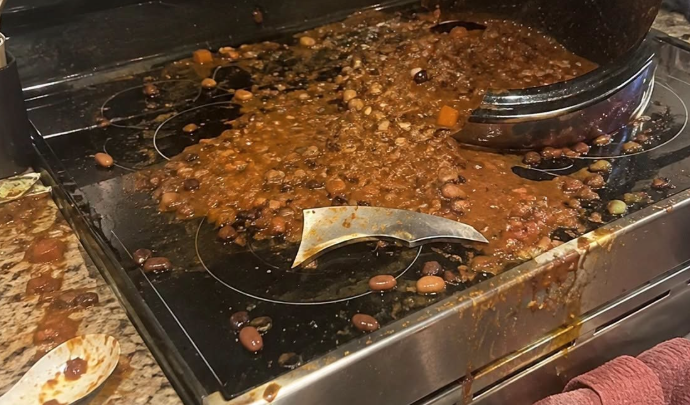
The Chili Spill That Shows What Can Go Wrong
The account accompanying this kitchen mishap describes a batch of chili that spent six hours in a slow cooker on high. Because it still needed cooking, the owner reportedly placed the crock on a stove burner for another hour.
Later, when the cooled insert was lifted, its bottom separated. Chili spilled across the stovetop.
The important lesson is straightforward. A removable insert may look like a substantial cooking pot, but its weight and appearance do not establish which heat sources it can tolerate.
Likewise, surviving one use on a burner does not prove that the cookware is approved for that purpose. The instructions for the exact product remain the guide.
Understand Which Part of the Slow Cooker You Are Using
A typical slow cooker has several separate parts: an electrical heating base, a removable cooking insert, and a lid.
These parts do different jobs and may have different restrictions. Permission to use an insert in an oven, for example, does not extend to the electrical base or automatically include the lid.
This distinction matters when you read care instructions. Look for guidance that identifies the specific component, cooking method, and temperature limit.
If the manual says the stoneware is oven-safe, read the conditions attached to that statement. Do not interpret it as general permission to use the entire appliance in other cooking environments.
When instructions are unclear or missing, identify the model number and contact the manufacturer rather than testing the cookware yourself.
Why Oven Safe Does Not Mean Stovetop Safe
An oven and a burner expose cookware to heat in different ways.
Inside an oven, heat surrounds the dish. On a burner, energy is applied more directly to a limited area of its base. Cookware must be designed for the cooking method in question.
That is why a dish can be approved for baking while remaining unsuitable for a gas flame or electric element.
Crockpot’s standard stoneware guidance illustrates this distinction: it permits certain oven and microwave uses while specifically excluding stovetop burners. The same page also lists different permissions for the lid.
Before changing cooking methods, check the actual instructions. A familiar material, sturdy appearance, or previous successful attempt is not a substitute for approval.
Sudden Temperature Changes Can Damage Stoneware
Temperature changes are another concern when handling ceramic cookware.
Crockpot warns that its stoneware and lid do not tolerate sudden temperature changes. Its cleaning guidance specifically advises against washing hot stoneware with cold water.
This type of temperature stress is commonly called thermal shock. Different areas of a dish can change temperature at different rates, placing stress on the material.
However, the exact cause of a particular break cannot be established from a photograph alone. The chili incident should not be treated as proof of a specific hidden crack or precise failure mechanism.
What matters for everyday use is following the approved heating and cooling methods. Avoid using cold water to cool a hot crock, and do not move it between heat sources unless the manufacturer permits that use.
A Heavy Insert Is Not Automatically More Versatile
The thick walls of a stoneware insert can make it feel exceptionally durable. Yet durability depends on how an item is used.
A dish may perform well within its intended appliance while being unsuitable for direct burner heat. Thickness does not remove that restriction.
The same principle applies to other kitchen dishes. A roasting dish, casserole, or serving bowl should not be placed on a burner simply because it resembles cookware that can be.
Check the markings and instructions rather than relying on appearance. If stovetop use is not clearly approved, choose a pot that is designed for the job.
This is especially important when using borrowed appliances or secondhand cookware. Without the original packaging, it can be easy to confuse a serving dish with a cooking vessel.
What About Slow Cookers With Metal Inserts
Not every slow cooker uses conventional ceramic stoneware.
Some products have removable inserts designed for additional cooking methods. Nevertheless, the material alone does not tell you which uses are permitted.
A metal insert may have a coating, handles, or construction details that come with specific limits. Similarly, approval for one burner type does not necessarily mean approval for every cooktop.
Find the model number and check its manual before attempting stovetop cooking. If the product allows searing or browning, follow the stated instructions for that feature.
The useful rule is product-specific: use the insert only with the heat sources expressly approved for it.
A different slow cooker’s instructions, or advice about a similar-looking pot, should not be used to override your own model’s limits.
Move the Food Into a Proper Pot
If a slow-cooked meal needs additional cooking, leave the stoneware out of the stovetop process.
Instead, transfer the food into a saucepan, stockpot, or Dutch oven approved for your burner.
First, prepare the receiving pot on a stable surface. Then use a suitable ladle or spoon to move the food carefully, avoiding splashes.
Once the transfer is complete, place the approved cookware on the burner and continue following the recipe. Thick foods such as chili may need stirring to prevent sticking.
Keep the cooking method and food safety questions separate. Changing pots solves the cookware problem; the food still needs appropriate cooking and handling.
If it has already been held unsafely, additional heating should not be assumed to make everything acceptable.
Check Temperature Instead of Judging by Appearance
A bubbling surface does not tell you everything about a meal.
The appropriate cooking temperature depends on the ingredients and whether you are preparing raw food or reheating a previously cooked dish. Follow a reliable recipe and use a food thermometer where needed.
For leftovers, USDA guidance recommends reheating to at least 165°F, or about 74°C. It also advises against reheating leftovers in a slow cooker because the food may spend too long warming through.
A stove, microwave, or oven provides a more suitable reheating method when used with the correct cookware.
This also explains why “cook longer” is not a complete instruction. The aim is to use an appropriate method and verify the relevant temperature, rather than relying only on elapsed time.
Handle a Hot Crock With Care
When cooking ends, remember that both the insert and lid can remain hot.
Use dry oven mitts and plan where the cookware will go before lifting it. A suitable heat-resistant trivet provides a more deliberate landing place than an unprepared counter.
Do not attempt to speed cooling by adding cold water to hot stoneware. Likewise, wait until the component has cooled as directed before washing it.
Crockpot recommends switching off the appliance, unplugging it, and allowing it to cool before cleaning. It also warns against immersing the electrical heating base in water or other liquids.
Keep cleaning instructions for the removable pieces separate from those for the base. A dishwasher-safe insert does not make the electrical appliance dishwasher-safe.
Do Not Wait for a Full Crock of Leftovers to Cool
Protecting the cookware should not mean leaving a large quantity of cooked food on the counter for hours.
Instead, divide leftovers into smaller portions in shallow containers and refrigerate promptly.
USDA guidance says leftovers should not remain unrefrigerated for more than two hours, or one hour when the surrounding temperature is above 90°F, about 32°C. The refrigerator should be at 40°F, about 4°C, or below.
You do not need to wait for small portions of hot food to reach room temperature before refrigeration. USDA explains that small amounts can go directly into the refrigerator, while large pots of soup or stew should first be divided among shallow containers.
The practical approach is to cool the food efficiently in appropriate storage containers while allowing the empty crock to cool separately.
Store and Reheat Leftovers With a Clear Plan
Once leftovers are packed, add a date so you can keep track of them.
USDA recommends using refrigerated leftovers within three to four days or freezing them for longer storage.
Plan portions around how the food will be used. Smaller containers can make it easier to take out only what is needed for a meal.
When reheating, choose approved cookware and heat the portion thoroughly. Stir foods such as soups and chili so you can check temperature more meaningfully across the dish.
Avoid using the slow cooker as a shortcut for warming cold leftovers from the refrigerator. Cooking a meal in a slow cooker and reheating a chilled meal are different tasks.
A little planning after dinner can make the next day’s meal both easier to manage and easier to handle properly.
What to Do if an Insert Breaks
If a crock breaks during use, stop cooking and keep other people away from the spill.
Turn off the heat if you can reach the controls safely. Do not grab falling pieces or try to catch a heavy insert.
Allow the area to cool before handling broken material. Use suitable protection and tools rather than bare hands.
Discard food that may contain ceramic fragments. Picking out visible pieces does not reliably remove smaller fragments hidden in a thick dish.
If liquid has entered electrical components, or the cooktop appears cracked or damaged, leave the equipment out of use and arrange an assessment.
Once immediate hazards are controlled, follow the cooktop manufacturer’s cleaning instructions. Avoid scraping blindly across the surface, since fragments may remain beneath the food.
Retire Damaged Cookware Rather Than Testing It Again
A visibly cracked or chipped insert should be taken out of service while you seek replacement guidance.
Do not use another cooking session to see whether the crack grows. Likewise, do not assume that household glue creates a repair suitable for contact with food and repeated heating.
Record the appliance’s model number before ordering a replacement. Similar appearance or capacity does not establish compatibility with the heating base.
The same caution applies if an insert has been used outside its instructions. Contact the manufacturer for advice about the specific incident rather than assuming the absence of an obvious break proves it remains suitable.
Replacing a damaged component is inconvenient, but it is more manageable than another spill involving hot food.
Plan Ahead Without Taking Cookware Shortcuts
The easiest way to avoid a last-minute transfer is to choose a recipe that fits the time available.
Check the recommended setting, preparation steps, and cooking range before starting. Leave room for variation rather than planning dinner around the shortest possible cooking time.
Prepare the stovetop pot in advance if you expect to finish part of the recipe there. This is particularly useful when the recipe already includes a separate browning or reduction step.
Meanwhile, keep the appliance manual accessible. A saved digital copy can help when questions arise about cleaning, oven use, or replacement parts.
For a standard stoneware slow cooker, the key habit is simple: keep the crock within its approved uses. When a burner is needed, transfer the food to cookware made for that burner.
That small change in approach can help keep dinner in the pot and avoid turning a rushed evening into a broken-cookware cleanup.