News
My Sister Threw Hot Coffee in My Face When I Refused to Give Her My Credit Card — Six Weeks Later, My Family Begged Me for Help
My Sister Threw Hot Coffee in My Face When I Refused to Give Her My Credit Card — Six Weeks Later, My Family Begged Me for Help

The Morning My Sister Threw Coffee at Me
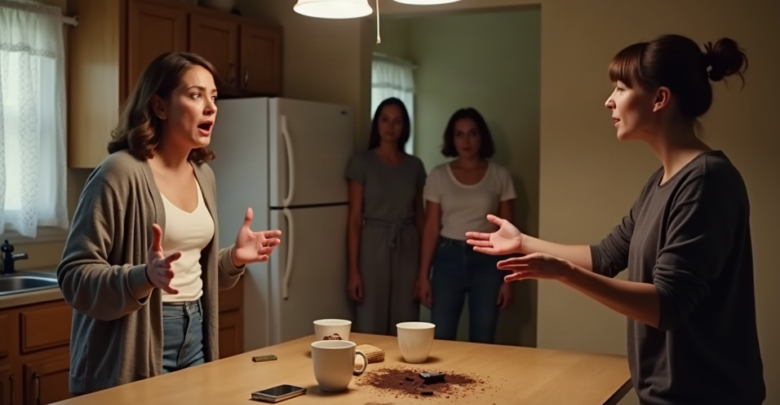
The coffee hit before I even saw Ashley raise the cup. One moment, my sister was smiling across the breakfast table, holding my credit card between her polished fingers. The next, hot coffee splashed across the left side of my face.
“You made me do that,” she said.
My mother grabbed a napkin to protect the white tablecloth. Meanwhile, Dad kept staring at his eggs. Around us, the Sunday crowd at Bellweather Café fell silent.
The argument had started when the server brought over a declined receipt for six hundred dollars’ worth of champagne. Ashley had ordered it for her friends the night before.
Months earlier, I had let her photograph my card to pay for an emergency tire. Since then, her “emergencies” had become salon deposits, designer shoes, and expensive dinners she called networking.
Now she was holding the physical card, asking me to cover the bill. When I reached to take it back, she threw the coffee.
“It’s only until my studio opens,” Ashley said as I pressed a cold glass against my burning cheek. “You make more money than all of us.”
At last, my mother turned toward me.
“Claire, don’t destroy your sister’s future over money.”
My hands shook as I stood, but my voice stayed steady.
“That card belongs to me. The answer is no.”
Ashley laughed.
“You always say that. Then you fix everything.”
Seven Years of Paying Their Bills
She was right about one thing.
For seven years, I had covered Dad’s property taxes, paid for Mom’s dental surgery, and helped Ashley out of two broken leases. Whenever another crisis appeared, my money made it disappear before the neighbors could notice.
Over time, they had mistaken my silence for permission.
The café manager had already called for medical help. A server named Luis brought me a bag of ice and leaned closer.
“The camera caught it.”
“Please save the footage,” I told him.
Later, at urgent care, a nurse photographed the burns and gave me discharge papers. After leaving, I filed a police report.
By evening, the family group chat had turned into a courtroom.
Mom called the coffee an “accident.” Dad said involving the police was cruel. Ashley, however, sent only one message:
“Pay the studio deposit by Tuesday, and we can forget this.”
My job was in fraud risk at a regional bank. That message was something I needed to keep.
So I saved it, froze my card, and disputed the charges I had never approved. Then I placed a fraud alert on my credit files.
Finally, I canceled the monthly transfers covering my parents’ mortgage shortfall and Ashley’s apartment.
For the first time in seven years, they would have to face their bills without my help.
What the Bank Found
For the next six weeks, my family mistook my silence for surrender.
Ashley kept posting photos of Aster House, the beauty studio she planned to open. According to her posts, the funding was secured and everything was moving forward.
Meanwhile, Mom left voicemails about forgiveness. Dad warned that a police report could “haunt Ashley for the rest of her life.”
Neither of them asked how my face was healing.
Instead of answering, I worked with Marisol Vega, an investigator from the card issuer. Together, we separated the expenses I had agreed to pay from those Ashley had charged without asking.
There was no reason to hide the help I had freely given. But helping my family did not mean approving every purchase they wanted to make.
The review found 38 charges linked to Ashley’s digital wallet after she had photographed my card.
They totaled $31,840.
Along with those records, Marisol reviewed the café footage and Ashley’s messages. Then she paused at a separate charge for $9,500.
“This was attempted two days after the café incident,” she said. “It was blocked.”
On the screen were three attempts to process the same amount under different descriptions.
The business receiving the payment was registered in Ashley’s name.
My sister had tried to move money from my credit card through her own company and label it “equipment financing.”
Until then, my parents had insisted this was a family misunderstanding. Those records made their story much harder to defend.
The Bills They Expected Me to Pay
My lawyer, Nina Patel, sent notices asking Ashley and the payment processor to preserve their records. She also requested a protection order based on the café assault and the threatening messages that followed.
The court granted a temporary order.
Meanwhile, the money problems my family had hidden for years began to surface.
Without my monthly transfers, my parents could no longer cover their mortgage payments. Dad had also put retirement money behind Ashley’s studio lease, while Mom had bought its furniture on credit.
As for Ashley, she had signed a five-year commercial lease. Her plan depended on me paying the first six months.
Soon, my phone showed 31 missed calls and 17 messages.
“The bank is holding all the studio money,” Ashley wrote. “Remove the fraud alert NOW.”
Dad’s message was shorter.
“We could lose the house.”
Then Mom sent a photo of an overdue notice.
“How can you do this to your own family?”
Only one reply went back.
“I didn’t sign your loan, approve Ashley’s use of my card, or throw coffee in my own face. Please speak to my lawyer.”
Even after that, they asked Nina to arrange a meeting.
I agreed to attend at her office.
The Meeting at My Lawyer’s Office
Through the glass wall, I watched Ashley pace in a dark red coat. Beside her, Dad twisted his hat between his hands. Mom held a folder full of spreadsheets I had sent them over the years.
Inside was a record of every bill I had helped pay.
Somehow, they thought those past gifts proved I owed them more.
As soon as I sat down, Mom spoke.
“You’re the one who made us get used to depending on you.”
In response, I placed the bank’s report on the table.
“I helped everyone. Ashley learned she could take my money, and you both taught her that I would apologize for noticing.”
For once, nobody accused me of overreacting.
Ashley broke the silence.
“Just withdraw the complaints, pay the studio lease, and I’ll apologize.”
Nina slid the café photographs across the table.
One showed Ashley’s raised hand as I turned away. The coffee was still in the air between us.
Beside it, Nina placed the payment records showing the three blocked attempts.
“An apology isn’t currency,” she said. “Claire won’t pay your lease in exchange for an apology. Any questions about the criminal case need to go through the proper lawyers.”
Dad went pale.
Then he admitted he had called the card company and claimed I had approved Ashley’s studio charges.
He thought that would make the bank release the money.
However, the company had recorded his call. His attempt to help Ashley had created another record for the investigators to review.
Nina told him to get his own lawyer.
The Answer Was Still No
After a long silence, Mom looked down at the documents.
“So what do we do now?”
“Sell the lake house,” I said.
All three stared at me.
The property had sat empty for three years. Even so, Dad had refused to sell it because he wanted to leave it to the next generation.
“The sale could cover the mortgage shortfall and most of the furniture debt,” I continued. “Then meet with a credit counselor and work out what you can afford.”
“What about my studio?” Ashley snapped.
My eyes stayed on hers.
“You needed my money to open it. I never agreed to give it to you.”
She stood so quickly that her chair hit the wall.
Then she moved toward me.
Before she reached my side of the table, the receptionist opened the door. A police officer was waiting outside.
Ashley stopped.
Nina ended the meeting, and I left without promising anyone a payment.
For years, every family argument had ended with me reaching for my wallet. This time, the answer stayed no.
The Consequences Finally Arrived
Eventually, Ashley was charged with fraudulent credit-card use and assault. Faced with the footage, payment records, and messages, she accepted a plea agreement.
Her sentence included probation, counseling, community service, and an order to repay the money she had taken. The protection order was also extended.
Meanwhile, the studio lease was ended under its fraud provisions. Ashley still had financial obligations to settle, but none of them became mine.
Dad avoided charges after correcting his statement and helping with the investigation. Even so, he spent the following years sorting through the debts and promises he had helped create.
My parents sold the lake house. Later, they moved into a smaller home and entered a debt-management program.
During one session, their counselor asked them to add up all the money I had given them over the years.
The total came to $86,214.
Mom mailed me the spreadsheet without a note.
For a while, I left it on the kitchen counter. Seeing the total in one place made it harder to dismiss each payment as a small favor.
Eventually, I put it away.
Their mortgage, moving costs, and Ashley’s repayments remained their responsibility. There were no more transfers from my account.
A Bank Statement Without Fear
When the gold Aster House sign disappeared from the storefront, I felt no urge to celebrate.
By then, something quieter mattered more.
My phone no longer rang at midnight with another emergency. Bank statements stopped filling me with dread. Every charge on my card was one I recognized.
Eight months after the café incident, the pink mark on my cheek had almost faded.
With the money I once spent covering my family’s bills, I made a down payment on a bright apartment overlooking the river.
Luis and two friends helped me move. Later, Nina arrived with pizza, and we ate among the boxes.
For the first time in years, my money was helping me build a life of my own.
Some time afterward, Ashley sent a message through my lawyer.
“I hope you’re happy.”
Around me were clean white walls, unopened boxes, and afternoon light stretching across the floor. My credit card sat safely inside my wallet.
After reading her words once, I deleted the message.
My family’s struggles brought me no joy. Still, I could finally feel at peace.
Their pain was no longer a bill with my name on it.