News
Is Collecting Rainwater Really Illegal? The Truth Behind the Myth (and How to Do It Right)
Is Collecting Rainwater Really Illegal? The Truth Behind the Myth (and How to Do It Right)

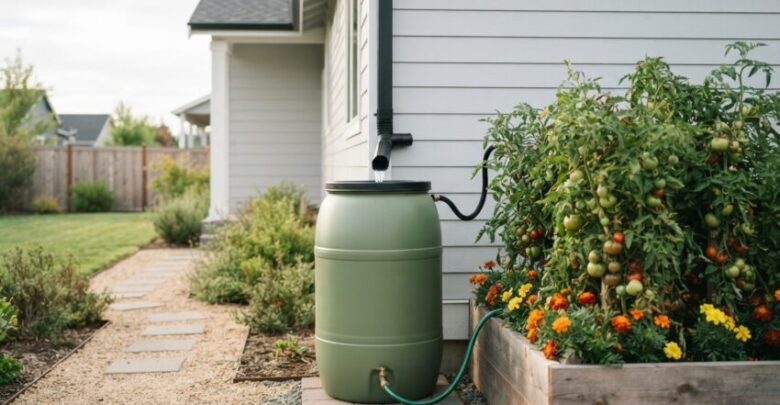
Is Collecting Rainwater Illegal What Homeowners Should Know Before Installing a Rain Barrel
A summer storm can send a surprising amount of water through your gutters. For a gardener, collecting some of that runoff may seem like a practical way to water flowers and make better use of a natural resource.
Then comes the familiar warning: “You cannot collect that water. Someone went to jail for doing it.”
The truth requires more context.
Rainwater collection rules depend on where you live, how you capture the water, how much you store, and how you intend to use it. A small rooftop collection system should not be confused with a project that blocks a natural channel or creates a reservoir.
Before buying a barrel, check the rules that apply to your property. After that, focus on a stable installation, controlled overflow, and uses appropriate for untreated roof runoff.
Why Simple Rainwater Questions Need Local Answers
“Is it legal to collect rainwater?” sounds like a question with a yes-or-no answer. However, it can describe very different projects.
One homeowner may want a covered barrel beneath a garage downspout. Another may be planning a large tank connected to household plumbing. A rural landowner might be considering an earthen dam.
Those projects should not be treated as interchangeable.
Oregon State University Extension, for example, explains that qualifying collection from artificial impervious surfaces can be exempt from a water-right requirement in Oregon. Its guidance also makes clear that other permits or reviews may apply and that pond or reservoir rules are different.
Start by describing your actual proposal. The source of the water and the intended use are more informative than the word “harvesting” alone.
The Oregon Story Behind Many Online Warnings
A widely repeated story concerns Gary Harrington, an Oregon landowner sentenced in 2012 over three unauthorized reservoirs.
Reporting at the time described dams that interrupted water flowing toward a local watershed. It also distinguished the reservoirs from exempt collection of runoff from roofs or other qualifying surfaces.
That distinction is the important part for homeowners.
The case should not be presented as proof that an ordinary garden barrel automatically leads to criminal penalties. Equally, it should not be used to suggest that every project described as rainwater collection is exempt from regulation.
A headline about reservoirs tells you little about whether a particular downspout installation meets your local requirements.
For your own project, use current guidance from the relevant water agency rather than relying on a shortened account of an old dispute.
Check These Details Before Buying Equipment
You can make a conversation with your local agency more useful by preparing a short description of the proposed system.
Include the collection surface, number of containers, total capacity, and intended uses. Mention whether the system will connect to plumbing or simply supply a watering can.
Useful questions include:
- Is this type of rooftop collection allowed at my property?
- Does the proposed capacity require registration or a permit?
- Are there restrictions on where the water can be used?
- Do local building, drainage, or plumbing requirements apply?
- Are there placement rules for the barrel or tank?
Keep the answers with your installation documents.
This approach avoids buying equipment based on a general article and discovering later that an important local condition was overlooked.
Colorado Allows a Defined Small Rain Barrel Setup
Colorado’s general residential rain barrel allowance includes specific limits.
Colorado State University Extension describes a maximum of two barrels with a combined capacity of 110 gallons. The water must be collected from qualifying residential rooftops and used on the same property for outdoor purposes. Drinking and other indoor household uses are not included in that allowance.
The number of barrels and total capacity matter together.
Two containers do not automatically comply if their combined volume exceeds the limit. Likewise, an outdoor-use allowance should not be interpreted as permission to connect the water to household fixtures.
Special circumstances can involve different provisions. Therefore, homeowners planning something beyond the small residential arrangement should contact the Colorado Division of Water Resources for project-specific guidance.
Utah Has a Specific Registration Exception
Utah’s rules are often summarized incorrectly.
The Utah Division of Water Rights states that collection can occur without registration in no more than two covered containers, provided neither container has a capacity greater than 100 gallons.
For collection under the registration provision, total storage is limited to 2,500 gallons. Registration is free, and collection and use must remain on the same parcel.
This is different from saying that every system above 100 gallons needs registration.
The exception depends on both container count and individual container size. Homeowners should review those conditions before choosing a setup.
If the proposed installation does not fit the exception, use the state’s current registration guidance rather than assuming a small change in capacity is unimportant.
California Distinguishes Water Rights From Other Requirements
California’s State Water Resources Control Board states that collecting rainwater from rooftops does not require a water-right permit under Water Code section 10574.
That answers a specific water-right question.
It should not be expanded into a claim that every system is free from all local construction, plumbing, or installation requirements.
When speaking with local officials, explain whether you want a simple outdoor barrel or a larger system. The intended use helps identify which questions need attention.
A project involving pumps, permanent tanks, or household connections deserves a more detailed discussion than a small container supplying ornamental plants.
The useful habit is to distinguish one exemption from blanket approval.
Washington Provides Another Example of Conditions
Washington’s Department of Ecology allows rooftop rainwater collection without a water-right permit under its policy, subject to conditions.
These include using the water on the property where it was collected and collecting from existing structures that have another purpose. The agency also identifies separate questions for using rainwater as a primary drinking-water supply.
This example shows why state summaries need qualifications.
A homeowner may be able to collect water without a water-right permit while still needing to investigate a proposed household use.
Check the current agency guidance before enlarging an existing system or changing how its water is used. A garden setup and a drinking-water installation involve different practical and public-health concerns.
Incentives Require Their Own Checks
Some jurisdictions encourage rainwater harvesting through tax provisions, rebates, or local programs.
For example, Texas tax guidance identifies an exemption for qualifying rainwater harvesting equipment and supplies.
However, an incentive should not be assumed to cover every component or installation expense.
Before calculating savings, check the current eligibility rules and any documentation requirements. If a retailer or program administrator needs a form, establish that before making the purchase.
Also separate equipment savings from water-bill savings. A discount on a barrel does not tell you how much usable water your roof will collect or how much purchased water you will replace.
A realistic budget begins with confirmed costs rather than the largest advertised benefit.
Choose a Container Designed for Water Storage
Once the legal questions are clear, turn to the equipment.
A purpose-made rain barrel gives you a defined capacity and installation instructions to follow. Check that its fittings, cover, and overflow components are present before connecting it.
Do not treat an unknown used drum as suitable merely because it looks clean. Establish its intended purpose and previous contents before considering it for water storage.
Opaque tank materials can help exclude light and limit algae growth. Secure covers and screened openings also form part of a well-designed collection system.
Choose equipment you can inspect and maintain. A complicated arrangement is less useful if its openings, valves, or filters are difficult to reach.
Give the Full Barrel a Stable Base
Water adds considerable weight.
University guidance notes that a full 50-gallon barrel weighs more than 400 pounds. That makes the supporting surface and installation important, especially where children or pets may be nearby.
Follow the barrel manufacturer’s requirements for support and securing the unit.
Avoid placing a filled barrel on an improvised stack that could shift or settle. Any raised platform should be designed for the full load, including the container itself.
Plan access before filling the system. You should be able to reach the outlet, inspect fittings, and maintain the barrel without climbing on unstable objects.
Keep the cover secured and the surrounding area clear. The installation should remain practical when the barrel is full, not just when it is empty.
Plan Where Excess Water Will Go
A small barrel can fill well before a storm ends.
Minnesota’s stormwater guidance uses an approximate yield of 600 gallons from one inch of rain on a 1,000-square-foot roof. Actual collection depends on the system and losses along the way.
The calculation explains why overflow needs attention.
Use the overflow arrangement specified for your system, and identify a suitable destination for excess water. University of Minnesota Extension recommends directing overflow toward appropriate landscape areas away from buildings.
During the first storms, observe the installation from a safe position. Look for leaks, pooling, and connections that do not behave as intended.
If drainage is already a problem at the property, seek advice before adding a collection system.
Keep Mosquitoes Out of Stored Water
Mosquito prevention should be part of the original setup.
CDC recommends tightly covering rain barrels and other storage containers so mosquitoes cannot enter to lay eggs. Where mesh is used, its openings need to be small enough to exclude adult mosquitoes.
Check more than the main inlet. Inspect overflow openings, loose covers, and damaged screens.
Also look around the barrel for water trapped in buckets, plant trays, or blocked gutters.
If a larvicide is considered, use a product labeled for the intended situation and follow its instructions. A fixed recommendation such as “use half a tablet” is inappropriate without knowing the product and water volume.
Maintaining barriers and removing unwanted standing water should remain central to the routine.
Roof Runoff Is Not Automatically Clean Water
Rainwater can collect contaminants before and after reaching a roof.
CDC explains that airborne particles, roofing materials, gutters, and storage components may introduce germs or chemicals. Clear-looking water is not proof of drinking-water quality.
For that reason, avoid describing stored roof runoff as pure simply because it has not been treated with municipal disinfectants.
A screen catches debris; it does not make water drinkable.
Similarly, a first-flush diverter can redirect the initial runoff, but it is not a complete treatment system.
Match the water quality to the intended use. A simple garden barrel is best approached as a non-drinking-water system unless an appropriately designed and verified treatment arrangement establishes otherwise.
Choose Garden Uses With Care
Ornamental plants provide a practical starting point for using untreated rain barrel water.
University of Minnesota Extension recommends minimizing exposure by using it for non-edible plants, and warns against allowing it to contact edible portions of crops.
For food gardens, seek guidance appropriate to the crop and collection system rather than assuming soil-level watering resolves every concern.
CDC advises using public-system tap water or bottled water, where possible, for watering plants intended to be eaten, as well as for rinsing produce, cooking, and drinking. It also advises keeping collected rainwater separate from safe piped water.
Do not connect a barrel to household plumbing without appropriate professional guidance.
Build a Routine Around the System
A rain barrel needs continuing attention.
Set a regular time to inspect covers, screens, fittings, and the overflow route. Clear debris before it interferes with flow, and address leaks rather than letting them become part of the normal operation.
In freezing climates, follow seasonal storage instructions. University of Minnesota Extension advises emptying barrels before freezing conditions and maintaining an appropriate downspout route when the barrel is disconnected.
Keep the equipment instructions and local guidance together so they are easy to consult.
A successful project starts with a permitted design and continues with safe use and maintenance. With those pieces established, a rain barrel can become a useful part of caring for a home landscape.
Information notice: This article provides general U.S. rainwater collection information. State and local requirements vary. Confirm the rules for your property and seek qualified guidance for structural work, plumbing connections, or drinking-water systems.