Uncategorized
My College Sweetheart Disappeared During the Vietnam War 55 Years Ago—Then a Voice From the Past Changed Everything

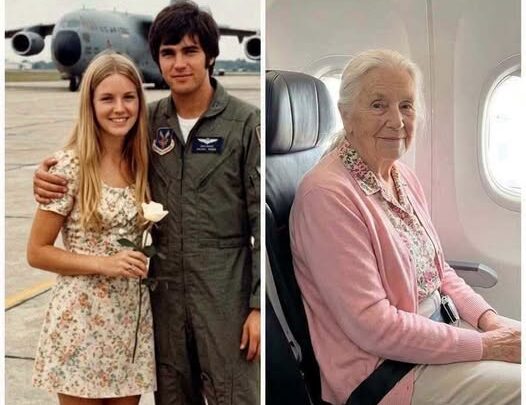
For 55 years, I believed the man I had loved since college had disappeared during the Vietnam War. Every year, on his birthday, I traveled to a memorial with a single white rose and an old photograph, keeping a promise I had made when I was just 21 years old.
I never married the memory of Thomas in the literal sense. Life continued, responsibilities grew, and I built a future of my own. But a small part of my heart always remained connected to the young man who had promised to come home.
Then, during my latest visit to the memorial, an unexpected encounter revealed a truth that changed everything I thought I knew about love, loss, and the years we can never recover.
I was 76 years old when I finally learned what had happened to the man I had mourned for more than half a century.
And the truth was far more complicated than I could have imagined.
The Young Man Who Shared His Coffee With Me
I met Thomas when I was 18 and studying literature at college.
He was an engineering student with a quick smile, a habit of making impossible calculations sound simple, and a confidence that made even the most ordinary moments feel memorable.
Our first conversation began over a cup of coffee.
He offered to share what he had bought, even though he had only 50 cents and I had 20.
“That isn’t half,” I told him.
“I’m an engineering student,” he replied. “I can make the numbers work.”
I laughed, and he looked so pleased with himself that I immediately decided he was going to be trouble.
For the next three years, Thomas proved that he could make me laugh even when I was determined not to.
I loved books, long conversations, and stories in which people eventually found the courage to tell one another the truth. Thomas preferred practical solutions and insisted that most problems would be easier to solve if people simply stopped overthinking them.
“You know what your problem is?” I asked him one afternoon.
“What?”
“You think life works like an engineering diagram.”
“And you think every problem can be solved by reading another novel.”
“Maybe it can.”
He grinned.
“Then I suppose I’ll have to keep you around until you prove it.”
Those were the kinds of conversations that filled our college years. We argued about books, walked across campus after dark, and dreamed about the places we would visit when we finally had enough money.
Thomas often spoke about the future as if it were something waiting just beyond the next semester.
He promised that one day he would buy me a proper engagement ring.
“You’ll have to propose properly, too,” I reminded him. “You’ve already asked me about six times.”
“Practice makes perfect,” he said.
I believed we had all the time in the world.
Neither of us understood how quickly a life could change.
The Promise He Made Before Leaving
The night before Thomas deployed to Vietnam, we sat together on the porch of my parents’ house.
The evening was quiet. The air carried the faint scent of grass, and the porch light attracted insects that circled above our heads.
I remember the smallest details of that night: the warmth of his hand, the way he kept looking at me as though he wanted to memorize my face, and the silence that followed whenever one of us tried to talk about the future.
I was frightened, although I tried not to show it.
Thomas had always seemed capable of handling anything. He could make me laugh when I was worried and turn an ordinary afternoon into an adventure.
But there was nothing he could say that would make the danger of war disappear.
“Promise me you’ll come home,” I whispered.
He pressed his forehead against mine.
“I will do everything I can.”
It was not a magical promise. It was simply the honest answer of a young man who wanted to return to the woman he loved.
Before he left, he told me again that he would buy me a ring when he came home.
I held on to that promise long after the sound of his departure had faded.
Then the news came.
Thomas had disappeared during the war.
The information available to our families was incomplete. There were questions about what had happened to his aircraft, whether he had survived, and whether he might have been captured.
I contacted the appropriate offices and waited for answers.
One official told me that his survival could not be ruled out.
Those words became a small light I carried through the darkest years.
I searched newspaper reports and lists of returning prisoners. I watched for his name whenever information about missing service members appeared.
It never came.
Eventually, his parents moved away. Our occasional letters stopped, and by 1973, I had lost contact with them.
I had no reliable way to know whether Thomas was alive.
All I had was the memory of the man who had promised to return.
The Memorial That Became Part of My Life
As the years passed, my life changed in ways I could never have predicted.
I grew older. I worked, developed friendships, and built a life that had its own joys and disappointments.
But I never completely stopped wondering what had happened to Thomas.
Every year, on his birthday, I visited a memorial honoring those who remained missing from the war.
I carried a white rose and an old photograph of us standing outside our college library.
In the picture, we looked impossibly young. Thomas had one arm around my shoulders, and I was laughing at something just outside the frame.
I would stand near the memorial and tell him about the previous year.
I spoke about my work, the students I had taught, the people I had met, and the ordinary moments that made up a life.
Sometimes I told him about things that made me happy. Other times, I spoke about the disappointments I had never shared with anyone else.
It became a private ritual.
My friend Ruth occasionally asked whether I wanted company on the trip.
“You don’t have to do this alone every year,” she told me once.
“I know,” I answered.
“But you keep going by yourself.”
I understood her concern. She wanted me to have companionship and to stop carrying the uncertainty alone.
Still, the journey felt personal. I had made a promise to Thomas, and visiting the memorial was the only way I knew to honor it.
I had learned to live with unanswered questions.
What I had not learned was how to stop hoping for an answer.
The Stranger Waiting at the Airport
During my latest trip, I nearly accepted Ruth’s offer to accompany me.
In the end, I decided to travel alone, as I had done for decades.
The flight was uneventful. A woman sitting beside me showed me photographs of her son’s upcoming wedding, and we spent much of the journey talking about family traditions.
For a while, I felt almost ordinary.
I had no idea that the next few minutes would challenge everything I believed about my past.
After landing, I collected my suitcase and walked into the arrivals hall of the small airport.
That was when I noticed a man standing near the exit.
He appeared to be in his thirties. He was holding a photograph and looking carefully at the people coming through the doors.
Something about the picture made me stop.
It was a photograph of Thomas and me outside our college library.
The same photograph I carried in my purse.
The man looked up.
“Ms. Eleanor?”
I tightened my grip on my suitcase.
“Where did you get that photograph?”
“My grandfather gave it to me.”
I stared at him.
“Who is your grandfather?”
He took a breath.
“His name is Thomas.”
For a moment, I could not speak.
“Thomas was my fiancé,” I finally managed.
The young man introduced himself as Daniel. He explained that Thomas was his grandfather and that he had been trying to find me.
I shook my head.
“That’s impossible.”
Daniel’s expression softened.
“He’s alive, Ms. Eleanor. And he asked me to bring you to him.”
The words seemed to hang in the air.
For 55 years, I had believed that Thomas had never returned from the war. I had built my life around that uncertainty, never knowing whether I was grieving someone who had died or waiting for someone who might still come home.
Now a stranger was telling me that Thomas was alive.
And he wanted to see me.
The Story I Had Never Been Told
I asked Daniel how he had found me.
He explained that he had discovered an old school newsletter containing an interview about my retirement. He had also found an article describing my annual visits to the memorial.
Those details had helped him identify the airport closest to my destination.
He did not know which flight I would take, so he had arrived early and waited.
“Does your grandfather know you’re here?” I asked.
“Yes. He asked me to bring you.”
Then Daniel told me something that made the moment even more difficult.
“He’s very sick.”
I called Ruth and explained what had happened. She immediately asked whether I was safe and whether I needed her to come.
I admitted that I did not know what to think.
After talking with her, I decided I needed answers before returning home. Before leaving the airport with Daniel, I sent Ruth his full name, telephone number, and the address where we were going.
The drive took approximately 40 minutes.
Daniel told me that Thomas had survived the aircraft incident, been captured, and remained a prisoner until his release in 1973.
The year struck me immediately.
The same year I had lost contact with his parents.
The same year I had begun to understand that I might never receive the answer I wanted.
“Why wasn’t I told?” I asked.
Daniel admitted that he did not know the entire story.
He explained that Thomas had kept our college photograph for decades. He still remembered the town where we had met and had spoken about his first love, although he had never explained everything to his family.
Daniel’s mother had learned about me only recently.
I turned toward the window and watched the landscape pass.
Thomas had survived. He had returned home, married, raised children, and grown old.
All those years, I had continued believing he was missing.
I did not yet know whether I felt relieved, angry, or heartbroken.
Perhaps I felt all three.
The Man Sitting Beside the Window
When we arrived, I noticed flowers along the walkway and a wooden sign beside the entrance.
Inside, Thomas sat near a window with a blanket across his knees.
His hair was white. His hands trembled slightly, and the years had changed his face.
But his eyes were unmistakable.
I knew them immediately.
“Eleanor,” he whispered.
For decades, I had imagined hearing my name in his voice again.
In my younger years, I pictured a reunion filled with relief. I imagined him explaining that he had been injured, that he had tried to contact me, or that some extraordinary circumstance had kept us apart.
I had never imagined standing in a room surrounded by photographs of the family he had built while I was still waiting for news of him.
Thomas reached toward me.
I remained standing.
“Tell me when you came home,” I said.
He looked at Daniel before answering.
“1973.”
I calculated the years in my head, although I already knew the answer.
“You came home in 1973?”
“Yes.”
“Did you try to contact me?”
His expression changed.
“At first, I intended to.”
He explained that he had spent months recovering in a military hospital after his release. During that time, he had met Margaret, a nurse who helped him through a difficult period.
She listened when he struggled to sleep. She supported him as he adjusted to life after captivity and helped him navigate experiences he found difficult to explain.
“She understood what I had been through,” he said.
“Did you tell her about me?”
“Yes.”
I sat down because my legs suddenly felt unsteady.
“Then why didn’t you come back?”
Thomas looked toward a family photograph on the mantel.
“Margaret became pregnant. I asked her to marry me.”
For a moment, I could hear nothing except the ticking of a clock.
“You could have written to me,” I said.
“I know.”
“You could have told me you were alive.”
“I know, Eleanor.”
“Then why didn’t you?”
He lowered his eyes.
He said he had been ashamed and afraid of confronting the past. He had written letters that he never sent. As time passed, he convinced himself that I had probably married someone else and created a new life.
He feared that contacting me would disrupt the family he had begun building.
“I couldn’t bear the thought of disrupting the life I had created,” he admitted.
I looked directly at him.
“So you allowed me to believe you were still missing for decades.”
He did not argue.
The Lie That Lasted for Decades
There was another part of the story I had not expected.
I asked Thomas about his parents. They had known he was released, yet they had never contacted me.
He hesitated before answering.
Then he admitted that he had told them he had written to me. He had claimed that I knew he was alive and had asked him not to contact me again.
His parents had believed him.
They thought they were respecting my wishes.
I stared at him.
“You told them that I had asked you to stay away?”
He nodded.
“You lied to them, too.”
He lowered his head.
Daniel had been standing quietly near the doorway. Now he looked at his grandfather with an expression of disbelief.
“You told us she was someone you knew before the war,” he said. “You never explained that she had spent years believing you were missing.”
Thomas wiped his eyes.
“I didn’t know she was still waiting.”
I thought about the memorial, the white roses, and the photograph I had carried for so many years.
“Daniel told me you asked whether I still visited the memorial,” I replied. “You knew I hadn’t forgotten you.”
Thomas looked down at his hands.
I could see that he regretted what he had done, but regret could not restore the decades that had passed.
I had spent years believing that I had lost Thomas to war.
The truth was that he had returned and made a choice I had never been allowed to understand.
I could acknowledge that he had endured terrible experiences during captivity. I could understand that he had been frightened, ashamed, and uncertain about how to rebuild his life.
But understanding his circumstances did not mean I had to excuse the deception.
He had been alive.
I had been waiting.
And he had decided, year after year, not to tell me the truth.
The Family He Had Built
Before I could say anything else, a car pulled into the driveway.
Daniel’s mother, Rebecca, and his uncle, Peter, arrived carrying groceries for dinner.
Rebecca greeted me warmly.
“You must be Eleanor. Dad told us his first love was coming to visit. He seemed so happy about it.”
Thomas reached toward me again.
“I hoped we could spend some time together,” he said. “We have lost so many years. Perhaps we could finally have another chance.”
For one brief moment, I remembered the young man who had shared his coffee with me and made me laugh on our college campus.
I remembered the porch, the promise of an engagement ring, and the future we had imagined.
Then I remembered every birthday I had spent standing at the memorial.
“No,” I said quietly.
Thomas looked surprised.
Rebecca glanced between us.
“Dad said the war separated you,” she explained.
“It did,” I answered. “But he returned home in 1973. I was never told.”
Peter put the grocery bags down.
“Dad, is that true?”
Thomas struggled to speak.
“I was ashamed.”
He explained that he had loved Margaret and loved the family he had built. He had convinced himself that staying away from his past was the best way to protect that life.
“And what about the life I built around a truth that wasn’t true?” I asked.
Nobody answered.
I did not blame Rebecca, Peter, or Daniel. They had not made the decisions that shaped my life. They had known only the version of the story Thomas had chosen to tell.
They were discovering the truth alongside me.
But I could not pretend that a reunion alone would make everything right.
Thomas had asked for another chance, perhaps imagining that our old feelings could bridge the distance of 55 years.
I could not offer him that.
The love we had shared was real. So was the pain caused by his silence.
Both things could be true.
The White Rose at the Memorial
Daniel walked me outside when I was ready to leave.
“I’m sorry,” he said. “I believed I knew the whole story.”
“You believed your grandfather.”
“I should have asked more questions.”
I looked at him gently.
“You can ask them now.”
I asked him to take me to the memorial before returning me to Ruth.
During the drive, neither of us turned on the radio.
When we arrived, I walked toward the stone honoring those who had never returned home.
I took the old photograph from my purse and looked at our younger faces.
We had been so certain that love and patience would carry us through anything.
I had spent years imagining that Thomas might still be somewhere in the world, unable to return. I had held on to the possibility that one day someone would bring me news of him.
Now I knew he had come home decades earlier.
I placed the white rose at the base of the memorial.
“I did love you,” I whispered. “And I won’t apologize for that.”
For years, I had wondered whether remembering him meant I had somehow failed to move forward.
Standing there, I understood that the love I had felt as a young woman was not something I needed to erase. It was part of my history.
But I no longer needed to carry the same unanswered question.
I slipped the photograph back into my purse and walked away.
For the first time, I left the memorial without feeling that I was still waiting for someone to return.
Choosing the Life That Was Still Ahead of Me
When Ruth picked me up, she did not demand an explanation.
She simply opened the car door and asked what I wanted to do next.
“Have dinner with you,” I said.
She smiled and promised to make something comforting.
“Anything else?” she asked.
I thought about the years I had spent waiting for an answer that never came. I thought about the people who had offered me companionship, the places I had postponed visiting, and the ordinary experiences I had sometimes treated as less important than my annual pilgrimage.
“Yes,” I told her. “I’d like to see the ocean.”
“Then we’ll go to the beach.”
On the flight home, I noticed another plane passing beyond the window.
For years, I had instinctively placed my hand against my heart whenever I saw an aircraft overhead. It was a small gesture that had become part of my private remembrance of Thomas.
This time, I lowered my hand.
I could not change the past or recover the years I had spent believing a different story.
I could not return to college and warn my younger self that love would not always lead where she expected. I could not make Thomas tell the truth when he returned from the war, and I could not ask his parents why they had believed a story that had never been true.
But I could decide what happened next.
Thomas would always be part of my history. The love we shared when we were young had been genuine, and the memories would remain meaningful to me.
Yet remembering someone did not mean I had to keep waiting for him.
Forgiving myself for the years I spent hoping was just as important as deciding what I would do with the years that remained.
I had spent much of my life waiting for someone to come home.
Now, at 76, I was ready to discover what else life might hold.
I wanted to see the ocean with Ruth. I wanted to visit places I had never seen, spend more time with the people who were present in my life, and make plans that did not depend on a promise made more than half a century earlier.
I could honor the young woman I had been without allowing her heartbreak to determine every decision made by the woman I had become.
The past could remain precious without controlling the future.
And the truth, however painful, had finally given me something I had needed for a long time: the freedom to stop waiting.
Sometimes, the hardest goodbye is not the one we never get to say. It is the one we must choose after finally learning the truth.