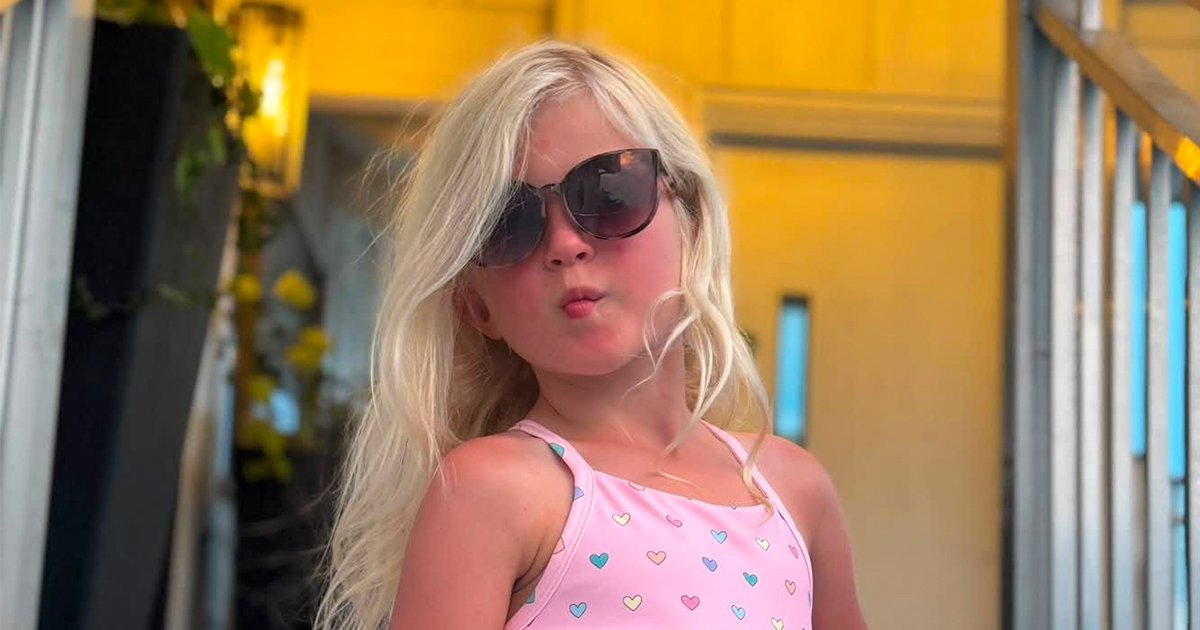
Louisiana Community Mourns the Loss of 8-Year-Old Lillian Smart After a Rare Infection
The community of Ruston, Louisiana, is mourning the heartbreaking loss of Lillian Smart, an 8-year-old girl remembered by those around her for her bright smile, joyful personality, and loving spirit.
What began as an ordinary summer experience near the water was followed by an exceptionally rare and devastating medical emergency. Lillian became ill after contracting an infection associated with Naegleria fowleri, a microscopic organism found naturally in some warm freshwater environments.
Her story has brought together family members, friends, neighbors, and people across Louisiana who followed her family’s journey and offered support during an incredibly difficult time.
While the circumstances surrounding her death have drawn national attention because of the rarity of the infection, those who knew Lillian say she should be remembered first and foremost as a happy young girl whose warmth and personality made a lasting impression on her community.
A Family Shares Heartbreaking News
Lillian’s parents, Daniel and Rebecca Smart, shared news of their daughter’s passing through the family’s public social media page after she had spent days receiving medical care.
The family described the enormous challenges she faced and expressed their gratitude toward the medical professionals, friends, relatives, and community members who supported them throughout her hospitalization.
Her parents also spoke about their faith and the overwhelming grief of losing their daughter.
The news quickly spread throughout Ruston and beyond, with many people sharing messages of sympathy and remembering Lillian as a cheerful and caring child.
Her passing became a deeply personal loss not only for her immediate family but also for a community that had rallied around her during her illness.
Health Officials Investigate a Rare Infection
Louisiana health officials confirmed that the state had recorded a case involving Naegleria fowleri, an organism associated with an extremely rare infection known medically as primary amebic meningoencephalitis, often abbreviated as PAM.
According to health authorities, the exposure in this case was most likely connected to swimming in Lake Claiborne in northern Louisiana.
The Louisiana Department of Health reported that the case was the state’s first confirmed Naegleria fowleri infection since 2013. Health officials have emphasized that infections involving this organism remain extraordinarily uncommon.
Although the story has understandably raised concerns among families who enjoy lakes and other freshwater recreation, public health experts stress that these infections are extremely rare.
The purpose of public health information is not to create unnecessary fear but to help people understand how rare risks can occur and how individuals can make informed decisions when participating in water-related activities.
What Is Naegleria fowleri?
Naegleria fowleri is a microscopic organism that can be found naturally in warm freshwater environments.
It may occur in places such as lakes, rivers, ponds, and other bodies of warm freshwater. The organism is most often discussed during warmer months, when water temperatures can create conditions suitable for its presence.
The infection associated with Naegleria fowleri occurs when water containing the organism enters the nose. From there, in extremely rare circumstances, the organism can travel toward the brain and cause primary amebic meningoencephalitis.
Health officials emphasize an important distinction: swallowing water does not cause this particular infection. The risk is associated specifically with contaminated water entering through the nose.
The illness is exceptionally rare, but when it occurs, it can progress rapidly and is very difficult to treat.
Between 1937 and 2025, approximately 180 cases were documented in the United States, according to information cited by Louisiana health officials. On average, fewer than 10 cases are reported nationally each year.
Lillian’s Connection to Lake Claiborne
Health authorities said Lillian’s infection was most likely acquired while swimming in Lake Claiborne, located in northern Louisiana.
Officials did not suggest that every visitor to the lake was at risk or that the lake represented a widespread public health emergency. Instead, the case highlighted the unusual and difficult nature of tracking an organism that can occur naturally in warm freshwater environments.
Because infections are so rare, routine environmental testing for Naegleria fowleri is not generally used as a standard way to determine whether a particular lake is safe for swimming.
The presence of the organism can vary depending on environmental conditions, including water temperature and location.
This makes public awareness and general water safety education important while also keeping the overall level of risk in perspective.
Millions of people participate in freshwater recreation every year, and infections involving Naegleria fowleri remain extraordinarily uncommon.
A Community Comes Together for Lillian
During Lillian’s hospitalization, the Ruston community responded with an outpouring of support.
Friends, local residents, businesses, and community members came together to encourage the Smart family and help them through an incredibly difficult period.
A fundraising and support effort known as Love for Lillian brought people together shortly after she was admitted to the hospital.
Community members also gathered around the time of her birthday to show their support and remind the family that they were not facing the situation alone.
The response demonstrated how strongly Lillian had touched the people around her, despite being only eight years old.
For many who knew her, the community’s response reflected the kind of person she was remembered as being: someone whose happiness and positive energy naturally brought people together.
Local residents described Lillian as a child who was consistently cheerful and whose smile was instantly recognizable to those who saw her around the community.
Remembering a Bright and Joyful Young Girl
As news coverage focused on the rare medical circumstances surrounding Lillian’s death, those closest to her encouraged people to remember the life she lived.
Lillian was known as a happy child who brought joy to the people around her.
People who encountered her in the Ruston community remembered her smile and positive personality. Her story became about much more than a rare infection.
It became a reminder of how deeply a young person can affect family members, friends, teachers, neighbors, and an entire community.
The outpouring of messages following her death showed how many people had been touched by her life.
For her family, the loss is immeasurable. For the wider community, it is a reminder of the importance of supporting families during moments of unimaginable grief.
Understanding Water Safety Without Creating Fear
Stories involving rare health events can understandably cause concern, especially among parents.
However, public health experts generally encourage families to keep risks in perspective.
Naegleria fowleri infections are extremely rare, even though many people swim in lakes, rivers, and other freshwater environments every year.
General water safety awareness can still be helpful.
People who participate in freshwater activities can stay informed about local conditions and follow guidance provided by public health authorities and park officials.
During periods of unusually warm weather, awareness of potential environmental risks may be especially important.
Families can also discuss basic water safety practices with children and pay attention to official notices regarding recreational areas.
It is important to rely on information from qualified health authorities rather than rumors or unverified claims circulating online.
Rare cases can generate significant public attention, but accurate information helps communities respond responsibly.
The Difference Between Awareness and Panic
One of the most important lessons from stories involving rare illnesses is the difference between awareness and fear.
Public health awareness allows people to understand unusual risks without assuming that every activity is dangerous.
The vast majority of people who swim in freshwater lakes never experience an infection involving Naegleria fowleri.
At the same time, awareness can help people understand why health officials occasionally issue guidance about warm freshwater recreation.
The goal is to provide useful information while recognizing the extremely uncommon nature of these infections.
Lillian’s story has brought attention to an organism that many people had never heard about before.
For public health professionals, increased awareness can create an opportunity to explain how rare infections occur and why accurate information matters.
A Family and Community Facing an Unimaginable Loss
For the Smart family, statistics and medical explanations cannot measure the loss they have experienced.
Lillian was not simply a news story or a rare medical case.
She was a daughter, a family member, a friend, and a beloved part of her community.
Her parents and loved ones are now facing the difficult reality of moving forward while carrying memories of a child whose life ended far too soon.
The support shown by the Ruston community has reflected the compassion people feel for the family.
Messages of sympathy, prayers, fundraising efforts, and acts of kindness have all become part of the community’s response.
During times of tragedy, these acts of support can remind grieving families that they are not alone.
Lillian Smart’s Legacy of Joy
Although her life was tragically short, those who knew Lillian continue to remember the happiness she brought into the lives of others.
Her smile, personality, and joyful spirit remain the memories that friends and community members continue to share.
The story of Lillian Smart is heartbreaking, but it is also a story about community, compassion, family, and the powerful impact one young life can have on the people around it.
As Louisiana continues to mourn, many people are choosing to remember Lillian not for the rare illness that brought national attention to her story, but for the happiness and love she shared during her eight years of life.
Her family’s loss is a reminder to cherish the people we love and to support those facing unimaginable moments of grief.
Lillian’s community came together when she needed them most, and that support continues as her family and loved ones remember a little girl whose bright smile left a lasting impression.
Lillian Smart will be remembered with love by her family, friends, and the Ruston community.