Inside a Historic Ligonier Manor: Victorian Elegance, Original Character and Timeless Indiana Charm
Some homes are designed simply to provide a place to live, while others seem to preserve an entire chapter of local history within their walls. This historic Ligonier manor belongs firmly in the second category. With its grand exterior, Victorian character, original woodwork, detailed craftsmanship, sweeping staircase, classic fireplace, wraparound porch, and spacious interior, the property offers an experience that is difficult to reproduce in modern construction.
Located in the historic Indiana community of Ligonier, this remarkable manor presents an opportunity to experience the architectural character of an earlier era while imagining how such a distinctive property could serve modern needs.
From the moment the home comes into view, its presence is immediately apparent. The architecture has a graceful quality that reflects the traditions of Victorian-era residential design, while the preserved details throughout the interior create an atmosphere filled with warmth and personality.
For buyers who appreciate historic homes, architectural craftsmanship, and properties with a genuine sense of identity, this manor represents an especially intriguing opportunity.
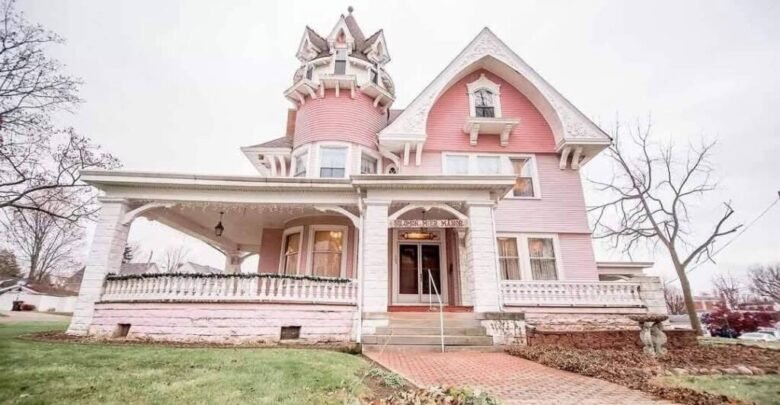
A Historic Home With an Unforgettable First Impression
The exterior establishes the character of the property before a visitor even steps through the front door.
Its grand appearance creates an immediate impression of elegance and permanence. Rather than following the minimalist design trends often seen in newer construction, the manor embraces architectural detail, proportion, and decorative character.
There is a sense that the home was created to make an impression.
The traditional exterior, classic lines, and expansive porch contribute to an inviting presence that feels deeply connected to its historic surroundings.
Historic homes such as this one can offer something that is increasingly difficult to find in today’s housing market: individuality.
Every architectural element contributes to the overall personality of the property, making it feel less like a standardized residence and more like a one-of-a-kind home.
Victorian Architecture and Timeless Character
Victorian architecture is often associated with elaborate craftsmanship, decorative details, dramatic proportions, and an appreciation for handcrafted design.
This Ligonier manor captures many of those qualities.
The property combines formal spaces with intimate architectural details, creating an interior that feels both impressive and comfortable.
Rather than relying on modern finishes to establish its identity, the home allows original architectural features to play a central role.
That is particularly valuable for buyers who appreciate the difference between historic character and modern reproduction.
Original materials and craftsmanship can give a historic residence a visual depth that is difficult to recreate.
Original Woodwork Adds Warmth Throughout the Interior
One of the most appealing features of the manor is its original woodwork.
Wood was an important architectural material in many historic homes, and carefully crafted wood details can dramatically influence the atmosphere of an interior.
The warm tones and natural texture of original woodwork provide a sense of continuity throughout the home.
Instead of appearing as a collection of separate rooms, the property benefits from architectural details that visually connect its spaces.
For homeowners who appreciate craftsmanship, these details can become one of the most memorable aspects of everyday life.
They also contribute to the home’s old-world atmosphere without requiring decorative additions to create visual interest.
Craftsmanship You Can Feel in Every Room
The appeal of this manor extends beyond individual features.
It is the cumulative effect of craftsmanship that gives the property its distinctive personality.
Details in the woodwork, staircase, fireplace, room proportions, and interior finishes contribute to a home that feels intentionally designed.
Modern construction often prioritizes efficiency and consistency. Historic properties can offer something different: evidence of the people, materials, and craftsmanship that went into creating them.
That sense of history can make walking through the property feel like exploring a living architectural artifact.
Formal Living Spaces for Everyday Life and Entertaining
The formal living and dining areas provide an important part of the home’s traditional character.
These spaces offer the kind of proportions and atmosphere that can make gatherings feel naturally special.
A formal living room can provide a setting for quiet conversations, reading, relaxing, or welcoming guests.
The dining room, meanwhile, can become the center of holiday meals, family celebrations, dinner parties, and memorable occasions.
Even in an era when open-concept floor plans are common, there remains something appealing about dedicated rooms with distinct purposes.
The separation creates a sense of occasion while also giving the home a more traditional rhythm.
A Sweeping Staircase Becomes an Architectural Focal Point
Few architectural elements make as strong an impression as a sweeping staircase.
In this manor, the staircase contributes significantly to the home’s sense of grandeur.
Rather than being simply a functional connection between floors, the staircase becomes part of the visual experience of the interior.
Its scale and design help establish a dramatic transition from the main living areas to the upper level.
For anyone interested in historic architecture, features such as this are particularly valuable because they reflect design principles that are rarely reproduced in contemporary homes.
A Charming Fireplace Adds Historic Atmosphere
The fireplace is another feature that reinforces the manor’s traditional personality.
A fireplace can serve as both a functional and visual centerpiece, particularly in a historic home.
Its presence contributes to the warm, inviting atmosphere of the interior and provides an architectural focal point around which furniture and conversation can naturally be arranged.
Combined with original woodwork and other historic details, the fireplace helps preserve the home’s old-world feeling.
The Beauty of Formal Dining
A dedicated formal dining room can be one of the most appealing features of a historic residence.
In this manor, the dining area offers an opportunity to preserve the tradition of gathering around a table for meals and conversation.
The room could potentially accommodate everything from intimate family dinners to larger celebrations and formal entertaining.
Historic dining spaces often have an atmosphere that differs from contemporary multifunctional rooms.
The architectural details provide a natural backdrop, allowing the room itself to become part of the experience.
Upper-Level Bedrooms With Privacy
The upper level provides comfortable bedroom spaces with a private and inviting atmosphere.
This separation between public and private areas is one of the advantages of a traditional multi-level home.
Downstairs rooms can be dedicated to entertaining and everyday gathering, while the upper level provides a quieter environment for sleeping, reading, relaxing, and personal time.
The bedrooms could also accommodate family members, overnight guests, or flexible uses depending on the owner’s lifestyle.
Their historic surroundings create a distinctive residential experience that is difficult to achieve in a newly constructed home.
A Private Retreat Within a Historic Setting
Bedrooms in a historic manor can feel especially personal.
The combination of original architectural details, generous room proportions, and separation from the home’s primary gathering spaces can create a peaceful retreat.
For homeowners who work from home, enjoy reading, collect antiques, or simply value quiet spaces, the upper level could provide considerable flexibility.
The property’s historic character also creates opportunities for interior design that complements rather than competes with the architecture.
The Large Attic Adds Possibility
Another intriguing feature is the large attic.
Attic space can provide valuable flexibility in a historic home.
At its most straightforward, it can serve as storage for seasonal items, household belongings, furniture, decorations, and personal collections.
But a large attic can also inspire more ambitious ideas.
Depending on structural conditions, building regulations, ceiling heights, insulation, electrical systems, access, and other factors, an owner could potentially investigate whether some portion of the space could eventually become additional living or creative space.
Any conversion would require professional evaluation and confirmation that the work is permitted and practical.
An Attic for Creativity and Future Plans
Beyond storage, an attic can become a uniquely personal part of a historic property.
Potential concepts might include a studio, reading room, hobby area, home office, art space, or additional recreational area.
The exact possibilities would depend entirely on the existing structure and local requirements.
Even without conversion, the attic adds useful capacity to the property and gives future owners another area to organize according to their needs.
For buyers who enjoy historic homes, the ability to gradually adapt a property over time can be part of the appeal.
The Classic Wraparound Porch
Outside, the wraparound porch is one of the defining features of the property.
Few architectural elements communicate small-town historic charm quite as effectively as a traditional wraparound porch.
It creates a transition between the interior of the home and the surrounding landscape while providing a natural place to sit, relax, and enjoy the outdoors.
A porch can become an extension of everyday living.
Morning coffee, evening conversations, reading, entertaining, or simply watching the seasons change can all take place in this kind of outdoor setting.
A Porch Designed for Slow Living
The wraparound porch contributes to the manor’s sense of timelessness.
In today’s fast-paced housing environment, outdoor spaces are often designed around entertainment features or modern landscaping.
A classic porch offers something simpler.
It creates space for slowing down.
With appropriate furniture and landscaping, the porch could become one of the property’s most frequently used areas.
Its traditional appearance also complements the architectural character of the manor rather than competing with it.
Open Yard and Small-Town Charm
The open yard surrounding the home adds another layer of appeal.
Together with the porch and historic architecture, the outdoor setting contributes to a peaceful residential atmosphere.
The property feels connected to the character of Ligonier rather than isolated from it.
For buyers seeking an alternative to densely developed suburban environments, this combination of architecture, outdoor space, and small-town atmosphere can be especially attractive.
A Home That Feels Connected to Its Past
One of the strongest qualities of this manor is its connection to history.
Historic homes are more than collections of rooms and materials.
They represent a particular period of architectural design and craftsmanship.
Living in one can create a daily connection to the past that is impossible to reproduce with a newly built house designed to look old.
The original features give the property authenticity.
The woodwork, staircase, fireplace, porch, formal rooms, and overall architectural design work together to preserve the home’s identity.
Historic Character Meets Modern Possibilities
Owning a historic home does not mean that modern life has to be sacrificed.
The challenge—and opportunity—is finding ways to incorporate contemporary functionality while respecting the original architecture.
A future owner could potentially furnish the home with modern conveniences while preserving its defining historic details.
The goal would be to create a balance between comfort and authenticity.
Rather than removing the features that make the house special, thoughtful improvements can focus on supporting the original design.
A Potential Private Residence
The most obvious future use for this manor is as a private residence.
For a buyer who values architectural character, the property could provide a distinctive home environment unlike a typical modern house.
The formal living and dining rooms could support entertaining, while the upper-level bedrooms provide privacy.
The porch and yard create outdoor living opportunities, and the attic provides additional storage or future flexibility.
The overall layout offers numerous possibilities for creating a personalized home while preserving the property’s historic identity.
A Potential Weekend or Private Retreat
The manor could also appeal to someone looking for a retreat.
Historic homes often provide a completely different atmosphere from contemporary vacation properties.
The architecture itself becomes part of the experience.
A future owner could create a retreat centered around reading, entertaining, collecting antiques, gardening, relaxing, or enjoying the slower pace associated with a small-town setting.
The property’s classic appearance could make it particularly memorable as a destination for family gatherings and special occasions.
A Hospitality-Inspired Opportunity
Another possibility worth considering is a hospitality-style use, subject to zoning, licensing, and local regulations.
The property’s scale, historic appearance, formal rooms, bedrooms, and architectural character could potentially lend themselves to a carefully planned hospitality concept.
Historic properties can sometimes attract visitors precisely because they offer an experience that modern accommodations cannot easily replicate.
However, any commercial or hospitality use would require thorough investigation of zoning, building codes, fire safety, accessibility requirements, insurance, licensing, parking, and other regulations.
Why Historic Homes Continue to Attract Buyers
There is a reason historic homes continue to capture the imagination of real estate buyers.
They offer individuality.
No two historic properties are exactly alike, and each carries its own combination of architectural details, construction methods, and visual character.
For some buyers, that individuality is worth far more than having the newest finishes or the most contemporary floor plan.
A historic manor can become a statement of personal taste as well as a place to live.
The Appeal of Authentic Architecture
Authenticity is particularly important when discussing historic real estate.
There is a difference between a modern home decorated with vintage-inspired furniture and a genuine historic property with original architectural components.
The latter contains physical evidence of its history.
Original woodwork, traditional room layouts, historic staircases, fireplaces, and porches can provide a level of authenticity that is extremely difficult to reproduce.
For architectural enthusiasts, that authenticity may be the property’s greatest asset.
Preserving Character While Updating Comfort
Future improvements should ideally be approached with care.
Historic properties can benefit from thoughtful modernization, but renovations should consider the original design.
Potential owners may wish to work with contractors and professionals who understand older construction and historic architectural materials.
The objective should be to improve comfort and functionality without unnecessarily eliminating the features that distinguish the property.
Before undertaking significant renovations, buyers should evaluate structural conditions, electrical systems, plumbing, roofing, heating and cooling, insulation, moisture management, and other components.
A Property for People Who Appreciate Details
This manor is unlikely to appeal primarily to someone searching for a generic, standardized home.
Its strongest audience is likely to be buyers who notice details.
People who appreciate handcrafted woodwork, historic architecture, traditional room layouts, fireplaces, dramatic staircases, large porches, and old-world design may find the property particularly compelling.
The home rewards attention.
The more closely a visitor examines the architecture, the more opportunities there are to appreciate the craftsmanship.
A Rare Indiana Landmark
The property is described as a remarkable Indiana landmark, and its architectural character gives it a strong sense of place.
Ligonier’s small-town atmosphere provides an appropriate setting for a manor of this type.
Rather than appearing out of context, the property’s traditional design contributes to the visual identity of its surroundings.
For buyers interested in historic Indiana properties, that connection can be an important part of the appeal.
What Prospective Buyers Should Consider
Historic beauty should always be balanced with practical due diligence.
Before purchasing a property of this type, prospective buyers should consider obtaining professional inspections and evaluating the condition of major systems.
Important areas to investigate may include:
- Structural integrity
- Foundation condition
- Roof condition
- Electrical systems
- Plumbing
- Heating and cooling
- Windows
- Moisture and drainage
- Attic condition
- Basement or lower-level areas, if applicable
- Insurance requirements
- Local historic restrictions
- Zoning
- Potential renovation requirements
Historic properties can have unique maintenance considerations, so buyers should understand both the beauty and responsibilities associated with ownership.
The Importance of Responsible Renovation
The most successful renovation of a historic property is often one that respects what already exists.
Original features should be evaluated carefully before they are removed or replaced.
In many cases, restoration can preserve more character than complete modernization.
A thoughtful owner can create a comfortable contemporary lifestyle while maintaining the architectural elements that make the property historically meaningful.
This approach can protect the home’s identity for future generations.
A Home With Multiple Possibilities
The versatility of this manor is another reason it stands out.
It could potentially function as:
- A private family residence
- A historic retreat
- A multi-generational home
- A gathering space
- A creative residence
- A hospitality-style property, subject to approvals
- A long-term restoration project
The property’s future ultimately depends on the buyer’s vision, available resources, local regulations, and the physical condition of the home.
Why This Ligonier Manor Is Different
In a real estate market filled with modern subdivisions and standardized floor plans, a historic Victorian manor immediately occupies a different category.
It offers character rather than uniformity.
It offers craftsmanship rather than mass-produced finishes.
It offers a sense of history rather than a blank slate.
The grand exterior, original woodwork, formal rooms, sweeping staircase, fireplace, upper-level bedrooms, large attic, wraparound porch, and open yard combine to create a property with a strong and recognizable identity.
Final Thoughts on This Historic Victorian Manor
This historic Ligonier manor is a remarkable example of the appeal that classic American residential architecture can still hold.
From its impressive exterior to its carefully preserved interior details, the property offers an atmosphere that feels increasingly rare in modern real estate.
The original woodwork brings warmth to the interior. The sweeping staircase provides a dramatic architectural focal point. The fireplace contributes timeless charm, while the formal living and dining rooms create elegant spaces for everyday life and entertaining.
Upstairs, the comfortable bedroom spaces offer privacy, while the large attic provides additional storage and the possibility of future creative use, subject to professional evaluation and local requirements.
Outside, the wraparound porch and open yard reinforce the property’s small-town atmosphere and create a peaceful connection between the home and its surroundings.
Perhaps most importantly, this is a property with personality.
It is not simply a collection of rooms. It is a historic residence with an architectural story, visible craftsmanship, and a strong connection to Indiana’s past.
For someone who loves Victorian design, historic homes, original craftsmanship, and timeless architecture, the opportunity to own a property like this can be particularly meaningful.
Whether imagined as a private residence, a peaceful retreat, or a carefully planned hospitality-style property, the manor offers an impressive foundation for a new chapter.
Of course, prospective buyers should independently verify the property’s historical information, structural condition, permitted uses, zoning, renovation possibilities, and all other relevant details before making a purchase decision.
Historic homes can require specialized care, but for the right owner, that responsibility can be part of the reward.
In an era when so many homes look remarkably similar, this Ligonier manor offers something increasingly valuable: a home with a genuine sense of history, craftsmanship, individuality, and timeless character.


From Zillow