News
I Cleaned an Elderly Woman’s House for 26 Years, but After Her Funeral, Her Son Fired Me and Handed Me $300
I Cleaned an Elderly Woman’s House for 26 Years, but After Her Funeral, Her Son Fired Me and Handed Me $300

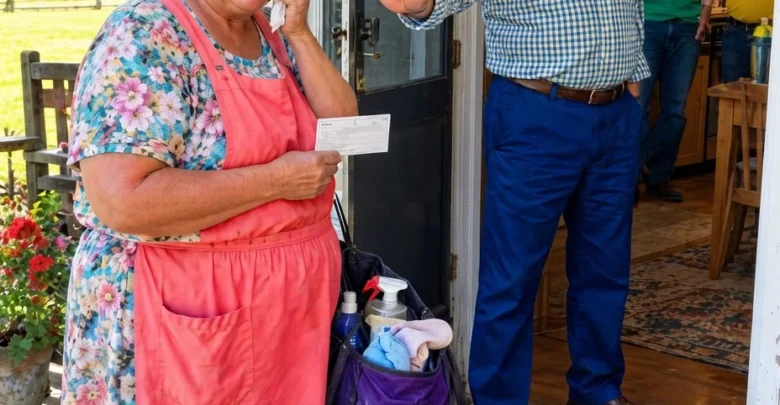
After 26 Years of Cleaning a Wealthy Family’s Estate, She Was Dismissed With $300 — Then a Courthouse Discovery Changed Everything
Life can change in ways we never expect. Sometimes, the greatest rewards arrive precisely when everything appears to be falling apart. For Elnora Ruthanne Whitsett, a 72-year-old woman from Maury County, Tennessee, that unexpected transformation began with a heartbreaking dismissal, a modest $300 check, and a mysterious telephone call from the county courthouse.
After dedicating twenty-six years of her life to cleaning and maintaining a wealthy family’s estate, Elnora suddenly found herself unemployed, financially vulnerable, and uncertain about her future.
She had no substantial retirement savings, no valuable investments, and no reliable source of income beyond her modest Social Security payments.
However, what initially appeared to be the beginning of a devastating financial crisis became an extraordinary journey involving family history, property ownership, legal protection, justice, and the true meaning of generational wealth.
Her story is a powerful reminder that human dignity cannot be measured by income, social status, or the size of a bank account.
Sometimes, the most valuable inheritance is something that should never have been taken away.
A Lifetime of Hard Work and Financial Sacrifice
Elnora Ruthanne Whitsett had spent most of her life working hard to support herself and her family.
She began working at the age of fourteen, long before she understood concepts such as financial independence, retirement planning, or long-term wealth management.
Her days were filled with responsibilities that many people rarely considered. She cleaned kitchens, washed floors, polished furniture, organized households, and ensured that the families employing her could enjoy comfortable lives.
Despite decades of employment, Elnora never accumulated significant personal wealth.
Like many hardworking individuals, she earned enough to cover immediate living expenses but struggled to establish lasting financial security.
Her income went toward housing, groceries, electricity, transportation, medical expenses, and other essential household costs.
There was rarely enough money left to build a substantial emergency fund or prepare for unexpected financial challenges.
Yet Elnora never complained about the value of honest work. Her mother had taught her that responsibility, dedication, and integrity mattered regardless of a person’s occupation.
Those lessons shaped every decision she made throughout her life.
The Tennessee Estate That Held Her Family’s History
The Lockridge estate was a beautiful property located along Hampshire Pike, approximately eight miles outside Columbia, Tennessee.
The estate consisted of roughly three hundred acres of rolling pastures, wooded hills, agricultural land, and a magnificent white farmhouse decorated with green shutters.
Beyond the main residence, a narrow gravel road led to a modest four-room house surrounded by forty-one pecan trees.
That small house held extraordinary sentimental value for Elnora.
It was where she had grown up, where her mother had raised her, and where some of her earliest childhood memories had been created.
Her mother, Odessa Whitsett, had worked for the Lockridge family for forty-three years.
Her father had also worked on the property, maintaining agricultural equipment, repairing fences, and caring for livestock.
Following his tragic death in a farming accident in 1961, the Lockridge family helped cover his funeral expenses.
Elnora and her mother remained grateful for that assistance.
For decades, they believed that the wealthy family had generously provided them with affordable housing and employment opportunities.
Neither realized that the property surrounding their modest home concealed a complicated history involving land ownership, historical tax records, and a potentially unjust real estate transaction.
Building a Family While Facing Financial Challenges
In 1971, Elnora married a hardworking man named Clarence.
Together, they established a modest household in Columbia and raised their daughter, Alfreda.
Clarence worked at a local manufacturing plant while Elnora continued cleaning houses to supplement their household income.
Their financial situation was never luxurious, but they managed their responsibilities carefully.
They understood the importance of paying bills on time, controlling unnecessary expenses, and protecting their family’s stability.
Like many American households, they depended heavily on consistent employment.
An unexpected medical expense, employment interruption, or transportation problem could easily disrupt their household budget.
Nevertheless, they remained committed to creating a stable environment for their daughter.
When Elnora’s mother became seriously ill in 1989, Henrietta Lockridge contacted her with an offer.
Henrietta wanted Odessa to remain in her home while receiving the care she needed.
Elnora agreed to help her mother while taking on additional responsibilities at the Lockridge estate.
After Odessa passed away in 1992, Elnora continued working for Henrietta.
When Clarence died in 2004, her employment became even more important to her financial survival.
An Unexpected Friendship Between Two Women
Although Henrietta Lockridge came from a wealthy family, her relationship with Elnora gradually developed into something more meaningful than a traditional employer-employee arrangement.
Every Friday morning, Henrietta prepared coffee and freshly baked buttermilk biscuits.
Before Elnora could begin cleaning, Henrietta insisted that she sit beside her at the kitchen table.
They discussed family matters, community news, personal struggles, childhood memories, and the challenges of growing older.
These weekly conversations became an important part of both women’s lives.
For Elnora, they represented a rare opportunity to feel appreciated beyond the work she performed.
For Henrietta, they provided companionship and a meaningful connection with someone who had become deeply familiar with her life.
Their friendship demonstrated that genuine human relationships can develop across significant differences in wealth, background, and social standing.
While Henrietta’s sons frequently discussed real estate investments, property development, and financial opportunities, Henrietta appeared increasingly concerned with something different.
She wanted to understand the history of her family’s wealth and the responsibilities that accompanied it.
That curiosity would eventually lead her toward a decision that would transform Elnora’s future.
The Growing Financial Value of the Family Estate
Henrietta had three sons: Carlton, Thurston, and Bertram.
Each had a different relationship with their mother’s property.
Carlton, a retired banker, maintained relatively consistent contact with his mother.
Thurston worked in property development and recognized the significant commercial potential of the estate.
Bertram had pursued several business opportunities and frequently experienced financial difficulties.
To Henrietta’s sons, the estate represented an important family asset.
Its extensive acreage offered opportunities for residential development, land investment, and potentially substantial financial returns.
Thurston was particularly interested in transforming portions of the property into a large residential development.
Such projects can involve complicated financial arrangements, construction financing, infrastructure planning, property valuations, and legal agreements.
However, successful real estate development also depends on clear property ownership and access rights.
Without those essential requirements, even a potentially profitable investment can encounter significant obstacles.
Thurston believed that his mother’s entire property would eventually become available for development.
He had no idea that Henrietta was quietly making arrangements that would challenge his expectations.
A Small Question With an Extraordinary Purpose
One Friday morning, while enjoying their usual coffee and biscuits, Henrietta asked Elnora an unusual question.
She wanted to know her complete legal name.
Elnora explained that her middle name was Ruthanne and carefully spelled it for her.
Henrietta wrote the full name on a paper napkin before folding it and placing it inside her pocket.
At the time, Elnora considered the conversation insignificant.
She assumed Henrietta was simply curious about her family history.
However, the seemingly ordinary moment carried a much deeper purpose.
Henrietta understood that accurate legal identification was important when preparing property documents.
She wanted to ensure that Elnora’s name appeared correctly in the paperwork she was arranging.
The napkin represented the beginning of something Elnora could never have imagined.
Behind the scenes, Henrietta was working to correct what she believed was a historical injustice.
She was preparing to transfer a valuable portion of her family’s estate back to the descendants of its original owner.
Losing Employment at the Age of 72
Henrietta passed away peacefully at the age of ninety-four.
For Elnora, the loss was deeply personal.
She had spent twenty-six years caring for Henrietta’s home and sharing countless conversations with her.
Following the funeral, Elnora returned to the farmhouse and helped clean after the guests.
She washed dishes, organized serving platters, and carefully returned everything to its familiar place.
The following morning, she arrived expecting to help organize Henrietta’s belongings.
Instead, Carlton met her at the back door and handed her a check for $300.
He informed her that the family would no longer require her services.
After more than two decades of dedication, Elnora suddenly found herself without employment.
The dismissal was particularly painful because she had not expected such an abrupt ending to a relationship that had shaped so much of her adult life.
She returned home in tears, uncertain how she would manage her financial responsibilities.
At seventy-two, finding new employment would not be easy.
Her retirement income was insufficient to provide the financial independence she desperately needed.
The Reality of Retirement Financial Insecurity
Elnora received approximately $784 each month through Social Security.
Her monthly rent was $650.
That left only $134 before accounting for groceries, utilities, medication, transportation, and other necessary expenses.
Her previous weekly income of $200 had helped bridge the gap between retirement benefits and her actual cost of living.
Without that additional income, her financial situation became increasingly difficult.
Her experience reflects a broader challenge that many older adults face.
Retirement can become financially stressful when individuals lack sufficient savings, pension benefits, affordable housing, or alternative income sources.
Unexpected employment loss can create difficult decisions involving healthcare expenses, housing costs, and everyday necessities.
Elnora contacted her daughter, hoping that she might temporarily move into her family’s home.
Unfortunately, Alfreda was already managing her own household expenses while raising two teenage children.
Although she loved her mother deeply, she could not immediately provide additional housing.
Elnora understood the situation, but understanding did not eliminate her fear.
She began searching for new employment opportunities, only to discover that many households preferred professional cleaning companies or younger workers.
Her options appeared increasingly limited.
The Mysterious Telephone Call From the Courthouse
Approximately one week after losing her job, Elnora received an unexpected telephone call.
The caller introduced herself as Rosella, an employee at the Maury County register of deeds office.
She requested that Elnora visit the courthouse and bring proper identification.
The request immediately made Elnora nervous.
She wondered whether she had encountered an unexpected tax problem, identity-related issue, or legal complication.
Her daughter explained that the register of deeds office handled property records and other important real estate documents.
Neither woman understood why Elnora would be involved in such matters.
After spending several days worrying about the call, Elnora finally decided to visit the courthouse.
She wore her best navy-blue dress, collected her identification, and drove into town.
When she arrived, Rosella greeted her warmly and explained that she had been a close friend of Henrietta for forty years.
Before passing away, Henrietta had requested that Rosella ensure Elnora personally reviewed a particular legal document.
What happened next would change Elnora’s understanding of her family’s history forever.
Discovering the Property Deed That Changed Everything
Rosella guided Elnora into a room containing shelves of historical documents and property records.
On a large wooden table rested an enormous red leather deed book.
Rosella opened the book and turned it toward Elnora.
At the top of the page appeared the words “Quitclaim Deed.”
Below Henrietta Lockridge’s name was another name that Elnora immediately recognized.
Her own.
The document described thirty-eight acres of land located beside Hampshire Pike.
The property included her childhood home, the surrounding pecan grove, and additional land that had been connected to her family for generations.
Rosella explained that Henrietta had transferred her interest in the property to Elnora before her death.
The discovery was overwhelming.
Elnora had entered the courthouse believing she might be facing a legal or financial problem.
Instead, she discovered that she had been named as the recipient of a significant real estate asset.
The property offered something that years of hard work had never provided: the possibility of permanent housing and meaningful financial stability.
However, the most surprising revelation was still waiting inside another collection of historical records.
The Hidden History of Generational Wealth
According to the historical documents Henrietta had discovered, Elnora’s great-grandfather, Isaac Whitsett, had purchased the property in 1879.
He had worked to establish land ownership and create a lasting foundation for future generations.
The property represented far more than agricultural acreage.
It was an opportunity to build family wealth, establish independence, and provide long-term security for his descendants.
Unfortunately, during the economic difficulties of the Great Depression, the property passed into Lockridge ownership through a disputed tax sale.
The records suggested that the property’s tax assessment had increased dramatically.
The land was eventually purchased at auction for only $42 by Amos Lockridge, a relative of the official responsible for the assessment.
Henrietta believed that the circumstances surrounding the transaction were deeply unfair.
For generations, the Whitsett family had continued living and working on land their own ancestors had once purchased.
They had unknowingly lost not only property ownership but also the economic opportunities that could have accompanied it.
Henrietta decided that returning the land was the most meaningful action she could take.
She did not consider it charity.
She considered it a responsibility.
Why Property Ownership Matters for Financial Independence
Real estate ownership can play an important role in establishing long-term financial security.
A property may provide housing stability, rental income, agricultural opportunities, or an asset that can be transferred to future generations.
However, property ownership also involves responsibilities such as maintenance, taxes, insurance, and legal obligations.
For Elnora, the newly discovered deed represented an opportunity to escape the uncertainty of rising housing costs and insufficient retirement income.
Instead of spending most of her monthly Social Security benefits on rent, she could potentially live in a home connected to her family’s history.
The land also offered opportunities to generate modest income through its existing pecan grove.
More importantly, it provided something that money alone could not guarantee: a permanent connection to her family’s heritage.
Henrietta’s decision demonstrated how the transfer of a valuable asset can influence not only one person’s future but also the opportunities available to subsequent generations.
What made the situation extraordinary was that Elnora had never requested the property.
Henrietta had acted independently because she believed returning it was the right thing to do.
The Secret Message Behind the $300 Check
As Elnora struggled to process the discovery, Rosella asked whether she still possessed the check Carlton had given her.
Elnora removed it from her purse.
Rosella encouraged her to examine the back.
Written in pencil was a short message instructing her not to cash the check and to visit Rosella instead.
Carlton had known about the property transfer.
He had accompanied his mother to the courthouse and witnessed the signing of the deed.
His brothers, however, had been unaware of the arrangement.
Carlton later explained that he had been concerned they might pressure Elnora before she understood her legal position.
Although his intentions were more complicated than they initially appeared, his actions had caused unnecessary emotional suffering.
A private conversation would have been more respectful and effective.
The situation illustrated an important lesson about communication.
Good intentions do not automatically excuse hurtful behavior.
Even when someone believes they are protecting another person, honesty and dignity should remain central to their actions.
A Million-Dollar Real Estate Development Faces an Unexpected Problem
Thurston had been negotiating a substantial residential development agreement involving the Lockridge estate.
The proposed project included hundreds of new homes.
However, the planned main entrance was located within the thirty-eight acres Henrietta had transferred to Elnora.
That unexpected change in property ownership created a significant obstacle for the development.
Real estate projects frequently depend on legally established access routes, ownership rights, infrastructure requirements, and contractual agreements.
A complication involving any of these elements can affect the feasibility of an entire project.
When Thurston discovered the recorded deed, he became furious.
He and Bertram confronted Elnora at her childhood home and questioned the validity of their mother’s decision.
They believed Henrietta would never have knowingly transferred such a valuable portion of the estate.
Carlton confirmed that he had witnessed the signing and that their mother had acted independently.
Nevertheless, his brothers decided to challenge the deed through the legal system.
For Elnora, the possibility of an expensive legal battle was terrifying.
She had limited income and no substantial savings to pay for experienced legal representation.
Fortunately, Henrietta had anticipated that possibility.
The Importance of Estate Planning and Legal Protection
Before her death, Henrietta had worked with an attorney named Patricia Odom.
She had taken steps to document her intentions and establish evidence supporting the property transfer.
According to the story, those preparations included legal documentation, an assessment of her decision-making capacity, and a recorded video explaining her reasons.
Henrietta had also arranged funding for legal representation if the deed was challenged.
These preparations proved extremely important when Thurston and Bertram initiated legal proceedings.
Estate planning can involve several different legal instruments, including wills, trusts, deeds, powers of attorney, and beneficiary designations.
The appropriate arrangement depends on individual circumstances, applicable state laws, property ownership, and personal objectives.
Proper documentation may reduce uncertainty and help clarify a property owner’s intentions.
However, no single legal document guarantees that a dispute will never occur.
In Elnora’s situation, Henrietta’s preparations provided important evidence that her decision had been deliberate and informed.
Without that foresight, defending the property transfer could have been considerably more difficult.
The Courtroom Decision That Protected Her Future
During the legal proceedings, Thurston and Bertram argued that their elderly mother had not fully understood the documents she signed.
Elnora’s attorney presented the supporting records, witness testimony, and Henrietta’s recorded statement.
Watching Henrietta appear on the courtroom screen was an emotional experience for Elnora.
Her former employer explained that Isaac Whitsett had once owned the property and that she believed its acquisition by the Lockridge family had been unjust.
She acknowledged the decades of service provided by Elnora and her mother.
Most importantly, she made clear that the property transfer was not simply an unexpected act of generosity.
It was an effort to restore something that belonged within the Whitsett family’s history.
After considering the evidence, the court upheld the deed and dismissed the challenge.
The thirty-eight acres remained Elnora’s property.
The proposed residential development eventually encountered difficulties, and the development company withdrew from the arrangement.
For Elnora, the legal victory was not about defeating wealthy individuals.
It was about protecting her home, restoring her family’s history, and establishing security for the remainder of her life.
Choosing Family Heritage Over a Million Dollars
After the legal dispute ended, Carlton visited Elnora and explained that a developer might be willing to offer more than one million dollars for the property.
For someone who had recently struggled to afford basic living expenses, the offer represented an extraordinary financial opportunity.
A million dollars could potentially provide access to comfortable housing, improved transportation, retirement investments, and greater financial flexibility.
Elnora considered what such wealth might mean for her future.
However, she also understood that selling the property would permanently separate her family from a place that had finally been returned to them.
Her great-grandfather had worked to purchase the land.
Her mother had spent decades living and working there.
Elnora had grown up beneath its pecan trees.
She decided that preserving the property was more important than accepting the developer’s offer.
Her decision demonstrated that the value of an asset is not always determined entirely by its market price.
Personal history, emotional attachment, housing security, and family legacy can also influence important financial decisions.
Of course, every property owner faces different circumstances.
For Elnora, remaining on the land represented the future she wanted most.
Creating a New Source of Retirement Income
Elnora eventually moved into the small white house where she had spent her childhood.
Her daughter and son-in-law helped transport her furniture and restore the familiar surroundings.
Although owning property did not eliminate every financial responsibility, it provided a meaningful improvement in her housing situation.
She no longer needed to pay rent for her previous home in Columbia.
When autumn arrived, the pecan grove produced a successful harvest.
Elnora gathered the nuts and sold them at the local farmers’ market.
The income was modest, but it carried considerable personal significance.
For the first time, she was earning money from trees growing on land that belonged to her family.
The experience gave her a renewed sense of independence.
It also demonstrated how existing resources can sometimes provide opportunities for supplemental retirement income.
For older adults, financial stability may involve a combination of retirement benefits, personal savings, affordable housing, and manageable additional income.
Elnora’s circumstances were unusual, but her determination to remain independent was something many people could understand.
Restoring Family Relationships and Building a Lasting Legacy
As Elnora settled into her new home, her daughter began visiting more frequently.
Alfreda brought her husband and children to help maintain the property, collect pecans, and repair the porch.
These visits created opportunities for younger family members to learn about their ancestors.
They discovered that their family history extended far beyond the stories they had previously heard.
Elnora’s son-in-law eventually created a wooden sign for the entrance to the property.
It identified the land as Whitsett Grove, established in 1879 and returned in 2025.
The sign represented recognition, restoration, and the continuation of a family legacy.
For the grandchildren, the property became a physical connection to generations of relatives they had never met.
For Elnora, it represented the opportunity to ensure that their family history would never again be forgotten.
Generational wealth is often discussed in terms of money, investments, businesses, and real estate.
However, family knowledge, shared values, historical understanding, and a sense of belonging can also become meaningful forms of inheritance.
The Power of Accountability and Forgiveness
Carlton eventually apologized for the way he had dismissed Elnora.
He acknowledged that his attempt to protect her from his brothers did not justify treating her disrespectfully.
He admitted that he should have explained the situation privately instead of allowing her to believe she had been discarded after twenty-six years of service.
Elnora accepted his acknowledgment.
She did not need to pretend that the experience had never hurt her.
Nor did she need to allow resentment to control the remainder of her life.
Their conversation demonstrated that accountability requires more than explaining one’s intentions.
It requires recognizing the consequences of one’s behavior.
Forgiveness does not necessarily erase the past, but it can create an opportunity to move forward.
Elnora had already experienced enough hardship.
She wanted to spend her remaining years enjoying her home, connecting with her family, and appreciating the unexpected security that Henrietta had helped restore.
Valuable Life Lessons About Money, Respect, and Human Dignity
Elnora’s journey offers several meaningful lessons about life, relationships, and financial security.
Her experience highlights the importance of preparing for unexpected employment changes whenever circumstances allow.
It demonstrates how property records and carefully prepared legal documents can become essential during ownership disputes.
It also illustrates the lasting consequences that historical financial decisions can have on future generations.
However, the most important lesson is not about real estate investment or inheritance.
It is about recognizing the dignity of every individual.
Elnora had spent decades performing work that supported the comfort of others.
Her dedication deserved respect long before she became a property owner.
Financial wealth did not make her more deserving of kindness.
Ownership did not suddenly make her more valuable as a human being.
Henrietta’s final decision acknowledged something that should never have been overlooked: Elnora and her family’s contributions mattered.
True generosity is not always measured by the amount of money someone gives away.
Sometimes, it is measured by the willingness to recognize an injustice and take meaningful action to correct it.
A Powerful Reminder That Kindness Can Create Lasting Change
Every Friday morning, Elnora continued preparing coffee and buttermilk biscuits.
She placed two cups on the table.
One for herself and another in memory of Henrietta.
Above her kitchen table, she displayed the old paper napkin containing her complete name.
Beside it, she kept the $300 check that had once represented the sudden loss of her employment.
Together, those objects reminded her of two profoundly different moments in her life.
One represented uncertainty, fear, and financial hardship.
The other represented recognition, justice, and the beginning of a new chapter.
When people asked about the value of her property, they often expected her to discuss the million-dollar offer.
Instead, Elnora remembered the moment she first saw her name inside the courthouse deed book.
For generations, her family had lived and worked on property they believed belonged to someone else.
Now, their name appeared in the public record as owners.
That recognition meant more to her than any financial offer.
Final Thoughts: The Greatest Inheritance Is Sometimes What Was Lost
Elnora Ruthanne Whitsett’s story is ultimately about much more than unexpected wealth.
It is about perseverance, financial hardship, friendship, family heritage, and the courage to acknowledge historical injustice.
After twenty-six years of dedicated service, she believed her future had become uncertain.
Instead, she discovered that someone had quietly prepared an opportunity for her to reclaim both her family’s history and her personal independence.
Her journey reminds us that the decisions we make today can influence lives for generations.
A thoughtful act of kindness can provide security where there was once uncertainty.
An honest examination of the past can help restore dignity in the present.
And an inheritance can carry emotional significance far beyond its financial value.
In a world where success is frequently measured through property, investments, and personal wealth, Elnora’s experience offers a different perspective.
The greatest fortune is not always the largest bank account.
Sometimes, it is the opportunity to return home, preserve your family’s legacy, and live with the knowledge that your history will never again be forgotten.
Because sometimes the most meaningful thing we receive is not something entirely new.
It is something our family should never have lost.
If this story touched your heart, share it with someone who believes in kindness, justice, and the importance of family. Join our community for more inspiring stories and meaningful life lessons. ❤️