News
I went to the bank to withdraw $300 for my grandson’s birthday gift.
I went to the bank to withdraw $300 for my grandson’s birthday gift.


The Truth About the Missing $61,000
“Sweetheart,” I said quietly, “what exactly do you think I’m about to do?”
At that, my daughter let out a sharp breath.
“Mom, you’re making a mistake because you don’t understand what’s happening. Let Brian explain.”
“Then put Brian on the phone.”
Once again, the line went quiet.
After a door closed in the background, I heard muffled voices. A man’s voice, unmistakably Brian’s, asked something I couldn’t quite make out.
My daughter whispered something back.
A few seconds later, Brian came onto the line.
“Mrs. Lane,” he began, using the formal name he normally reserved for arguments. “I think we should all calm down.”
I almost laughed.
For twelve years, I had considered Brian a decent man. On Mother’s Day, he brought flowers. When my porch railing came loose, he fixed it. Every Sunday evening, he also called to ask whether I needed groceries.
Because I trusted him, I had even given him a spare house key.
Now he was telling me to calm down after sixty-one thousand dollars had disappeared from my account.
“Brian, I have a simple question. Why is Diane wearing my green coat at my bank?”
For a moment, he didn’t answer.
Then he said something that made my stomach tighten.
“She was helping us.”
“Helping you do what?”
“Mom, please,” my daughter interrupted. “We were going to tell you.”
“Tell me what?”
The silence returned.
Meanwhile, Mr. Okafor was quietly taking notes beside me.
Finally, Brian spoke.
“We borrowed the money.”
“Borrowed?”
“Yes. We were going to put it back.”
I closed my eyes.
“Sixty-one thousand dollars is not money you borrow from someone without asking.”
“We had a situation,” he replied defensively. “The renovation was more expensive than expected. We had some debts. Things got out of control.”
The Woman in My Green Coat
“And Diane?”
Learning to Trust with Boundaries
He hesitated.
“She suggested a way to help.”
Once again, I looked at the security photograph.
“By dressing like me?”
When nobody answered, I continued.
“You took my identification so she could pretend to be an eighty-year-old woman who has used this bank for fifty-five years?”
My daughter’s voice suddenly cracked.
“Mom, she said nobody would notice. She said you never checked your account online.”
That sentence hurt because it revealed how carefully they had discussed my habits.
For example, they knew when I visited the bank and where I kept my paper statements. More than that, they understood how much I trusted familiar faces.
Instead of respecting that trust, they had turned it into a plan.
A Spare Key and a Stolen Identity
“How did Diane get my identification?” I asked.
Although my daughter began crying, I waited for an answer.
“Brian took it,” she finally whispered.
My fingers tightened around the telephone.
“When?”
“Last month. When he came over to fix your kitchen cabinet. He said he needed to check something on your account because you had asked him to help with your paperwork.”
As I stared at the desk, I remembered that afternoon.
Brian had spent almost an hour in my kitchen, making tea and asking about my medication. Before leaving, he also checked whether I had groceries and had been sleeping well.
At the time, I had thanked him for being such a thoughtful son-in-law.
“Did he take my coat, too?”
Finally, Brian answered.
“Mom, Diane borrowed it. She needed something that looked similar to you.”
“Similar?”
After that, he said nothing.
Then I turned toward Mr. Okafor.
“Please document that statement.”
He nodded.
What My Daughter Already Knew
Then I asked the question I had been avoiding.
“Was my daughter involved in the withdrawals?”
My daughter started sobbing.
“Mom, I didn’t stand at that counter. I swear I didn’t.”
However, that did not answer my question.
“That isn’t what I asked.”
She struggled to speak.
“Although I knew Diane was going to the bank for money, Brian told me you had agreed to it.”
“And you believed him?”
“I wanted to believe him.”
I felt something inside me change.
By then, my daughter had seen enough to know something was wrong. Even so, she had chosen not to ask questions.
“Listen carefully,” I said. “I am not giving anyone permission to touch another dollar of my money. The bank is contacting the authorities. Stay away from my house and my accounts. From now on, everything goes through the police and my attorney.”
“Mom, please don’t destroy our family over this.”
I looked at the security photograph one final time.
“Sweetheart, I didn’t destroy our family. Someone decided my savings were worth more than my trust.”
Then I ended the call.
The Bank Finds an Earlier Warning
Afterward, nobody spoke for several seconds.
Eventually, Mr. Okafor placed a hand on the desk.
“Mrs. Lane, I want you to know that we will keep all the records and contact our fraud department immediately.”
I nodded.
“Thank you. But I want something else.”
“Of course.”
“Nobody is allowed to tell them what I do next.”
When he looked puzzled, I leaned forward.
“Because I have a feeling this was not the first time they tried to take something from me.”
Later, the bank’s fraud investigator reviewed the previous months of activity. What he found suggested the missing sixty-one thousand dollars was part of a much longer plan.
Three months earlier, someone had attempted to change my mailing address.
However, the bank rejected the request because the signature did not match.
Two weeks later, someone had called the bank asking about the withdrawal limits on my account.
Again, an employee had refused to provide the information.
And then, six days before I walked into that branch, someone had successfully obtained access to my account information.
After printing the records, the investigator placed them in front of me.
There was a telephone number associated with one of the inquiries.
As soon as I saw the last four digits, I recognised my daughter’s home number.
I slowly pushed the paper away.
“Mr. Okafor,” I whispered, “I think we need to find out how long this has been happening.”
He nodded.
Diane Had Returned to the Bank
And then his phone rang.
As he listened, his expression grew more serious.
When he hung up, he looked directly at me.
“Mrs. Lane, the police are on their way. But there’s something else.”
“What?”
“The woman in the footage came back yesterday.”
At those words, my heart seemed to stop.
“Yesterday?”
“Yes. She didn’t make a withdrawal. She spoke to one of our employees and asked whether your account had been temporarily restricted.”
Once more, I studied the photograph. Although the theft had been discovered, Diane had returned to ask about my account.
That was when I began to wonder whether my savings were their only target. Perhaps they were afraid I would discover something else they had failed to hide.
Part 3: The Secret Behind the $61,000
The police arrived forty minutes later.
Two officers entered Mr. Okafor’s office, and one introduced herself as Detective Harris. Probably in her late forties, she had tired eyes and a calm voice.
Without interrupting, she listened as I explained the missing money, the green coat, and my stolen identification. Then I described the telephone call and Diane’s return to the bank.
When I finished, Detective Harris opened her notebook.
“Mrs. Lane, I need to ask you something. Has anyone recently visited your home when you weren’t there?”
I thought for a moment.
“Brian has a spare key.”
“Anyone else?”
“My daughter sometimes comes by. The cleaning lady comes every Wednesday.”
“Have you noticed anything missing?”
At first, I almost said no. Then a thought stopped me.
“My husband’s documents.”
Detective Harris looked up.
“What documents?”
“His old financial papers. Insurance documents. Property records. A small folder he kept in his study.”
“Are those documents missing?”
“I don’t know. I haven’t looked at them in months.”
After exchanging a glance with the other officer, she turned back to me.
“Would you be comfortable allowing us to help you check?”
I agreed.
The Missing Folder in Robert’s Study
Before leaving the bank, Mr. Okafor gave Detective Harris copies of the relevant transaction records and confirmed that the security footage had been preserved.
He also arranged for my remaining accounts to be secured.
Then I went home with the officers.
At first glance, the house looked exactly as I had left it.
The little clock above the fireplace still showed the wrong time. My husband’s photograph remained beside the television. A half-finished crossword puzzle sat on the dining table.
Although everything was familiar, I felt like a stranger inside my own home for the first time in fifty-five years.
Detective Harris accompanied me into the study.
The old wooden filing cabinet stood against the wall.
When I opened the bottom drawer, the folder was gone. Next, I searched behind the books, beneath the desk, and inside the cupboard, but found nothing.
“What was in it?” she asked.
“Insurance papers. My husband’s pension documents. The original deed to the house. And a letter.”
“What letter?”
I swallowed.
“A letter my husband wrote before he died.”
A Letter I Had Put Away
Until that moment, I had not thought about the letter in years.
My husband, Robert, had been a careful man. Because he believed in leaving clear instructions, he kept careful records, especially about money.
After his death, I had put the letter away because reading it hurt too much.
Over time, I had come to think of it mainly as a personal goodbye.
But now the folder was missing.
Detective Harris asked whether I had a copy.
“I might.”
So we searched the bedroom closet.
Eventually, inside a small box of Christmas cards, I found an envelope with Robert’s handwriting.
With trembling hands, I opened the envelope. After a few affectionate words, the short letter turned to our finances.
He had written that a separate investment account existed in addition to our ordinary savings.
Unlike our ordinary savings, this account was separate from the money I used for daily expenses.
It was a reserve he had created for our daughter, intended to be released when she reached a particular age, provided certain conditions were met.
Again and again, I read that paragraph.
“Detective,” I said quietly, “I don’t think they knew about the sixty-one thousand dollars only.”
She looked at the letter.
“Do you know where this account is?”
I shook my head.
“Not exactly. Robert handled most of the investments. I remember him saying he had arranged everything through an attorney.”
The detective asked whether I had the attorney’s name.
At the bottom of the letter, I found a name and an old office telephone number.
The Trust Robert Had Created
The next morning, Detective Harris helped me contact the law firm.
Although the attorney had retired, his former partner still worked there.
After verifying my identity, he agreed to meet with us.
I arrived at his office with Robert’s letter inside my purse.
The attorney, Mr. Collins, was a thin gentleman with silver glasses. He read the letter slowly.
Afterward, he removed his glasses.
“Mrs. Lane, I wondered whether this day might eventually come.”
I felt cold.
“What do you mean?”
Instead of answering immediately, he opened a cabinet and took out a thick file.
“Your husband established an investment trust many years ago. Its purpose was to protect the invested money while providing for your daughter’s future.”
“How much money?”
He looked at me.
“The original investment has grown considerably. According to the last statement in our file, the trust was valued at approximately $184,000.”
At that, I sat back. Until then, I had never known the fund was worth approximately $184,000.
The Protection My Husband Left Behind
“Who controls it?”
“Your husband appointed you as the primary trustee. Your daughter is the intended beneficiary, subject to the conditions in the trust.”
I stared at him.
“Can she withdraw money?”
“Not without your authorization. And there are restrictions on changing the beneficiary.”
Slowly, another possibility became clear. In addition to taking my savings, Brian and Diane might have been looking for access to the trust.
Mr. Collins continued.
“Your husband also left a specific instruction. He wanted the trust protected from anyone attempting to obtain control through pressure, deception, or unauthorized signatures.”
I felt tears gather in my eyes.
Robert understood how money could complicate family relationships, so he had tried to protect us. Yet now, the people I trusted most appeared to be searching for a way around that protection.
Detective Harris asked Mr. Collins to preserve the trust documents and provide the appropriate records to the investigators.
Then she turned toward me.
“Mrs. Lane, I think we have a much clearer picture now. But I need to establish exactly what your family knew about this account.”
I looked down at Robert’s letter.
“Then you should ask Diane.”
Diane Changes Her Story
That afternoon, the police contacted her.
At first, she denied knowing anything about my identification.
But when investigators showed her the security footage, her story changed.
First, she admitted wearing my coat and visiting the bank. Eventually, she also admitted Brian had given her my identification.
She claimed she had believed I had authorized the withdrawals.
But the investigators had another question.
Why had she returned to the bank after the theft was discovered?
However, her answer changed everything.
She said Brian had told her to find out whether the account was frozen because they needed to know how much time they had left.
Time for what?
The Debts Behind the Renovation
The answer came two days later.
Because the kitchen renovation was not fully paid for, Brian had been receiving calls from a private lender. In addition, there were credit card debts, overdue payments, and another loan my daughter knew nothing about. Together, those debts had put their house at risk.
The new kitchen, the expensive appliances, the beautiful countertops, the polished cabinets—all of it had been financed with money they did not have.
The sixty-one thousand dollars had gone toward those debts.
But there was more.
Investigators discovered that Brian had been trying to obtain documents relating to Robert’s trust.
Apparently, he had learned that my husband left something valuable behind. To get closer to that information, he had been using my daughter.
When Detective Harris explained this, I felt deeply sad. After all, my daughter had watched that renovation take shape without asking how they could afford it.
My Daughter Comes to the Door
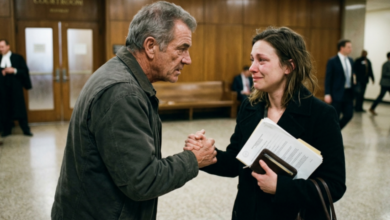
A week later, my daughter came to see me.
With swollen eyes and a small handbag, she stood on my front porch.
“Mom, can I come in?”
I opened the door but did not step aside immediately.
“Why?”
She looked down.
“Because I miss you.”
For a moment, I saw the little girl who ran into my kitchen after school. Once, during a thunderstorm, she had fallen asleep on my shoulder. Even now, part of me wanted to protect her.
Finally, I moved aside, and we sat in the living room.
She looked at her father’s photograph.
“Mom, I am so sorry.”
Rather than answer, I waited.
“I didn’t know he was going to take that much.”
“How much did you think he was taking?”
She began crying again.
“I thought it was a few thousand. According to him, you had agreed to help us, and Diane was collecting the money to save you several trips.”
The Answer That Hurt Most
“And when did you realize I hadn’t agreed?”
She wiped her cheeks.
“The first day.”
In disbelief, I stared at her. “The first day?”
She nodded.
“Brian told me you might get suspicious. He said we should wait until everything was replaced.”
At that, my throat tightened.
“Then why didn’t you call me?”
She covered her face.
“I was afraid.”
“Of what?”
“Losing my marriage and the house. Also, I was afraid everyone would find out.”
Before answering, I looked at her for a long time.
“And you thought I should lose sixty-one thousand dollars instead?”
This time, she had no answer.
Loving Her Without Ignoring the Betrayal
I stood and walked to the window.
Outside, the autumn leaves were moving gently across the garden path.
“Your father and I worked for everything we had,” I said. “By saving carefully and going without things, we planned for our old age. Above all, we wanted to avoid becoming a burden to our children.”
I turned toward her.
“Do you know what hurts most?”
She shook her head.
“That you knew I was being deceived, and you allowed me to remain the only person in the family who didn’t know.”
She began sobbing.
Despite everything, I wanted to hug her. Yet loving my daughter did not mean pretending the betrayal had never happened.
“I love you,” I told her. “But I cannot give you access to my money, my home, or my trust simply because you are my daughter.”
She nodded.
“And I cannot promise that everything will go back to the way it was.”
She left an hour later.
After watching her drive away, I cried. Although I stood by what I had said, I was mourning the family I thought I had.
The Final Decision
The investigation continued for several months.
The bank cooperated with the authorities, and the evidence was preserved.
Brian and Diane eventually faced criminal charges connected to the unauthorized withdrawals and the use of my identification. My daughter’s involvement was also examined, including what she knew and when she knew it.
Meanwhile, I hired an independent attorney.
The bank’s fraud department worked through the reimbursement process, and the recovery of the stolen funds became part of the legal proceedings.
In addition, I changed every arrangement for accessing my accounts.
New identification documents were issued. My mailing address was secured. The spare house key was returned.
Finally, I had the locks changed, because I no longer assumed a familiar face meant I was safe.
A Letter Without Excuses
Six months later, I received a letter from my daughter.
Unlike our earlier conversations, the handwritten letter contained no request for money or excuses about Brian. Instead, she wrote that her marriage was over and she had started counseling. Through that work, she was trying to understand how she had taken part in something so terrible.
At the bottom, she wrote:
I know I may never deserve your trust again, but I hope one day you will let me be your daughter without asking me to pretend none of this happened.
After reading the letter several times, I placed it beside Robert’s photograph. However, I was not ready to respond.
After all, some wounds need time before forgiveness can even be considered.
And forgiveness, I had learned, does not mean handing someone the key to your life again.
Returning to the Bank
A year after the day I discovered the theft, I returned to the bank.
As always, it was the first Monday of the month.
Brittany saw me approaching the counter and smiled.
“Mrs. Lane! It’s lovely to see you.”
I smiled back.
“Good morning, sweetheart.”
While she processed my transaction, I thought about my grandson’s birthday. This time, the three hundred dollars I was withdrawing would buy him a present.
Because he was not responsible for his parents’ choices, I wanted him to have the bicycle he kept talking about.
As I put the cash inside my purse, Mr. Okafor came out of his office.
“Mrs. Lane, it’s good to see you doing well.”
“Thank you, Mr. Okafor. I am doing better.”
He hesitated.
“May I ask you something?”
“Of course.”
“After everything that happened, do you still trust people?”
Before answering, I thought about Robert and his decades of saving. Then my mind turned to my daughter’s silence and Diane wearing my coat. But I also remembered Brittany, who noticed something was wrong and refused to ignore it.
Finally, I answered.
“I still trust people. I simply don’t confuse trust with giving someone unlimited access to my life.”
He smiled.
As I walked into the sunlight, I felt light for the first time in months.
Along the way, I had lost money and watched my daughter’s marriage fall apart. More painfully, I had lost the belief that the people closest to me would always protect me.
But I had not lost myself.
And I had not lost the life Robert and I had built together.
Starting Over at Eighty
That evening, I placed the birthday present beside my grandson’s chair.
Then I sat in the living room and looked at my husband’s photograph.
“Well, Robert,” I whispered, “you were right about one thing. We should always keep our important papers somewhere safe.”
I paused and smiled sadly.
“But I think we should have been more careful about who we gave the spare key to.”
And for the first time since the bank incident, I laughed.
Although it was a small, tired laugh, it belonged to me.
Because the greatest lesson I learned at eighty was not that family can betray you.
It was that being someone’s mother, grandmother, or relative does not mean you must surrender your dignity, your security, or your right to say no.
At eighty, after losing my husband and surviving heartbreak, I was still capable of starting over.
The money was important.
But my freedom was worth far more than sixty-one thousand dollars.