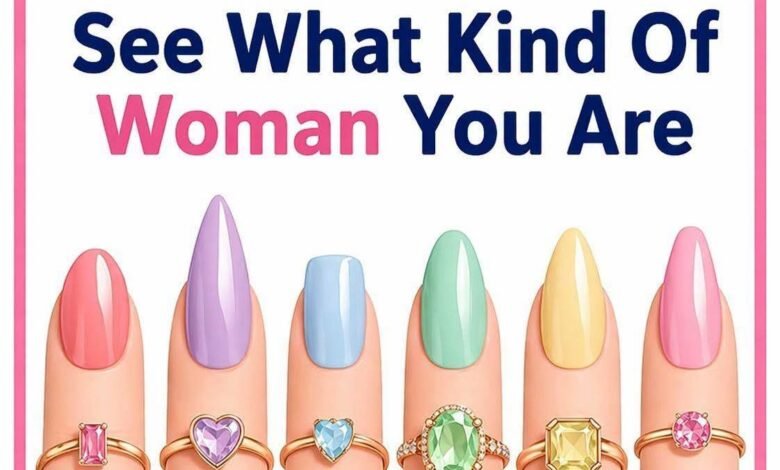
A picture of six purple nail designs asks viewers to choose quickly and promises to reveal their true personality. Each option differs in shape, gemstone and level of decoration. The results can be fun, but they are symbolic stories rather than psychological findings.
Nail one is simple and structured, with a small rectangular detail. The test links it with quiet confidence, reliability and self-discipline. A person may choose it because they prefer practical designs, work in a setting with a dress code or simply like clean lines.
Nail two features a heart and is assigned romance, intuition and emotional openness. The heart is a widely recognized symbol of affection, so the interpretation follows the design rather than uncovering a hidden trait. Someone can love the pattern without making decisions primarily through emotion.
Nail three balances decoration and restraint. Its result describes thoughtfulness, stability and controlled emotion. These broad qualities are attractive to many readers. The middle position in the image may also influence attention before conscious preference forms.
Nail four uses a large central gem and is associated with ambition, boldness and comfort with attention. A striking design does invite visibility, but wearing or selecting it does not prove someone is competitive. Fashion lets people experiment with a mood that may differ from everyday behavior.
Nail five combines a square gem with a balanced shape. The test describes practicality, intelligence and long-term thinking. Geometry often creates an impression of order, which encourages that narrative. The visual association is real; the personality conclusion remains playful.
Nail six is sleek and less decorated, leading to descriptions of independence, mystery and quiet influence. Preference for a subtle design may come from taste, convenience or the way it looks on a particular hand. It does not mean the person hides an inner world.
The Barnum effect helps explain why results feel accurate. Personality posts use statements that apply widely: dependable but not boring, emotional but strong, private yet caring. When people choose before reading, they experience the description as personalized.
Choice is also shaped by the image. Lighting, screen color, placement and finger shape affect which option looks best. If the gems were exchanged or the designs shown on different hands, many viewers would select differently. Stable personality would not have changed in those seconds.
Enjoy the puzzle by asking what the design expresses today. Perhaps you want simplicity, celebration, romance or confidence. That preference can be meaningful without becoming a permanent label. People are reserved in one setting and bold in another. A manicure can communicate style, but six illustrated nails cannot contain the full complexity of a life.
Real nail choices also depend on practical factors the test ignores. Length and gems may be difficult for healthcare work, food preparation, musical instruments, childcare or sports. Allergies, nail health, cost and maintenance shape preference. Someone who loves the boldest design may wear the simplest one every day, while a normally reserved person may choose elaborate nails for a celebration. Context changes expression without changing identity. If a result feels accurate, consider which sentence resonated and why. If it feels wrong, that disagreement is equally informative because it shows how you describe yourself. The image offers six ready-made stories; the viewer supplies the evidence. Treat the result as a moment of style and reflection, not a verdict about what kind of woman anyone must be.
There is also no correct answer to cheat toward. The best choice is simply the one that catches your attention, followed by enough skepticism to keep a decorative preference from becoming a permanent psychological label.
Style is allowed to remain playful.