Uncategorized
At My Husband’s 70th Birthday Dinner, He Handed Me a $3,926 Bill—My Answer Changed Everything

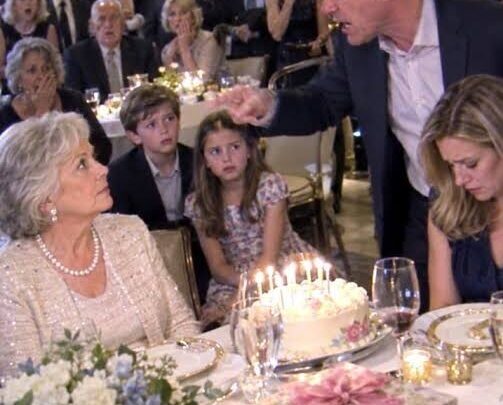
At my husband Walter’s seventieth birthday dinner, he handed me a folder containing a bill for $3,926.18 and told me to pay it with my retirement money.
For a moment, I genuinely believed he was joking.
We had been married for forty-two years. We had raised children together, welcomed grandchildren into our family, and built a life that, from the outside, probably looked ordinary and comfortable. I had spent decades believing that keeping a marriage peaceful meant knowing when to stay quiet, when to compromise, and when to put someone else’s needs ahead of my own.
But that evening, surrounded by our children, grandchildren, relatives, and friends, Walter revealed something I could no longer ignore.
He had always considered my sacrifices part of his entitlement.
And when I finally said no, the consequences reached far beyond a birthday dinner.
The Bill Nobody Expected Me to Question
The restaurant was crowded, and our table was filled with the sounds of conversation, laughter, and children asking for more dessert. Walter had insisted on celebrating his seventieth birthday in style. He chose the restaurant, invited more than twenty people, and ordered expensive steaks, appetizers, wine, cocktails, and desserts without worrying about the prices.
He wanted everyone to enjoy themselves.
At least, that was what he had told us.
Then he placed the folder in front of me.
“The bill,” he explained, tapping it with one finger. “Your retirement money. You have twenty-one thousand dollars sitting around doing nothing, and we have a birthday dinner to pay for.”
I opened the folder.
The total was $3,926.18.
Nearly four thousand dollars for a dinner I had neither planned nor agreed to finance.
I looked at Walter, waiting for him to smile and admit that he was teasing me. Instead, he looked perfectly serious.
“You planned to have me pay for this?” I asked.
He waved his hand dismissively.
“Don’t make a scene.”
I repeated my question, hoping he might understand how unreasonable his request sounded. He did not.
“You have the money, Elaine. I thought it would be a nice way for you to contribute.”
Contribute.
That word stayed with me.
For forty-two years, I had contributed through cooking, cleaning, raising our children, managing the household, caring for Walter’s mother, working part-time, and finding ways to stretch our budget when money was tight.
I had remembered birthdays, prepared holiday meals, and made sure our family had what it needed. I had quietly postponed personal plans whenever Walter decided something else was more important.
Now that I finally had money of my own, he treated it as though it had automatically become his.
“Walter,” I said carefully, “you invited everyone. You chose this restaurant. You ordered the food. We never discussed me paying for it.”
His expression changed.
The charming birthday host disappeared, replaced by the man who had controlled our household finances for decades.
“A wife doesn’t keep money from her husband,” he announced loudly enough for everyone nearby to hear.
Then he laughed.
He expected me to feel embarrassed. He expected me to glance around the table, see our family watching, and reach into my purse to prevent an uncomfortable scene.
For most of our marriage, that expectation would have been correct.
But something had changed.
I closed the folder and pushed it back across the table.
“No.”
The First Time I Refused to Give In
Walter blinked as though he had not understood me.
“What did you say?”
“I said no. I’m not paying this bill.”
He looked around the table, waiting for someone to agree that I was being unreasonable. Our son Michael put his phone facedown. Our daughter Rachel stopped helping her youngest child with dessert. Susan lowered her glass, while Walter’s brother, Robert, shifted uneasily in his chair.
Nobody rushed to defend him.
Walter leaned closer.
“Elaine, don’t be ridiculous. Just give the server your card.”
“No.”
“Do you want to embarrass me on my birthday?”
I looked directly at him.
“You invited twenty people to an expensive restaurant without discussing the cost with me. If you’re embarrassed, perhaps you should ask yourself why.”
A small gasp came from the other end of the table.
Walter’s face reddened. He was accustomed to disagreements happening privately, where he could talk over me until I became exhausted and eventually apologized.
He was not accustomed to being challenged in public.
“You are my wife,” he said.
“Yes.”
“That means what’s yours is mine.”
I folded my hands in my lap.
“Does that mean what’s yours is mine, too?”
He stared at me.
I continued, asking whether his retirement accounts, savings, investments, and golf fund also belonged to me. If marriage meant that every dollar belonged equally to both of us, surely the principle applied in both directions.
Walter had no immediate answer.
His money had always been treated as the reward for his hard work. My money, however, became family money whenever he wanted access to it.
I turned toward the server.
“I’m sorry for the awkward situation. I didn’t authorize these purchases, and I won’t be paying for the entire table.”
The young man remained professional and offered to bring separate checks.
Before I could answer, Walter slammed his palm against the table.
“Absolutely not! This is a family celebration. One bill. I’ll handle it.”
The words came out before he seemed to realize what he had said.
I watched him quietly.
For the first time that evening, he had accepted responsibility for the expense he had created.
When the server walked away to bring the payment terminal, Walter leaned toward me and muttered that I had made myself look cheap in front of everyone.
I answered without raising my voice.
“No, Walter. I have simply stopped pretending that your choices are my responsibility.”
When Walter’s Credit Cards Were Declined
Five minutes later, the server returned with the payment terminal.
Walter pulled a credit card from his wallet and handed it over confidently. He had always liked paying in front of people because it made him appear successful and dependable.
The server processed the payment.
Then he looked at Walter apologetically.
“I’m sorry, sir. The transaction was declined.”
Walter stared at him.
“That can’t be right.”
The server tried again.
Declined.
Walter snatched the card back and handed him another. It was the card he usually kept for emergencies.
That one was declined, too.
The table fell silent.
Walter’s face changed from red to a pale, uncomfortable gray. He muttered that the machine must be broken, then pulled out his phone and opened his banking application.
“There’s money in there,” he whispered to himself.
I watched him tapping the screen with growing frustration.
Suddenly, I remembered a conversation from two months earlier. Walter had been sitting at the kitchen table, studying a stack of financial paperwork. When I asked what he was doing, he said he was reorganizing our accounts.
“Nothing you need to worry about,” he had told me.
At the time, I had accepted his answer. I was busy arranging my retirement paperwork and discussing travel plans with my sister Marianne.
Now, as Walter struggled to find a way to pay for dinner, I wondered what he had reorganized.
He called someone, but the call went to voicemail. After trying again without success, he turned to Michael.
“Do you have enough room on your card to cover this? I’ll transfer the money tomorrow.”
Michael looked uncomfortable.
“Dad, I don’t have four thousand dollars available on my credit card.”
Walter asked Rachel next. She explained that she couldn’t cover the entire amount without affecting her family’s budget.
Susan began reaching for her purse, offering to pay part of the bill.
I stopped her gently.
“You don’t need to pay for a dinner you didn’t organize.”
“Mom, it’s fine,” she replied. “We don’t want Dad to be embarrassed.”
I understood her instinct. I had spent years behaving the same way, protecting other people from the consequences of their own decisions.
But I didn’t want my daughter to learn that love required her to sacrifice her financial security to rescue someone else’s pride.
Walter turned toward me.
“Would you stop making this worse?”
“I’m not making anything worse. I’m sitting here.”
The Family Finally Speaks Up
Robert cleared his throat.
“Walt, perhaps we should look at the bill and split it among the adults.”
Walter looked at his brother as though he had betrayed him.
“Split it? This is my seventieth birthday!”
“And it’s nearly four thousand dollars,” Robert replied. “That’s a lot for one dinner.”
For the first time that night, someone had challenged Walter without immediately backing down.
Other guests began offering practical solutions. Dennis, a retired contractor who had attended the celebration with his wife, offered to cover the wine they had ordered. Another guest offered to pay for his family’s meals.
The restaurant agreed to prepare itemized receipts so everyone could pay for their own orders.
Walter rejected the idea twice.
Then he looked around the table and realized nobody was going to rescue him simply to protect his pride.
“Fine. Separate checks.”
The adults began sorting out their portions. Robert paid for his family, Michael covered his own household’s meals, and other guests took responsibility for their orders. Rachel and Susan divided their families’ expenses between them.
Walter was still left with a substantial bill, but it was considerably smaller than the original $3,926.18.
When the server returned with his new total, Walter read the receipt and looked at me.
“You could have prevented all of this.”
I took a slow breath.
“No, Walter. I could have paid for it. Those are two different things.”
For once, I didn’t rush to soften my words.
The dinner ended in fragments. Some guests left early, offering awkward birthday wishes. Others lingered near the entrance, talking quietly while they waited for their rides.
The grandchildren were confused by the tension.
My oldest granddaughter, Lily, approached me while her mother helped her younger brother into his jacket.
“Grandma, are you and Grandpa mad at each other?”
I knelt to straighten her scarf.
“Sometimes grown-ups disagree, sweetheart.”
“Did you do something wrong?”
Her question hurt more than I expected. Children often assume that the person who refuses to give in must be responsible for the conflict.
I looked at her carefully.
“No, sweetheart. I didn’t do anything wrong by saying no to something I didn’t agree to.”
She wrapped her arms around me.
“I love you.”
“I love you, too.”
When I stood up, I noticed Walter watching us from across the room. He looked irritated, but there was uncertainty in his expression.
He had expected the evening to end with me apologizing.
Instead, I collected my coat and decided I wanted to go home, sleep, and think about my future without having another argument that night.
My Daughter Told Me Something I Needed to Hear
Outside, the October air was cold enough to sting my cheeks.
Rachel caught up with me beside the car.
“Mom, are you okay?”
My automatic response was ready.
Of course. I’m fine.
It was what I had said for decades whenever someone asked whether I was tired, hurt, disappointed, or lonely.
This time, I told the truth.
“I don’t know.”
Rachel’s expression softened.
She took my hand and glanced toward the restaurant entrance, where Walter was still talking to Robert.
“I’ve wanted to say something to you for years, but I never knew how.”
I asked her what she meant.
“Dad has always treated you like you need his permission to do anything. Even when I was little, I noticed it. I thought maybe that was just how marriages worked.”
I stared at her.
“You noticed?”
She nodded.
She remembered when I had wanted to take a pottery class at the community center. I had saved the money myself, but Walter dismissed the idea as a waste of time. Eventually, I abandoned the plan.
Rachel also remembered how I cared for Walter’s mother when she became ill. I drove her to appointments, prepared meals, stayed overnight, and comforted her when she was frightened.
Walter told people he was supporting his mother, but much of the daily work had fallen to me.
“He worked hard, Rachel,” I said instinctively.
“I know he did. But so did you.”
She squeezed my hand.
“Mom, you don’t have to keep proving you’re a good wife by making yourself smaller.”
For several seconds, I couldn’t speak.
I had spent so long trying to convince myself that my contributions mattered that hearing my daughter acknowledge them felt like being seen for the first time.
I hugged her before getting into my car.
Walter arrived a few minutes later and slammed the passenger door. He fastened his seat belt and remained silent until we were halfway home.
“You made me look like a fool,” he finally said.
I kept my eyes on the road.
“You ordered nearly four thousand dollars of food and expected me to pay without asking.”
“I thought we were a family.”
“We are.”
“Then why couldn’t you help me?”
I turned onto our street.
“Because being a family doesn’t mean one person gets to make every decision and another person has to pay for them.”
Walter laughed bitterly.
“Forty-two years, Elaine. Forty-two years, and now you’re acting like a stranger.”
I parked in the driveway and turned off the engine.
For a moment, neither of us spoke.
Then I looked at him.
“Perhaps you’ve never really known me, Walter.”
I opened my door and stepped outside. Behind me, he muttered something I couldn’t hear.
For once, I didn’t ask him to repeat it.
The Memories I Could No Longer Ignore
I barely slept that night.
Walter went to bed without speaking to me. I heard him moving around in the bathroom, opening drawers more loudly than necessary, and turning on the television. It was his familiar way of making sure I knew he was angry.
I lay awake beside him, staring into the darkness.
At 2:13 a.m., I finally got up, went downstairs, made tea, and sat at the kitchen table.
The house was quiet.
For the first time in years, I allowed myself to examine my marriage without immediately defending Walter.
I remembered the holidays when I cooked for everyone while he sat in the living room with his brother. I remembered the years I spent caring for his mother, changing her sheets, preparing her meals, and staying awake when she needed comfort.
I remembered working part-time at a medical supply company and coming home to prepare dinner because Walter believed a meal cooked by one’s wife was part of making a house a home.
I remembered asking whether we could take a weekend trip for our anniversary. He said we couldn’t afford it.
The following month, he spent nearly three thousand dollars on a new golf club membership.
There was the sofa I wanted to replace, the pottery class I never attended, the books I stopped buying because Walter questioned why I needed them, and the clothes I continued wearing long after the fabric had thinned.
None of those memories seemed especially significant on its own.
Together, however, they formed a pattern I could no longer ignore.
Walter hadn’t simply been careful with money.
He had been careful with my independence.
And I had mistaken his control for responsibility because admitting the truth would have meant confronting how lonely I had become.
At 3:05 a.m., I went upstairs and opened the small desk drawer where I kept my personal documents.
My retirement letter was there, along with the statement showing the money deposited into my individual account.
I carried both documents downstairs and studied the balance.
A little over $21,000.
It wasn’t a fortune. It wouldn’t buy a house or allow me to retire in luxury.
But it could pay for a plane ticket to Oregon, several weeks with Marianne, and the beginning of a life in which I could make some decisions for myself.
For the first time, that possibility felt real.
A Late-Night Call to My Sister
I picked up my phone and opened Marianne’s contact.
For a moment, I hesitated. Then I typed a message.
Are you awake? I think I’m finally ready to come visit you.
The message showed as delivered almost immediately.
A minute later, my phone rang.
“Hello?”
“Elaine?”
My sister’s voice was thick with sleep, but she became alert the moment she heard mine.
“What happened?”
“Nothing terrible. I just need to talk to someone.”
“Then talk.”
I told her about the dinner, Walter’s demand, the declined credit cards, and the moment I pushed the folder back across the table.
Marianne listened without interrupting.
When I finished, she remained quiet for a moment.
Then she asked a question I hadn’t expected.
“Elaine, do you remember what you told me when we were seventeen?”
I smiled faintly.
“We were seventeen for about five minutes before you started telling me what to do.”
She laughed softly.
“You told me that when we got older, you wanted a little house with a garden. You wanted roses by the front steps, a kitchen window overlooking the yard, and a room where you could read without anyone telling you that you were wasting time.”
I closed my eyes.
I remembered sitting on the back porch of our childhood home, talking about the lives we imagined for ourselves. Marianne wanted to travel. I wanted a garden and a quiet room.
Neither of us had understood how complicated adulthood could become.
“I remember,” I whispered.
“Do you still want that?”
I looked around my kitchen. The clock on the wall was five minutes fast, just as Walter liked it. The refrigerator calendar was filled with appointments and family events. A list of household repairs was held to the door by a magnet.
Every corner carried evidence of a life spent making sure everyone else had what they needed.
“Yes,” I answered.
The word came out so softly that I almost didn’t recognize it.
Marianne exhaled.
“Then come here. Stay as long as you want. We’ll go to the coast, buy ridiculous amounts of flowers, and sit in the garden until we get cold.”
I laughed, but tears began rolling down my face.
“I don’t know if I can.”
“You can visit your sister, Elaine. You don’t need permission to see me.”
For a long time, neither of us spoke.
Then Marianne asked me to think carefully about two questions.
Was I afraid of what Walter would say if I went?
“Yes,” I admitted.
Was I afraid of what would happen if I didn’t?
I had no answer.
The truth was that I had been afraid for years. I was afraid of arguments, of disappointing Walter, of being called selfish, and of discovering that after forty-two years of marriage, I no longer knew how to live according to my own wishes.
“I’ll call you tomorrow,” I finally said.
“Anytime,” Marianne replied. “I’m here.”
The Decision That Belonged to Me
When we hung up, I remained at the kitchen table until the sky outside the window began to lighten.
Then I made a decision.
I would book the trip.
I wouldn’t announce it as a request. I wouldn’t ask Walter whether he thought it was sensible. I wouldn’t spend days preparing arguments to justify why visiting my sister was a reasonable use of my own money.
I would tell him what I had decided, and he could decide how he wanted to respond.
The thought frightened me more than I wanted to admit.
After decades of anticipating Walter’s reactions, I had become accustomed to considering his opinion before making even the smallest personal decision. I had learned to avoid conflict by giving up things I wanted before an argument could begin.
But I was sixty-seven years old.
I had worked, raised children, cared for family members, managed responsibilities, and contributed to a household for most of my adult life. Wanting to spend time with my sister was not an unreasonable demand.
Neither was wanting to use my retirement money according to my own priorities.
I didn’t know what would happen when Walter discovered that I intended to go to Oregon. I didn’t know whether he would become angry, attempt to persuade me to stay, or accuse me of abandoning my family.
I also didn’t know whether this trip would change my marriage or simply help me understand it more clearly.
For now, I didn’t need all the answers.
I only needed to take the first step.
The birthday dinner had begun with a $3,926.18 bill and a husband who believed that my money, like so many other things in our marriage, was his to control.
It ended with something I had not felt in years: the possibility of choosing my own future.
I wasn’t trying to punish Walter. I wasn’t looking for revenge or hoping to embarrass him in return.
I simply wanted to stop confusing love with obligation and peace with silence.
I wanted to remember the woman who had dreamed of roses by her front steps and a quiet room where she could read.
I wanted to discover whether there was still room in my life for that woman.
And for the first time in a very long time, I was willing to find out.
I didn’t know yet how much my decision would change.
I only knew I couldn’t go back to the way things had been.