News
Mystery Item Found in Our Attic: It’s an Old Christmas Tree
Mystery Item Found in Our Attic: It's an Old Christmas Tree

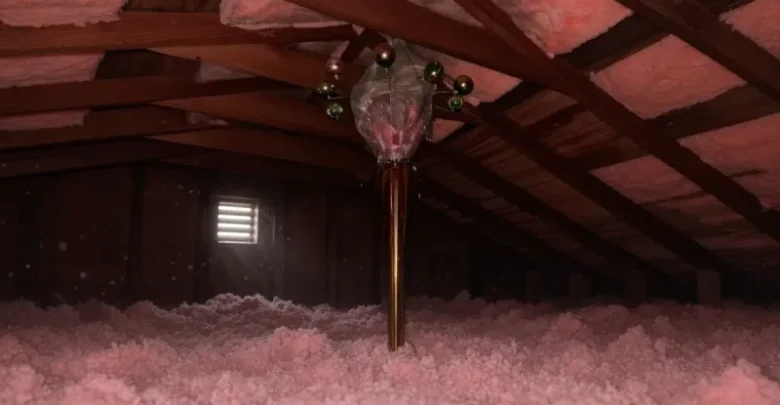
Someone opens an attic hatch, shines a light into the rafters, and freezes. Something is hanging from a beam: a dusty bundle, a long gold spike pointing at the insulation, a few shiny balls poking out of a plastic shroud. In a dim photo it can look like a creature, a leftover machine, or a prank that got out of hand. The circled pictures spread quickly, usually with the same two words: “What is this?”
The answer, confirmed in the original write-up of this find and in many similar attic photos, is almost wonderfully ordinary. It is an old artificial Christmas tree, stored hanging, often with a few ornaments still attached and the stand or trunk hanging downward.

Once you know that, the picture snaps into place. The “body” is a mass of compressed branches, sometimes wrapped in a bag or a sheet of plastic to keep them from snagging.
The “legs” or “spike” is the trunk, or the tree’s stand, pointing down. The little globes on stalks are baubles that never got packed away. Dust, cobwebs, and pink insulation do the rest of the costume work.
Why It Looks So Strange
Attics are not kind to memory. Heat, cold, and years of stillness flatten plastic needles. Branches that once opened into a nice cone get crushed into a tangle. Tinsel turns into silver strings that can pass for wiring or webbing. A gold-painted stand, seen end-on in a phone photo, can look like a metal horn. Add a red circle and a frightened caption, and a holiday leftover becomes a mystery object.
People guess anyway, and the guesses are understandable. An abandoned electrical project. Some kind of antenna. A trap. A decoration from a different holiday that no one can name.
A few commenters go darker and picture an animal or something worse. The Christmas-tree answer fits the details better than any of those: ornaments, a central pole, a stand, and a storage habit that a lot of families actually used.
Lighting plays a bigger role than most of us admit. Phone cameras boost shadows. A single flashlight beam can turn ordinary plastic into a shiny, unfamiliar texture. If you have ever jumped at a coat on a door hook at night, you already know the trick. The attic version is the same habit of the brain, just with insulation and rafters in the frame. Step closer, or wait for daylight from a vent, and the “creature” often becomes a household object with a very dull name.
That is a useful habit for the next odd find, too. Before you assume the worst, look for seams, screws, fabric, price tags, and repeating shapes that signal something manufactured.
Wildlife leaves other clues, such as droppings or torn insulation. Wiring has a logic and a path. A Christmas tree has a trunk and a stand. A minute of calm looking prevents a lot of shared panic, and it also keeps you from yanking on something you should have left alone.

Hanging a tree from a rafter was, for some households, a space-saving trick. Floor space in an attic is awkward. A bag can tear. If you hook the tree up high, the branches stay off the insulation and the floor stays clearer for boxes. The method makes sense until someone comes up a decade later, does not remember the trick, and meets a dusty silhouette in the beam of a flashlight.
A Little Family History, Hiding in Plain Sight
That is the other reason the find sticks with people. The object is funny, but it is also a leftover from years of December evenings.
A tree like that probably stood in a living room once, with lights that had to be untangled and a few favorite ornaments that always went on the same branch. Then tastes changed, a new tree arrived, or the work of decorating felt like too much, and the old one went upstairs “for now.” “For now” can last a long time.

When you finally take it down, you may find more than plastic. A forgotten ornament. A hook still tied with old twist ties. A tag from a store that no longer exists. You do not have to keep any of it. You also do not have to treat it as junk on sight.
Sometimes the value is just the reminder that ordinary objects can look unrecognizable after a long stay in the dark.

If You Meet One in Your Own Attic
Curiosity is fine. Caution is better. Attics can have loose boards, sharp nails, and insulation that you should not breathe or handle bare-handed. Step only on solid joists or flooring, use a good light, and wear gloves and a mask if you will be moving dusty things. If the hanging object is heavy, awkwardly wrapped, or tied in a way you cannot see clearly, get help before you cut it down.
A tree is not dangerous in the way a live wire would be, but a falling stand or a lost footing can still ruin an afternoon.

Once it is down, you can decide what to do. Some people tidy the branches, test the lights if there are any, and give the tree another season. Others recycle what they can and pack the ornaments into a box that will actually be opened next year. A dedicated storage bag, kept in a drier, easier-to-reach spot, is kinder to the next person who goes looking.
If you decide to keep the tree, give it a closer look before the next holiday. Check for brittle branches, cracked stands, and, if it has lights, damaged cords.
Old pre-lit trees can be a fire hazard if the wiring is worn. When in doubt, recycle the lights and keep the ornaments. A new, simpler tree is cheaper than a problem in the living room, and the decorations are usually the part people actually missed.
If you do not want it, many communities have a date or a drop-off for holiday decorations, or a secondhand shop that will take a clean, usable tree. Shake out insects outside, not in the house. And if the attic has more forgotten seasonal boxes, label them now, while you remember what they are. Future you, standing under the same rafters, will be grateful for a marker and a clear word like “tree” instead of another mystery silhouette.

So the mystery item in the attic, at least in this widely shared case, was never a monster and never a secret device. It was a Christmas tree that had been put away and then left long enough for dust and bad lighting to do their work.
The internet loves a scare. This time the punchline is tinsel.
Frequently Asked Questions
How can I be sure it is a Christmas tree?
Look for a central pole or trunk, a stand, repeating branch patterns, and ornaments or tinsel. Those details, taken together, are much more typical of a stored tree than of wiring or wildlife.
Could a hanging object in an attic ever be something unsafe?
Yes. If you see exposed wiring, pest nests, or anything you cannot identify at all, do not pull on it. Step back and, if needed, call a qualified inspector, electrician, or pest professional.
Is this the same photo people have shared for years?
Variations of this scene have circulated online, all with the same basic explanation. The version attached to this story matches an old artificial tree, complete with leftover ornaments.
Thanks for stopping by this little attic mystery with us. The story is for entertainment and general curiosity, not a treasure-hunting or home-repair guide.