News
Fans of Happy Days Will Love These Little-Known Stories From the Beloved Series
Fans of Happy Days Will Love These Little-Known Stories From the Beloved Series

Fans of Happy Days Will Love These Little-Known Stories From the Beloved Series
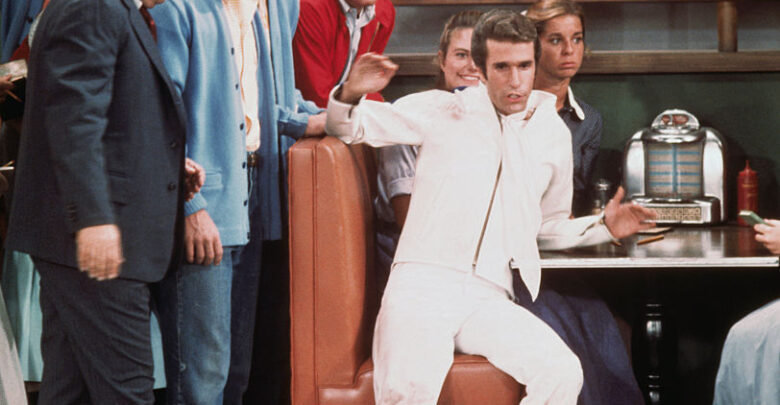
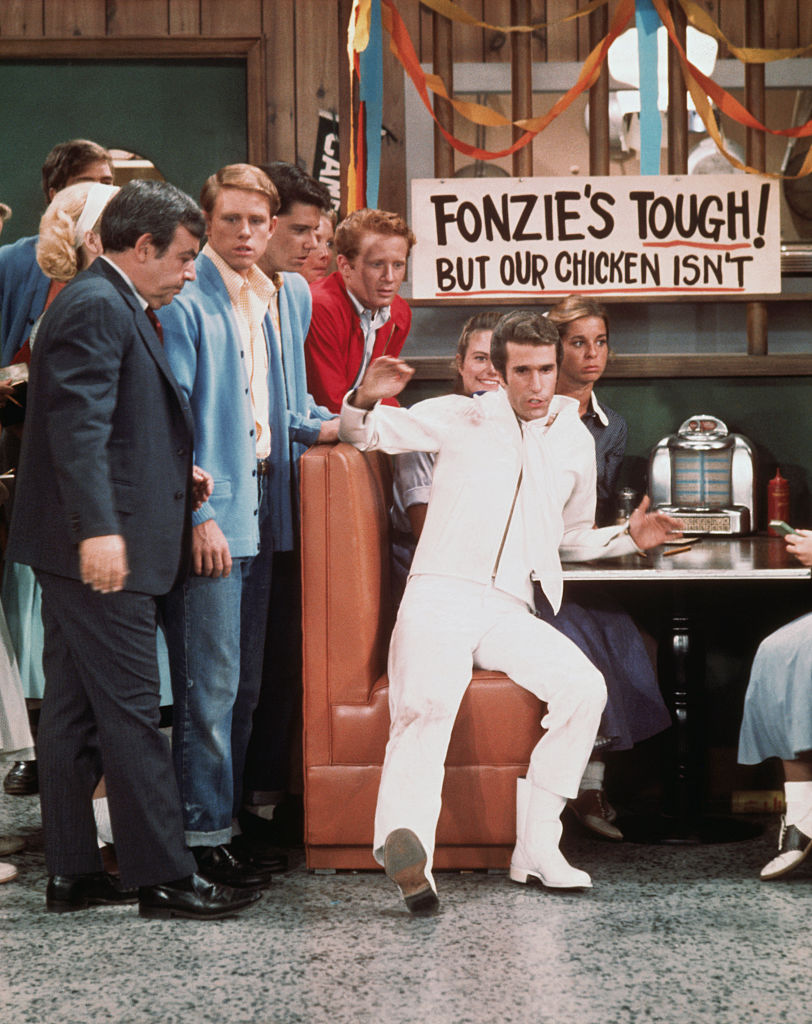
If you grew up watching Happy Days, chances are you remember the leather jacket, Arnold’s, the jukebox, Richie Cunningham, and, of course, Fonzie’s unforgettable “Ayyyy!”
For millions of viewers, Happy Days became much more than another television sitcom. The series offered a warm and nostalgic look at an idealized version of 1950s America, following the Cunningham family and their friends through teenage adventures, family moments, romance, friendship, and plenty of comedy.
But behind the familiar characters and memorable episodes was a surprisingly fascinating story.
The series almost looked completely different before it reached television. Some of its most recognizable characters were nearly played by other actors. One of its biggest stars struggled with something audiences could not see. A future comedy superstar received a life-changing opportunity through the show. Even one of television’s most famous expressions, “jump the shark,” can be traced back to Happy Days.
Here are some of the lesser-known stories that make the history of Happy Days even more interesting.
Happy Days Almost Took Place in a Different Era
It is difficult to imagine Happy Days anywhere other than the 1950s.
The cars, clothing, diners, music, hairstyles, and teenage culture became essential parts of the show’s identity. Yet the series almost had a completely different setting.
When Garry Marshall was first approached about developing a sitcom in the early 1970s, the original concept was reportedly supposed to take place during the 1920s or 1930s.
Marshall eventually realized that he did not know enough about the flapper era to develop the kind of story he wanted.
The 1950s, however, were a period he understood much better.
Marshall created a pilot centered around a Midwestern family getting its first television set. Their teenage son hoped the new invention might even help him attract girls.
The pilot did not immediately become a television series.
Instead, it was eventually presented as a segment of Love, American Style.
That might have been the end of the story.
Fortunately for television history, it wasn’t.

The Show Almost Had a Completely Different Name
Even the title Happy Days was not guaranteed.
Marshall initially considered calling the series COOL.
The problem appeared during test screenings. Audiences reportedly associated the word with cigarettes, creating an image that was very different from the wholesome nostalgic sitcom the creators wanted to build.
Producer Carl Kleinschmitt eventually suggested the name Happy Days.
The new title turned out to be a much better fit.
It captured the show’s nostalgic atmosphere and eventually became one of the most recognizable sitcom titles in television history.
Ron Howard Wasn’t Immediately Interested in Playing Richie
Ron Howard became closely associated with Richie Cunningham, but accepting the role was not necessarily an obvious decision for him.
Howard had already spent years working in front of television cameras, and he was concerned about becoming permanently identified with playing a teenager.
He initially turned down the role.
Garry Marshall, however, offered him an important promise.
If the series became successful, Richie and his friends would not remain teenagers forever. The characters would eventually graduate, grow older, and move into adulthood.
Even Fonzie would eventually return to school to complete his education.
That promise helped convince Howard to accept the role.
The decision would prove to be enormously important in his career.

Ron Howard Had Another Reason to Accept the Job
There was another factor surrounding Howard’s decision at the time.
He had enrolled at the University of Southern California with ambitions of becoming a director. At the same time, his low military draft number was hanging over him.
His work with Paramount offered a possible occupational deferment because the company employed enough people who could potentially be affected if he were drafted.
Howard ultimately accepted the role of Richie Cunningham.
Few people could have known just how important that decision would become.
His time on Happy Days would not only make him famous as an actor but would eventually fit into a much larger career behind the camera.
Fonzie Almost Looked Completely Different
Today, it is almost impossible to imagine anyone other than Henry Winkler playing Arthur “Fonzie” Fonzarelli.
But Winkler was not exactly what Garry Marshall had envisioned.
Marshall originally imagined Fonzie as a much more physically imposing character.
Actors with a tougher, more muscular appearance, including Sylvester Stallone and Perry King, were closer to the image Marshall initially had in mind.
Henry Winkler did not have that traditional tough-guy build.
Another surprising name was also considered for the role: Micky Dolenz, the former drummer of The Monkees.
Dolenz was significantly taller than Ron Howard, however, which made the casting less practical.
Then Henry Winkler walked into the audition.
Something clicked.
Henry Winkler Brought the Attitude
Winkler may not have looked exactly like the character Marshall had imagined, but he understood Fonzie’s personality.
During the audition, Winkler drew on an attitude influenced by Sylvester Stallone, whom he had previously worked with on The Lords of Flatbush.
Marshall eventually realized that the character did not need to be defined by physical size.
The attitude was more important.
And that attitude created one of television’s most memorable characters.
Fonzie went from being a supporting character to one of the biggest stars of the entire series.
His popularity became so enormous that the network eventually considered renaming the show around him.
The idea of Fonzie’s Happy Days or simply Fonzie demonstrates just how dramatically the character’s popularity had grown.
Henry Winkler’s Hidden Struggle With Dyslexia
One of the most remarkable stories connected to Happy Days involves Henry Winkler’s childhood and education.
Winkler struggled in school for much of his childhood, but he was not diagnosed with dyslexia until he was 31.
That information makes his audition for Happy Days particularly fascinating.
When Winkler auditioned for Fonzie, he reportedly had only six lines.
The problem was that he could not properly read them.
Instead of simply following the script word for word, Winkler improvised.
His interpretation apparently differed from what had been written.
When producers questioned the performance, Winkler explained that he had captured the essence of the character and could deliver the written material exactly if he received the role.
He got the part.
His experience later became an important part of the public conversation surrounding dyslexia and learning differences.
When Fonzie Went to the Library
Fonzie was probably one of the last characters viewers would have expected to see spending time in a library.
Yet Happy Days used his popularity to promote an important message about reading.
After the show became a major hit, Garry Marshall was asked whether the series could do something to encourage children to read.
The result was an episode in which Fonzie visits a library and checks out a book.
The story ended with a simple message:
Everybody is allowed to read.
A popular story later claimed that the episode caused library-card registrations to increase by 500 percent.
However, the American Library Association reportedly found no evidence that interest increased by anything close to that amount.
So the dramatic statistic may have been exaggerated.
But the underlying message remained powerful.
Fonzie demonstrated that reading did not have to be presented as something boring or uncool.
The Story Behind the Happy Days Opening Song
The music of Happy Days became almost as recognizable as the characters.
Bill Haley & His Comets’ “Rock Around the Clock” became strongly associated with the show’s early identity.
However, there is an interesting detail many viewers may not know.
The original recording was used only for the first episode.
Bill Haley later recorded another version specifically for the television series, and that version became the familiar opening theme during the show’s first two seasons.
For viewers who remember the opening credits, the song and the visuals became an essential part of the show’s nostalgic appeal.
Fonzie Wasn’t Comfortable on a Motorcycle
Fonzie made riding a motorcycle look effortless.
The motorcycle became one of the defining visual elements of his character.
But Henry Winkler was reportedly terrified of motorcycles in real life.
That meant the production had to find creative ways to make Fonzie appear comfortable riding one.
In many motorcycle scenes, the bike was secured to a platform and pulled along by a truck.
From the camera’s perspective, however, the effect created the illusion that Fonzie was confidently cruising along.
It was another example of television magic making an actor appear to possess abilities that were not necessarily part of his real-life personality.
The Phone Call Fonzie Would Never Forget
One of the most emotional stories connected to Henry Winkler happened away from the cameras.
At the height of Happy Days‘ popularity, the show’s characters had become incredibly meaningful to viewers.
One day, Paramount Studios received a phone call from a teenage boy who was contemplating suicide.
The teenager did not ask to speak with a producer or executive.
He wanted to speak with Fonzie.
Henry Winkler took the call.
Rather than simply passing the young person to someone else, Winkler stayed on the phone and spoke with him about life, offering encouragement and trying to persuade him that things could get better.
The story is a powerful reminder of the connection audiences can develop with television characters and the actors who portray them.
For some viewers, a beloved fictional character can become a source of comfort during difficult moments.
Pat Morita Was Asked to Change the Way He Spoke
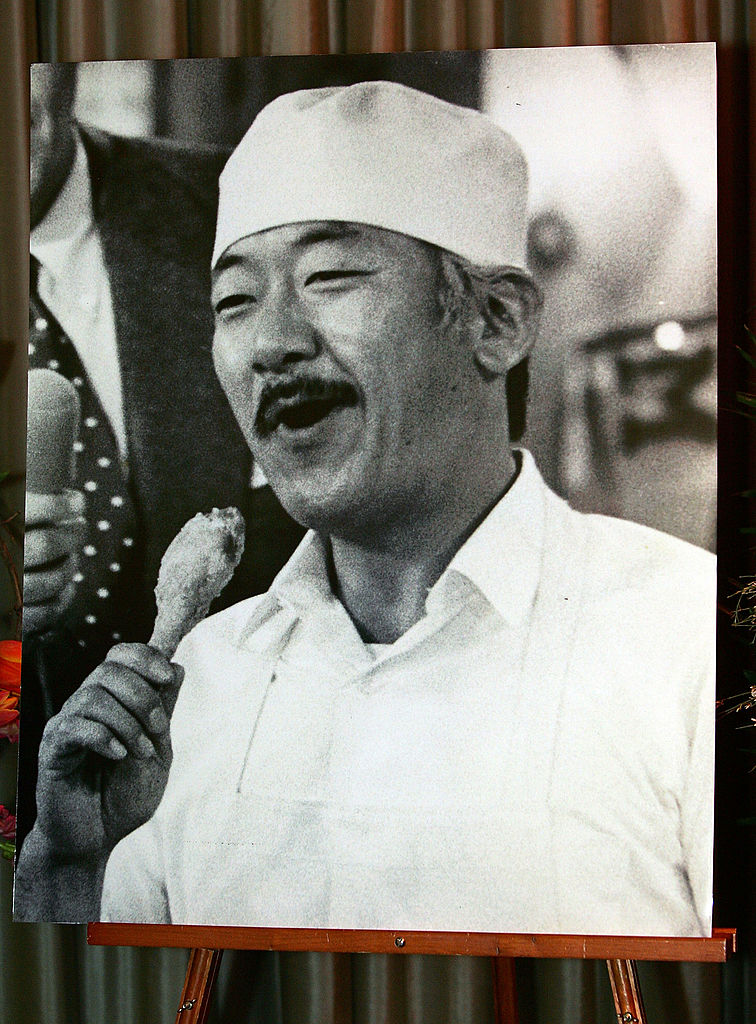
Pat Morita became famous to another generation as Mr. Miyagi in The Karate Kid, but years earlier he appeared on Happy Days as Arnold.
Morita was a California native and spoke English without an accent.
However, when he first appeared as Arnold, he was reportedly asked to use an exaggerated accent because network executives believed the character should sound more distinctly Asian.
Morita went along with the request.
Later, concerns arose about the character being perceived as Chinese-American rather than Japanese-American, and Morita had to explain Arnold’s background.
The story reflects some of the limitations and stereotypes actors from minority backgrounds encountered in television during that era.
Fonzie’s Big Romance With Pinky Didn’t Last
Fonzie was known for his confidence, style, and popularity with women.
During the fourth season, the series introduced Pinky Tuscadero, played by Roz Kelly.
The storyline, Fonzie Loves Pinky, was heavily promoted as Fonzie’s opportunity to find true love.
Pinky was intended to be something of a female counterpart to Fonzie.
The pairing received significant publicity, but the storyline did not ultimately work as planned.
Pinky was eventually written out of the series.
For fans looking back at the show’s history, the storyline remains an interesting example of the producers trying to develop Fonzie’s character in a new direction.
A Future Television Star Appeared on Happy Days
One of the fun aspects of revisiting older television series is discovering famous actors before they became household names.
In 1983, a young Janine Turner appeared on Happy Days.
She played Debbie in the episode “Where the Guys Are.”
The story follows Roger, Potsie, and Chachi as they attempt to help Fonzie recover from a breakup with Ashley.
Their solution is to send Fonzie to a singles resort.
That is where he meets Debbie.
At the time, Turner was still near the beginning of her acting career.
Years later, she became widely recognized for playing Maggie O’Connell on Northern Exposure and appeared in films and television projects including Cliffhanger and Friday Night Lights.
That old Happy Days appearance therefore offers a glimpse at an actress before she became widely famous.
The Clever Ron Howard Joke Many Fans Missed
One of the show’s cleverest jokes involved Ron Howard himself.
In one episode, the Cunningham family leaves a theater after watching The Music Man.
Mrs. Cunningham notices a young boy in the movie and comments that he looks exactly like Richie did when he was younger.
Mr. Cunningham disagrees and insists that the boy looks nothing like their son.
There is just one problem with his argument.
The boy actually was Richie.
The child on the screen was played by Ron Howard himself when he was only eight years old.
Howard had portrayed Winthrop Paroo in the 1962 film The Music Man, years before he became Richie Cunningham.
It was a clever piece of casting that connected Howard’s real acting history with the fictional history of the Cunningham family.
John Lennon Visited the Happy Days Set
Imagine working on Happy Days and suddenly seeing one of the most famous musicians in the world walk onto the Paramount lot.
That reportedly happened in 1975.
John Lennon visited the studio with his son, Julian, who was reportedly a fan of the show.
Lennon spent time meeting members of the cast, signing autographs, and talking with people behind the scenes.
For the cast and crew, having a former Beatle unexpectedly appear must have been an extraordinary moment.
It also provides a fascinating snapshot of how popular Happy Days had become during the height of its success.
Happy Days Helped Launch Robin Williams
Perhaps one of the most important career stories connected to Happy Days involves Robin Williams.
Before becoming one of the world’s most famous comedians, Williams was a relatively unknown stand-up performer.
Garry Marshall needed someone to play the eccentric alien Mork from Ork.
Marshall’s sister, Ronny, recommended Williams after seeing him perform.
Williams eventually appeared on Happy Days.
His performance was so unpredictable and memorable that the character was given a spinoff series.
That series became Mork & Mindy.
The appearance transformed Williams’ career and introduced audiences to a performer whose energetic improvisational style would eventually make him one of the biggest comedy stars of his generation.
Some Character Names Had Real-Life Connections
Even some of the show’s fictional names had connections to real people.
Garry Marshall’s wife had reportedly gone to school with someone named Potsie Webber.
Richie Cunningham was reportedly the name of a “nice boy” Marshall knew from church.
Fonzie’s name also went through an interesting development.
Marshall originally considered naming the character Arthur Masciarelli, using his own family’s original surname.
Fortunately, the name Arthur Fonzarelli eventually won out.
The nickname “Fonzie” would become one of the most recognizable character names in American television.
Happy Days Created the Phrase “Jump the Shark”
Few television expressions have become as recognizable as “jump the shark.”
The phrase originated with Happy Days.
In the famous episode, Fonzie waterskis over a shark.
Henry Winkler reportedly performed most of the stunt himself, although producers would not allow him to perform the actual shark jump.
The scene became so famous that the phrase “jump the shark” entered popular culture.
It came to describe the moment when a television series supposedly goes too far in an attempt to remain exciting or relevant.
Today, people use the expression far beyond television.
Ironically, one of Happy Days‘ most famous moments became a permanent part of the vocabulary used to discuss the history of television itself.
Arnold’s Name Wasn’t Always Arnold’s
For longtime fans, Arnold’s was one of the most recognizable locations in the series.
It was the place where the characters gathered, talked, ate, and experienced countless teenage adventures.
But in the pilot episode, the diner was actually called Arthur’s.
When the show returned for its regular series run, the name had mysteriously changed to Arnold’s.
It is a tiny continuity detail, but it is exactly the sort of thing longtime fans enjoy discovering.
The Cast Became a Team Away From the Cameras
The relationships among the Happy Days cast were not limited to the television set.
Garry Marshall encouraged the actors and crew to spend time together away from filming.
He helped organize a Happy Days All-Star Softball Team consisting of cast and crew members.
The team played against other celebrity teams, raised money for charity, and even traveled to military bases in Europe and Japan.
These activities helped create a sense of camaraderie among the people involved with the series.
That spirit became another part of the show’s history.
Fonzie’s Famous Leather Jacket Almost Didn’t Happen
It is nearly impossible to picture Fonzie without his brown leather jacket.
Yet the jacket almost never became part of his signature look.
When Happy Days debuted in 1974, ABC initially refused to let Winkler wear a leather jacket.
Network executives reportedly believed leather carried a “hoodlum” image.
Instead, Fonzie initially wore a blue windbreaker.
Eventually, beginning in the second season, the leather jacket was approved.
It quickly became inseparable from the character.
Five jackets were reportedly made for the series.
One eventually became part of the Smithsonian collection, while another belongs to Winkler himself.
The jacket became much more than a costume.
It became a symbol of Fonzie and one of television’s most recognizable pieces of clothing.
Henry Winkler Remembered Tension With One Actor
Although the atmosphere among the Happy Days cast was generally remembered as warm and supportive, Henry Winkler later described an uncomfortable dynamic involving one recurring actor.
According to Winkler, one actor repeatedly talked about the amount of fan mail he was receiving.
Winkler recalled telling him that the cast did not discuss such things on set because they were all part of an ensemble.
The actor apparently continued.
Winkler later described him negatively and initially declined to reveal his name.
He did, however, offer one clue:
He played Eugene.
That clue led fans to Denis Mandel, who portrayed Eugene Belvin during the later seasons.
The anecdote offers a glimpse into the less visible interpersonal dynamics that can exist behind a successful television series.
The Emotional Goodbye to Happy Days
After more than a decade on television, Happy Days eventually came to an end.
The final episode contained a particularly emotional moment involving Tom Bosley, who played Howard Cunningham.
Bosley briefly stepped outside his character and spoke directly to the audience.
He thanked viewers for welcoming the Cunningham family into their homes and for becoming part of the family’s television journey.
It was a simple gesture, but it carried considerable emotional weight.
For viewers who had spent years watching Richie, Fonzie, Joanie, Howard, Marion, Potsie, Ralph, Chachi, and the rest of the characters, the goodbye represented the end of an era.
Why Happy Days Still Has Such a Strong Legacy
What makes Happy Days fascinating decades after its original run is not simply its popularity.
The series became a cultural time capsule.
It introduced characters that remained recognizable long after the final episode aired. Fonzie became a television icon. Richie Cunningham became one of the defining sitcom teenagers of his era. Arnold’s became a familiar fictional hangout. And expressions such as “jump the shark” escaped the show entirely and entered everyday language.
The series also became a launching point for several major careers.
Ron Howard went on to establish himself as a highly successful director and producer. Henry Winkler continued an extensive career in television and film. Robin Williams became one of the most celebrated comedians and actors of his generation.
Even performers who had smaller roles went on to become recognizable names.
That makes revisiting Happy Days especially rewarding.
The Little Details Are What Make the Story Special
For longtime fans, the biggest surprises may not be the famous moments.
They may be the little details.
The original title was almost COOL.
Fonzie nearly looked completely different.
Ron Howard initially turned down Richie.
The diner was once called Arthur’s.
Fonzie’s leather jacket was initially rejected.
Henry Winkler was afraid of motorcycles.
Robin Williams’ appearance as Mork helped launch an entirely new television series.
John Lennon visited the set.
And a childhood performance by Ron Howard appeared inside a storyline years later.
Each detail adds another layer to the history of the show.
Final Thoughts
Happy Days may have presented an idealized version of teenage life in the 1950s, but the story behind the series was anything but ordinary.
From its unusual development and near-miss title to the casting decisions, unexpected career breakthroughs, emotional moments, famous guest appearances, and behind-the-scenes surprises, the show’s history is filled with stories that many casual viewers never knew.
Henry Winkler almost didn’t look like Fonzie.
Ron Howard almost didn’t become Richie Cunningham.
The leather jacket almost disappeared.
Robin Williams arrived as a relatively unknown comedian and left with a character that would become a television phenomenon.
And one seemingly outrageous waterskiing scene helped create one of the most famous expressions in television history.
That is part of the reason Happy Days remains so memorable.
The series was about a fictional family and their friends, but behind those fictional stories were real people, unexpected decisions, career-changing opportunities, and moments that shaped American television.
For fans returning to the series today, these little-known stories offer another reason to revisit the world of Richie Cunningham, Fonzie, Arnold’s, and the rest of the gang.
Because sometimes the most interesting stories from a beloved television show are the ones that happened behind the scenes.