News
Can You Spot the Tiny Difference in This Sidewalk Scene?
Can You Spot the Tiny Difference in This Sidewalk Scene?

Can You Spot the Tiny Difference in This Sidewalk Scene?
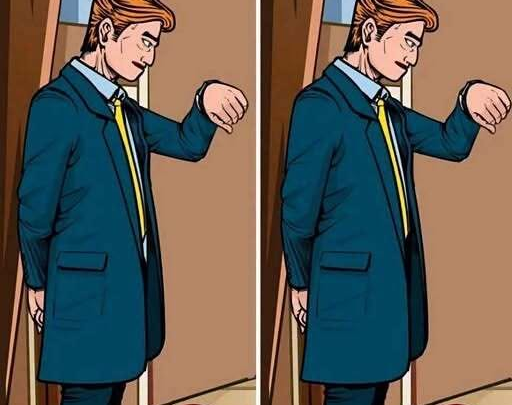
Two pictures. One man. One small detail that refuses to match.
At first glance, this sidewalk scene looks straightforward. A well-dressed man stands beside a bright red fire hydrant, checking the watch on his wrist. He wears a long blue coat over a light blue shirt, with a yellow tie adding a bright touch of color. His reddish-brown hair completes an illustration that seems easy enough to remember.
Place the two pictures side by side, however, and the challenge becomes more interesting. They appear almost identical, yet one detail has changed.
Your task is simple: find that difference.
For an extra challenge, give yourself just ten seconds before reading the suggestions below. Take a careful look at both pictures, compare what you see, and decide which detail deserves closer attention.
Ready? Let the search begin.
Take Your First Look Before Reading Further
Before trying any particular strategy, give yourself a chance to explore the pictures naturally.
Look at the whole scene. Notice where the man is standing, how his arms are positioned, and how the red fire hydrant sits beside him. Then move your attention between the two images.
Does anything immediately feel different?
Sometimes a change stands out almost instantly. At other times, the pictures seem so similar that you begin wondering whether there is a difference at all. That uncertainty is part of the fun.
If you are using a timer, stop after ten seconds and remember where you were looking. Even if you have not found the changed detail, noticing your search pattern can help you approach the next attempt more deliberately.
What Makes This Scene an Interesting Challenge?
This illustration gives you several recognizable elements to compare without making the overall scene difficult to understand.
The man’s blue coat forms a large part of the image. His yellow tie provides a strong point of contrast, while the red fire hydrant draws attention to the space beside him. The wristwatch adds a smaller object that invites inspection.
Because these features are easy to recognize, you may feel that you have understood the picture after only a brief glance. But recognizing the scene and checking every detail are different tasks.
You can correctly remember a man wearing a blue coat while overlooking a small change along its edge. Likewise, you can notice the fire hydrant without examining each part of its outline.
The challenge is to move beyond recognition and begin comparing.
Start with the Whole Picture
A useful first step is to examine the overall arrangement before concentrating on tiny details.
Compare the man’s position in each picture. Look at the direction of his body, the placement of his arms, and the space between him and the hydrant. Check whether the larger shapes appear to occupy the same areas.
This broad comparison gives you a starting point. It helps establish which elements seem consistent and where a closer look might be useful.
Avoid choosing an answer simply because one area feels unusual. An illustration may contain a shape or line that looks unexpected in both pictures. To solve the puzzle, you need a detail that actually differs between them.
Compare the Man’s Head and Hair
Once you have checked the overall scene, begin a more organized search at the top.
Examine the outline of the man’s reddish-brown hair. Follow its shape around his head and compare any visible sections or individual lines. Then look at his face and the angle of his head.
Try to compare matching features directly. Look at one part of the first image, then shift immediately to the same part of the second.
There is no need to memorize the entire face. A smaller comparison is easier to manage and gives you a clear task. When you are satisfied that an area matches, move on instead of repeatedly returning to it without a reason.
Examine the Collar, Shirt, and Yellow Tie
Next, move down to the man’s clothing near his neck.
The yellow tie is likely to attract attention because it contrasts with the blue clothing around it. Instead of looking only at its color, examine its outline, length, and position against the shirt.
Check the knot and the visible edges. Then compare the light blue shirt and the collar around it.
This part of the search is a good reminder that differences can take several forms. A detail might be missing, reshaped, moved slightly, or colored differently.
Those are possibilities to consider throughout the puzzle, rather than clues to a confirmed answer. The important step is to compare what is actually visible in the two pictures.
Follow the Outline of the Blue Coat
The long blue coat occupies a noticeable portion of the scene, so it helps to break it into manageable sections.
Begin at the shoulders. Follow the outside edge down one side, then compare the other side. Look at the sleeves, cuffs, and lower edge wherever they are visible.
After checking the outline, examine the details inside it. These might include folds, seams, buttons, or other illustrated features.
A large area can seem thoroughly checked when you have only glanced across its center. Following the edges gives your search a clear direction and encourages you to inspect places you might otherwise skip.
Work steadily, and compare the same section in both pictures before moving farther down.
Look Closely at the Hands and Wristwatch
The man’s watch-checking gesture is an important part of the scene. It also creates several small details close together.
Compare the position of his hands, the shape of his wrists, and the relationship between his sleeves and the watch. If the illustration makes the watch face or strap visible, inspect those features separately.
Try not to let the familiar action replace the comparison. Seeing that the man is checking his watch in both images does not establish that every line around his hands matches.
At the same time, resist assuming that the answer must be here because the watch seems significant. Give this area the same careful attention you give the rest of the picture, then continue if everything appears consistent.
Give the Red Fire Hydrant Equal Attention
It is easy to spend most of the challenge studying the man. The fire hydrant, however, is another distinct object that deserves a complete comparison.
Start with its overall silhouette. Compare the top, central body, side projections, and base wherever those parts are shown.
Then look at smaller marks and the spaces around the hydrant. Check how its edges meet the background and sidewalk.
Its bright red color makes the object easy to notice, but noticing it is only the beginning. You still need to inspect its individual features.
If you have repeatedly checked the man’s face and clothing without success, moving to this separate object can also help you resume a more balanced search.
Check the Sidewalk and Background
After examining the main subjects, turn your attention to the surrounding scene.
Compare any visible sidewalk lines, background shapes, and open spaces. If shadows or other marks appear in the illustration, check them as well.
Background details can receive less attention because they do not seem central to the story of the picture. Yet a spot-the-difference puzzle asks you to compare the entire image.
Look especially at the boundaries between objects and their surroundings. A small change may be easier to recognize when you follow an edge than when you stare at the middle of a large area.
This final pass completes your first organized search from top to bottom.
Use a Section-by-Section Search
If you have not found the difference, divide the pictures into a few matching sections.
You might use an upper section for the head and shoulders, a middle section for the arms and torso, and a lower section for the remaining clothing and sidewalk. The hydrant can be checked as its own area.
Choose one section and compare it fully before moving to the next.
This gives you a way to track your progress. Random searching can send your attention back to the same noticeable objects while leaving other areas barely examined.
A section-by-section method does not guarantee an immediate answer, but it makes the task more orderly. You can identify what you have checked and decide where to look next.
Compare Small Details Without Relying on Memory
Another useful approach is to keep each comparison small.
Look at a single feature in the first picture, such as a cuff or a short section of the hydrant’s outline. Immediately inspect the matching feature in the second picture.
Then move to the next detail.
Trying to remember a whole image while examining another can make the search feel vague. Small comparisons give you something specific to evaluate: does this shape, line, or color match?
If you are viewing the pictures on a phone, a modest zoom may help you inspect fine details. Keep both images at a comparable scale so that differences in display size do not distract from the actual puzzle.
Avoid These Common Search Habits
One unhelpful habit is repeatedly checking a favorite suspect. Once the watch or tie catches your attention, you may return to it again and again, expecting the answer to appear.
Another is assuming that a detail matches because the object has the same name in both pictures. Both images may show a coat, but you still need to compare the coat’s visible features.
It is also possible to search so quickly that your eyes move without making a clear comparison.
If that happens, pause and choose a concrete task. For example, follow one sleeve from shoulder to cuff in each image. A specific action can help you restart with greater focus.
What If Ten Seconds Is Not Enough?
The ten-second limit adds excitement, but you can continue after the timer ends.
Try treating the puzzle as two separate activities. First, make a quick attempt and see whether anything stands out. Then take a slower pass using a consistent search pattern.
You may enjoy one approach more than the other. Some people like the pressure of a short countdown, while others prefer inspecting every detail at their own pace.
Neither approach needs to turn the activity into a judgment about intelligence or ability. This is a visual puzzle with a small target, and the time needed to notice that target can vary.
The aim is to enjoy the search and reach an answer you can verify.
How to Confirm That You Found the Difference
When you think you have spotted the change, compare the exact location one more time.
Describe it clearly to yourself. Identify the object, the relevant feature, and how that feature differs between the two pictures.
A precise description helps separate a real discovery from a vague impression. If you cannot explain what changed, return to that area and check again.
The original pair of images is needed to confirm the solution. The written description alone does not identify the altered detail, so it would be misleading to name the watch, tie, coat, or hydrant as the definite answer.
Use the pictures themselves as your final reference.
Did You Find It on Your First Attempt?
Take one last look at the scene: the reddish-brown hair, light blue shirt, yellow tie, long blue coat, raised wrist, and bright red fire hydrant.
If the difference is still hiding, begin again with one small section and compare carefully. You now have a complete route through the image, from the man’s head to the surrounding sidewalk.
If you have already found it, try showing the puzzle to someone else before explaining your answer. It can be interesting to see which part of the picture catches their attention first.
Did you spot the changed detail within ten seconds, or did a slower second look help? Share your time and your approach in the comments. If you include the solution, mark it as a spoiler so other readers can enjoy their own attempt.