News
My Nephew Humiliated Me at My Own Birthday Dinner by Pouring Cherry Punch on My New Outfit—So I Took Back His Porsche
My Nephew Humiliated Me at My Own Birthday Dinner by Pouring Cherry Punch on My New Outfit—So I Took Back His Porsche

I Took Back the Car My Nephew Borrowed—Then an $85,000 Loan Application Surfaced
A fictional family drama about financial boundaries, misplaced trust, and documents that changed everything.
The Morning After My Birthday
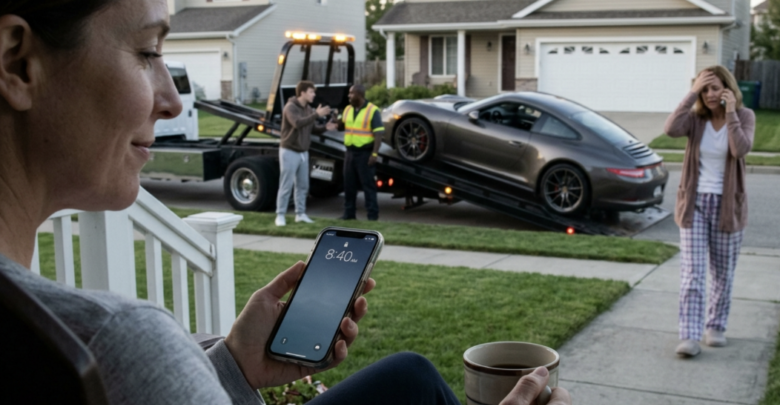
Jessica called before nine.
“Where is Carter’s car?”
I looked at the clock.
8:43 a.m.
“Good morning to you too.”
“This isn’t funny, Matthew. He went outside and the Porsche was gone.”
“I know.”
There was a pause.
Then her voice sharpened.
“You took it?”
“I arranged for it to be collected.”
“He has plans today.”
I looked at the folder beside my laptop.
For two years, my nephew had driven a vehicle I purchased, insured, and maintained.
The title remained in my name.
Until the previous evening, I had rarely insisted that anyone distinguish between owning it and being allowed to use it.
Now that distinction mattered.
“Jessica, did David ever show you documents transferring ownership?”
“What are you talking about? You bought it for Carter.”
“I let him use it.”
“You can’t do this because you’re upset about a joke.”
I thought about my birthday dinner.
The cherry punch running down my shirt.
Carter laughing.
My mother telling me not to be so sensitive.
“It wasn’t much of a joke from where I was sitting.”
The Emergency Card
While Jessica argued, I opened the credit-card account.
I had stopped further use of the additional card I provided her.
The balance remained.
Approximately fifteen thousand dollars.
I had already downloaded the statements.
The arrangement had been simple: groceries and genuine emergencies while their finances recovered.
Somehow, temporary help had become a regular part of their spending.
“How much of that balance was for groceries?” I asked.
“Don’t start with money now.”
“You called about something I paid for.”
“We can discuss the card later.”
“We’ve been discussing it later for months.”
She began talking about Carter again.
He was upset.
He was embarrassed.
He needed the Porsche.
I listened until she stopped.
“David can contact me in writing about the vehicle.”
Then I ended the call.
My Mother Arrives
At 9:06, the doorbell rang.
Mom stood outside in a cream-colored coat, gripping her handbag.
“We need to talk.”
I let her in.
She sat down without removing her coat.
“Your sister is beside herself.”
“I’ve spoken to her.”
“And Carter?”
“What about him?”
“He’s young, Matthew.”
“He’s nineteen.”
“He made a foolish joke.”
I remained standing.
“He called me cheap at my birthday dinner. Then he deliberately tipped a drink over my clothes.”
“It may have looked deliberate.”
“I was there.”
She sighed.
That sound was familiar.
It usually meant I was expected to make the conversation easier by agreeing that I had misunderstood.
I went to my desk and brought back the vehicle folder.
The Documents She Did Not Want to Read
I placed the folder on the coffee table.
“The purchase receipt, title, registration, and insurance records are here.”
Mom looked at it.
“You don’t need paperwork between family.”
“We seem to need some clarity.”
“You gave him the car.”
“I allowed him to drive it. I kept paying the costs.”
“What difference does that make?”
“It makes a difference to what I agreed to.”
She folded her arms.
I told her about the repairs, registration, and tires.
Then I told her I had stopped Jessica’s access to the emergency card.
Mom stood.
“Your sister needs help.”
“I have helped.”
“She said you were happy to.”
“I was happy to help with the arrangement we discussed. I’m no longer willing to keep doing this without limits.”
Mom picked up her handbag.
“You’ve become selfish.”
For years, that word had made me reach for my wallet.
That morning, I walked her to the door.
David’s Explanation
David called a little after ten.
“Where’s the Porsche?”
“Secured.”
“You can’t take back a family gift.”
“I haven’t agreed with your description of it.”
“We had an arrangement.”
“Then send me what you believe we agreed to.”
He became quiet.
Then he tried another approach.
“Carter will apologize. We can have dinner and settle this.”
“I’m not arranging another dinner right now.”
“Jessica’s under pressure.”
“I understand pressure. I don’t understand why I’m only hearing about it after asking questions.”
He mentioned the card.
There were payments they had expected to make.
I looked at the statements on my screen.
“That card was supposed to cover emergencies.”
“You’re splitting hairs.”
“I’m asking about the arrangement.”
David’s tone changed.
“Don’t think you’re the only one who knows things, Matthew.”
“What does that mean?”
“Your mother doesn’t know everything about you.”
I waited.
He ended the call.
What Luke Found
Luke had helped coordinate collection of the Porsche through a vehicle transport service.
He called later that morning.
“The car’s secure.”
“Thanks.”
“There are personal belongings inside. We should arrange to return them.”
“Of course.”
He mentioned paperwork visible in the glove compartment.
“I haven’t gone through it,” he said. “But some envelopes have Jessica’s and David’s names.”
“Keep everything together.”
“One has a handwritten note on it.”
“What note?”
“Something about collateral.”
He sent a photograph showing the outside of the envelope.
Beneath Jessica’s name were the words:
SECOND VEHICLE — COLLATERAL
I enlarged the image.
Then I called him back.
“Please don’t move the documents around. I’m going to ask Robert how we should handle them.”
My attorney had dealt with several matters for me before.
Until that moment, I had thought I might need him to clarify a disagreement about a car.
Now I was less certain.
“That Car Isn’t Just a Car Anymore”
Jessica sent several messages.
The first asked me to stop making things worse.
The next listed everyone I had upset.
Then she left a voice message.
Her tone was different.
“Matthew, I know Carter shouldn’t have done that. But you need to understand something. David used the car for an arrangement, and we need to talk before you do anything else.”
I played it again.
David used the car.
For what?
I saved the message.
Then I wrote down the time.
The morning had begun with a dispute about a nephew who no longer had access to a luxury vehicle.
By noon, I was wondering what had happened while I believed I was simply helping.
The Financing Inquiry
Early that afternoon, I received a call concerning a financing application linked to the Porsche.
Before discussing details, I confirmed the inquiry through the lender’s published contact channel.
Then I asked what had been submitted.
The application identified David Davis as the applicant.
It used the vehicle identification number belonging to my Porsche Macan.
The proposed borrowing was approximately $85,000.
“Has money been advanced?” I asked.
I was told the application remained under review because the ownership information required clarification.
That distinction mattered.
An application was not the same as an approved loan.
Still, I wanted to know why my vehicle appeared in it at all.
Then the representative mentioned an authorization bearing my name.
The Signature
“An authorization from me?”
“That is what the submitted document represents.”
“I haven’t signed one.”
I repeated it carefully.
I had not authorized David to use the Porsche as security.
I had not agreed to transfer ownership for a financing arrangement.
I had not signed the document being described.
The representative explained how to record my dispute and request the relevant material.
After the conversation, I stood beside my desk for several minutes.
The birthday dinner now felt far away.
David’s demand for the car sounded different in my memory.
So did Jessica’s voice message.
Neither conversation proved what they had done.
But both now required answers I had not known to ask.
Calling Robert
Robert Hayes answered on the second attempt.
“I need help with a financing application,” I said.
He listened while I explained.
“Do you have the documents?”
“They’re being sent.”
“Then let’s review them before drawing conclusions.”
I told him about the Porsche’s ownership records, the envelope, and Jessica’s message.
He asked me to keep the communications and arrange for the papers in the car to be handled carefully.
“What about speaking to David?”
“I’d prefer to see what was submitted first.”
I agreed.
Then I remembered something.
Several months earlier, Jessica had asked for a photograph of my driver’s license.
She said it concerned family insurance paperwork.
I had sent it.
At the time, I had not asked which paperwork.
Four Pages in an Attachment
The lender’s documents arrived later that afternoon.
I opened the application.
David’s name.
The Porsche’s details.
The proposed loan amount.
Then the authorization.
My name appeared above a signature that resembled mine.
I enlarged it.
Recognition was not certainty about who had written it, but I knew one thing without hesitation.
I had not.
I forwarded the file to Robert.
Then I noticed another detail.
Jessica’s phone number appeared as a contact.
The proposed funds were associated with a business called JD Lifestyle Ventures LLC.
I did not recognize the company.
There were too many gaps to fill by guessing.
I began listing questions instead.
Jessica Answers One Question
When I called, Jessica answered immediately.
“Did you know about the application?”
“What application?”
“The one involving my Porsche.”
She began explaining before I repeated the question.
David was trying to improve their finances.
The business had problems.
They expected things to turn around.
“Did you know?”
Eventually, she said yes.
I sat down.
“Did you know the car was still mine?”
“Yes.”
“Then why wasn’t I asked?”
She cried.
“We thought it would be temporary.”
“The application uses an authorization I didn’t sign.”
“I didn’t think it would get this far.”
I looked at the pages.
It had already gone farther than any conversation we had had.
Carter and the Paperwork
I asked whether Carter knew.
Jessica said no.
Then she qualified it.
“He gave David some documents from the car.”
“What documents?”
“The insurance information. Copies of the vehicle papers. There may have been a copy of your identification.”
“Did he know what they were for?”
“I don’t know exactly what David told him.”
That answer was different from proving Carter understood the application.
I needed to keep those things separate.
But it also meant the nephew demanding the car had been involved in passing along documents concerning it.
“Jessica, don’t describe this as me being upset about a drink,” I said.
She went quiet.
“I’m having the application reviewed.”
I ended the call.
Looking at the Card Again
While Robert reviewed the financing documents, I returned to the statements.
There were payments I remembered.
Others needed explanation.
I also reviewed earlier transfers I had made voluntarily.
School costs.
Medical expenses.
Repairs.
Short-term help that had quietly become another monthly expectation.
Not every payment was suspicious.
Some had been gifts. Some had been exactly what we agreed.
I did not want anger to erase those distinctions.
But I also did not want the word family to prevent me from examining the rest.
I organized the records by date.
The list grew longer than I expected.
For years, I had remembered each request separately.
Seeing them together changed the picture.
Carter on the Porch
Carter arrived that evening.
He wore a black hoodie and expensive sneakers.
“Where’s my Porsche?”
I stayed near the doorway.
“We’re not agreeing on whose car it is.”
“You know what I mean.”
“Yes. You want to drive it again.”
He rolled his eyes.
“The punch thing was a joke.”
“Not to me.”
“Everyone laughed.”
“That didn’t make it harmless.”
He shifted his weight.
“Dad says you’ll calm down.”
“Has your father explained the financing application?”
Carter stopped moving.
“What application?”
I waited.
“I don’t know about that.”
“Then you should speak with him.”
He began arguing that I was making his parents’ lives harder.
I let him finish.
Then I asked him to leave.
A Demand That Explained Too Much
“You’ve helped before,” Carter said.
“Yes.”
“So why stop now?”
It was an honest question, although not in the way he intended.
He seemed unable to imagine that help could have a limit.
“I’m not discussing more money tonight.”
He looked past me toward the house.
“Dad said you’d make this complicated.”
“I’m asking what was done using my information.”
He said I would regret embarrassing the family.
I did not answer the threat with one of my own.
I told him again that the visit was over.
After he left, I wrote down what had been said while I could still remember it clearly.
Then I checked my messages.
Robert had sent another document.
Jessica’s Written Statement
This page contained a statement signed in Jessica’s name.
It represented that I had verbally authorized the use of the Porsche as security and would transfer ownership if the financing proceeded.
I read it several times.
Then I checked the date.
Eleven days before my birthday.
Before Carter tipped the drink.
Before I stopped the card.
Before the car was collected.
The application had not been a response to our argument.
It already existed.
I called Robert.
“I never said this to her.”
“We’ll make that clear in the dispute,” he replied. “I’m requesting the supporting submission records.”
I looked at my sister’s name.
The question was no longer whether my family appreciated what I had provided.
It was what they had represented that I had agreed to provide next.
More Than One Application
As the review widened, information from my financial records and lender correspondence raised further questions.
There were unfamiliar inquiries involving a personal loan and another credit application.
Jessica’s number appeared again.
I did not yet know which submissions had progressed, whether any account had been opened, or who had prepared each document.
Those distinctions would matter.
Still, the pattern was enough to make the Porsche feel like one part of a larger problem.
Robert called.
“Matthew, we need to examine whether your information has been used elsewhere.”
“For how long?”
“I can’t tell you that yet.”
I looked toward the family photograph on the shelf.
My mother.
Jessica.
David.
Carter.
Their faces did not tell me who knew what.
I would need evidence for that too.
The Next Decision
For years, I had responded to family problems by asking how much money would make the immediate difficulty disappear.
This time, I asked a different question.
“What do we need to establish first?”
Robert talked me through the next stage of reviewing the records and securing my accounts.
I took notes.
There would be unfamiliar forms, uncomfortable conversations, and questions I might not want answered.
I could already imagine the calls asking me to keep everything inside the family.
I saved the files in a separate folder.
Then I opened a fresh page in my notebook.
The title I wrote was simple:
What I Have Not Authorized.
Beneath it, I began with the Porsche.
To be continued.