News
My Brothers and I Sent Our Sister Money Every Year for Mom’s Heating, but I Found Mom Sleeping in Her Coat With an Empty Propane Tank
My Brothers and I Sent Our Sister Money Every Year for Mom’s Heating, but I Found Mom Sleeping in Her Coat With an Empty Propane Tank

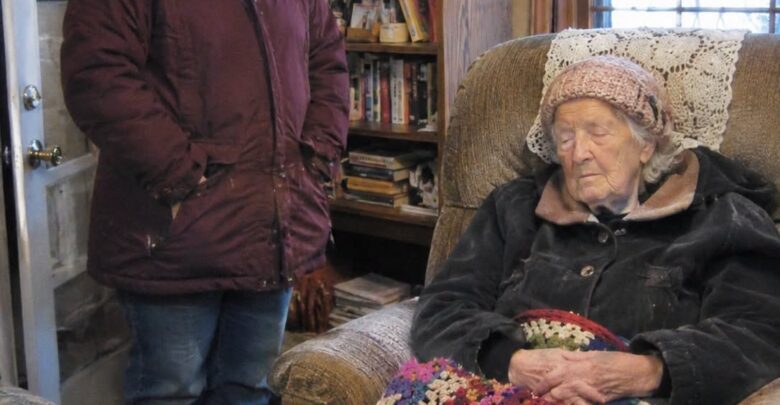
I Found My Mother Wearing Her Winter Coat Indoors—Then My Sister Brought a Box of Receipts
A fictional story about an elderly mother, a winter emergency, and the caregiving burden one family had failed to share.
The Night My Mother Did Not Answer
The cold arrived in January and stayed.
By Wednesday evening, the weather reports were discussing temperatures far below zero across central North Dakota. People canceled plans, checked on livestock, and made sure someone knew where they were going.
My mother did not answer her telephone.
At first, I imagined the usual explanations. She had fallen asleep in her chair. The television was too loud. The phone was charging in another room.
Then I called again.
My name is Connie Weber. I was fifty-four, living in Bismarck, and trying to sound calm when I contacted someone near Mom’s farm.
No one could immediately confirm that she was all right.
I called emergency dispatch and explained that my eighty-two-year-old mother lived alone outside Harvey and was not answering.
Then I called my husband, Steve.
He was working through the storm and could not leave.
“Keep your phone on,” he said. “Let the responders know you’re coming.”
I gathered my things while waiting for an update about the roads.
By the time I left, I could think of little except the telephone ringing inside an empty kitchen.
The Silence Inside the Farmhouse
The farm had belonged to our family for generations.
I knew the yard light, the bend in the driveway, and the back step that always held a patch of ice.
That night, everything looked familiar until I opened the door.
The house was quiet.
In winter, the furnace usually announced itself before anyone said hello. It rumbled beneath the floor and pushed warm air through the registers.
I heard only the kitchen clock.
Mom was in Dad’s old recliner, wearing her brown wool coat, a knitted hat, and gloves.
An afghan covered her knees.
For one terrible moment, I could not tell whether she was breathing.
Then she moved.
“Mom?”
She opened her eyes slowly.
“Connie? What are you doing here?”
I contacted the responders again and told them what I had found. When they arrived, they assessed her and helped arrange for her to spend the night somewhere warm.
I stayed beside her while we gathered what she needed.
She kept insisting that she was fine.
I kept looking at the gloves.
The Sister Who Lived Closest
There were four of us.
Pam was the oldest. Then me, followed by our brothers, Rob and Dean.
Pam lived near Harvey, much closer to the farm than the rest of us.
After Dad died, she became the person who handled most of Mom’s daily needs.
She collected prescriptions. She bought groceries. She drove Mom to appointments and stopped by when something in the house needed attention.
Every autumn, the four of us were supposed to contribute toward heating costs.
Rob, Dean, and I each sent Pam two hundred and fifty dollars. She managed the propane arrangements because she was nearby.
I had never asked to see a statement.
I trusted her.
More than that, I had become comfortable knowing there was someone closer who would notice when Mom needed help.
That night, comfort turned into anger with frightening speed.
How could Pam have missed this?
The Delivery Ticket on the Refrigerator
While Mom’s overnight arrangements were being settled, I looked through the papers on her refrigerator.
Under a magnet, I found a propane delivery ticket from October.
It recorded a smaller delivery than I had expected.
I looked for another ticket.
There was none.
Outside, the tank gauge showed a low reading. I did not know whether the heating problem came from the fuel supply, the furnace, or something else.
That was for the supplier and a technician to determine.
But I knew we needed help.
I contacted the propane company’s emergency number and explained the situation.
The driver who called back remembered Dad.
“We’ll coordinate a delivery as soon as we can get through,” he said. “And we’ll have the system checked.”
Before leaving with Mom, I took a photograph of the ticket.
I looked at it again later that night.
Already, I was building a story around it.
“Don’t Start With Your Sister”
Mom stayed with a neighbor until we had dependable heat restored.
Sitting in a warm kitchen, she finally removed her gloves.
I asked when she had first noticed the house getting colder.
She looked down at her hands.
“Don’t start with Pam.”
“Mom, I’m asking what happened.”
“She’s got enough going on.”
I knew Pam’s husband, Mark, had undergone back surgery in the autumn. I knew he had been away from work.
I did not know what that had meant for their finances.
“Pam says everything costs more now,” Mom continued.
“That doesn’t explain why you were sitting in your coat.”
She turned her cup slowly.
“I thought I could manage.”
I wanted to ask several more questions.
Instead, I helped her settle into the room our neighbors had prepared.
There would be time to talk when she was rested.
I told myself I was postponing an argument for her sake.
Part of me was also afraid of what I might say.
Restoring the Heat
The next day, the supplier reached the farm.
A qualified technician inspected the heating system, and the necessary work and fuel arrangements were completed.
I paid the immediate bill.
With Mom’s agreement, I also asked the company about automatic deliveries and available tank monitoring.
The details were arranged directly with the supplier.
I wanted a system that did not depend entirely on one busy person remembering to make a call.
Later, when we returned to the house, the furnace was running again.
Mom stood over a register with her hands held loosely in front of her.
After a while, she unbuttoned her coat.
She hung it on the hook beside the kitchen door.
“I didn’t realize how tired I was,” she said.
I looked away before she could see me crying.
The Phone Call I Handled Badly
I updated Rob and Dean.
Then Pam called.
“The company said you’re handling the account now.”
“For the moment, yes.”
“You could have spoken to me.”
“I found Mom wearing her winter clothes in the living room.”
“I know.”
“Then why didn’t you tell us?”
She did not answer immediately.
In the background, I could hear telephones ringing at the clinic where she worked.
“Connie, I can’t do this here.”
I heard that as avoidance.
“Where did the rest of the money go?”
The question came out harder than I intended.
Pam’s breathing changed.
“I have to go,” she said.
Then she ended the call.
I stared at my phone, certain that her silence had confirmed my suspicions.
Steve asked me later whether I knew the full story.
“I know Mom was cold.”
“Yes,” he said. “You know that part.”
What Sending a Check Had Allowed Us to Ignore
Over the following weeks, we put a temporary plan in place.
Someone checked in with Mom every day. We visited more often. Heating expenses were recorded and shared.
Pam continued bringing groceries and taking Mom to appointments.
I noticed that.
I also noticed how determined I was to remain angry.
A two-hundred-and-fifty-dollar payment had felt like a meaningful contribution when I sent it each autumn.
I had not considered what happened during the rest of the year.
Who bought the groceries when Mom’s money ran short?
Who paid for the repair that could not wait?
Who took time away from work to sit through an appointment?
I knew the answer to most of those questions.
Still, I kept returning to the October ticket.
I wanted an explanation.
At Easter, Pam brought one.
The Box on the Kitchen Table
She arrived carrying a cardboard box and a faded coffee tin.
The rest of us were already at the farmhouse.
Mom was in her chair wearing a blue cardigan. The kitchen was warm, and dinner was nearly ready.
Pam placed the box on the table.
“Before we eat, I need everyone to listen.”
She opened the tin.
Inside were folded notes she had saved through extra shifts and the sale of belongings.
“I want to replace the money I used for something else.”
Rob straightened in his chair.
Pam explained that she had paid for the October delivery but diverted part of the remaining contributions toward urgent household bills.
She had not been able to contribute her own share.
“I thought I would replace it before anyone needed to know.”
Her voice shook.
“That was wrong.”
Nobody interrupted.
For weeks, I had imagined demanding an admission.
Hearing it gave me no satisfaction.
Four Years in a Green Notebook
Then Pam opened the box.
It contained receipts, statements, and a green notebook.
She set the notebook in front of us.
There were four years of expenses in her handwriting.
Prescriptions.
Groceries.
A well repair.
Glasses.
Dental treatment.
Fuel for journeys to appointments.
Small purchases I recognized and larger bills I had never heard about.
The recorded total was $14,860, separate from the propane contributions.
Dean turned several pages.
“You paid all this?”
Pam nodded.
“Why didn’t you tell us?”
“I thought I was handling it.”
She looked toward Mom.
“Then Mark got hurt.”
I remembered asking Pam at Thanksgiving whether his recovery was going well.
She had said it was slow.
I had accepted that answer and moved on to another subject.
The Autumn Everything Changed
Mark’s injury had removed a large part of their household income.
Pam’s wages covered less than I had assumed.
There were medical expenses, ordinary bills, and a mortgage payment they could not keep postponing.
She had taken on extra work.
She had sold a quilt rack Dad made and the sewing machine our grandmother left her.
“I kept thinking the next paycheck would catch us up,” she said.
She planned to arrange another delivery for Mom, even if she had to borrow to pay for it.
Then Mom found out how much trouble they were in.
Pam stopped speaking.
Across the room, Mom set down her cup.
“That part belongs to me.”
The Promise Mom Should Not Have Asked For
Mom told us she had discouraged Pam from spending more money on her.
She had said she could tolerate a cooler house.
She had mentioned blankets and the winters she remembered from childhood.
Most painfully, she had asked Pam not to tell us.
“I thought you would all make a fuss,” she said.
“We should have known,” Rob answered.
Mom looked toward Pam.
“I was trying to help my daughter.”
Pam wiped her face.
“And I should have called anyway.”
There it was.
No single explanation made everything acceptable.
Pam had used money intended for another purpose and hidden how much she was struggling.
Mom had minimized a dangerous situation.
The rest of us had mistaken distance and an annual payment for a shared care plan.
I had found a real emergency and decided I understood every cause before asking enough questions.
The Apology That Changed the Conversation
I went around the table.
“Pam, I’m sorry.”
She shook her head.
“You were right to get Mom help.”
“I know. I’m sorry I decided that was the whole story.”
For a moment, neither of us moved.
Then she put her arms around me.
She was my older sister again—the person who had helped me through childhood troubles before I learned to treat needing help as an embarrassment.
Rob stood next.
“We owe you more than an apology.”
Pam started to object.
He rested a hand on the notebook.
“We can discuss the money properly. But first, we need to stop leaving you with all the work.”
Dean found a pad of paper.
Dinner waited while we began making a different arrangement.
A Care Plan With Everyone’s Name on It
The heating account stayed organized through one contact, but the bills were shared.
We agreed on regular contributions based on what each household could manage.
Pam’s contribution was paused while Mark recovered.
We also created a separate household-expense account for Mom, with her agreement and clear records available to everyone involved.
Nobody would have to quietly cover a large bill and hope to mention it later.
Visits went on a schedule.
Rob took certain weekends.
Dean arranged others around his travel.
Steve and I committed to regular visits from Bismarck.
Pam would still help, but she would no longer be the automatic answer to every problem.
We included a backup plan for missed calls.
For once, the discussion involved dates, names, and responsibilities instead of promises that someone would try harder.
Mom Had Something to Add
Mom listened until we finished.
Then she looked at the notebook.
“I need to stop saying I’m fine when I’m not.”
Nobody argued.
She also wanted us to remember that she still had a voice in her own life.
We agreed.
The goal was not to take over every decision.
It was to make sure decisions were based on honest information and that she did not have to protect us by going without something essential.
Before we ate, she asked Pam to help clear a shelf in the kitchen.
“That can be where the papers go,” she said.
The green notebook stayed there.
It belonged to the family now.
The Sewing Machine Came Back
That summer, Pam called me.
Her grandmother’s sewing machine had been returned.
The woman who bought it had agreed to sell it back, and someone in the family arranged the purchase.
A note inside the case read:
For something you want to make.
Mom eventually admitted it was her idea.
By then, her bills were being handled openly, and she had room in her budget for the gift.
She had asked Rob to help arrange it.
That detail mattered.
This time, helping Pam did not require another hidden sacrifice.
Pam began sewing again.
At our next gathering, she brought fabric samples for a quilt.
She asked Mom which colors she liked.
The conversation lasted longer than any of us expected.
The Following Winter
When cold weather returned, the routine held.
Deliveries were recorded.
Bills were shared.
Someone called Mom each evening, and missed calls prompted a follow-up instead of an assumption.
Pam still went out to the farm, but she also took occasional weekends for herself.
Mark returned to work gradually.
The green notebook grew less crowded as records moved into a system we all understood.
At Thanksgiving, Mom sat in Dad’s recliner while the grandchildren argued over a board game.
Her winter coat hung beside the back door.
I noticed it because I always would.
But she was wearing slippers and the blue cardigan, and she asked someone to move the dessert closer.
What I Heard in the Quiet House
After dinner, I stayed in the kitchen while the others finished clearing away.
The furnace started beneath the floor.
For months, I had associated that sound with the night I found Mom.
Now I looked at the schedule on the refrigerator.
Pam’s name was there.
So were mine, Rob’s, and Dean’s.
Beside it was a note Mom had written about an upcoming appointment. She had asked who could drive her instead of assuming Pam would manage.
Dean had already replied.
I stood for a moment listening to the warm air move through the registers.
Then Pam came into the kitchen and asked whether I wanted tea.
I took two cups from the cupboard.
She filled the kettle.
We sat down at the table together.