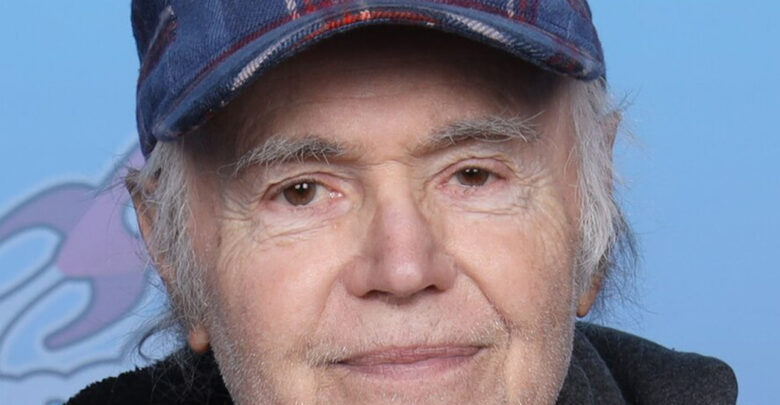
For generations of television viewers, Walter Koenig was more than an actor in a science-fiction series. He was Pavel Chekov, the young, enthusiastic navigator aboard the USS Enterprise, a character who became an unforgettable part of television history.
With his distinctive hairstyle, youthful appearance, and recognizable Russian accent, Koenig brought a unique personality to the world of Star Trek. His character represented curiosity, optimism, and the possibility of cooperation between people from different backgrounds—even during a period when the real world was divided by Cold War tensions.
Now, fans are mourning the loss of the actor who helped make that vision memorable. Walter Koenig died at the age of 90, leaving behind a career that stretched across television, film, writing, and science fiction.
According to reports from his representative, Koenig died at his home in North Hollywood on October 25, 2026, surrounded by his daughter and niece. His passing marks the end of a remarkable chapter in the history of one of television’s most influential science-fiction franchises.
For longtime fans, remembering Koenig means revisiting not only the adventures of the Enterprise crew but also the life of an actor whose work reached far beyond a single famous role.
A Beloved Face From the Star Trek Universe
When Koenig joined Star Trek during its second season in 1967, the series was still developing the cultural legacy it would eventually achieve. The show, created by Gene Roddenberry, introduced audiences to a future in which exploration, scientific discovery, and cooperation formed the foundation of humanity’s journey through space.
Koenig became part of that vision as Pavel Andreievich Chekov, the Enterprise’s young Russian navigator.
Chekov joined a bridge crew already known to viewers through characters such as Captain James T. Kirk, Mr. Spock, and Dr. Leonard “Bones” McCoy. Although he was not always at the center of the story, he quickly became a recognizable member of the ensemble.
Koenig appeared in 36 episodes of the original series. His character added youthful energy to the crew, often expressing confidence, enthusiasm, and pride in his Russian heritage.
The role also carried significance beyond entertainment. At a time when the United States and the Soviet Union were political rivals, the series presented a future in which an American-led starship could include a Russian officer working alongside colleagues from different cultures and backgrounds.
Chekov was not simply another officer on the bridge. He represented the hopeful idea that cooperation could overcome divisions that seemed impossible to resolve in the present.
That message helped make the character memorable, and Koenig’s performance ensured that Chekov remained an important part of the franchise for decades.
Before Chekov, He Was Not Even a Dedicated Fan
One of the more surprising details about Koenig’s career was that he had not initially become a devoted follower of Star Trek before joining its cast.
In a 2013 interview with the Television Academy Foundation, he recalled flipping through television channels and noticing the show’s artificial-looking scenery.
The production effects did not immediately impress him. He remembered seeing what appeared to be foam rocks and assuming the program was not worth watching.
At the time, he had no reason to imagine that he would soon become one of the actors most closely associated with the series.
His eventual casting transformed his relationship with the program. What had once seemed like an unconventional television production became a defining part of his professional life.
Koenig’s experience also illustrates how unpredictable an acting career can be. A performer may dismiss a project without realizing that it could eventually shape their identity in popular culture.
For Koenig, the Enterprise became far more than a workplace. It became the setting through which millions of viewers would come to know him.
His Early Life and Family Background
Marvin Walter Koenig was born in Chicago, Illinois, on September 14, 1936. His parents, Isadore Koenig and Sarah Strauss, came from a family background connected to Russian Jewish immigrants whose earlier roots were in Lithuania.
The family name had originally been Königsberg before it was shortened to Koenig after immigration.
During Koenig’s childhood, his family moved to Manhattan, where he grew up in the Inwood neighborhood of New York City.
His upbringing took place during a complicated period in American history. Political disagreements, fears surrounding communism, and the tensions of the McCarthy era affected many families across the country.
Koenig’s father held communist political beliefs, which attracted government attention during that period. Koenig later recalled that federal agents searched the family’s apartment.
Those experiences formed part of his early understanding of politics, public suspicion, and the pressures that ideological conflicts could place on ordinary people.
Decades later, his most famous television character would become part of a fictional future in which former rivals could serve together. The contrast between the political climate of his childhood and the optimistic world of Star Trek adds another dimension to the legacy of his best-known role.
How an Acting Class Changed His Future
Acting was not originally Koenig’s intended profession.
He attended Grinnell College as a pre-med student before transferring to the University of California, Los Angeles, where he studied psychology. His direction changed after he took an acting class and discovered a stronger interest in performance.
That decision eventually led him to New York’s Neighborhood Playhouse, a respected institution known for training actors.
Koenig studied alongside performers who would later become well-known names in film and television, including James Caan, Christopher Lloyd, and Dabney Coleman.
The experience helped him develop the skills that would become central to his career. He learned to approach characters with different backgrounds and personalities, building the versatility needed for a profession in which opportunities could be unpredictable.
By the early 1960s, he was appearing in television productions and steadily developing his experience in front of the camera.
Before becoming Chekov, he had already played a Russian character in an episode of Mr. Novak in 1963. He also appeared in The Lieutenant, a series created by Gene Roddenberry.
That earlier connection to Roddenberry’s work helped place Koenig within the professional circle that would eventually lead him to Star Trek.
His career did not begin with instant fame. Instead, it developed through training, smaller roles, auditions, and the persistence required to establish a place in a competitive industry.
The Audition That Changed Everything
Koenig later recalled that director Joseph Pevney, who had previously worked with him on The Alfred Hitchcock Hour, was among the people who supported his audition for Star Trek.
Pevney had been impressed by Koenig’s work and encouraged him to believe that a successful acting career was possible.
When Koenig came in to read for the science-fiction series, the director’s enthusiasm helped him feel that he had a genuine chance at the role.
Still, learning that he had been hired was not the dramatic Hollywood moment someone might expect.
After the audition, Koenig spent hours waiting and wondering whether he had secured the part. Eventually, someone approached him and led him toward the wardrobe department.
There, a costume fitting began. Koenig initially misunderstood what was happening when a wardrobe employee measured the length of his trousers.
Only after the explanation did he realize that the practical preparations for his character’s costume meant the role was his.
The experience became one of the amusing stories he shared when reflecting on his career.
In that ordinary backstage moment, the future Chekov learned that he was joining a television series that would become a cultural institution.
The Hairstyle, the Fan Mail, and Chekov’s Popularity
Chekov was introduced partly to bring a younger presence to the Enterprise crew and connect the series with younger viewers.
Koenig recalled that an early idea for the character involved the name Jones, reflecting a desire to appeal to the youthful audience associated with Davy Jones of the popular musical group The Monkees.
The final character became Pavel Chekov, but the strategy of introducing a youthful face helped distinguish him within the ensemble.
The response from younger viewers was substantial. Koenig remembered receiving large amounts of fan mail from children and teenagers, many of whom commented on his hairstyle and the character’s appealing personality.
The hair became one of Chekov’s most recognizable features, although Koenig later joked that the look involved a wig.
He also spoke humorously about the reasons he believed some fans eventually lost their fascination with the character. The hairstyle was not real, he was not actually Russian, and viewers learned that he was married.
His comments reflected the playful relationship he maintained with his public image. Rather than treating his popularity as something to take too seriously, he could laugh at the small details that helped create the illusion of a television character.
For many viewers, however, Chekov’s appeal went beyond appearance. He was enthusiastic, loyal, and eager to contribute to the Enterprise’s missions.
Even when the scripts did not give him the central role, he helped make the bridge feel like a working team rather than a collection of isolated personalities.
Returning to Star Trek on the Big Screen
The end of the original television series did not mean the end of Koenig’s connection to Chekov.
When the franchise expanded into feature films, he returned to the role, beginning with Star Trek: The Motion Picture in 1979.
He continued appearing in the early films, including Star Trek II: The Wrath of Khan, Star Trek III: The Search for Spock, and Star Trek IV: The Voyage Home.
His appearances continued through Star Trek Generations, released in 1994.
Across seven films, Koenig helped carry the character from the television era into a new generation of cinematic adventures. Audiences who had first encountered Chekov on television could see the character grow within a larger universe, while newer viewers discovered him through the movies.
The continued success of the franchise demonstrated that its appeal was not limited to special effects or futuristic technology. Its characters, relationships, and ideas were central to its lasting popularity.
Koenig’s return also gave fans a sense of continuity. The original crew remained recognizable even as the stories and production styles evolved.
For the actor, Chekov was a role he would revisit throughout much of his professional life, but it was never the only work he wanted to pursue.
Building a Career Beyond One Famous Character
Like many actors associated with a successful television role, Koenig had to navigate the possibility of being typecast.
He did not want his career to be defined exclusively by Chekov. To broaden his professional opportunities, he increasingly explored writing and other creative work.
His television writing credits included projects such as Land of the Lost, Family, The Powers of Matthew Star, and The Incredible Hulk.
Writing gave him another way to contribute to television, allowing him to help shape stories rather than only perform within them.
He also appeared in productions outside the Star Trek universe, demonstrating that his talents were not confined to science fiction.
For a later generation of genre fans, one of his most memorable roles was Alfred Bester on Babylon 5. In contrast to Chekov’s generally optimistic personality, Bester was a more complicated and often intimidating figure.
The role offered Koenig an opportunity to explore a different kind of character and reminded viewers of his range as a performer.
His career was therefore not simply a long return to the same famous bridge. It was also a continuing effort to find new creative challenges.
A Serious Health Challenge
Koenig’s professional life was not without significant personal challenges.
At the age of 56, he suffered a heart attack and underwent quadruple bypass surgery. The medical emergency disrupted his plans and affected an opportunity to appear on Babylon 5 earlier than he ultimately did.
Recovering from a major cardiac event can be a difficult experience, particularly for someone whose career depends on being able to work consistently.
Koenig nevertheless continued pursuing acting and writing after his recovery.
His later appearance as Alfred Bester demonstrated that a serious health setback did not necessarily bring his creative life to an end.
He also remained engaged with fans, conventions, interviews, and the broader community that had grown around science-fiction television.
Koenig wrote about his experiences in his 1998 memoir, Warped Factors: A Neurotic’s Guide to the Universe. In 2020, he published Beaming Up and Getting Off, adding another reflection on a life that had included professional uncertainty, public recognition, and decades of unusual experiences.
Through his writing, he offered readers a perspective on the entertainment business that extended beyond the polished images seen on television.
A Long Marriage and a Family Marked by Loss
Away from the cameras, Koenig shared a long marriage with actress Judy Levitt.
The couple married in July 1965, before Star Trek became the defining professional opportunity of his life. Their marriage lasted more than five decades.
Levitt appeared alongside Koenig in several productions connected to his career, including Star Trek films and Babylon 5.
She died in December 2022 at the age of 83, bringing an end to a partnership that had lasted for more than 57 years.
Their family also experienced a devastating loss in 2010, when their son, Andrew Koenig, died by suicide at the age of 41.
Andrew was known to many television viewers for playing Richard “Boner” Stabone on the sitcom Growing Pains. He also worked as an actor and pursued other creative interests.
His death was a profound tragedy for the family and brought public attention to the importance of taking emotional distress seriously and offering support to people who may be struggling.
Koenig’s daughter, Danielle Koenig, is an actress and screenwriter. She is married to comedian Jimmy Pardo.
As news of Walter’s death spreads, the family’s private experiences deserve the same respect as the public achievements that made him famous. Behind a familiar television face was a husband, father, and grandfather whose life included both professional accomplishments and deeply personal grief.
The Legacy Walter Koenig Leaves Behind
Walter Koenig’s legacy cannot be measured only by the number of episodes in which he appeared or the films that carried Chekov into cinemas.
His contribution was also part of a larger television idea: that a diverse group of people could work together toward a shared purpose, even when their backgrounds and histories differed.
In the original Star Trek series, Chekov served aboard a fictional starship at a time when international tensions made such cooperation seem distant. The character’s presence offered viewers a hopeful picture of a future in which former adversaries could become colleagues.
Koenig helped deliver that message with warmth and humor. His performance gave Chekov a distinct personality without separating him from the larger crew.
Over the years, the franchise became a source of inspiration for generations of fans, scientists, writers, actors, and viewers who saw possibilities in its stories about exploration and humanity.
Koenig also leaves a broader professional legacy as a writer and performer who continued to seek work beyond his most famous role. His appearances in other television productions, his writing credits, and his memoirs all contributed to a career that was more varied than a single character might suggest.
For fans who grew up watching the Enterprise travel into the unknown, his passing will bring back memories of television nights, favorite episodes, and the familiar voices of a crew that felt like an extended family.
Those memories remain part of the reason Star Trek continues to matter.
Saying Goodbye to a Television Legend
Walter Koenig’s death at 90 marks the loss of an actor whose work became woven into popular culture.
He helped bring Pavel Chekov to life, returned to the character across seven films, explored writing, and later found a new audience through Babylon 5. His career reflected persistence, adaptability, and a willingness to keep creating long after achieving recognition for one iconic role.
He also lived through experiences that were far removed from the adventures of a fictional starship: a changing entertainment industry, a serious health crisis, the death of his wife, and the heartbreaking loss of his son.
His story was therefore more complex than the cheerful navigator many viewers remember.
For fans, the most lasting image may still be Chekov standing on the bridge of the Enterprise, ready to report for duty and take the crew toward another unknown destination.
That character will remain available to audiences through the episodes and films that helped define a generation of science-fiction storytelling.
Although Walter Koenig is gone, his performances will continue to connect viewers with the stories, ideas, and characters that made Star Trek special.
And whenever Chekov appears on the bridge, a part of Koenig’s legacy will be there with him.
Rest in peace, Walter Koenig. Thank you for the memories, the laughter, and the lasting contribution you made to television history.