Affordable Homes
$30,000 3 beds 1 baths 1,896 sqft
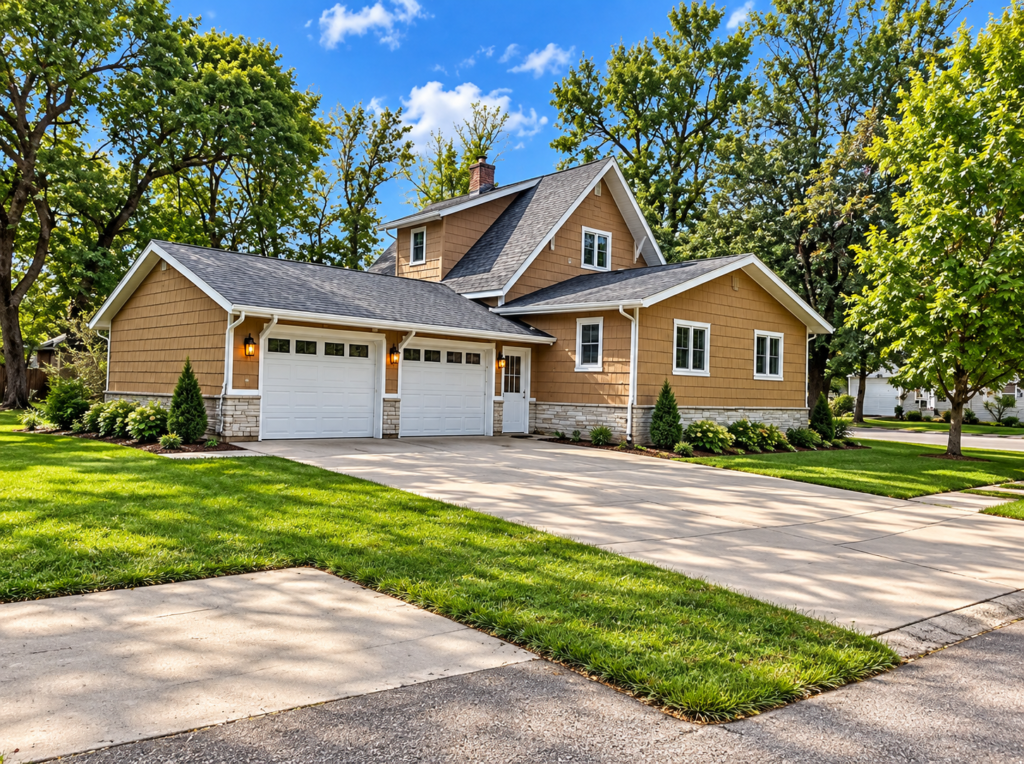
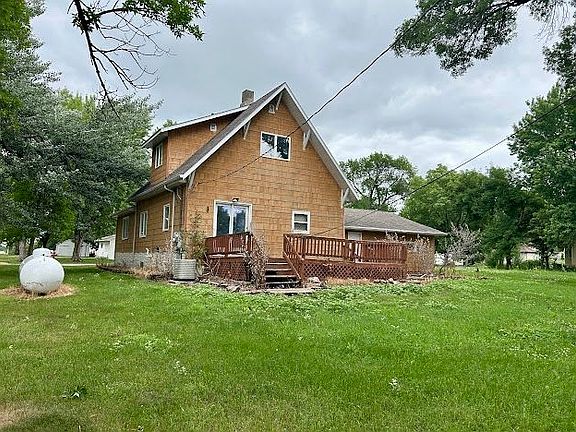
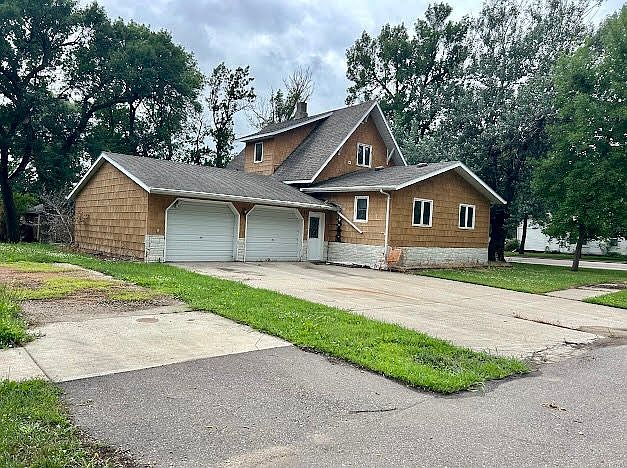
$30,000 Fixer-Upper in Clinton, Minnesota – 3-Bedroom Home With 1,896 Sq. Ft. at 622 Lake St


$30,000 Fixer-Upper in Clinton, Minnesota – 3-Bedroom Home With 1,896 Sq. Ft. at 622 Lake St
Affordable Minnesota Real Estate: A $30,000 Renovation Opportunity for Cash Buyers
For real estate investors, contractors, and homebuyers searching for inexpensive houses with renovation potential, 622 Lake St in Clinton, Minnesota, presents an interesting opportunity. Listed for just $30,000, this three-bedroom, one-bathroom single-family home offers approximately 1,896 square feet of interior space and a reported 0.29-acre lot.
Built in 1913, the property is being marketed as a fixer-upper suitable for buyers willing to take on a renovation project. The seller specifically emphasizes that the home is being sold as-is, with cash buyers preferred.
At an advertised price of approximately $16 per square foot, the property may catch the attention of investors exploring affordable homes in Minnesota, fix-and-flip opportunities, or potential rental investments.
The listing also reports a Zillow Zestimate of $76,800, considerably higher than the current asking price. However, this automated estimate should not be confused with a professional appraisal or the home’s value in its existing condition.
The central question for prospective buyers is not simply whether $30,000 is an attractive purchase price. It is whether the property’s condition, repair requirements, local housing market, and eventual ownership costs make the investment financially reasonable.
This detailed overview explores the home’s features, potential renovation strategies, financing considerations, property value, and the important due diligence required before purchasing an older house sold as-is.
Property Overview: 622 Lake St, Clinton, MN 56225
The listing provides the following information:
| Property Feature | Details |
|---|---|
| Asking Price | $30,000 |
| Address | 622 Lake St, Clinton, MN 56225 |
| Property Type | Single-Family Home |
| Bedrooms | 3 |
| Bathrooms | 1 |
| Living Area | 1,896 Sq. Ft. |
| Reported Lot Size | 0.29 Acres |
| Year Built | 1913 |
| Price Per Square Foot | Approximately $16 |
| Zillow Zestimate | $76,800 |
| Property Condition | Fixer-Upper |
| Sale Terms | Sold As-Is |
| Buyer Preference | Cash Buyers Preferred |
| Potential Uses | Renovation, Resale, or Rental Investment |
One important detail requires clarification: the supplied property information includes a conflicting lot-size entry of 29 square feet, while the description states 0.29 acres. These are substantially different measurements.
For this article, the 0.29-acre figure is treated as the advertised lot size, but buyers should verify the correct parcel area through county property records or a survey.
Why This $30,000 Minnesota Home Is Attracting Attention
The most noticeable feature of 622 Lake St is its low asking price relative to its reported interior size.
At $30,000 for approximately 1,896 square feet, the property has an asking price of roughly $15.82 per square foot.
That figure may appear unusually affordable to buyers accustomed to higher-priced residential markets.
However, price per square foot does not account for the condition of the building, required renovations, location, or local market demand.
The property is explicitly advertised as a fixer-upper.
This means buyers should anticipate the possibility of repairs, although the listing does not identify the specific systems or building components that require attention.
The home’s three-bedroom layout and substantial interior square footage may provide flexibility for future use.
An investor could potentially investigate renovating the property for resale, while another buyer might consider restoring it for personal occupancy.
A third possibility is evaluating its suitability as a long-term rental property.
Each strategy requires different financial calculations, and none guarantees profitability.
A Historic 1913 Home With Renovation Potential
Built in 1913, this residence has stood for more than a century.
Older houses can offer distinctive architectural characteristics, traditional room layouts, and construction details that appeal to buyers interested in restoration.
However, the listing does not describe the home’s original architectural style, interior finishes, or preserved historic features.
It would therefore be inappropriate to assume that the property contains original hardwood floors, decorative woodwork, or other period-specific details without an inspection.
Age is particularly important when evaluating a fixer-upper.
A house constructed in 1913 may have undergone multiple renovations, repairs, and alterations during its lifetime.
Some systems could be relatively modern, while others might be outdated.
Prospective purchasers should investigate the history of major improvements, including roofing, electrical wiring, plumbing, heating, and foundation repairs.
The current listing does not provide that information.
A professional home inspection can help identify visible deficiencies and determine whether additional specialist evaluations are needed.
Three Bedrooms Offer Flexible Living Arrangements
The property includes three reported bedrooms.
For a home of approximately 1,896 square feet, this configuration may provide a useful balance between sleeping areas and shared living space.
A three-bedroom residence can accommodate different household arrangements.
For example, an owner might use one bedroom as the primary sleeping area, another for family members or guests, and the third as a home office.
For an investor, bedroom count can also influence the pool of potential tenants or future buyers.
However, the available listing does not specify bedroom sizes, locations, ceiling heights, or whether each room meets current requirements for a legal bedroom.
These details should be verified during an inspection.
Renovation planning may also involve evaluating closet space, ventilation, natural light, and emergency escape openings.
Older homes sometimes have layouts that differ significantly from modern residential expectations.
Buyers should determine whether the existing arrangement is functional or whether modifications would improve usability.
Any proposed changes should account for structural walls, electrical systems, plumbing locations, and applicable building requirements.
One Bathroom: Practical Considerations for Renovation
The home includes one reported bathroom.
A single bathroom may be adequate for certain households, but its condition and location can influence overall convenience.
Because this property is marketed as a fixer-upper, buyers should carefully inspect the bathroom before estimating renovation costs.
Important components include the toilet, sink, bathing facilities, flooring, ventilation, plumbing connections, and surrounding walls.
Moisture damage can sometimes extend beneath visible finishes.
If the bathroom requires a complete renovation, costs may include demolition, plumbing repairs, electrical work, waterproofing, fixtures, and new finishes.
Adding a second bathroom might be worth investigating, given the home’s relatively large reported interior area.
However, the listing does not establish whether the floor plan or existing plumbing would support such an addition.
Any proposed expansion should be evaluated by qualified professionals and reviewed for permit requirements.
Nearly 1,900 Square Feet of Interior Space
At 1,896 square feet, this property offers considerably more interior area than many compact starter homes.
The additional space may provide flexibility during renovation.
Depending on the actual layout, there could be opportunities to create more functional living areas, improve storage, or modernize room arrangements.
However, the listing does not include a floor plan or detailed breakdown of finished and unfinished space.
Buyers should confirm that the reported square footage represents legally recognized living area.
Basements, enclosed porches, converted attics, and additions can sometimes be treated differently in property records.
A professional measurement or appraisal may help clarify the home’s actual finished area.
For investors, accurate square footage is important when comparing potential resale values.
Overestimating usable living space can produce unrealistic financial projections.
Understanding the Reported 0.29-Acre Lot
The property description identifies a lot measuring approximately 0.29 acres.
If accurate, that would represent roughly 12,632 square feet of land.
Such a parcel could provide room for a yard, landscaping, or other outdoor activities, depending on the lot’s configuration and local restrictions.
However, buyers should confirm the exact boundaries and usable area.
A larger lot does not automatically permit additional construction, subdivision, or accessory structures.
Local zoning rules, setbacks, utility easements, and property-specific restrictions may limit development options.
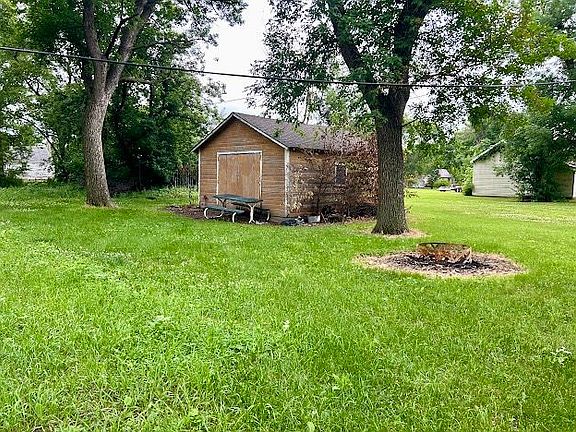
The condition of the yard and any existing outbuildings is not described in the supplied information.
Prospective purchasers should inspect drainage, access, vegetation, and potential maintenance needs.
Living in Clinton, Minnesota
Clinton is a small community in western Minnesota’s Big Stone County.
Buyers considering a home in a smaller community should evaluate both the advantages and practical limitations of the location.
For some households, small-town living may offer a quieter residential environment and a different pace of life compared with larger metropolitan areas.
However, access to employment, healthcare, schools, shopping, and specialized services should be researched before purchasing.
Real estate investors should also consider local housing demand.
A property that appears inexpensive may still be difficult to rent or resell if demand is limited.
Population trends, employment opportunities, rental availability, and recent home sales can influence investment performance.
The home’s exact location within Clinton should be evaluated for street access, nearby amenities, and surrounding property conditions.
Buyers should not rely exclusively on general information about the town when assessing a specific address.
Sold As-Is: What Buyers Need to Understand
The seller explicitly advertises 622 Lake St as an as-is property.
An as-is sale generally means the seller is offering the property in its existing condition and may not be willing to complete repairs before closing.
However, the precise legal meaning depends on the purchase agreement and applicable law.
An as-is designation does not automatically eliminate disclosure obligations or prevent buyers from requesting inspections.
Prospective purchasers should review the contract carefully.
For a fixer-upper, inspection contingencies can be particularly important.
A buyer should understand what happens if significant structural problems, environmental hazards, or expensive system failures are discovered.
The listing does not provide a detailed condition report.
Therefore, the total cost of restoring the property remains unknown.
Cash Buyers Preferred: Why Financing Could Be Challenging
The listing states that cash buyers are preferred.
This may appeal to investors who have funds available and can complete a purchase without mortgage financing.
Cash transactions can sometimes involve fewer lender-related requirements.
However, cash buyers still need to evaluate title, condition, taxes, insurance, and closing costs.
The seller’s preference does not necessarily establish that mortgage financing is impossible.
Some properties in poor condition may fail to meet conventional lender standards.
Issues involving safety, habitability, roofing, utilities, or structural integrity can affect financing eligibility.
Buyers interested in renovation financing should consult lenders about available programs and requirements.
Cash purchasers should be equally careful not to skip important inspections simply because a lender is not involved.
Zillow Zestimate: $76,800 Compared With the $30,000 Asking Price
The listing reports a Zillow Zestimate of $76,800.
Compared with the $30,000 asking price, that represents a difference of $46,800.
Asking Price
$30,000
Reported Zestimate
$76,800
Difference
$46,800
The asking price is approximately 60.9% below the reported Zestimate.
This difference may be interesting to investors, but it should not be interpreted as guaranteed equity.
A Zestimate is an automated estimate based on available property and market information.
It is not a substitute for an appraisal, and it may not fully account for the current condition of a distressed property.
If the house requires extensive structural or mechanical repairs, its actual market value could differ significantly from an automated estimate.
Buyers should review recent comparable sales and obtain professional advice before determining an appropriate offer.
Renovation Budget: What Could a Fixer-Upper Cost?
The purchase price is only the first part of a renovation investment.
Depending on the home’s condition, repair expenses could include roofing, electrical upgrades, plumbing, heating, insulation, windows, flooring, kitchen improvements, and bathroom renovations.
The listing does not provide enough information to estimate the actual work required.
Nevertheless, buyers can explore hypothetical scenarios to understand how renovation spending affects total investment.
| Hypothetical Scenario | Purchase Price | Renovation Budget | Combined Cost |
|---|---|---|---|
| Limited Repairs | $30,000 | $15,000 | $45,000 |
| Moderate Renovation | $30,000 | $35,000 | $65,000 |
| Extensive Renovation | $30,000 | $60,000 | $90,000 |
| Major Rehabilitation | $30,000 | $100,000 | $130,000 |
These are illustrative budgets, not contractor estimates for this property.
They exclude closing costs, taxes, insurance, financing, utilities, permits, contingency reserves, and eventual selling expenses.
A detailed inspection and written contractor bids are necessary before developing a realistic project budget.
Roof, Foundation, and Structural Inspections
For a house constructed in 1913, structural evaluation should be a priority.
The listing does not identify the foundation type, roof age, or current structural condition.
Buyers should inspect for settlement, cracks, uneven floors, moisture intrusion, and visible framing concerns.
Older homes may have experienced decades of repairs or modifications.
Some issues may be cosmetic, while others could require professional structural engineering services.
Roof condition is also important.
Leaks can damage ceilings, insulation, wall assemblies, and framing.
A qualified roofing contractor can help assess remaining service life and identify needed repairs.
Because major structural work can be expensive, these inspections are especially important when evaluating a low-priced investment property.
Electrical and Plumbing Systems in Older Homes
Electrical and plumbing systems can be among the most expensive components of a major renovation.
The listing does not specify whether the property has updated wiring, modern circuit protection, or recently replaced plumbing.
Buyers should arrange appropriate inspections.
A licensed electrician may need to evaluate the service panel, wiring condition, grounding, outlets, and electrical capacity.
A plumbing inspection should assess supply lines, drainage, fixtures, leaks, and any signs of deterioration.
Older properties can contain materials and installations that no longer meet modern expectations.
The presence of functioning lights or running water during a tour does not guarantee that the underlying systems are in satisfactory condition.
Renovation budgets should account for the possibility of hidden problems.
Heating, Insulation, and Minnesota Winters
Heating performance is a particularly important consideration for residential property in Minnesota.
Cold winter temperatures make reliable heating and adequate insulation essential.
The listing does not identify the home’s heating system, insulation levels, or energy efficiency.
Buyers should determine whether the heating equipment is operational and appropriate for year-round occupancy.
Insulation, windows, doors, and air leakage can significantly influence energy costs.
An older house may benefit from energy-efficiency improvements, but these should be planned in coordination with moisture control and ventilation requirements.
Before purchasing, buyers should request available utility records and obtain professional evaluations where appropriate.
Potential Fix-and-Flip Investment Strategy
The listing specifically identifies fix-and-flip investors as a potential buyer group.
A fix-and-flip strategy generally involves purchasing a property, completing improvements, and reselling it.
The objective is to sell for more than the combined acquisition, renovation, holding, and selling costs.
However, profit depends on accurate budgeting and realistic resale expectations.
For example, an investor purchasing the home for $30,000 and spending $35,000 on renovations would have $65,000 invested before transaction and holding expenses.
If the property later sold for $90,000, the $25,000 difference would not represent net profit.
Selling commissions, closing expenses, insurance, taxes, utilities, financing costs, and unexpected repairs would reduce the final result.
A successful project requires careful analysis of comparable renovated homes in the local market.
Investors should avoid assuming that renovation expenses automatically translate into equivalent increases in property value.
Could This Property Become a Rental Investment?
Another possibility is renovating the residence for long-term rental use.
Three bedrooms and approximately 1,896 square feet could potentially accommodate households seeking more living space.
However, the listing does not provide rental history, current occupancy, or market rent estimates.
Before purchasing, investors should investigate actual rental demand in Clinton.
Relevant factors include employment opportunities, local vacancy rates, comparable rental listings, and tenant expectations.
The property would also need to meet applicable safety and habitability requirements.
A rental investment budget should include repairs, insurance, taxes, management, maintenance, vacancy, and future capital expenditures.
Potential rental income should be based on verified local market evidence rather than assumptions.
Renovating for Personal Homeownership
Although the listing is directed toward investors and contractors, some buyers may consider purchasing the property as a future personal residence.
A low acquisition price can appear appealing to buyers willing to manage renovation work.
However, extensive rehabilitation requires time, money, planning, and reliable contractors.
Buyers intending to live in the home should determine whether it is currently habitable.
If major work is required, alternative accommodation may be necessary during construction.
Renovation timelines can also change when hidden defects are discovered.
A detailed budget and contingency reserve are important before committing to the project.
Permits, Building Codes, and Historic Construction
Renovating an older property may involve local building permits and inspections.
Electrical, plumbing, structural, and mechanical work can be subject to different requirements.
Buyers should contact the appropriate local authorities before beginning significant renovations.
Because the home was built in 1913, lead-based paint may also be a concern.
Federal rules governing pre-1978 residential housing can apply to certain sales and renovation activities.
Potential asbestos-containing materials may also be encountered in older building components.
Qualified professionals should evaluate suspected hazardous materials before they are disturbed.
The home’s age alone does not prove that these materials are present, but it makes appropriate due diligence important.
Property Taxes, Insurance, and Holding Costs
A low purchase price does not eliminate recurring ownership expenses.
Property taxes, insurance, utilities, maintenance, and security costs can accumulate while a property is being renovated.
The supplied listing does not include an annual property tax amount.
Buyers should verify tax information through the appropriate county records.
Insurance may also require special consideration.
Vacant properties and homes undergoing major renovations can have different insurance requirements from occupied residences.
Investors should obtain coverage information before closing.
Holding costs should be incorporated into any resale or rental analysis.
Questions Every Buyer Should Ask
Before submitting an offer, prospective purchasers should seek answers to several important questions:
-
What specific repairs are known to be necessary?
-
Is the home currently habitable?
-
Are the electrical, plumbing, and heating systems operational?
-
What is the condition of the roof and foundation?
-
Has the property experienced water damage or flooding?
-
Are there outstanding liens, unpaid taxes, or code violations?
-
Is the advertised lot size 0.29 acres?
-
Are any additions or renovations unpermitted?
-
Can the property qualify for renovation financing?
-
Are there recent comparable sales supporting the anticipated resale value?
Answers to these questions can significantly affect the property’s financial attractiveness.
How to Evaluate the Property’s After-Repair Value
After-repair value, commonly called ARV, is the estimated market value of a property after planned renovations are completed.
For a fix-and-flip project, ARV is one of the most important financial assumptions.
It should be based on comparable renovated homes that have recently sold in the surrounding area.
Comparable properties should ideally have similar bedroom counts, square footage, lot sizes, and locations.
Adjustments may be necessary for differences in condition, amenities, and construction characteristics.
The reported $76,800 Zestimate should not automatically be treated as the property’s ARV.
A professional appraisal or well-supported comparative market analysis can provide a stronger basis for investment planning.
Why Low-Cost Real Estate Requires Careful Analysis
Inexpensive properties can attract considerable attention because the initial asking price appears manageable.
However, low-priced real estate can involve substantial uncertainty.
A property listed for $30,000 may ultimately require more investment than a higher-priced home in better condition.
Renovation costs, market liquidity, property taxes, insurance, and financing availability all influence the final outcome.
Buyers should compare total acquisition and improvement costs against realistic alternatives.
For some investors, a major renovation project may offer opportunities to create value.
For others, the time and expense involved may outweigh the potential benefits.
The appropriate decision depends on financial resources, experience, risk tolerance, and verified property conditions.
Final Thoughts: Is 622 Lake St Worth $30,000?
622 Lake St in Clinton, Minnesota, presents a low-priced real estate opportunity for buyers interested in renovation projects.
The property offers three bedrooms, one bathroom, approximately 1,896 square feet of reported living space, and an advertised 0.29-acre lot.
Built in 1913, the home is being sold as-is, with cash buyers preferred.
Its $30,000 asking price and reported $76,800 Zillow Zestimate may attract attention, but the difference between those figures should not be mistaken for guaranteed investment profit.
The home’s actual condition, renovation expenses, local housing demand, and eventual market value are essential factors in determining whether it represents a worthwhile purchase.
For experienced contractors, investors, or buyers prepared to manage a substantial restoration, the property may be worth investigating.
A professional inspection, title review, accurate renovation estimates, and comparable-sales analysis should come before any final purchasing decision.
With careful research and realistic expectations, this century-old Minnesota home could offer an opportunity for a buyer whose budget, skills, and goals align with the property’s needs.
From Zillow