Uncategorized
The Bride Refused to Pay Grandma for Her Wedding Cake—Then the Groom Made a Shocking Decision

A Wedding Cake, an Unpaid Promise, and a Family Secret Revealed
Some family conflicts begin with a disagreement over money. Others reveal something much deeper about trust, respect, and the way people treat those who care about them most. In this emotional family drama, a grandmother’s extraordinary effort to create a beautiful wedding cake becomes the center of a confrontation that no one at the reception expected.
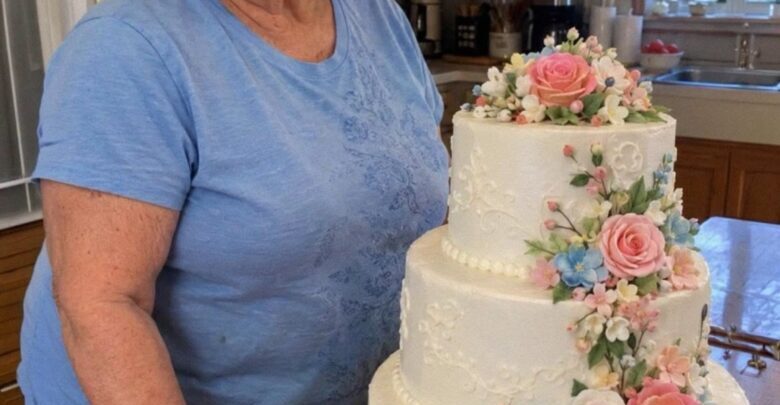
At first, everything appears to be going according to plan. Daniel is preparing to marry Ashley in a charming restored barn decorated with lights, flowers, and elegant details. His grandmother has spent days creating a four-tier cake covered with delicate handmade sugar flowers. His sister wants the wedding to be a happy occasion, and the guests have gathered to celebrate the couple’s future.
But behind the beautiful decorations lies a painful disagreement. Ashley promised to pay Grandma for the ingredients and labor required to make the cake. Once the work was finished, however, she refused to honor that promise.
What begins as a private dispute eventually becomes a public turning point. Daniel discovers what happened, learns how his grandmother was treated, and must decide whether the behavior he has witnessed is something he can accept in a marriage.
The story explores a difficult but familiar question: What happens when someone’s actions reveal a side of their character that their loved ones have never fully seen?
A Grandmother Who Expressed Love Through Baking
For Daniel’s grandmother, baking had always been more than a hobby. At 73, she used it as a way to show affection, celebrate important occasions, and bring her family together.
Her kitchen held years of memories. When Daniel and his sister were children, they had helped decorate birthday cakes, sometimes producing crooked stars and uneven icing. Grandma never insisted that every detail be perfect.
“Leave them, dear. That’s the good part,” she used to say.
Her attitude reflected the warmth that made her kitchen such a special place. The cakes did not need to look professional to be meaningful. What mattered was the time spent together and the happiness the finished dessert brought to the family.
That was why she felt genuinely delighted when Daniel’s fiancée, Ashley, asked her to make their wedding cake.
Ashley wanted something impressive: a four-tier creation decorated with handmade sugar flowers. She had reportedly found that professional bakeries were charging more than $1,000 for comparable designs.
Grandma offered to make the cake, and Ashley promised to cover the ingredients and pay for her time.
Daniel’s sister heard the agreement during a Sunday family lunch. To her, there was no confusion about the arrangement. Grandma would provide the skill and labor, and Ashley would compensate her for the cost of the supplies and the hours involved.
It seemed like a reasonable agreement between family members.
Grandma did not approach the project as a commercial baker negotiating a large contract. She approached it as someone who wanted to contribute something personal to an important family milestone.
Unfortunately, that generosity would later be used against her.
Three Days of Work for a Wedding Gift That Was Never Meant to Be Free
Creating a four-tier wedding cake is a demanding task, particularly when much of the decoration is made by hand.
Grandma purchased the ingredients herself, including butter, eggs, fondant, and the supplies needed to create the decorative flowers. She then spent three days baking, assembling, and decorating the cake.
The sugar flowers required special attention. Each one had to be shaped and arranged carefully so that the finished design would look balanced and elegant.
When Daniel’s sister visited, the kitchen table was covered with delicate flowers waiting to be placed on the cake. Grandma rubbed her aching wrist before holding up one of the roses for her granddaughter to admire.
The rose was beautiful.
Yet behind its delicate appearance were hours of concentration, patience, and physical effort.
Grandma was living on a modest pension. The money she spent on supplies was not spare cash that she could easily replace. Her regular expenses already accounted for most of her income, including the cost of medication she needed to purchase.
That financial reality made Ashley’s promise particularly important.
The grandmother had agreed to undertake the project because she believed the arrangement was understood. She was willing to help, but she had not offered to absorb every expense and provide several days of unpaid labor.
The cake was an expression of love, but love did not automatically make the ingredients free. Nor did it mean that Grandma’s time had no value.
As the wedding approached, she finished the decorations and prepared for Ashley to collect the cake.
She had every reason to expect that the agreement would be honored.
The Morning Ashley Collected the Cake
Daniel’s sister stayed overnight at Grandma’s house so she could drive her to the wedding venue outside the city.
The following morning, she woke to the smell of coffee and voices coming from the front hall.
Ashley had arrived to collect the cake.
Instead of expressing excitement about Grandma’s work, Ashley stood beside the finished creation with her arms folded and her phone in hand. She took photographs while examining the cake.
Grandma approached the conversation carefully. She explained that she had spent a considerable amount on ingredients and needed to buy her medication soon.
Then she asked Ashley whether she could pay for the cake.
The response was not what Grandma expected.
Ashley laughed and questioned why she should pay when they were family. She suggested that the cake should have been made for free.
Grandma tried to explain that she had not understood the arrangement that way. She was not asking for an extravagant fee. She wanted reimbursement for her expenses and payment for the time she had spent creating the cake.
Ashley remained unwilling to pay.
She reportedly accused Grandma of acting poor and insisted that she already had too many expenses of her own.
Daniel’s sister, who had heard the original promise, could no longer remain silent.
She reminded Ashley that the agreement had been made openly and that Grandma had spent days fulfilling her part of it.
Ashley dismissed the objection by reducing the entire project to a simple cake.
But the disagreement was never just about dessert. It concerned a promise, the cost of the materials, the value of skilled work, and the dignity of an elderly family member who had been trying to help.
Despite the confrontation, Ashley instructed the men accompanying her to carry the cake carefully.
Then she left with it.
Grandma remained at the kitchen table, visibly hurt.
Grandma Asked Her Granddaughter Not to Ruin the Wedding
Daniel’s sister felt angry enough to follow Ashley to the venue and demand that the cake be returned.
She even had her keys in her hand.
But Grandma asked her not to create a scene.
It was Daniel’s wedding day, she reminded her granddaughter. She did not want a family dispute to overshadow the ceremony or leave her grandson caught in the middle.
Her reaction was heartbreaking because she was trying to protect everyone else despite having been treated unfairly herself.
She even began to wonder whether the situation was her fault.
Perhaps, she suggested, she should have asked for the agreement in writing.
Her granddaughter immediately rejected that idea. Grandma had done nothing wrong by believing a promise made during a family gathering. Wanting to be paid for ingredients and labor was not unreasonable.
Still, Grandma did not want revenge. She wanted the day to proceed peacefully.
Her granddaughter understood that wish, but she also knew that Grandma needed money for her medication.
She asked to see the receipts.
Grandma brought out an old cookie tin containing the records of the supplies she had purchased. The receipts documented the expenses associated with the cake, including the ingredients and decorative materials.
Her granddaughter added up the costs and considered the time Grandma had spent working.
Then she counted out enough money to cover the supplies and compensate her grandmother for her labor.
Grandma was surprised.
She reminded her granddaughter that the bill was not hers to pay.
But her granddaughter insisted that the most urgent thing was ensuring Grandma could purchase her medication without worrying about the money.
It was a quiet act of kindness in the middle of an upsetting situation.
The granddaughter could not undo what Ashley had said, but she could make sure Grandma was not left carrying the financial burden alone.
An Unexpected Plan for the Wedding Gift
Although Grandma had asked her granddaughter not to cause a scene, the younger woman was still struggling to accept what had happened.
She had already purchased an engraved silver picture frame as a wedding gift for Daniel and Ashley. Now, she decided to include something else in the package.
Using the receipts and her calculations, she prepared an itemized invoice showing the expenses and the amount owed for Grandma’s labor.
Across the top, she wrote that the amount had been paid.
She also added a note explaining that she had reimbursed Grandma because the bride had declined to pay.
The invoice was not simply a record of the money. It documented the difference between the original agreement and what had happened afterward.
She placed it beneath the silver frame and wrapped the gift again.
Her plan was simple: Ashley would have an opportunity to acknowledge what she had done and make things right.
The granddaughter did not know exactly how the bride would respond. She hoped that seeing the figures in writing might force her to reconsider the decision.
But she also knew that the wedding reception could become uncomfortable if Ashley reacted defensively.
For the moment, she kept the invoice private and went to the ceremony.
A Beautiful Ceremony With an Unspoken Problem
The wedding took place in a restored barn decorated with strings of lights.
The atmosphere was warm and celebratory. Guests gathered to watch Daniel and Ashley exchange vows, and Daniel became emotional during the ceremony.
His sister watched her brother and wondered whether he knew anything about the argument that had taken place that morning.
From the outside, the wedding appeared to be proceeding normally. The couple had exchanged vows, the guests were celebrating, and the reception preparations were underway.
Grandma’s cake stood on a wheeled cart beneath the lights.
Every sugar flower remained intact. The careful decoration made the cake an impressive centerpiece, and Ashley was directing the photographer to capture it from different angles.
Daniel appeared pleased with the result. He smiled toward his grandmother, who was standing near the dessert table.
Grandma returned his smile, although the earlier confrontation had clearly affected her.
Her granddaughter told her that the cake was one of the best she had ever made.
Grandma was happy that Daniel liked it. That was what mattered most to her.
Yet the granddaughter could not forget the way Ashley had spoken to her grandmother or the promise that had been broken.
The cake was ready for the traditional cutting ceremony, but the conflict surrounding it had not been resolved.
The Invoice Appears at the Reception
Around 7:30 p.m., shortly before the cake-cutting moment, Daniel’s sister approached the head table carrying the wrapped wedding gift.
She presented it as a small gift for the newlyweds.
Ashley responded enthusiastically. She removed the ribbon, opened the box, and lifted out the silver picture frame.
At first, she seemed pleased.
Then she noticed the invoice underneath it.
Her expression changed immediately.
She began moving the paper around, apparently trying to hide it or put it somewhere out of sight. Daniel, sitting beside her, noticed her reaction and asked what was wrong.
Ashley insisted that nothing was happening.
But the granddaughter explained that the paper was an invoice for the cake. She told the couple that she had reimbursed Grandma herself after Ashley refused to pay.
Ashley was angry that the invoice had been included in the gift.
The granddaughter explained that she had wanted to see whether Ashley would acknowledge the situation and make it right. Instead, Ashley had attempted to hide the document.
The disagreement was no longer a private conversation in a kitchen. Guests nearby had begun to notice that something was wrong.
The granddaughter then walked toward the cake cart.
Ashley followed, demanding to know what she was doing.
What happened next transformed the reception from an ordinary celebration into a confrontation that guests would remember long afterward.
The Cake Becomes the Center of the Confrontation
The granddaughter moved the cake cart toward her own table and sat down.
She explained that she had paid Grandma for the work and thought she might as well enjoy the cake.
Her argument was deliberately provocative, and Ashley immediately objected. The cake had been made for the wedding, she insisted, and the granddaughter could not simply take it away.
The granddaughter picked up a spoon and moved it toward the frosting, stopping before touching the cake.
The gesture was enough to attract attention from guests across the room.
Ashley accused her of being petty and jealous and claimed that she was trying to ruin the wedding.
Daniel arrived in the middle of the argument, confused by what he was seeing. He asked both women to explain what was happening.
His sister calmly described the agreement Grandma had made with Ashley.
According to the granddaughter, Ashley had promised to pay for the ingredients and labor, then refused after the cake was completed.
Daniel was stunned.
He said Ashley had told him that Grandma was making the cake as a wedding gift.
For the first time, the groom realized that he and his sister had received very different explanations of the same arrangement.
Ashley acknowledged that Grandma had initially mentioned payment but argued that relatives should not charge one another for a wedding cake.
She also accused the granddaughter of making an unnecessarily large spectacle.
Daniel asked why his sister had reimbursed Grandma herself.
The answer was straightforward: Grandma needed the money to purchase her medication.
That detail changed the conversation.
Daniel asked Ashley whether she had known about his grandmother’s financial circumstances.
Ashley dismissed the concern, suggesting that Grandma was being dramatic.
The granddaughter then explained that Ashley had laughed when Grandma asked for payment.
Daniel looked toward his grandmother, who was sitting quietly with her hands folded.
He appeared to be waiting for Ashley to deny what had happened, explain a misunderstanding, or offer an apology.
Instead, Ashley continued defending herself.
She argued that Grandma could wait a few days for her medication and complained that the argument was ruining the photographs and disrupting the reception.
For Daniel, the issue had become much bigger than the price of a cake.
Daniel Makes a Decision No One Expected
Daniel had to choose how to respond to the information he had just learned.
He could have dismissed the disagreement as a family misunderstanding, asked his sister to return the cake to its original place, or encouraged everyone to discuss the issue privately after the reception.
Instead, he told Ashley that the argument had gone far enough.
He walked toward his sister and asked her to hand over the spoon.
For a moment, the granddaughter thought her brother was about to defend his bride and order her to stop.
Ashley appeared to think the same thing. She relaxed, seemingly confident that Daniel would take her side.
But Daniel had something else in mind.
He approached the cake and examined the carefully decorated tiers. The sugar roses represented hours of work by a woman who had made the cake because she loved him.
Then he plunged the spoon into the middle of the cake and took a large bite.
The action startled the guests.
Ashley shouted at him, demanding to know what he was doing.
Daniel ignored the commotion and called across the room to his grandmother.
He told her that the cake was wonderful.
It was a small statement, but it carried a message that the entire room could understand. Daniel was publicly acknowledging Grandma’s effort instead of allowing the argument to reduce her work to something worthless.
He placed the spoon down and walked to his grandmother.
Then he knelt beside her chair and took her hands.
He thanked her for the hours she had spent creating the cake and apologized for the way she had been treated.
Grandma was overwhelmed. She tried to reassure him that she had never wanted to upset anyone on his wedding day.
Daniel told her that she had done nothing wrong.
It was the recognition she had needed from the beginning: her effort mattered, her feelings mattered, and she had every right to expect that a promise would be honored.
When the Cake Was Never the Real Problem
After apologizing to his grandmother, Daniel turned back toward Ashley.
He admitted that he was struggling with what he had learned and said he did not know how to move forward in their marriage.
The statement shocked the bride.
She accused him of ruining their wedding over a cake and argued that his sister had manipulated him.
Daniel rejected that explanation.
His sister had not forced Ashley to refuse payment, he explained. She had not made Ashley dismiss Grandma’s concerns or minimize the importance of medication. Those were choices Ashley had made herself.
Daniel said he could not imagine building a life with someone who treated a vulnerable member of his family with such contempt.
Ashley reminded him that they were already legally married.
Daniel acknowledged that the legal situation would have to be handled afterward. But emotionally, he said, he was ending the relationship.
It was a dramatic moment, particularly because the couple had exchanged vows only hours earlier.
The guests watched in silence as Ashley struggled to respond. She appeared more concerned about the money she had spent on the wedding and the reception than about the grandmother who had been hurt.
Daniel pointed out the contradiction: she had spent money trying to create a perfect wedding but had refused to pay the person who made its centerpiece.
Ashley eventually gathered her skirts and left through the barn doors.
The reception was left in stunned silence.
The cake remained beside the table, its perfect exterior marked by the large scoop Daniel had taken from the middle.
For everyone who witnessed the confrontation, the image became a symbol of the evening: a carefully planned celebration interrupted by an uncomfortable truth about respect, generosity, and personal responsibility.
The Lesson Behind the Wedding Cake
The story offers several lessons that extend beyond a wedding reception.
First, generosity should not be confused with an obligation to provide free labor. Family members often help one another with celebrations, home projects, childcare, transportation, and other responsibilities. Those acts can be meaningful expressions of love.
But when an agreement includes payment, the arrangement should be honored. If circumstances change, the people involved should discuss the issue before the work is completed, not afterward.
Second, a person’s financial circumstances should never be treated as a reason to ridicule them. Grandma was living on a pension and needed money for medication. Her situation deserved compassion, not mockery.
Third, promises matter even when they are made informally. A clear written agreement can prevent disagreements, especially when substantial materials, time, or money are involved. Still, the absence of a written contract does not make it acceptable to dismiss a promise simply because the other person is a relative.
Finally, difficult situations can reveal important information about relationships. Daniel’s decision was based not merely on a disagreement over payment but on what he witnessed and learned about Ashley’s response to his grandmother’s needs.
In real life, major relationship decisions require careful thought, and a single dramatic moment does not provide every detail of a marriage. The story’s central point, however, is clear: respect and compassion are important foundations for any lasting partnership.
A Final Moment of Grace
After Ashley left, Grandma looked at the damaged cake.
The evening had become far more dramatic than she had ever wanted. She had spent days creating something beautiful for her grandson, hoping it would contribute to a happy family celebration.
Instead, the cake had become the center of a painful confrontation.
Yet Grandma responded in the same practical, understated way that had characterized her approach to life. After wiping her eyes, she observed that there were proper ways to cut a cake.
Her comment brought the story back to the woman at its center.
She was not interested in humiliating anyone. She had not made the cake to create conflict or prove a point. She had simply wanted to show her grandson that she loved him.
Her granddaughter had stepped in because she could not bear to see Grandma treated unfairly. Daniel had responded because he could no longer ignore what he had learned.
The wedding did not end the way the couple had planned. The cake was no longer perfect, and the reception became an occasion filled with difficult questions.
But the grandmother’s work was finally acknowledged.
Her effort was appreciated, her expenses were covered, and her grandson apologized for the hurt she had experienced.
In the end, the most meaningful part of the cake was never its four tiers, handmade flowers, or elegant decoration. It was the love behind it—and the reminder that kindness should never be taken for granted.
Conclusion: Respect Is Worth More Than a Perfect Celebration
A wedding can be planned down to the smallest detail, but no decoration can compensate for a lack of honesty or consideration.
Grandma’s cake represented hours of work, personal sacrifice, and affection for her family. The promise of payment was part of the agreement, and refusing to honor it caused harm that went far beyond the cost of the ingredients.
Daniel’s response showed how quickly a celebration can change when an important truth comes to light. His decision was dramatic, but the underlying issue was serious: whether he could trust the person he had just married to treat his family with basic respect.
The story also highlights the quiet strength of people who continue to give even when their generosity is not appreciated. Grandma did not demand a public apology or seek revenge. She wanted the wedding to proceed peacefully, even at her own expense.
Her granddaughter made sure she was not left struggling financially, while Daniel ultimately recognized the effort and care behind the cake.
The lasting message is simple. Family relationships should be built on mutual respect, honest communication, and an understanding that kindness is not an unlimited resource to exploit.
A beautiful cake may be remembered for its appearance, but the way people treat one another is what reveals the true character of a family.
Sometimes, the most important moment at a wedding is not the exchange of vows or the cutting of the cake. It is the moment when someone finally stands up for the person who has spent a lifetime showing love through small, generous acts.
Editorial note: This article presents the supplied material as a family-drama narrative. The events have not been independently verified and should not be presented as confirmed real-world news without reliable sourcing.