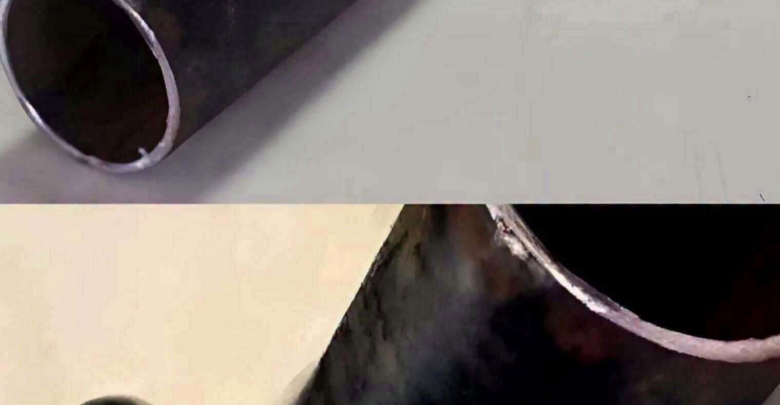
If you have ever cleaned out an old barn, explored a forgotten workshop, or looked through a collection of vintage farm tools, you may have come across a strange piece of equipment that seems difficult to identify.
It may look like a short, heavy steel cylinder with thick walls, welded handles, and a solid cap. At first glance, you might mistake it for an old piece of industrial equipment, a section of heavy plumbing, or even some kind of historical weapon.
But in many cases, the explanation is much simpler.
That unusual steel cylinder is a manual post driver, sometimes called a fence post pounder, T-post driver, or post rammer. It is a remarkably straightforward tool designed to make one demanding outdoor job considerably easier: driving metal posts firmly into the ground.
The design may look basic, but the principle behind it is highly effective. Instead of swinging a separate hammer at the top of a post, the heavy cylindrical tool fits directly over the post. You lift it, allow it to fall, and repeat the movement until the post reaches the desired depth.
It is a classic example of how simple mechanical design can solve a surprisingly difficult problem.
What Is a Manual Post Driver?
A manual post driver is essentially a heavy steel tube designed to deliver repeated downward impacts to a metal post.
Most versions consist of a hollow cylindrical body, a solid or reinforced striking section, and two handles welded along the outside. The handles allow the operator to lift and lower the tool while keeping it centered over the post.
The tool is particularly common with metal fence posts, including T-posts and similar agricultural stakes.
Its basic operation is easy to understand.
First, the metal post is positioned where it needs to go. The driver is then placed over the top of the post. The user grips the handles, lifts the heavy cylinder, and allows gravity to bring it back down.
When the driver falls, its weight produces the impact necessary to push the post farther into the soil.
The process is repeated until the post reaches the appropriate depth.
There is no engine, battery, electrical cord, complicated mechanism, or fuel system. The operator supplies the lifting motion, while gravity and the tool’s weight provide the impact.
That simplicity is one of the reasons these tools have remained useful for so many years.
Why Does the Cylinder Have Handles?
The welded handles are one of the easiest clues that the mysterious object is a post driver.
They provide a secure grip on either side of the heavy cylinder, allowing the operator to raise and lower it while maintaining control.
The handles also help keep the driver properly aligned with the post.
That matters because a post driver works best when the impact remains centered over the post. Instead of trying to strike a narrow target with a separate hammer, the user places the post inside the driver itself.
The result is a controlled vertical movement.
The design also eliminates much of the guesswork involved in using a conventional sledgehammer.
With a separate hammer, the operator must repeatedly swing the tool and accurately strike the top of the post. With a post driver, the heavy steel body surrounds the post and guides the impact directly downward.
That is a major advantage when installing multiple posts.
How a Post Driver Works
The principle behind the tool is straightforward physics.
A heavy object has stored gravitational potential energy when it is lifted. When that object is allowed to fall, the energy is converted into motion and then into impact when it contacts the post.
A manual post driver takes advantage of that process repeatedly.
The operator does not need to swing the tool through a large arc. Instead, the driver is lifted vertically and dropped onto the post.
This makes the motion relatively compact and predictable.
The exact amount of force produced depends on the driver’s weight, the height from which it is lifted, the construction of the tool, and the resistance of the soil.
Different models are designed for different applications. Lightweight versions may be suitable for occasional residential fencing, while heavier agricultural models can be built for demanding farm and ranch work.
The important point is that the tool’s effectiveness comes from its weight and controlled movement rather than from a complicated mechanical system.
Why Not Just Use a Sledgehammer?
A sledgehammer can certainly be used to drive some posts, and people have relied on that method for generations.
However, it can become awkward when the post is tall or when dozens of posts need to be installed.
With a sledgehammer, the operator has to repeatedly swing the tool toward the post. Maintaining accurate contact becomes increasingly difficult as fatigue sets in.
A missed strike can also bend or damage a metal post.
The physical effort can become significant when installing an entire fence line.
A manual post driver changes the movement completely.
Instead of swinging a hammer toward the post, the user stands over the post and moves the heavy driver vertically. The post itself helps guide the tool.
This means the operator can maintain a more consistent rhythm.
For larger projects, that difference can make the job feel considerably more manageable.
How to Use a Manual Post Driver Properly
Although the tool is simple, good technique matters.
Before beginning, determine where the posts need to go. Mark the fence line or planting area so that spacing remains consistent.
Then position the first metal post.
Make sure it is reasonably straight before starting. A small level can be useful for checking alignment.
Once the post is positioned, place the driver over its top.
Hold both handles securely.
Lift the driver a manageable distance and allow it to fall vertically.
Repeat the movement.
There is no need to make exaggerated swings or lift the tool unnecessarily high. The goal is controlled repetition rather than maximum height.
Every few strokes, stop and check the post.
Metal posts can gradually begin leaning as they enter uneven ground, particularly when the soil contains stones or roots. Correcting the alignment early is much easier than trying to straighten a deeply embedded post later.
Continue until the post reaches the desired depth.
A Simple Technique Checklist
For a smoother project:
- Wear sturdy work gloves.
- Use appropriate eye protection.
- Wear solid work boots.
- Keep both hands securely on the handles.
- Maintain stable footing.
- Keep the driver centered over the post.
- Lift only as high as necessary.
- Check the post’s alignment regularly.
- Stop if the tool or post becomes damaged.
- Be especially careful around underground utilities and buried infrastructure.
The exact technique can vary depending on the type of post, soil conditions, and manufacturer’s instructions.
Preparing Difficult Ground
Soil conditions can make a major difference.
Soft garden soil may allow a post to enter relatively easily, while compacted clay, gravel, roots, or rocky ground can create much more resistance.
Before driving posts, inspect the area.
If the soil is extremely dry and compacted, watering the area ahead of time may make digging and post installation easier. However, excessively wet ground can also create problems because the post may not hold securely once the soil dries.
Rocky locations require additional caution.
Do not simply increase the force indefinitely if a post suddenly refuses to move. A buried rock, concrete fragment, utility line, or other obstruction may be responsible.
If resistance is unusually high, stop and investigate the area rather than repeatedly striking the post.
Before digging or driving anything into the ground, homeowners should also check for buried utility lines where applicable.
A few minutes of preparation can prevent a much bigger problem.
Useful Applications Around the Home
You do not need a large farm to benefit from a post driver.
There are many smaller outdoor projects where metal posts are useful.
Garden Fencing
One of the most common applications is garden fencing.
A few metal posts and appropriate fencing material can create a protective boundary around vegetables, flowers, or other plants.
The posts provide the framework, while mesh or wire fencing can help discourage animals from entering the garden.
Trellises
Metal posts can also form the backbone of a sturdy trellis.
Tomatoes, beans, grapes, blackberries, and other climbing plants can become surprisingly heavy during the growing season.
A well-supported structure can be much more reliable than a thin wooden stake pushed only a few inches into the ground.
Temporary Animal Enclosures
Farmers and homesteaders often need temporary fencing arrangements.
Metal posts can provide a practical framework for temporary barriers, garden protection, or small animal enclosures when used with suitable fencing materials.
Tree Supports
Posts can also be useful when supporting newly planted trees.
Young trees may need protection from strong winds while their root systems become established. Properly positioned support posts can help stabilize the tree.
Care should be taken not to tie young trees too tightly or leave support systems in place longer than necessary.
Property Marking
Metal stakes can also be useful for marking boundaries, garden areas, temporary work zones, and other outdoor spaces.
The specific use depends on local regulations and property requirements, particularly when permanent boundary markers are involved.
Manual Post Driver vs. Powered Equipment
For a small project, a manual post driver may be all that is necessary.
For larger jobs, powered equipment can offer greater speed and reduced manual effort.
There are gas-powered post drivers, pneumatic systems, hydraulic attachments, and specialized equipment designed for agricultural and construction applications.
However, powered equipment is not automatically the right choice for every situation.
A manual driver has several advantages.
It is relatively simple.
It does not require fuel.
It does not require a battery.
It produces little mechanical complexity.
It can be stored for years without worrying about a motor deteriorating.
And it can be useful in locations where bringing larger equipment would be inconvenient.
For a homeowner installing a modest garden fence, the simplicity of a manual tool can be particularly appealing.
Maintaining Your Steel Post Driver
One reason these tools can last for years is that there are relatively few components to maintain.
After use, remove dirt and moisture from the outside and inside surfaces.
If soil has become packed inside the cylinder, allow it to dry if appropriate and then clean it out.
Inspect the welds and handles periodically.
Look for cracks, significant deformation, loose components, or other damage.
A damaged tool should not be used until it has been properly repaired or replaced.
Steel can also develop rust when exposed to moisture.
Keeping the tool clean and dry helps reduce corrosion. Depending on the manufacturer’s recommendations and the type of finish on the tool, a suitable protective treatment may also help protect exposed metal.
Store the driver somewhere dry and stable.
Because these tools are heavy, avoid leaving them where they can easily fall onto someone’s feet or create a trip hazard.
Why Old-Fashioned Tools Still Have a Place
Modern technology has transformed outdoor work.
There are battery-powered tools for almost everything, specialized tractors for agricultural jobs, and machines capable of completing tasks that once required several workers.
Yet simple hand-operated tools continue to have a place.
A manual post driver is a good example.
Its design has not needed to become dramatically more complicated because the problem itself is straightforward.
A heavy object needs to repeatedly strike a post.
Gravity can provide the energy.
A steel cylinder can provide the structure.
Handles can provide control.
That’s enough.
There is something satisfying about a tool that accomplishes its job without requiring software, charging, fuel, or complicated maintenance.
It is simply a practical application of physics.
What to Look for When Buying One
If you are considering purchasing a manual post driver, pay attention to several factors.
Weight: A heavier driver can deliver greater impact, but it can also be more tiring to lift repeatedly.
Diameter: Make sure the driver is compatible with the type and dimensions of the posts you plan to install.
Handle construction: Strong, securely welded handles are important because they experience repeated lifting forces.
Overall construction: Look for sturdy steel and good-quality welds.
Post compatibility: Some drivers are designed specifically for T-posts or particular agricultural fence systems.
Your project size: A homeowner installing a handful of posts may not need the same equipment as someone building hundreds of feet of livestock fencing.
The right choice depends on the job rather than simply choosing the heaviest tool available.
A Strange Object With a Surprisingly Simple Purpose
The next time you see a heavy steel cylinder sitting in an old shed, garage, or barn, take a closer look.
Those sturdy side handles and hollow center may reveal exactly what it is.
A manual post driver may not look particularly sophisticated, but its design solves a common outdoor problem with remarkable efficiency.
Instead of swinging a separate hammer and trying to hit the top of a narrow metal post, the user places the post inside the driver and lets gravity do much of the work.
That simple idea has made the tool useful for farmers, gardeners, homesteaders, landscapers, and DIY homeowners for generations.
It is a reminder that useful engineering does not always require complicated technology.
Sometimes, a heavy steel tube, two handles, a sturdy post, and a little gravity are all you need to get the job done.