News
Sally Field’s worst on-screen kiss might be a surprise
Sally Field’s worst on-screen kiss might be a surprise

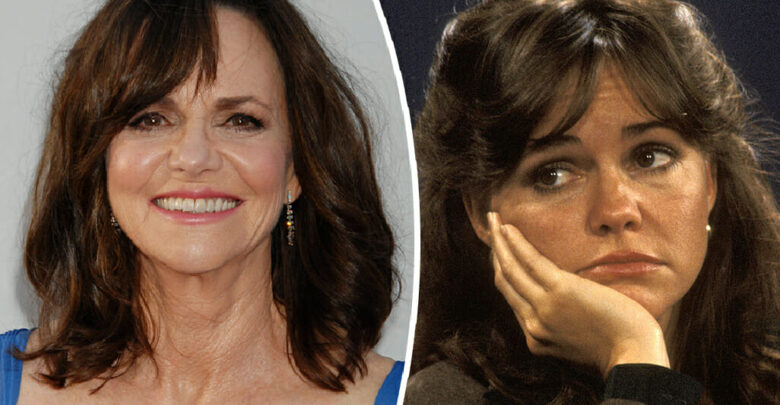
Sally Field Named Burt Reynolds as Her Worst On-Screen Kiss—and Explained Why
Sally Field has worked with many recognizable actors throughout her career. However, when she was asked to name her worst on-screen kiss, the answer drew particular attention because it involved someone who had also been her romantic partner.
She named Burt Reynolds.
The exchange took place during a December 2022 appearance on Watch What Happens Live with Andy Cohen. A caller raised the subject after mentioning that Field had previously praised James Garner, her co-star in Murphy’s Romance, as her best on-screen kiss.
Field’s answer about Reynolds quickly became a headline. Yet the moment also reopened a wider discussion about the difference between a famous screen romance and the memories of the people involved.
Her comments were personal, specific, and rooted in her own experience. Understanding that context makes the story more meaningful than treating it as a simple judgment about a Hollywood star.
The Question That Put Her on the Spot
The caller’s question invited Field to make a comparison across a long acting career.
Her initial hesitation suggested that she understood how much attention a name could attract. After some encouragement, she identified Reynolds and briefly explained her choice.
Andy Cohen and fellow guest Idina Menzel reacted to the answer, while Field added a detail about the kissing that made the exchange especially memorable.
The setting matters.
This was a conversational entertainment interview, with humor and surprise built into the format. It was not a formal assessment of Reynolds’s acting or a complete explanation of their relationship.
The remark can be reported accurately without asking it to carry more meaning than Field actually gave it.
What She Said About the Kissing
Field described kissing Reynolds as something he did not do particularly well, in her opinion.
She also referred to “a lot of drooling” when explaining what she remembered. Bravo’s official clip confirms the subject of her answer and that detail.
That short explanation was enough to surprise viewers familiar with the pair’s romantic history.
However, the scope of the statement should remain clear: she was answering a question about her own on-screen experience.
It does not establish how anyone else experienced working with him. Nor does it require a general conclusion about his personality.
Keeping the attribution visible allows Field’s answer to stand without turning it into a broader claim.
Why Reynolds Was an Unexpected Answer
Reynolds was more than another name in Field’s list of co-stars.
The two met while making the 1977 film Smokey and the Bandit and had an on-and-off relationship lasting about five years, according to reporting on Field’s later interview with Variety.
That history helps explain why the answer caught attention.
Audiences often connect a convincing romantic pairing on screen with an assumption about the experience behind the camera. A real-life relationship can strengthen that assumption.
Field’s comment challenged the neat version of the story.
Someone can share a relationship with a co-star and still have an unfavorable memory of a particular aspect of filming. The two observations are not mutually exclusive.
Screen Chemistry and Personal Experience Are Different
A film gives viewers a finished performance.
Its scenes have been shaped through acting, direction, editing, and the work surrounding the production. Audiences respond to that finished result.
The performers, meanwhile, remember the process from their own positions.
This distinction is useful when considering Field’s answer. The way a romantic scene appears to viewers does not settle how comfortable or enjoyable it was for the actors.
Likewise, a personal anecdote does not erase what audiences appreciated about the film.
Both perspectives can exist together.
Smokey and the Bandit can remain part of someone’s affectionate movie memories while Field retains the right to describe her own experience differently.
A Relationship With More Than One Public Version
The couple’s relationship has been discussed through interviews, memoirs, and retrospective coverage.
Those accounts do not always tell the same emotional story.
Reynolds later spoke about Field with regret, while Field described reasons she had chosen distance. Reporting on her Variety interview noted the difference between their perspectives.
That contrast deserves careful handling.
It is possible to report what each person said without deciding that one romantic description must define the other person’s memories.
A relationship belongs to the experiences of both participants.
Public familiarity with a couple does not make the audience’s preferred version more authoritative than the words of someone who lived it.
What Field Told Variety
In comments reported from her 2022 Variety interview, Field explained that she had not spoken to Reynolds for roughly the final thirty years of his life.
Her explanation was direct:
“He was not someone I could be around. He was just not good for me in any way.”
She also disputed the way he had later remembered her significance in his life.
These remarks provide a more complicated context than the lighter talk-show exchange.
However, the two interviews should still be kept distinct. The discussion about their relationship and the answer about an on-screen kiss occurred in different conversations.
Bringing them together can provide background, but it should not make them sound like one continuous statement.
Reynolds’s Later Reflections
Reynolds’s memoir, But Enough About Me, was published in 2015.
Coverage of Field’s later comments noted that he had expressed regret about the end of their relationship and wished he had done more to preserve it.
He died in 2018, aged 82.
Those reflections form part of the public record, but they do not require Field to adopt the same interpretation.
Regret expressed by one former partner does not automatically describe the experience of the other.
A balanced account can acknowledge his words while leaving hers intact.
That approach offers readers a fuller understanding than presenting the relationship exclusively as a lost romance or a single disappointing memory.
Why Personal Recollections Need Clear Attribution
Stories about famous relationships can gradually lose their original wording.
A person describes an experience. A headline condenses it. Later retellings repeat the headline as though it were a complete account.
Clear attribution helps prevent that shift.
In this case, the accurate phrasing is that Field named Reynolds as her worst on-screen kiss.
It would be a different claim to describe him as the worst kisser in Hollywood or suggest that everyone who worked with him shared her view.
The first statement reports her answer. The others go beyond it.
That distinction allows an entertaining anecdote to remain accurate without making it bland or removing its surprise.
Field’s Memoir Added Her Own Perspective
Field’s 2018 memoir, In Pieces, gave her another way to discuss her life in her own words.
Reporting on the Variety interview connected her comments about Reynolds with the account she had already written in that book.
A memoir is a personal narrative rather than an outside observer’s complete history. Its importance lies partly in allowing the author to decide which experiences to examine and how to describe them.
For readers interested in Field’s perspective, that distinction is valuable.
Her life should not be reconstructed only from short interview clips or recollections offered by other people.
The longer account provides a different kind of context.
A Career That Extends Far Beyond the Romance
Field’s work spans television, comedy, drama, and film.
Her career includes early television roles in Gidget and The Flying Nun, followed by performances in productions such as Sybil, Norma Rae, and Places in the Heart.
She won leading-actress Academy Awards for the latter two films.
Those achievements are central to any account of her public life.
The Reynolds anecdote may provide an attention-grabbing introduction, but it should not become a substitute for discussing her work.
A long career contains far more than the relationships attached to it.
Returning to the performances helps keep that broader perspective visible.
The Emotional Range of Steel Magnolias
Steel Magnolias is another part of Field’s film career, appearing among the major roles recorded by the American Academy of Arts and Sciences.
Her performance offers a different point of focus from the interview anecdote.
For viewers drawn to emotionally demanding scenes, the film provides an opportunity to consider how she moves between grief, anger, and moments of connection.
That is a discussion about acting rather than celebrity romance.
Including such work in a retrospective helps explain why audiences may feel they know Field through several very different characters.
Her recognizable presence is connected to the roles she has played as well as the personal stories she has chosen to share.
Continued Work Across Different Formats
Field’s screen work has also extended into later television projects.
HBO’s official announcement for Winning Time: The Rise of the Lakers Dynasty identified her as Jessie Buss in the ensemble cast.
That role adds another chapter to a career already associated with a wide range of characters.
It is useful context when an older anecdote circulates again. A performer’s career does not stop at the film connected with the headline.
Rather than treating later work as a footnote, a fuller article can place the personal recollection alongside the continuing professional record.
That gives readers more than one reason to remain interested.
Keep the Date Visible When Sharing the Clip
The worst-kiss exchange occurred in December 2022.
That date should remain visible when the story is republished. Without it, readers may assume that Field has just made a new comment or appeared in a current interview.
The relationship discussion reported from Variety also dates to 2022, while Reynolds’s memoir and death belong to earlier years.
Keeping those events separate makes the article easier to follow.
A clear timeline does not reduce the appeal of the story. It helps readers understand how the different remarks relate to one another and prevents an old clip from being mistaken for breaking news.
The Anecdote Is Memorable, but It Is Not the Whole Story
Field’s answer drew attention because it combined an unexpected name with a familiar Hollywood history.
Yet its lasting interest comes partly from the gap between public image and personal recollection.
Audiences knew the film and the romance. Field supplied her own memory of an experience that viewers could not judge from the screen alone.
That memory deserves to be reported in its proper context.
So do the rest of her statements, her professional achievements, and the distinction between one interview answer and an entire life.
The result is a more complete portrait: an actress with a substantial body of work who has also chosen, at different moments, to speak directly about her past.
Which Sally Field performance has stayed with you most—her comedy, her dramatic roles, or a particular film you return to?