News
My Son and His Wife Left Me Out of Christmas, but When They Found
My Son and His Wife Left Me Out of Christmas, but When They Found

The Christmas Invitation That Disappeared
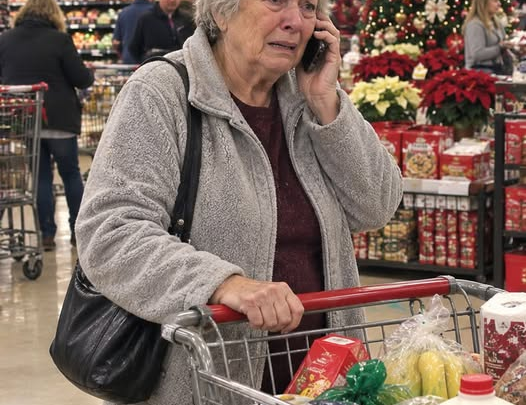
I was standing in the produce aisle at the Kroger on Princeton Road on December 21, holding two packages of fresh thyme and trying to decide which one looked less wilted, when my daughter-in-law said it.
I’d called my son’s cell phone. It was the middle of a Saturday afternoon, and Adam usually picked up on the second ring. But this time a woman’s voice answered.
“Hi, Joanne.”
“Oh. Renee. Hi, honey. Is Adam there? I just wanted to ask whether I should bring wine on Wednesday. Red or white. I couldn’t remember what you were serving.”
Before answering, she paused.
“Adam’s in the shower,” Renee said. “But actually, Joanne, I’m glad you called. We’re spending the holidays with my family this year. You don’t need to come.”
For a moment, I stood motionless in the produce aisle.
“Oh,” I said. “I thought dinner was still at your house.”
“It is. My mother’s coming over to cook.”
“Does Adam know?”
“Of course he knows.” Her voice had an edge to it. “We’ve talked about it.”
Meanwhile, behind me, a woman with a full cart asked whether I was finished with the herbs.
After putting both packages of thyme back, I moved my cart.
“All right,” I said into the phone.
The Dinner I Thought We Had Planned
“Okay. Great. Merry Christmas, Joanne.”
“Merry Christmas, Renee.”
After she hung up, I stood in front of the bananas for a long time.
Earlier, on Thanksgiving weekend, sitting in my kitchen after the pie, Adam had told me, “Same plan for Christmas, Mom. Come around noon.” I’d written it on the calendar beside my refrigerator, the one from Walter’s insurance agent with a different covered bridge every month. Under December 25, in my handwriting: Noon. Adam’s.
I looked down into my cart.
Whole-berry cranberry sauce, two cans, because Adam has hated the jellied kind since he was six and once said it looked like something a doctor would take out of you. Clementines, a whole box, for Lily, who is ten and eats them like candy and leaves the peels in little spirals on the coffee table. A big squeeze bottle of yellow mustard, because Noah, who is seven, puts mustard on practically everything, including, once, a pancake. Underneath all of it, two bags of pecans and two refrigerated pie crusts, because I make the pecan pie every Christmas and have for thirty-six years.
At sixty-two, I was facing my third Christmas without Walter. Two years after his death, I still missed him.
Another Christmas Without Walter
The embarrassing part was how much I had looked forward to it: sitting on Adam’s couch in the middle of the afternoon with a cup of coffee, listening to Lily and Noah argue over whose turn it was to hand out the presents. Walter always handed out the presents. He wore a ridiculous red Santa hat he got at a Walgreens in 1994 and called out every name in a big booming voice like he was announcing hockey players at a game. “And now, from Grandma, number twelve, the right winger, NOAH JAMES KESSLER!” The kids would scream.
After he died, Lily and Noah fought about who got to do it. Last year Lily won. She wore the hat. It came down over her eyes.
Even so, I finished shopping. Perhaps I kept going because the cart was full and walking away would have made people stare.
At the checkout, the total came to eighty-seven dollars and forty cents.
Outside, meanwhile, a cold wind was pushing loose receipts across the parking lot in little circles. The sky over Hamilton was the color of dishwater. I loaded the bags into the trunk of my Buick, and I sat behind the wheel with the engine running and the heater blowing, and I took out my phone.
Taking the Groceries to Westdale
Then I typed a message to Adam.
Renee says Christmas plans have changed. Please call when you have a minute.
Before sending it, I read the message four times. First, I removed the words I’m hurt. Then I deleted You could have told me yourself, leaving only the plain request.
Then I put the phone face down on the passenger seat. And instead of driving home, I drove across town to the Westdale Community Resource Center.
For the last six years of his life, Walter had volunteered at Westdale.
It’s a low brick building on the west side of Hamilton that used to be a Kresge’s back in the sixties. Now it’s a food pantry and a clothing closet and a place where people can get help with rent and utilities and finding a job. They serve a hot lunch three days a week in what used to be the store’s stockroom. On the front window, somebody painted a sun with a smiling face years ago, and nobody has ever had the heart to scrape it off.
Walter started going there after he retired from the post office. He’d been a mail carrier for thirty-four years, the same route on the north end of town for most of them. He knew every dog and every porch and every widow who’d wave at him from her window at eleven fifteen. After he retired, he said he didn’t know what to do with his hands.
The Community Walter Loved
So he went to Westdale, delivering groceries to people who couldn’t get out. In addition, he drove older neighbors to medical appointments in his Buick. Whenever Clare, the director, found something broken, Walter repaired it: a shelf, a wobbly table, a noisy freezer, or the supply cabinet door.
Every Tuesday and Thursday, he returned tired and happy, smelling of coffee and cardboard. For example, he would tell me about Gus, a welder who had lost three fingers, or a mother of four who never missed a week. Sometimes, his stories involved the older woman teaching him to say thank you in Polish.
Although I sometimes went along, I usually stayed home. Baking was more my style, so I sent cookies with him instead.
After he died, I didn’t go back for almost a year.
When I arrived, Clare looked up as I walked in that Saturday afternoon. She was behind the front counter in a red Westdale sweatshirt with reading glasses pushed up on her head, sorting through a box of donated canned goods. She’s about fifty-five, with short gray hair and a voice that sounds like she’s been shouting across warehouses for thirty years, because she has.
“Joanne,” she said. “Hi there. Dropping something off?”
More Than a Grocery Donation
“A few groceries,” I said. “My dinner plans changed.”
Before answering, Clare took off her glasses and looked at me.
Instead of asking what happened, she studied my face for a moment. Then she reached for her coat.
“Then let’s see what you’ve got,” she said.
Together, we went to my car in the wind. After opening the trunk, she held up the cans of whole-berry cranberry sauce, the box of clementines, the pie crusts, the bags of pecans, the squeeze bottle of yellow mustard.
“We can take the sealed pantry items and the fruit,” she said. “Not the refrigerated stuff. That’s our food donation policy. I’m sorry.”
“That’s fine.”
After two trips, the bags were inside. When we were done, the cranberry sauce and the pecans and the clementines and the mustard were sitting on a long steel table in the back with about forty other bags of groceries other people had dropped off that week. The pie crusts and a package of butter and a carton of heavy cream were still in a bag by my feet.
Still, I stayed. Going home meant facing an empty house and a calendar that read Noon. Adam’s.
“Perhaps I could help with sorting?” I asked Clare.
The Cabinet with Walter’s Name
She looked at me. “You want to?”
“I think I do.”
So I stayed. I put on a pair of plastic gloves and stood at the long steel table with two college kids from Miami University and a retired dentist named Harold, and I sorted canned goods for an hour and a half. First came vegetables and soup, followed by fruit, beans, pasta, and peanut butter. Harold told jokes. The college kids played Christmas music on a little speaker. Somebody had hung paper chains from the ceiling.
Near the end, I carried an armload of boxes back to the supply closet, and I stopped.
Against the back wall stood a tall, dented gray cabinet. Its door closed perfectly because Walter had spent two Thursdays fixing the hinge one spring. He’d come home with grease on his hands and said, “That door’s going to outlive me, Jo.”
It had.
Someone had taped a white paper snowflake to the front of it. Because a child had cut too far into the middle, the lopsided snowflake was mostly holes. And under the snowflake, on a strip of masking tape, in black marker, somebody had written: WALT’S CABINET.
For a while, I stood looking at it.
A few minutes later, Clare found me there.
His Photograph in Clare’s Office
For a moment, she simply stood beside me and looked at it too.
“One of the kids from the after-school program made the snowflake,” she said finally. “Gus put the tape on. He said it shouldn’t be just any cabinet.” She put her hand on my shoulder. “Come have some coffee, Joanne.”
Her office is a tiny room off the back hallway, crammed with filing cabinets and boxes and a desk covered in paper. There’s a window that looks out at the parking lot and a coffee maker on top of a mini-fridge that makes coffee strong enough to strip paint.
On the wall behind her desk, there’s a photograph of Walter.
Although I had never seen it, someone must have taken it at a summer picnic. He was carrying one end of a folding table across a patch of grass, in his old Cincinnati Reds cap and a T-shirt with sweat stains, and he was laughing at something outside the picture. With his head back and mouth open, he was laughing the way you could hear from three houses away.
Then Clare poured me a cup of coffee and sat down across from me.
“Every Tuesday, he brought the bakery’s unsold doughnuts,” she said, nodding at the picture. “Rather than call them stale, he’d tell me, ‘Clare, these are vintage.’”
The Things He Left Behind
Although I laughed, the sound came out wet.
After that, we sat quietly with our coffee.
By then, I had spent two years deciding what to keep of his.
First, most of his clothes went to Westdale’s clothing closet, which felt right. I kept two flannel shirts and his Reds cap. His tools went to Adam, who has never once used them and keeps them in a box in his garage. His fishing gear went to my brother-in-law in Kentucky.
However, the hockey collection took the longest.
Walter grew up in Cleveland, back when the Barons were the minor league team in town. His father took him to games at the old Arena when he was five. He fell in love. He played in high school, badly, he always said, and coached Adam’s peewee team when Adam was little. Above all, he loved collecting.
For nearly thirty years, he brought home old programs, ticket stubs, team photographs, signed pucks, broken sticks, pennants, and pieces of equipment from estate sales and flea markets and antique malls across three states. He’d come home on a Saturday afternoon holding something wrapped in newspaper, grinning like a kid. “Jo. You’re not going to believe what I found.” Sometimes it was a 1952 Barons championship program; other times, a 1967 goalie mask or a ticket from the Cleveland Crusaders’ first game.
Selling the Hockey Collection
Eventually, labeled binders and plastic sleeves filled the basement shelves. To keep track, Walter updated a spreadsheet on the old computer every Sunday night.
Because I knew little about hockey, I had no idea what to do with the collection. After the funeral, standing among those binders felt like facing a language I couldn’t read.
Eventually, last spring, I called an auction house in Columbus that specializes in sports memorabilia. Two men in khakis came down and spent three days in my basement. They were very respectful. One of them got tears in his eyes when he opened the binder with the 1952 program. He said Walter had a very good eye.
After months of cataloging, they sold separate lots online through the summer and fall. Collectors across the country bought pieces of Walter’s collection. A dentist in Toronto bought the goalie mask. A man in Minnesota bought the championship program.
Eventually, the auction payments came to thirty-one thousand dollars after commissions and expenses.
Since then, the money had stayed untouched in a savings account.
During the summer, sitting in this same office, I’d told Clare I wanted some of the proceeds to go to Westdale. Although the gift would be in Walter’s memory, I had not settled on an amount. Perhaps five thousand dollars, or even ten.
An Unspoken Hope for a Down Payment
Of course, Adam knew about the sale.
For almost a year, he and Renee had searched for a house. Meanwhile, the landlord kept raising the rent on their three-bedroom split-level in Fairfield. They wanted something of their own. Something with a bigger yard for the kids. Every few weeks, Adam would send me a listing from his phone. Look at this one, Mom. Isn’t this great? Four bedrooms. Finished basement.
In October, sitting at my kitchen table, I’d mentioned that the last auction check had come in.
“How much?” Adam asked.
So I told him.
He was quiet for a second. Then he said, “Wow. That would make a pretty decent down payment.”
“It would,” I said.
That was all. However, he never asked for help, and I never offered. Instead, we talked about the children’s school and his job at the bank, leaving the money unmentioned.
Even so, the question stayed with me every day and often kept me awake at night.
Now, across Clare’s desk, with Walter laughing over her shoulder, I asked her about the housing fund.
Before answering, Clare put down her mug.
“We have applications waiting,” she said. “More than we’ve ever had. For example, some families were behind on rent, while others needed a security deposit. Without help, several faced losing their homes in January.” She rubbed her eyes. “We can’t cover all of them. We’ve got maybe four thousand dollars left in the fund for the year. And I’ve got twenty-two applications on my desk.”
Deciding What the Money Could Do
“What would thirty-one thousand dollars do?”
Clare looked at me for a long moment.
“Joanne, you don’t have to decide today,” she said gently. “Because I can see you’re upset, I’d rather you waited. After all, a bad day can make a decision like this harder.”
“I’ve been thinking about this for months,” I said.
After all, this idea had been with me since the summer.
Although the idea was months old, the hurt was fresh. My daughter-in-law had just told me to stay away from Christmas, while my son had left me to discover the change myself. Of course, part of me was angry.
But I also knew this. My house was paid off. Walter and I had made the last mortgage payment in 2015 and burned the paperwork in the backyard grill. My retirement income from the school district, where I’d worked in the front office for twenty-eight years, covered my bills. Walter’s postal pension covered the rest. I had an emergency fund I’d never touched. This gift wouldn’t touch any of that.
Above all, this collection had been Walter’s. For thirty years, he had spent Saturday mornings finding value in things other people discarded.
Because I knew him so well, I believed he would have wanted the money here.
A Gift in Walter’s Memory
Clare explained how the money could be used. First, it could support winter meals and heating bills. In addition, the housing fund could cover security deposits and overdue rent, helping people stay in their homes.
After discussing the details, we completed a gift form with three carbon copies. Then I wrote the check right there at her desk, with Walter’s photograph watching me.
Westdale Community Resource Center. Thirty-one thousand dollars and no cents. In the memo line, I wrote: For Walt.
When Clare took the check, she held it for a long time.
“May we acknowledge you publicly?” she asked. “We usually put a thank-you on our Facebook page. In the newsletter. Some people prefer to stay anonymous.”
Before answering, I thought about it.
“Yes,” I said. “In Walter’s memory. You can use both our names.”
“And the amount?”
Before answering, Before answering, I paused. Renee followed Westdale’s Facebook page because of its tribute to Walter after the funeral. Therefore, she and Adam might see the amount, and some part of me wanted them to. Looking back, I am not proud of that.
“Yes,” I said.
In response, Clare nodded slowly without saying anything.
Before I left, I asked whether they needed another volunteer on Christmas Day.
Making Different Christmas Plans
After looking up, Clare opened a battered green binder on her desk and ran her finger down a page.
“We serve a hot Christmas dinner,” she said. “Eleven to three. We usually get about two hundred people. We’re short in the kitchen.” She looked at me over her glasses. “It’s not glamorous. It’s peeling potatoes and washing pots.”
“I’ve been peeling potatoes for forty years,” I said. “Put me down.”
Then she penciled my name into the binder.
Adam finally called that evening at eight fifteen.
By then, I was at the kitchen table with tea and a crossword I wasn’t doing.
“Hey, Mom.” He sounded tired. “Sorry. It’s been a crazy day. I got your text.”
“Hi, Adam.”
“So, yeah. About Christmas.” He let out a long breath. “Renee’s mom’s had a rough year. You know her dad left in the spring. And she lost her job at the plant in September. Because she’s had such a hard time, we thought keeping it to her side would give her something to look forward to.”
“You could have told me.”
“I thought she had.”
“She did,” I said. “This afternoon. When I called to ask about the wine. Three weeks after you told me to come at noon.”
Changing the Words on My Calendar
Then Adam gave the same heavy sigh he had used at fourteen when asked to take out the trash.
“Can we please not make this a thing, Mom?”
Once again, I looked at the covered-bridge calendar beside my refrigerator. Under December 25, it still said Noon. Adam’s.
“It’s not a thing,” I said. “It’s fine, Adam. Enjoy your Christmas. Give the kids a hug from me.”
“Okay.” He sounded relieved. “Thanks, Mom. We’ll do something with you next weekend. Promise.”
“Okay.”
“Love you.”
“Love you too.”
After we hung up, I got up from the table and found a pen in the junk drawer.
After crossing out the invitation, I carefully wrote a new plan underneath: Westdale, 10 a.m.
Finally, I went to bed.
The next morning, I was in my robe, halfway through my coffee at the kitchen table, when the pounding started.
Instead of a knock, a fist struck the front door hard enough to rattle the storm-door glass.
“Mom! Mom, open up!”
By then, the kitchen clock read 7:15.
After setting down my coffee, I pulled my robe tighter and walked down the hall. Because I lived alone, I fastened the security chain before opening the door a few inches, even though I knew the voice.
The Donation Appears on Facebook
Adam stood on my porch in his gray fleece jacket and a pair of sweatpants, like he’d jumped out of bed and driven straight over. His hair was sticking up on one side. His breath came out in white clouds in the cold. Still unshaven, he lifted his phone toward the gap in the doorway.
On the screen, meanwhile, was Westdale’s Facebook page. In the photograph, Clare held an oversized check, and beneath it were big, cheerful words:
A HOLIDAY MIRACLE! Westdale is overwhelmed with gratitude to JOANNE KESSLER, who has donated $31,000 in memory of her late husband, WALTER KESSLER, one of our most beloved volunteers. Walt gave six years of his life to this community. This gift will provide winter meals and housing assistance to dozens of families this season. Thank you, Joanne. Walt would be so proud. ♥
Already, the post had 241 likes and sixty comments.
“Thirty-one thousand dollars, Mom?” Adam said. His voice was cracking. “You gave away thirty-one thousand dollars? To a food pantry? Yesterday?”
I looked at him through the gap in the door.
“Good morning, Adam,” I said.
“Renee saw it at six o’clock this morning,” he said. “While scrolling in bed, she saw it and sat straight up. Now she’s in the bathroom crying, Mom.”
The Money Adam Thought Was Promised
“I’m sorry she’s upset.”
“Upset?” His laugh sounded bitter rather than amused. “Mom. That was supposed to help us. That was our down payment.”
“Was it?”
In response, he stared at me.
“Nobody asked me, Adam,” I said. “Not once. You said it would make a decent down payment. In October. I said it would. That was the whole conversation. Neither of you asked, Mom, could you help us? Instead, we left that conversation without discussing what either of us intended.”
“We were going to,” he said. “After Christmas. We were going to sit down with you.”
“After Christmas,” I said. “After the Christmas I wasn’t invited to.”
At that, his face went red.
“Is that what this is?” he said. “Is this because of Christmas? You’re punishing us? You found out we weren’t having you over, and you went and gave away Dad’s money out of spite?”
Before answering, I hesitated, because I had asked myself the same question at three that morning. Lying awake in the dark, I had not liked every part of the answer.
“Back in July, I told Clare I wanted to give something,” I said slowly. “Although the idea was months old, I chose the amount yesterday.” I looked at him. “Was I hurt when I decided it? Yes. Was it the reason? No. Did it make it easier? Probably.” I took a breath. “But it was your father’s money, Adam. From your father’s collection. And your father would have wanted it there.”
The Truth About Renee’s Mother
“How do you know what Dad would have wanted?”
“Because I was married to him for thirty-six years,” I said. “And because you didn’t come to the auction house when they were cataloging it, and you didn’t come to look through the binders, and you didn’t ask for a single thing out of that basement. Not one program. Not one stick. Nothing.”
At those words, Adam flinched as if I had slapped him.
“That’s not fair,” he said quietly.
“No,” I said. “It isn’t. I’m sorry. I shouldn’t have said that.”
For a moment, he stood on the porch, looking down at the photograph of Clare and the oversized check.
“Renee’s mom is about to lose her apartment,” he said.
At that, For a moment, I went very still.
“What?”
“Her landlord filed an eviction. In November. She’s three months behind. She’s got until January fifth.” Adam’s voice was barely above a whisper. “That’s why Renee wanted her at our house for Christmas. That’s why she didn’t want you there. She didn’t want you to see. Her mom’s ashamed. She didn’t want anybody to know.” He swallowed. “We were going to ask you for the money, Mom. Not all of it. Just some. Not for us. For the house. We found one. A ranch in Fairfield with a finished basement. With a bedroom and a bathroom down there. We wanted to buy it so Pat could move in with us.”
The Help Nobody Had Asked For
I stood there with my hand on the door chain.
“Why didn’t you tell me?” I whispered.
“Renee didn’t want you to know because she thinks you look down on her family,” Adam said. “After her dad left, her mom was struggling while you had a paid-off house and Dad’s collection.” He looked up at me. His eyes were wet. “And because I’m a coward, Mom. Somehow, asking you for help has always felt impossible.”
For a moment, I had no idea what to say.
Then he turned and went down my porch steps.
“Adam,” I called after him.
Although he stopped at the bottom of the steps, he did not turn around.
“Until now, I had no idea,” I said. “I’m sorry.”
“I know you didn’t,” he said. “Nobody told you. That’s on us.” He started walking to his car. “But it’s still gone, Mom. It’s still gone.”
After that, he got in his car and drove away.
I stood in my doorway in my robe with the chain still on the door, watching his taillights turn the corner, and I didn’t close it for a long time.
The next two days were the longest of my life.
Neither Adam nor Renee called. On Monday, the twenty-third, I called Clare and asked, very quietly, whether there was any way to take back part of the gift. She was quiet on the phone for a long time.
Families Who Could Stay in Their Homes
“Joanne,” she said finally. “Most of it’s already been allocated. The board met yesterday afternoon. We approved the next group of housing applications. The checks went out this morning.” She paused. “As a result, families who faced losing their homes in January can stay. Because of you. And because of Walt.”
I sat at my kitchen table and cried after I hung up.
Perhaps I was crying from happiness, or perhaps from shame. In truth, it was probably both.
Then, on Christmas Eve, Lily texted me. She has her own phone now. She’s ten. Adam says it’s for emergencies.
Grandma why arent you coming tomorrow?? Dad said you were busy but you’re never busy on Christmas.
Before replying, I looked at it for a long time.
I’m helping at the place where Grandpa used to volunteer, I wrote back. Serving Christmas dinner to people who don’t have anybody to eat with.
A few minutes later, her reply arrived.
Thats nice. But I wanted you to come. Who’s going to do the presents? I cant reach the high ones under the tree.
After reading that, I put the phone down on the table and pressed my hands over my face.
At nine that night, I made the pie anyway. After all, the crusts, butter, and cream were waiting, along with pecans left over from Thanksgiving. Following my mother’s recipe, I used her glass pie dish, including the little crack Walter said gave it character.
Christmas Morning in the Westdale Kitchen
After the pie cooled on the counter, I covered it with foil and put it in the refrigerator.
At ten o’clock on Christmas morning, I walked into the Westdale Community Resource Center wearing my oldest jeans and Walter’s red flannel shirt.
The old stockroom in the back had been transformed. Long folding tables covered in red and green paper tablecloths. A little plastic Christmas tree on every table with battery-powered lights. Paper snowflakes hanging from the ceiling on fishing line, dozens of them, made by the kids from the after-school program. A man in a Santa suit with a real white beard was setting up a chair in the corner. Gus, the welder with three fingers missing, was stringing lights over the door.
Meanwhile, the kitchen smelled of turkey, gravy, and coffee.
Then Clare handed me a red apron with WESTDALE printed in white.
“Potatoes,” she said. “Sixty pounds of them. The peeler’s in the drawer. Harold’s on gravy. Don’t let him put anything weird in it.”
“What would he put in it?”
“Last year it was nutmeg,” said Clare darkly. “We don’t talk about last year.”
For the next two hours, I peeled potatoes. Harold sang along to the Christmas music on the little speaker in a surprisingly good baritone. The college kids from Miami were back, in reindeer antlers. Two women from a Methodist church in Oxford were making stuffing in hotel pans the size of bathtubs. A teenage boy doing community service for reasons nobody asked about was washing pots with tremendous seriousness.
Opening the Doors for Dinner
Finally, at eleven, the doors opened.
Out of the cold came 212 people, Clare later told me. Alongside older men in worn coats were young mothers carrying babies and teenagers in hoodies. Among them were a family living in their car, a woman using a wheelchair, and a man with a dog on a rope. Meanwhile, children rushed toward Santa in the corner.
Next, I moved onto the serving line with the mashed potatoes. Each plate received a generous scoop, followed by another if requested. Usually, people wanted a second.
As each person reached me, I wished them a merry Christmas.
While some met my eyes and returned the greeting, others quietly moved along. An old man with no teeth told me I had a nice smile. A little girl in a purple coat asked if I was Mrs. Claus. I told her I was her cousin.
Around twelve thirty, I was scooping potatoes onto a plate when I looked up and saw the next person in line.
Holding a tray in both hands, she kept her head down. Although her navy coat was too big, I could see how thin she looked. Under a knitted hat was gray-blond hair, and she seemed about sixty.
A Familiar Face in the Serving Line
But I knew her.
Although we had met only four times, I knew her. First came Adam and Renee’s wedding, then Lily’s christening and Noah’s fourth birthday. At Walter’s funeral, she had held my hand and told me how sorry she was.
Patricia Gorski. Pat.
Renee’s mother.
Without looking up, she held out her tray.
Before speaking, I put a scoop of mashed potatoes on her plate.
“Merry Christmas, Pat,” I said quietly.
At her name, she froze. Then she looked up, her face turning from pale to bright red.
“Joanne,” she said. She almost dropped her tray. “Oh God. Oh my God. What are you doing here?”
“Volunteering,” I said. “This is where Walter used to work.”
After staring at me, she looked down at her dinner. Next came a glance at the waiting line, followed by the door.
For a moment, I thought she might run.
“Pat,” I said. “Go sit down. Eat your dinner. I’m off the line at one. Will you wait for me?”
Before replying, she looked at me for a long moment.
Then she nodded, and walked to a table in the far corner, and sat down by herself with her back to the room.
At one o’clock, Clare took my place on the potatoes. After removing my apron, I collected two coffees and walked to her corner table.
Coffee with Pat in the Corner
Even then, Pat had barely touched her food. She was sitting with her hands wrapped around a paper cup of water, staring at the plastic Christmas tree on the table.
Then I sat across from her and placed a coffee within reach.
“Thank you,” she said, although she kept her eyes down.
For a while, we sat in silence while Christmas carried on around us. Children shrieked at Santa as Gus told jokes, and Harold sang “O Holy Night” in the kitchen.
“Renee doesn’t know I’m here,” Pat said finally. Very quietly.
“I figured.”
“I’m supposed to be at her house at three. For dinner. I told her I’d bring the turkey.” Her voice wobbled. “I told her I’d cook it at my place and bring it over. Like I always do. Like when she was little.”
Without interrupting, I waited.
“Because I couldn’t afford a turkey, I don’t have one,” Pat said. “Until my unemployment payment arrives on the second, there are forty-one dollars in my account.” She pressed her lips together. “They give out holiday food boxes here. At the end of the dinner. With a turkey breast. And some sides. I was going to take one. And cook it real quick at my apartment. And bring it to Renee’s like I’d done it myself.” As she spoke, she looked down at her hands. “I was going to lie to my own daughter on Christmas.”
The Struggle She Had Kept Hidden
“Oh, Pat.”
“For three months, I’ve lied about my job, savings, and rent,” Pat said. “Although I told her there was money put away, there isn’t. Nor did the plant give me the severance I claimed. As for my landlord, I said he was being patient.” She laughed, a horrible broken little laugh. “He filed for eviction on November eighteenth. I’ve got until January fifth.”
“Adam told me,” I said gently.
At that, Pat looked up sharply.
“Adam told you? When?”
“Sunday morning. On my front porch.” I took a breath. “He told me they’d found a house. A ranch with a finished basement. He said they wanted it so you could move in with them.”
At that, Pat’s face crumpled.
“Renee told me about that house,” she said. “She showed me pictures. The bedroom in the basement. The little bathroom. She said, ‘Mom, you’ll have your own space. You’ll be right there with the kids.’” Pat wiped her eyes. “Rather than admit the truth, I refused and said I would never be a burden. According to me, everything was fine.” She looked at me. “I wasn’t fine.”
For a moment, I had no idea what to say.
The Call About Her Overdue Rent
“And then I saw the Facebook post,” Pat said. “Sunday. About your donation. Thirty-one thousand dollars.” She looked down at her cup. “Renee called me crying. She said you’d done it on purpose. Because she told you not to come to Christmas. She said you’d done it to hurt her. She said that money was supposed to be for the house. For me.” Pat swallowed. “She said you’d always looked down on us.”
“I’ve never looked down on you, Pat,” I said. “Never once.”
“Of course,” Pat said quietly. “That’s why I told her she was wrong.” She took a shaky breath. “And then on Monday morning, my phone rang.”
In response, I looked at her.
“It was a woman from here,” Pat said. “From Westdale. Clare. She said my application had been approved. For the housing fund. I’d applied in November. When I got the eviction notice. I was on the waiting list. Number nineteen.” Her voice broke. “Clare said they’d had a big donation over the weekend. She said they could pay all three months of my back rent. And January. Four thousand two hundred dollars. She said the check went to my landlord that morning.”
For a moment, I could barely breathe.
Understanding Where the Gift Had Gone
“She didn’t tell me who,” Pat said. “She said the donor was a widow. Giving in her husband’s memory.” She looked at me across the table. Her eyes were overflowing. “I didn’t put it together. Not until I saw you standing there with the mashed potatoes.”
As she spoke, I put my hand over my mouth.
“Your money is paying my rent, Joanne,” Pat whispered. “Walter’s money. Your husband’s hockey cards. They’re keeping me in my apartment.”
I sat there across the table from my daughter-in-law’s mother and couldn’t say anything at all.
Likewise, she could not speak.
We sat in the corner of the old stockroom with the paper snowflakes turning over our heads on their fishing lines, both of us crying, while two hundred people ate Christmas dinner around us and Harold sang about a weary world rejoicing.
After a long time, Pat wiped her face with a paper napkin.
“I haven’t told Renee,” she said. “About the call. About the rent. I didn’t know how. I was so ashamed. And then I saw the post, and I knew it was your money, and I thought, if she finds out, she’ll think I’m a charity case. She’ll think I took money from her mother-in-law. From the woman she told not to come to Christmas.”
An Invitation to Go Together
“Pat,” I said. “After applying for help, you received exactly what the fund exists to provide. Besides, helping someone like you is what Walter would have wanted.” I reached across the table and took her hand. “And you’re not a charity case. You’re a woman who worked at a plant for twenty-two years and lost her job and got left by her husband and kept going anyway. That’s not charity. That’s courage.”
In response, Pat stared at me.
“Twenty-two years,” she said. “Making plastic bottle caps.” She almost laughed. “Nobody’s ever called it courage before.”
“Well,” I said. “I’m calling it that.”
Even then, she held onto my hand.
“Come with me,” she said suddenly.
“What?”
“To Renee’s. At three. Come with me.” She squeezed my hand. “I can’t do it alone. I can’t walk in there and tell her. Not by myself. Please, Joanne.”
“Pat. She told me not to come.”
“I know she did. She was wrong.” Pat looked at me. “And so was I. For letting her. As her mother, I should have reminded her you were family too. Instead of staying quiet, I should have insisted she invite you. That woman just lost her husband. You don’t leave her alone on Christmas.” She shook her head. “I didn’t say anything. Because I was too busy hiding.”
A Turkey, a Pie, and a Change of Plans
For a long moment, I thought about Lily’s message: she couldn’t reach the high presents under the tree.
“First, we’ll need to stop at my house,” I said. “There’s a pie in the refrigerator.”
Although tears still covered her face, Pat gave a real laugh.
“What kind?”
“Pecan.”
“Renee’s favorite,” said Pat. “Did you know that? Ever since she was a little girl. Although she’s too proud to tell you, it always has been.” Then she stood up. “Bring the pie, Joanne.”
Before we left Westdale, Clare stopped me at the door.
In her arms was a holiday food box containing turkey breast, stuffing mix, and green beans. Alongside them was whole-berry cranberry sauce, just like the cans from my shopping cart.
“For Mrs. Gorski,” Clare said quietly. “Everybody gets one.”
After looking at the box, Pat turned toward me.
“Take it, Pat,” I said. “It’s yours. You earned it.”
Finally, she took it.
First, we stopped at Pat’s apartment. A second-floor walk-up in a brick building on the east side, with a bent metal mailbox and a wreath on the door that looked like it had been there for ten years. Her kitchen was very small and very clean. We cooked the turkey breast together in her little oven. I made the stuffing. She opened the green beans. Because we understood each other, we needed few words.
The Shoebox I Almost Forgot
Then we stopped at my house. I got the pecan pie out of the refrigerator. I got the can of whole-berry cranberry sauce I’d kept back, the one Adam liked. And on my way out, I went down to the basement.
On Sunday, I had told Adam the collection was gone. Almost every binder, program, and puck had been sold, but one small exception remained.
There was one thing I’d kept. In a shoebox on the shelf above the washing machine. I’d forgotten about it until three o’clock that morning, lying awake.
Before leaving, I took down the shoebox and tucked it under my arm.
Only then did Pat and I drive to Fairfield.
Adam and Renee’s house is a gray split-level with white shutters and a basketball hoop over the garage. Their minivan was in the driveway. Every light was on. Through the front window, I could see the Christmas tree. And the kids, in their pajamas, sitting on the floor.
By the time we arrived, it was three ten, and we were late.
Pat stood on the front step holding the turkey in its aluminum pan, covered with foil. I stood behind her holding the pecan pie and the shoebox.
After a moment, she rang the doorbell.
Arriving at Adam and Renee’s Door
Renee opened the door.
With her dark hair pulled back and an apron over a red sweater, she smiled. Meanwhile, a wooden spoon rested in one hand.
“Mom! You’re late, I was getting worried, I…”
As soon as she saw me, her smile vanished.
After noticing the pie and shoebox in my arms, she looked between her mother and me.
“What is she doing here?” Renee said.
“Renee,” said Pat. “Let us in, honey. We need to talk.”
“Mom, I told you. I told everybody. I don’t want…”
“Renee Marie,” said Pat. In a voice I’d never heard her use. A mother’s voice. “Let us in. Now. It’s cold.”
In response, Renee stared at her mother.
Finally, she stepped aside.
We came in. The house smelled like ham and rolls and the vanilla candle Renee always burns at Christmas. Adam came around the corner from the kitchen, wiping his hands on a dish towel. He stopped dead when he saw me.
“Mom?”
“Hi, Adam.”
And then I heard a shriek from the living room.
“GRANDMA!”
As Lily flew around the couch in her pajamas, Noah followed close behind. When they reached me together, I nearly dropped the pie.
“You came! Dad said you were busy, but I knew you’d come!”
The Conversation Behind the Laundry Room Door
“Me too!” Noah said. “Because Grandma always comes!”
I held onto my grandchildren with one arm and the pecan pie with the other and couldn’t say anything.
Over their heads, I saw Renee’s face.
As her children hugged me and shrieked, she watched their faces.
And something in her face cracked.
Before any discussion, Pat took charge of the kitchen. First, the turkey went into the oven, and my pie joined Renee’s cookies on the counter. After transferring the cranberry sauce to a bowl, she sent the children to the living room. Meanwhile, Adam was told to set another place at the table.
Then she took her daughter by the hand and led her into the laundry room and closed the door.
Meanwhile, Adam and I waited silently in the kitchen.
Through the laundry room door, I could hear Pat’s voice. Low. Steady. And then, after a few minutes, I heard Renee.
“Mom, why didn’t you tell me?”
A moment later, I heard her crying.
Then Adam looked at me.
“What’s going on?” he said quietly.
So I told him everything: finding Pat in the serving line, her forty-one dollars, and the eviction. Then I explained how the housing fund had paid $4,200 after she reached it from number nineteen on the waiting list.
Admitting My Own Part in the Hurt
When I got to the part about the turkey in the food box, Adam put his hand over his mouth.
“Your money,” he said. “Dad’s money. It paid her rent.”
“It did.”
“We were going to buy a house,” he said. “To save her. And you saved her anyway. With the money we thought we were losing.”
“Until today, none of that was clear to me, Adam.”
“I know you didn’t.” He sat down hard at the kitchen table. He put his face in his hands. “God. Mom. Everything Renee said to me on Sunday. Everything I said to you. On your porch. At seven in the morning.” He looked up. “I called you spiteful.”
“I was a little spiteful,” I said.
In response, he stared at me.
“There’s no point pretending otherwise,” I said, sitting across from him. “Because you didn’t tell me yourself, finding out that way hurt. That I found out in the produce aisle from Renee. That I’d already bought the cranberry sauce you like and the clementines for Lily and the mustard for Noah.” My voice wobbled. “And when Clare asked if she could put the amount on Facebook, Before answering, I paused. Because I knew Renee would see it. And some part of me wanted her to.”
Learning How to Ask for Help
For a moment, Adam said nothing.
“That’s not a part of me I’m proud of,” I said. “But it was there. And I’m sorry for it.”
Before answering, my son looked at me across the kitchen table.
“I should have asked,” he said finally. “In October. When you told me about the check. I should have just said, Mom, we need help. Renee’s mom is in trouble. Can we talk about it?” He shook his head. “Why couldn’t I just say that?”
“I don’t know, honey.”
“Dad would have,” said Adam. “Dad would have just asked. He asked for help all the time. Whether it was a neighbor, a friend, or a stranger at the hardware store, he would simply ask.” Although he laughed, his eyes were wet. “He asked a guy at a flea market once to help him carry a bench he didn’t even buy.”
“He did,” I said.
“I never learned how,” said Adam. “I always thought asking meant you’d failed.”
The laundry room door opened.
Eventually, Renee came out first. Her face was red and swollen. Her apron was crooked. Pat came out behind her with one hand on her daughter’s back.
Then Renee walked across the kitchen. She stopped in front of me.
Renee Explains Why She Pushed Me Away
For a long moment, she didn’t say anything. She just stood there with her arms wrapped around herself, looking at the floor.
“I told you not to come,” she said finally. “On the phone. In the grocery store. I was so rude to you.”
“You were,” I said.
“I’m sorry, Joanne.” She looked up. Her eyes were overflowing. “I was so scared. About my mom. I didn’t want you to see. I didn’t want you to know my family was falling apart. You’ve always had everything so together. Your paid-off house. Your perfect pie. Walter’s collection. And my dad left, and my mom was about to lose her apartment, and I was so ashamed.” She wiped her face. “So I pushed you out. I thought if you weren’t here, nobody would have to know.”
“Renee,” I said. “My house is paid off because Walter and I ate a lot of tuna casserole for thirty years. My pie is my mother’s recipe. And Walter’s collection was thirty years of flea markets and other people’s junk.” After taking a breath, I told her, “For two years, I’ve been falling apart too. The difference is that I do it quietly, alone in my kitchen.”
At that, Renee stared at me.
The First Hug That Felt Different
“I didn’t know that,” she whispered.
“Nobody does,” I said. “Nobody asked.”
After a moment, she did something she had never done in twelve years as my daughter-in-law.
She hugged me.
Instead of a quick holiday embrace, she held on, with her arms around my neck and her face against my shoulder.
“Thank you,” she said into my shoulder. “For helping my mom with the rent, coming here, and bringing the pie.” She was crying. “Mom told me. About the turkey in the food box. She was going to lie to me. On Christmas. Because she was too ashamed to tell me she couldn’t afford a turkey.” She pulled back. “And you sat with her. And you brought her home.”
“She brought me,” I said. “She made me come.”
Renee looked at her mother. Pat shrugged.
“I’m her mother,” Pat said. “Somebody had to tell you you were wrong.”
Eventually, we ate Christmas dinner at four thirty. Ham and turkey both. Pat’s stuffing and Renee’s green bean casserole. Rolls from the bakery. Whole-berry cranberry sauce, which Adam ate straight out of the bowl with a spoon when he thought nobody was looking. Noah put mustard on his turkey and his ham and his roll and, briefly, his green beans.
Walter’s Santa Hat and the Christmas Voices
Finally, there was pecan pie, and Renee ate two pieces. Although she said nothing about it, Pat caught my eye and winked.
After dinner, it was time for presents.
Then Lily dragged the old Walgreens Santa hat out from under the tree. Faded red, with a pom-pom that had lost most of its fluff.
“Grandma,” she said. “It’s your turn.”
“My turn? Honey, I don’t…”
“Grandpa always did the presents,” Lily said seriously. “And last year I did it. But I can’t reach the high ones. And you’re the tallest who’s not Dad. And Dad’s bad at the voices.” She held out the hat. “You have to do the voices like Grandpa.”
I looked at the hat in her hands.
Then I put it on, although it slipped over one eyebrow.
Next, I picked up the first present from under the tree.
“And now,” I said, in the biggest, boomiest voice I could manage, “from Grandma Pat, number seven, the left winger, LILY ROSE KESSLER!”
At once, both children screamed.
Pat laughed so hard she had to hold onto the arm of the couch.
Adam was standing in the kitchen doorway, watching. His eyes were wet.
I did the voices for every single present. Fifty-three of them. Renee became the goalie, while Pat was team captain and Adam was coach. By the end, I was hoarse and the hat was crooked and the living room floor was covered in torn wrapping paper, and the kids were lying in it like snow angels.
One Last Piece of the Collection
When all the presents were gone, I sat down on the couch.
Then I picked up the shoebox I’d brought from home. I’d set it on the end table when we came in. Nobody had asked about it.
“Adam,” I said. “Come here a minute.”
In response, he came over and sat down next to me on the couch.
I put the shoebox in his lap.
“I told you on Sunday that I sold everything,” I said. “From Dad’s collection. Every binder. Every program.”
“I know, Mom.”
“I lied,” I said. “Not on purpose. I forgot. There was one thing I kept. In a shoebox. Over the washing machine.” I nodded at the box. “The men from the auction house found it on the last day. Because it had little value to a collector, they brought it upstairs and suggested I keep it.”
After looking from the shoebox to me, Adam opened it.
Inside, wrapped in a sheet of yellowed tissue paper, was a hockey program.
Unlike the valuable professional programs, this was a cheap photocopy folded in half. It came from a peewee tournament at Hamilton Ice Arena in February 2002.
On the cover, in clip art, a cartoon hockey player. And under it: HAMILTON HAWKS PEEWEE INVITATIONAL. Coach: Walter Kessler.
The Puck from Adam’s First Goal
Under the program, there was a photograph. A team photo. Fifteen little boys in blue jerseys, kneeling on the ice in two rows. And at the end of the back row, in a bulky jacket and a whistle around his neck, grinning his big grin, Walter.
And in the front row, in the middle, with a missing front tooth and his helmet too big for his head, nine years old, holding a small plastic trophy, was Adam.
Finally, beneath the photograph lay a black, scuffed puck. With white tape on it, and on the tape, in Walter’s careful block handwriting:
ADAM’S FIRST GOAL. 2/17/02. HE DIDN’T EVEN SEE IT GO IN.
For a while, Adam stared at it.
For a long time, he said nothing. Eventually, he asked in a small voice, “He kept this?”
“In the binder with the 1952 Barons championship program,” I said. “Right in front. The auction men said it was the first page. They said they almost threw it out. Then they saw his note.”
Then Adam picked up the puck. He turned it over in his hands. He read the tape.
“I quit,” he said. “Two years later. When I was eleven. Because hockey felt like his interest rather than mine, I said I hated it. Then I accused him of caring only about his collection.” He swallowed hard. “He didn’t talk to me for a week. Then he never brought it up again. Not once. In twenty years.”
What His Father Had Always Treasured
“Of course, honey.”
“Ever since then, I wondered whether he forgave me,” Adam said. “Perhaps that was why we never seemed as close as other guys and their dads.” He looked at the photo. At himself with the missing tooth and the too-big helmet. “I thought he was disappointed in me.”
“He kept this in the front of his most valuable binder,” I said. “For years. In front of the 1952 championship program. He used to take it out on Sunday nights when he was updating his spreadsheet. I’d see him in the basement. Just looking at it.” I put my hand on Adam’s arm. “He was never disappointed in you, Adam. He just never knew how to say so. You two were exactly alike that way.”
As Adam held the puck in both hands, his shoulders began to shake.
Meanwhile, Lily climbed up onto the couch next to him. Then she looked at the photo.
“Is that you, Dad?”
“That’s me,” Adam said thickly.
“You look funny.”
“I was nine.”
“Is that Grandpa?”
“That’s Grandpa.”
After studying the photograph, Lily looked up at her father.
“He looks really happy,” she said.
Adam put his arm around his daughter and pulled her against his side and cried. Right there on the couch, in the torn wrapping paper, holding a scuffed peewee hockey puck.
A Year of Doing Things Differently
After a moment, Renee came over and sat down on his other side. She put her hand on his back.
Across the room, Pat was standing by the Christmas tree with her hand over her mouth.
And I sat there on the couch, in my late husband’s red flannel shirt and his ridiculous Walgreens Santa hat, and watched my son finally understand that his father had loved him all along.
It’s been a year now.
As a result of the help, Pat kept her apartment. The housing fund paid January too. In February, she got a job as a receptionist at a dental office in Hamilton. The same one where I used to get my teeth cleaned. She says it’s the first job she’s ever had where she gets to sit down. Every Tuesday night, she calls, and we talk for an hour about the children, Renee, or nothing in particular. She says I’m the only person who ever called her brave.
Adam and Renee didn’t buy the ranch house with the finished basement. Instead, they decided to wait and save a little longer. They’re looking again this spring. Eventually, in March, Adam asked me, at my kitchen table, whether I’d be willing to help a little with the down payment. Just a little. He asked plainly. No hinting. No waiting for me to offer.
New Conversations and a Familiar Cabinet
I said yes. Because he asked.
Renee and I have lunch once a month. Just the two of us. Now she tells me about her father leaving and growing up with little money. Above all, she talks about the shame that taught her to push people away before they could see her struggles. In return, I tell her about Walter, tuna casserole, and the lonely evenings in my kitchen.
Later, in October, she told me that she’d started following Westdale’s Facebook page again. She said she’d read the post about my donation about fifty times.
“I hated it at first,” she said. “I thought you were showing off. Rubbing it in.” She looked down at her salad. “Now I read it when I’m having a bad day. To remind myself that people are good. Even when you think they’re not.”
On the first Tuesday of every month, Adam drives to Hamilton after work and volunteers at Westdale. Clare put him on the repair crew. He’s terrible at it. He’s not handy like his father. But Gus is teaching him. Last month, he fixed the hinge on the supply cabinet. The one with the paper snowflake and the masking tape that says WALT’S CABINET.
Afterward, he came home and called me.
A Different Plan for Christmas
“Mom,” he said. “I fixed Dad’s cabinet.”
“I heard.”
“It took me three hours,” he said. “Gus had to show me twice. Dad did it in twenty minutes, Clare said.” He was quiet for a second. “It closes perfectly now.”
“It’ll outlive us both,” I said.
At that, he laughed.
This year, we didn’t argue about Christmas.
There was nothing to argue about. In early December, Renee called me. Not Adam. Renee.
“Joanne,” she said. “I’ve been thinking about Christmas. About where we should have it.”
At first, my heart sank a little. For a moment, I braced myself.
“Perhaps we should have it at Westdale,” Renee said.
At that, I fell silent.
“All of us,” she said. “You and me and Adam and the kids and my mom. We could serve dinner. Eleven to three. Clare says they’re short in the kitchen again.” She paused. “And then we could all go back to your house after. For the presents. And your pie.” She paused again. “If that’s okay.”
Meanwhile, I sat at my kitchen table with the phone pressed against my ear.
“That’s okay,” I said. “That’s more than okay.”
And so that became our plan.
On Christmas morning, at ten o’clock, six of us walked into the old stockroom at the Westdale Community Resource Center. Alongside me were Adam, Renee, Pat, eleven-year-old Lily, and eight-year-old Noah, who still put mustard on everything.
Serving Dinner as a Family
Then Clare handed each of us a red apron.
While Adam, Gus, and Harold prepared the turkeys, Renee and Pat handled the stuffing. Meanwhile, Lily took charge of rolls, and Noah carefully folded each napkin into a triangle.
Once again, I peeled sixty pounds of potatoes with the same peeler from the same drawer.
Finally, at eleven, the doors opened. Two hundred and thirty-one people this year, Clare told us later.
I stood on the serving line with a big metal spoon.
As each person reached me, I wished them a merry Christmas.
Lily stood next to me with the rolls. Every person who came through the line, she said, “Merry Christmas! Do you want a roll? They’re really good. I tried one.”
Around noon, a young woman came through the line with a toddler on her hip. Perhaps twenty-five, she looked tired and thin beneath a coat too light for December.
Before answering, I put potatoes on her plate.
“Merry Christmas,” I said.
She looked up at me.
“Are you Joanne?” she said.
After a moment, I blinked and answered, “Yes.”
“I saw your picture,” she said. “On Facebook. Last year. With the big check.” She shifted her little boy on her hip. “My name’s Kayla. I was on the housing list. Number six. We were going to get evicted on January third. Me and Marcus.” She nodded at the toddler. “And then on December twenty-third, a lady from here called me. And said our rent was paid. Three months.” Her voice broke. “We’re still in our apartment. Because of you. And your husband.”
What the Gift Meant to Another Mother
For a moment, I could not speak.
“For a whole year, I’ve wanted to thank you,” Kayla said. “Until today, I wasn’t sure we would ever meet.”
Meanwhile, beside me, Lily had gone very quiet.
“You’re welcome, Kayla,” I said finally. My voice was wrecked. “Merry Christmas. Merry Christmas, Marcus.”
The little boy waved at me with a fistful of roll.
Afterward, Kayla moved down the line. I stood there with my spoon.
Then Lily looked up at me.
“Grandma,” she said. “Was that Grandpa’s money?”
“It was, sweetheart.”
She thought about it for a long time. Then she said, very seriously:
“Grandpa would like that. More than the hockey cards.”
“Yes,” I said. “He would.”
At three o’clock, when the last plates were cleared and the last pots were washed and the last paper snowflake had been taken down and put in a box for next year, Clare found me in the back by the supply cabinet.
There was a new snowflake taped to the front of it. Made that morning, by Noah. Very lopsided. Too many holes in the middle.
Under it, on the masking tape, under WALT’S CABINET, somebody had added two more words in black marker.
AND JO’S.
In response, I looked at Clare.
Two Photographs of Walter
“Gus,” she said. “He said it was only fair.”
Then she pointed at the wall of her office, through the open door. Next to the photo of Walter carrying the folding table, there was a new frame.
Inside was the 2002 Hamilton Hawks team photograph, showing fifteen little boys in blue jerseys. And Walter at the end of the back row in his bulky jacket and his whistle, grinning.
“Adam brought it in last month,” Clare said. “He asked if we’d hang it here. He said this is where Walt would want to be.”
For a long time, I stood in Clare’s doorway looking at both photographs. Together, they showed two parts of Walter’s life: laughing with his friends and grinning beside his team.
Eventually, Adam came up behind me. He put his arm around my shoulders.
“Ready, Mom?” he said. “Kids are in the car. Pat’s got the pie warming up at your house. Lily’s already got the hat on.”
“The hat?”
“Dad’s hat,” said Adam. He grinned. “She says it’s your turn again. She says you’re better at the voices than me.”
“I am better at the voices than you.”
“Everybody’s better at the voices than me.” He squeezed my shoulder. “Come on. Let’s go home.”
Going Home Together
Before leaving, I took off my red Westdale apron and hung it on the hook by the back door. Next to six others. Adam’s. Renee’s. Pat’s. Lily’s. Noah’s. And one more, an old one, faded, with a little grease stain on the pocket, that Clare had kept on that hook for two years and never let anybody else use.
It said WALT on the front in iron-on letters.
Before stepping outside, I lightly touched it with two fingers.
Then I followed my son out into the cold and the dark, where my family was waiting in the car with the engine running and the heater blowing, and a little girl in the back seat was wearing a faded red Walgreens Santa hat that came down over her eyes, practicing her biggest, boomiest voice.
“And now,” she was shouting, as I opened the door, “from Grandma Joanne, number one, the CAPTAIN of the whole TEAM…”
After getting in and fastening my seat belt, I looked around at my family. Then we drove home.