News
Bruce Willis and Scout Willis: A Family Moment Beyond the Hollywood Spotlight
Bruce Willis and Scout Willis: A Family Moment Beyond the Hollywood Spotlight

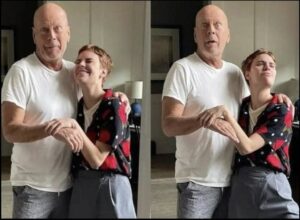
Bruce Willis and Scout Willis: A Family Moment Beyond the Hollywood Spotlight
For generations of moviegoers, Bruce Willis has been a familiar presence on screen. His performances brought humor, intensity, and an unmistakable personality to films that remain part of popular culture. From the determined John McClane in Die Hard to his memorable roles in The Sixth Sense and Pulp Fiction, Willis built a career that reached audiences across different genres and generations.
Today, public interest in the actor extends beyond his films. Following his family’s announcements about his health, many supporters have come to appreciate the personal moments his loved ones choose to share. These glimpses offer a different perspective on someone whose public identity was shaped for decades by the entertainment industry.
One such moment appeared in a December 2024 Instagram post from his daughter, Scout Willis, which included a video of her embracing her father. The brief interaction drew attention because it showed a familiar actor in a simple family setting, sharing a moment with his daughter. The Independent
Understanding that moment means keeping its date and context clear. It was a family post from December 2024, rather than a new medical announcement or a comprehensive account of Willis’s life today.
Understanding the Timeline of Bruce Willis’s Health Announcements
An important detail in any discussion of Bruce Willis’s health is the distinction between his family’s two public announcements.
In March 2022, the family announced that Willis had been diagnosed with aphasia and would step away from acting. In February 2023, they shared a more specific diagnosis: frontotemporal dementia, commonly abbreviated as FTD. Describing the FTD announcement as having occurred in 2022 combines two separate developments and creates an inaccurate timeline. AFTD
That distinction matters because public stories about illness can spread quickly. A small error repeated across articles can eventually appear to be an established fact.
For readers who follow Willis’s story, the clearest approach is to distinguish confirmed family statements from social media observations. A photograph can document a shared moment. It cannot establish a medical change, explain symptoms, or reveal everything happening outside the frame.
Accurate reporting allows an article to remain compassionate while giving readers a reliable understanding of what has actually been disclosed.
What Frontotemporal Dementia Means
Frontotemporal dementia is a term for a group of brain diseases affecting the frontal and temporal lobes. These areas are associated with functions such as behavior, personality, and language. Symptoms differ between individuals, and changes in communication or behavior can be prominent. Mayo Clinic
A public diagnosis, however, does not give outsiders a complete understanding of an individual’s experience. People living with the same condition can have different needs, abilities, and symptoms.
For this reason, descriptions of Willis’s health should remain grounded in information his family has chosen to release. Brief videos and photographs should not be used to speculate about his awareness, communication abilities, or prognosis.
Readers can appreciate the significance of a family interaction without treating it as evidence of improvement or deterioration. That approach respects both the person living with the condition and the relatives who decide which parts of their lives to share.
Scout Willis’s December 2024 Family Moment
The appeal of Scout’s post was rooted in its simplicity. A daughter embracing her father is an ordinary family interaction, yet it carries additional meaning when the people involved have spent much of their lives in public view.
Audiences are accustomed to seeing Bruce Willis through film scenes, promotional appearances, and carefully organized public events. A personal family moment offers a different setting, with none of the expectations attached to a performance.
The embrace did not need an elaborate explanation to attract interest. It showed a relationship rather than a role.
Still, its meaning should not be stretched beyond what was visible. The post did not provide a complete account of family life, and it should not be presented as though it did. Its value lies in the moment itself: a brief interaction that Scout chose to share with her followers.
For readers, that is enough to appreciate without adding invented dialogue, private feelings, or conclusions about Willis’s condition.
Scout Willis’s Creative Identity
Scout Willis has grown up with a recognizable surname, but her public identity also includes her own creative work. Music gives her a space to develop a voice that is separate from the careers of her parents.
Her performances have included the song “Over and Over,” and coverage of a November 2024 New York appearance documented Demi Moore supporting her daughter’s live music. people.com
That creative identity is relevant when discussing Scout’s social media presence. Her posts can reflect several parts of her life at once: music, personal expression, friendships, and family relationships.
Reducing every appearance to an update about her father overlooks that broader context. She can be a daughter sharing a meaningful interaction and an artist documenting her own experiences within the same public space.
A thoughtful article can recognize both. Family connections explain part of the interest surrounding her, while her creative work deserves attention on its own terms.
Seeing Bruce Willis Beyond His Screen Roles
A long film career can make an actor seem permanently connected to a particular character. In Willis’s case, John McClane remains one of the strongest examples of that connection.
But a film character represents only one part of an actor’s working life. It tells audiences very little about the person’s private relationships, daily routines, or experiences outside the industry.
Family posts can help broaden that perspective. They remind viewers that someone associated with action sequences and memorable dialogue also occupies everyday roles as a parent and relative.
This does not diminish the importance of his work. Instead, it places that work within a fuller human context.
The performances remain available for audiences to enjoy, while personal moments invite a different kind of attention. Rather than expecting entertainment, viewers are asked simply to recognize a person and the relationships around him.
A Family With Connections Across Generations
Bruce Willis’s family includes his daughters Rumer, Scout, and Tallulah with Demi Moore, as well as Mabel and Evelyn with Emma Heming Willis.
These relationships span different stages of life and form an important part of the public context surrounding the actor. However, a family tree cannot explain the full nature of those relationships, and occasional posts cannot reveal everyone’s private experience.
The most responsible way to discuss the family is to acknowledge the connections that are publicly known while leaving room for privacy.
There is also little benefit in attaching undated ages to every person mentioned. Ages change, and an article based on an older social media post can become misleading if historical details are presented as current.
Names, relationships, and clearly identified dates provide a more durable foundation. They help readers understand the story without creating the impression that every detail has been newly confirmed.
Why Small Family Moments Attract So Much Attention
For many people, a favorite actor becomes connected with memories that extend far beyond a particular film.
A movie may recall a family evening, a childhood television broadcast, or a first visit to the cinema with friends. Over time, the performer becomes part of those memories, even though the viewer has never met them.
That history helps explain why a brief personal post can attract considerable interest. The audience brings years of familiarity to an interaction lasting only a few seconds.
There is nothing unusual about feeling affection for someone whose work has been meaningful. The important distinction is between that affection and an expectation of access.
Supporters can value a shared moment while accepting that the family decides when to post, what to include, and what to keep private. Interest does not require a continuous stream of updates.
The Limits of Photographs and Short Videos
Social media encourages quick interpretations. A facial expression, gesture, or caption can become the basis for a headline within minutes.
Yet images are limited records. They show a particular angle at a particular time, usually without the surrounding conversation or circumstances.
This is especially important when a post involves someone living with a medical condition. A short interaction cannot support sweeping statements about a person’s health or daily abilities.
Careful writing should separate observation from interpretation. “The video shows a daughter embracing her father” describes visible content. Claims about what either person understood, felt, or experienced require information that the image alone cannot provide.
Maintaining that distinction makes an article more credible. It also allows readers to respond emotionally without being led toward conclusions that have not been established.
Remembering a Career With Lasting Cultural Reach
Willis’s screen work continues to provide a substantial reason for public interest.
Die Hard established a character whose combination of determination, vulnerability, and humor became closely associated with the actor. The Sixth Sense placed him in a quieter role within a story built around atmosphere and uncertainty. Pulp Fiction connected him with a film remembered for its distinctive structure and characters.
These performances illustrate why his career cannot be reduced to a single type of movie. Different audiences may remember different roles, depending on when they encountered his work and which films mattered most to them.
Revisiting those performances offers a straightforward way to celebrate his contribution. It keeps attention on work he deliberately created for the public, rather than requiring new access to his private life.
His films remain part of the conversation even as his personal circumstances have changed.
Family Statements and Greater Public Awareness
The Willis family’s February 2023 statement did more than announce a diagnosis. It also expressed a hope that attention surrounding Bruce could help increase awareness of frontotemporal dementia and the need for further research. The family directed readers toward information and support through the Association for Frontotemporal Degeneration. AFTD
Public recognition can create an opportunity for learning, particularly when a condition is unfamiliar to many readers.
That opportunity is best served by clear information rather than dramatic language. An article can explain the diagnosis timeline, identify a reliable resource, and avoid presenting one family’s experience as representative of everyone living with FTD.
Awareness also depends on how people are described. A diagnosis is important context, but it should not replace the person’s name, relationships, career, or individuality.
For Willis, those parts of his story remain relevant alongside the information his family has shared.
Appreciating the Moment Without Turning It Into a Prediction
Scout’s December 2024 post can be appreciated as a record of a family interaction. It does not need to become a prediction about the future or a claim about events that followed.
Keeping that perspective protects the meaning of the moment. The embrace belongs to a specific time, and its significance does not depend on presenting it as the latest development.
Readers who admire Bruce Willis can continue to enjoy his films, follow confirmed statements when they are released, and welcome personal moments when his relatives choose to share them.
The lasting appeal of this story comes from that connection between a familiar public figure and an ordinary human relationship. Behind the memorable characters and decades of screen appearances is a father whose daughter shared a brief embrace with the world.
That moment offers something modest but meaningful: an opportunity to remember the person alongside the performer, while respecting how much of family life remains outside public view.