News
My In Laws Painted My House Pink Until Their Own Home Became The Surprise
My In Laws Painted My House Pink Until Their Own Home Became The Surprise

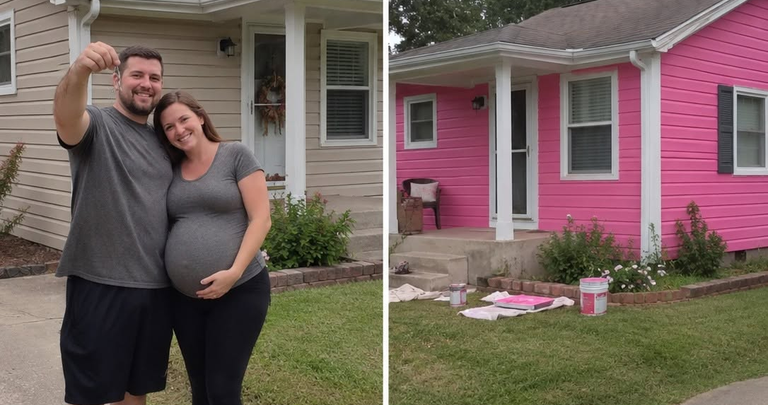
My Mother-in-Law Painted Our House Pink While I Was in the Hospital—Then I Discovered How She Paid for It
This is a fictional story. All names, characters, businesses, and events are invented.
The first thing I noticed was the mailbox.
It had been white when we left for the hospital.
Now it was pink.
Then Ryan turned into the driveway, and I saw the porch railings, the shutters, and the front door.
Pink.
The entire house had changed color.
In the back seat, our newborn daughter slept in her car seat. I sat beside her, exhausted after a week in the hospital, trying to understand what I was seeing.
My mother-in-law stood on the porch with her arms spread wide.
“Surprise!”
Beside her, Ryan’s sister, Brooke, raised her phone.
“Wait before you get out. I want your reactions.”
I looked at the bright walls of the first home we had ever owned.
“Please stop recording,” I said.
The House We Had Saved For
My name is Rosalie Brandt.
I am a graphic designer, which means I spend much of my working day making decisions about color.
Clients ask for blue that feels reassuring, green that looks fresh, and red that attracts attention without overwhelming everything around it.
When Ryan and I bought our house, I loved its soft gray exterior immediately.
The paint was called Harbor Fog.
It worked with the white trim and the old oak in the front yard. Behind the house, a field stretched toward a neighboring property where three horses spent their afternoons.
The place was small, but it felt right.
We had saved for four years.
When we finally received the keys, Ryan stood beside me in the empty living room.
“Somewhere of our own,” he said.
I believed that included the decisions.
Diane Had Already Disagreed
Ryan’s mother, Diane, disliked the color.
She told us at the housewarming.
“It looks gloomy.”
“We like it,” I answered.
Brooke laughed and suggested pink.
At the time, I thought she was joking.
Diane continued making suggestions about the exterior, the furniture, and how we should arrange the study.
Her opinions were familiar.
In our old apartment, she had criticized curtains I saved months to buy. When I objected, Ryan said she spoke that way to everyone.
I knew he wanted to avoid an argument.
But avoiding one conversation usually meant leaving me to carry the discomfort afterward.
At the housewarming, he finally told her the exterior would stay as it was.
I thought that settled it.
A Difficult Week Away
Our daughter, Alice, arrived earlier than expected.
Her birth involved an emergency cesarean delivery, and both of us needed additional care.
For several days, our world became hospital corridors, updates from clinicians, and waiting for the next piece of reassuring news.
By the time discharge was discussed, I felt worn down in ways I had not anticipated.
I wanted ordinary things.
My own pillow.
Clean clothes.
A quiet room where nobody needed to take my blood pressure in the middle of a conversation.
Diane visited with Brooke near the end of our stay.
“We’ll take care of things at the house,” she promised.
They had spare keys.
I asked whether they could arrange meals for when we returned.
“Of course,” Diane said.
The Gift Our Friends Organized
My brother, Jake, called that afternoon.
He owned the hardware store our grandfather had established and knew practically everyone who had helped us prepare the house.
“People have collected something for you,” he said.
The fund totaled $1,920.
Family members, friends, and Ryan’s coworkers had contributed toward meals, baby supplies, and help while I recovered.
I cried when Jake explained it.
He said Diane had offered to coordinate the assistance because he was busy at the store.
She could purchase suitable items there against the fund, and he would keep the receipts.
I thanked him and asked him to thank everyone else.
For the first time that week, I felt able to stop worrying about what would happen when we went home.
Someone had already thought about it.
Our Homecoming Became a Performance
Standing in front of the pink house, Diane appeared delighted.
Ryan walked toward the porch.
“Did you paint the whole exterior?”
“We worked for days,” she said.
“Without asking us?”
Her expression changed.
“Most people would appreciate this.”
I remained beside the car while Ryan helped get Alice and our belongings inside.
Brooke lowered her phone.
Diane followed us toward the door, explaining that the house now looked cheerful enough for a family with a baby.
I could not face a debate in the driveway.
“I need to sit down,” I said.
Diane treated that as the end of the conversation.
Before leaving, she told Ryan we would understand once we had rested.
I watched her car disappear and wondered why help had made me feel so helpless.
The Refrigerator Was Almost Empty
Inside, the familiar rooms offered a little comfort.
Then Ryan opened the refrigerator.
There were no prepared meals.
The freezer held what we had left there before going to the hospital.
I called Jake.
“Our house is pink.”
He laughed until I sent a photograph.
Then he stopped.
“Diane said you wanted some rooms painted.”
“I didn’t.”
He explained that when he questioned the quantity, she told him Ryan had requested exterior work as a surprise.
Ryan shook his head.
“I never asked for any painting.”
Jake pulled the receipts.
Paint, supplies, and equipment rental had cost $1,364.
The money had come from the fund meant to help us after Alice’s birth.
What the Messages Revealed
Jake sent the messages from the contributors’ group.
Diane had told everyone I wanted a cheerful makeover.
When Aunt Marlene offered to bring meals, Diane said I preferred to handle the cooking myself.
When another relative offered cleaning help, Diane declined on our behalf.
She also asked people not to contact us directly.
Reading those messages hurt more than seeing the walls.
People had tried to help.
They had prepared food, offered time, and asked what we needed.
Diane had intercepted those offers while describing her own project as my request.
I sent her a direct question about the money.
Her response did not deny using it.
She said we should be grateful that people had done something beautiful for us.
Telling the Contributors the Truth
Ryan and I reviewed the records before responding.
We thanked each contributor and explained that we had not requested or approved the painting.
We included the relevant receipts and corrected the claim that we did not want meals or practical assistance.
We kept the message focused on what had happened.
The replies came quickly.
Marlene said the meals were already in her freezer and asked when she could deliver them.
A coworker offered groceries.
Another friend said she could coordinate help directly with us.
I felt relieved.
Then I felt furious.
The relief made the earlier deception clearer. Help had been available, and someone had deliberately redirected it.
That anger led to the decision I wish I had not made.
The Retaliation I Regretted
I asked Jake whether he had dark gray exterior paint.
He understood immediately.
“No, Rose.”
But I kept talking.
I wanted Diane to experience the same shock I had felt when our home stopped looking like ours.
Ryan objected.
He told me that what she had done did not give us permission to do the same thing.
He was right.
I knew it.
Nevertheless, Jake and I made a foolish decision. That night, he repainted the front of Diane’s house charcoal gray at my request.
I did not help with the physical work.
That distinction did not reduce my responsibility.
By morning, I had added a second unauthorized alteration to a situation that already needed honesty and repair.
The Confrontation in Her Driveway
Diane called early.
When we arrived, she stood outside in her robe, pointing at the front wall.
“You had no right!”
“I didn’t,” I answered.
She stopped for a moment.
“I will pay to restore it,” I continued.
Brooke looked between us.
“Then why do it?”
I had imagined an answer about finally making them understand.
Standing there, it sounded inadequate.
“I was angry,” I said. “And I made a bad decision.”
Diane began telling us what the work would cost.
Ryan waited until she finished.
“Your house needs restoring,” he said. “So does ours. We also need to resolve the money collected for Alice.”
The conversation became quieter after that.
Not easier.
Quieter.
Brooke Finally Stopped Agreeing
Brooke admitted that she had accepted Diane’s explanations without checking with us.
She had been told different things at different times: that I chose the color, that Ryan wanted a surprise, and that we would appreciate it once the work was finished.
She had also heard her mother say we would be too occupied with the baby to object afterward.
Ryan stared at Diane.
“You knew we would say no.”
Diane insisted she had been improving the house.
But she could not explain why an improvement required inventing our approval.
Brooke looked at me.
“I should have called you.”
“Yes,” I said.
She did not offer another excuse.
That was the beginning of her apology.
Ryan Asked for the Keys
Before we left, Ryan asked Diane and Brooke to return their spare keys.
His mother looked wounded.
“You’re shutting me out?”
“We need control over access to our home.”
She turned toward me.
I did not answer for him.
Ryan repeated the request.
Diane eventually placed the keys in his hand.
We also arranged to change the locks rather than rely only on knowing which copies had been returned.
It was an ordinary practical step, but it affected me more than I expected.
For years, our boundaries had been treated as conversations that could be reopened whenever Diane disliked the answer.
This time, Ryan made the decision with me and followed through.
Paying for Both Mistakes
We obtained professional estimates for restoring both houses.
I accepted responsibility for Diane’s repainting and paid from my own savings.
Jake apologized for taking part and agreed that he should have refused.
Separately, Diane was asked to replace the money spent without our approval and return the balance she still held.
The contributors wanted an accounting too.
Eventually, the full $1,920 was restored to the fund, and Diane paid the agreed cost of returning our exterior to its previous appearance.
Those arrangements did not make everyone suddenly reasonable.
There were defensive messages and uncomfortable conversations.
Still, the obligations were kept distinct.
My retaliation did not erase her conduct, and her conduct did not excuse mine.
The Help We Actually Needed
Marlene arrived with food in a cooler.
She labeled containers, asked where we wanted them, and checked which day would be useful for another delivery.
A friend arranged cleaning help.
Jake brought groceries and stayed long enough to fix a small problem beneath the kitchen sink.
Nobody announced a surprise.
They asked.
That was what I remembered afterward.
People offered specific help, listened to our answers, and did the thing they had agreed to do.
Our days became manageable in small increments.
Alice needed us. I needed time to recover. Ryan needed rest too.
The meals, clean clothes, and quiet visits mattered much more than any decorative transformation could have.
Harbor Fog Returned
The painters restored the soft gray exterior and white trim.
I watched from inside while Ryan walked through the completed work with them.
The house looked familiar again.
Brooke came to help with a small task the crew approved and stayed to clean up afterward.
She apologized without asking whether I was ready to forget.
I appreciated that.
Diane did not visit during the work.
She paid what she had agreed to pay, but our relationship remained distant.
Ryan and I began counseling to address the pattern that had existed long before the paint.
We discussed his habit of minimizing comments and my habit of letting resentment accumulate until I acted badly.
Neither of us enjoyed those conversations.
We needed them.
The Mailbox We Kept
When the painter asked about the mailbox, Ryan and I looked at it together.
It was still bright pink.
By then, it had become almost absurdly familiar.
“Do you want it white again?” Ryan asked.
I considered it.
“Actually, no.”
He smiled.
“Neither do I.”
We kept it.
The choice did not mean I had changed my mind about the original project.
It meant we could make a new decision about one small part of it.
Some visitors found that confusing.
I understood.
For me, the difference was standing beside my husband and answering a question about our home before anyone touched it.
An Invitation Instead of an Assumption
Months later, Diane asked Ryan whether she could visit for dinner.
He told her he would discuss a suitable time with me.
When he mentioned it, I waited for the familiar explanation about how difficult refusing her would be.
It did not come.
“What do you think?” he asked.
I looked toward Alice, who was reaching enthusiastically for a toy she had dropped moments earlier.
“I’m willing to try a short visit.”
We agreed on a day and told Diane the plan.
She arrived at the scheduled time carrying food she had checked with us about first.
Then she rang the doorbell.
I opened it.
There was still work to do between us, but that beginning mattered.
She had asked.
We had answered.
And our front door opened when we chose.
This story is fictional and is presented for entertainment.