News
“My Husband Forged My Signature to Steal $186,400 Against My Farm—He Never Expected Me to Fight Back and Take Back Control of My Life”
“My Husband Forged My Signature to Steal $186,400 Against My Farm—He Never Expected Me to Fight Back and Take Back Control of My Life”

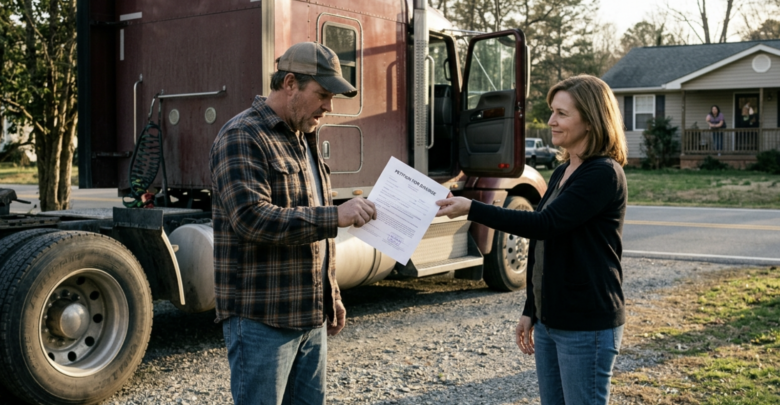
My Husband Put My Farm at Risk—Then Asked Me to Sign Away the Truth
A fictional story about financial betrayal, friendship, and rebuilding an independent life.
Part Three: The Goats in the Pasture
Alden noticed the goats before he noticed the envelope.
He stopped beside the front window, looking across the pasture.
A temporary fence followed the grazing area. Beneath the old oak tree, several goats were feeding while two smaller ones chased each other around a stump.
“What is that?”
“Goats.”
“I can see that. Why are they on my pasture?”
I put down my coffee.
“Your pasture?”
He turned toward me.
We had been married for forty-five years. I knew the expression on his face. Usually, it meant I would spend the next hour choosing words carefully.
This time, I opened the kitchen drawer and took out a manila envelope.
“There are some things you need to read.”
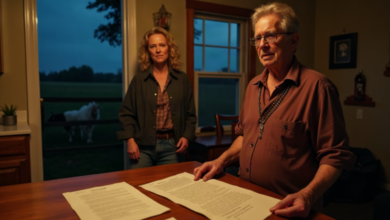
The Papers on the Table
Inside were copies of the property records, a pasture lease, and confirmation that my pension would now go into an account I controlled.
Alden examined the lease first.
“You rented out my land?”
“The front pasture. To Miriam and her husband.”
“Without asking me?”
“Read the other pages.”
He looked through them, then returned to the deed.
The farmhouse and forty acres had come to me through my father. I had recently gathered the records and taken advice about my position.
Alden pushed the papers away.
“We’ve been married almost half a century.”
“Yes.”
“You can’t suddenly start making decisions without me.”
I looked at the pension notice beside his hand.
“You’ve been making financial decisions without me for years.”
“That’s different.”
He did not explain how.
A Different Answer
He picked up the bank notice.
“Where is your pension going?”
“To my account.”
“Give me the details.”
“No.”
The word surprised us both.
For years, I had handed over statements, passwords, and explanations whenever he asked. Refusing felt unfamiliar, but I left the answer where it was.
“You don’t understand what you’re doing,” he said.
“I’m learning.”
He shook his head.
For most of our marriage, I had measured my requests against his moods. A bill could wait if he looked tired. A necessary purchase could become an argument about whether I really needed it.
Recently, he had waved his paycheck at me and announced that whoever earned the money called the shots.
I had worked for thirty-one years.
Somehow, that work never counted during those conversations.
Three Hundred and Fifty Dollars
“How much are they paying?” he asked.
“Three hundred and fifty a month.”
“For forty acres?”
“For the front pasture,” I repeated. “The agreement describes the area. They’re also maintaining the fencing and water troughs.”
He looked outside.
“You should have asked me.”
“I wanted us to discuss money as equals. You made it clear that wasn’t the arrangement you wanted.”
He took his paycheck from his pocket and dropped it on the table.
“This keeps the house going.”
“So did my wages. So does my pension.”
A goat bleated outside.
The sound was so ordinary that I almost smiled.
Alden pointed toward the window.
“Tell Miriam to take them away.”
“I’m keeping the agreement.”
He waited for me to soften the answer.
I went to rinse my cup.
The Family Telephone Calls
That evening, Alden called his sisters.
By ten o’clock, Brenda had heard that I had become unreasonable, rented out his property, and hidden money.
She called to correct me.
“What have you done to my brother?”
“Good evening, Brenda.”
“Don’t be clever. He’s worked all his life.”
“So have I.”
“Delivering mail?”
I sat down.
For thirty-one years, I had driven those country roads through rain, heat, and winter weather. I had carried medicine, birthday cards, parcels, and letters people waited anxiously to receive.
I knew which residents lived alone. I knew whose steps became slippery and whose dog needed a little patience.
“Yes,” I said. “Delivering mail. It was work.”
She sighed.
“You’re embarrassing yourself.”
“I’m discussing my own affairs. I’m not discussing them with you tonight.”
After ending the call, I sat quietly until my hands steadied.
Then I put the papers back in their envelope.
The Old Arrangement in a Clean Shirt
The following morning, Alden had made coffee.
His paycheck lay beside my cup.
“I’ve been thinking,” he said.
I sat across from him.
“You cancel the lease. We put everything back together in one account. We forget the argument.”
“And when I need to replace the water heater?”
“I’ll handle it.”
“When?”
“When we can.”
“What if I want to buy something?”
“You ask.”
There it was.
I had spent weeks heating water on the stove while waiting for him to decide the repair mattered.
“I’m keeping my account,” I said.
His expression hardened.
“Don’t come to me when you need something.”
I looked at the cold window above the sink.
“I’ve needed things for a long time.”
He left without finishing his coffee.
A Neighbor Who Listened
Miriam came over that afternoon with chicken and dumplings.
She put the dish on the counter and looked toward my envelope.
“How did he take it?”
“Poorly.”
She pulled out a chair.
We discussed the pasture and the possibility of a longer agreement. Her husband wanted time to improve the fencing, and I liked the idea of regular income and maintained ground.
“We’ll review it properly before changing anything,” I said.
“Of course.”
Then she mentioned someone who could inspect the water heater.
I began my usual answer about waiting.
Miriam raised an eyebrow.
“Waiting for what?”
I stopped.
Two days later, I arranged the visit myself.
That small telephone call felt more difficult than it should have.
The Envelope Alden Brought Home
A few evenings later, Alden placed a thick envelope on the kitchen table.
He looked pale.
“Joanne, we need to talk.”
I had been folding a dish towel. I set it down.
He removed a document and pushed it toward me.
The outstanding balance was $186,400.
My name appeared beneath language about a guarantee. Other pages described the farmhouse and forty acres as security.
At the bottom was a signature resembling mine.
I read the page twice.
“What is this?”
“A loan.”
“I can see that.”
He looked toward the window.
“When did this happen?”
“About eighteen months ago.”
I felt the room become very still.
“I never signed this.”
Alden rubbed his forehead.
“It wasn’t supposed to become a problem.”
Part Four: The Name Beneath the Loan
My name is Joanne Kittle.
I was sixty-eight when I learned that my husband had involved my property in a loan I knew nothing about.
I did not need special training to know whether I had agreed to it.
I had not seen the documents. I had not authorized a guarantee. I had not given him permission to sign my name.
“What was the money for?” I asked.
“Brenda’s son. His trucking business needed help.”
“You used the farm?”
“He said he would pay it back.”
“That wasn’t my question.”
Alden stood up.
“I was trying to help my family.”
I looked at the broken water heater estimate on the counter.
For months, he had treated that expense as impossible.
Now I was learning about a sum large enough to threaten everything I depended on.
Everyone Except Me
“Did Brenda know?”
Alden hesitated.
“She knew there was an arrangement.”
“Did she know the farm was involved?”
“Yes.”
I pushed back my chair.
“How many people knew before I did?”
He did not answer.
I reached for my phone.
“I’m calling an attorney.”
“Joanne, we can settle this ourselves.”
“You had eighteen months to tell me.”
He stepped closer.
“You’re going to destroy our marriage over paperwork?”
I looked at the signature again.
The paperwork was how I had discovered the problem. It was not what had created it.
“I need someone who can explain what happened,” I said.
Then I took the documents into the bedroom and closed the door.
Rebecca’s Office
Rebecca Lawson’s office was near the courthouse.
I arrived carrying the envelope and a notebook filled with questions.
She let me finish before examining the papers.
“Did you sign any part of this?”
“No.”
“Did you authorize anyone to sign for you?”
“No.”
She made notes.
“We need the complete loan file and the property records. These copies give us questions to investigate.”
“Can I lose the house?”
“I can’t answer that responsibly from what we have here. We need to address the disputed documents promptly.”
She explained the next steps and gave me a list of records to gather.
Before I left, she asked whether Alden still had access to my personal accounts.
I told her he knew most of my passwords.
“Then let’s address that too.”
For the first time since opening the envelope, I had something more useful than fear.
I had a list.
Looking Through My Own Records
The following days were full of paper.
I collected pension statements, property documents, bank correspondence, and examples of my genuine signature.
Some records brought back memories I had not expected.
There was an old birthday card I had written to Alden.
To the man I hope to grow old with.
I sat holding it longer than necessary.
Our marriage had included good years. He had once brought roadside flowers home in a coffee jar. When I was ill early in our marriage, he had driven through the night to find an open pharmacy.
Remembering those things did not explain the loan.
It made the present harder to understand.
I put the card with the other documents and continued.
The Money Had Taken Several Routes
As Rebecca obtained more records, the picture widened.
The loan proceeds had not all gone straight to the trucking company.
Some transfers involved an account belonging to Brenda. Others required further explanation.
One payment caught my attention.
$12,800.
“The mower,” I said.
Rebecca looked up.
“Alden bought a zero-turn mower for that amount.”
“We’ll check the recipient and the supporting records.”
Later, Alden confirmed it himself.
“Yes,” he said when I asked. “Some of the money paid for it.”
I thought of him driving around the pasture on the new machine.
Then I remembered carrying a pot of hot water upstairs.
“You told me we couldn’t afford the repair.”
“I was going to get to it.”
I waited.
He had nothing more to add.
The Statement Brenda Wanted
One evening, Alden approached me on the porch.
“Brenda wants you to sign something.”
“What?”
“A statement saying you understood the loan.”
I looked at him.
“But I didn’t.”
“She thinks it would help.”
“Help whom?”
He sat beside me.
“She’s frightened.”
“So am I.”
He stared across the yard.
I had wanted him to acknowledge that since the first evening.
Instead, he asked again.
“Will you at least read it?”
“I’ll give anything you bring me to Rebecca.”
He shook his head.
“You make everything difficult now.”
I stayed on the porch after he went inside, listening to the goats move near the fence.
Visitors at Seven-Fifteen
Brenda arrived early the next morning with Alden’s sister Linda.
They came into the kitchen and placed a document on the table.
It stated that I had known about the loan and had authorized Alden to handle the relevant signatures.
Brenda tapped the page.
“This will straighten things out.”
“It isn’t true.”
“You need to think about the family.”
“I am part of the family.”
Linda looked down.
Brenda continued talking about the consequences for her son.
I let her finish.
Then I pushed the document back.
“I’m not signing it.”
Alden entered through the back door and glanced at the table.
“Did she agree?”
“No,” Brenda said. “She wants to make this worse.”
I stood.
“The answer is no. I’d like you to leave.”
What the Investigation Could Establish
Rebecca sent notice of my dispute and pursued the supporting records.
The lender reviewed the application, the claimed authorization, and the documents connected to the property.
An independent examiner compared the disputed signature with examples I supplied.
The findings supported my account that I had not written it.
There were still questions to resolve. The circumstances of the signing and notarization needed examination. The money transfers required tracing.
I learned to stop expecting one dramatic telephone call to finish everything.
Progress came in smaller forms: another record obtained, a question answered, a response received.
Some days I was exhausted by it.
Miriam came over with food, sat beside me while I sorted pages, or persuaded me to walk outside.
She never treated the folder as an inconvenience.
The Question He Could Not Answer
One night, Alden sat across from me.
“They want to question me.”
“Then explain what you did.”
He rubbed his face.
“I thought I could pay it back.”
“Did you think about what would happen if you couldn’t?”
He said nothing.
“Where would I go?”
“I didn’t think it would come to that.”
“But you let me live here without knowing.”
He nodded.
That admission was quieter than his earlier arguments.
It also told me more.
He had known I might object. Keeping me uninformed had made the arrangement easier for him.
I could no longer describe that as ordinary disagreement about money.
The Release
The process took months.
Alden acknowledged arranging the financing and using information from our household records. Investigators continued examining the disputed paperwork and the roles of those involved.
Rebecca dealt with the lender’s representatives and kept me informed.
Eventually, the lender agreed to release its disputed claim against my property.
Rebecca called after the release had been recorded.
“The farm is no longer subject to that lien,” she said.
I sat down at the kitchen table.
“You’ve checked?”
“Yes.”
I asked her to send the confirmation.
Then I put my hand over my mouth and cried.
Outside, Miriam was near the fence.
I opened the door and called her name.
She looked up, saw my face, and came across the yard.
For once, there was no new problem to explain.
A Decision About the Marriage
Protecting the farm did not decide what I wanted to do about Alden.
That required a different kind of attention.
One evening, we looked through our wedding photographs.
He touched the corner of a picture.
“We were happy.”
“Yes.”
“Could we start over?”
I studied the two young people outside the church.
I remembered loving him. I could still remember it clearly.
But remembering was not the same as wanting our life back.
“I don’t want to keep living as we have,” I said.
“I’ve said I’m sorry.”
“I heard you.”
He closed the album.
A few months later, I filed for divorce.
Rebecca helped address the property, the disputed debt, and the other financial matters through the appropriate process.
I asked questions before agreeing to anything.
The Day He Left
When Alden collected the last of his belongings, he found an old photograph of us beside a lake.
“Do you want this?”
“You can keep it.”
He looked around the bedroom.
“I never thought this would happen.”
“Neither did I.”
At the kitchen door, he stopped.
“I am sorry, Joanne.”
He sounded tired.
I believed he regretted what had happened. I could acknowledge that without changing my decision.
“I hope you find a better way forward,” I said.
Then he carried his bag to the truck.
After he left, I stayed by the window until the dust settled.
I locked the door and returned to the kitchen.
The folder containing the farm’s release sat in the drawer where I had put it.
I checked once.
Then I left it there.
Hot Water and a Navy Coat
The water heater had been repaired while the dispute was still underway.
I remember the first evening afterward.
I turned the tap and waited.
Hot water came through without a pot on the stove, without planning, without explaining why I needed it.
I stood there longer than necessary.
Later, I bought a navy winter coat.
It had a warm lining and pockets deep enough for my gloves.
At the register, I almost began explaining the purchase to an imaginary listener.
Then I paid.
These were ordinary things. They should always have been ordinary.
Learning to treat them that way took time.
The Farm’s Next Season
Miriam and her husband continued leasing the pasture.
We reviewed the terms, kept the paperwork organized, and spoke when something needed attention.
The fencing improved. The goats settled into their routine.
Their payments arrived regularly.
I began planning a garden behind the barn, starting with an area I could manage comfortably.
Miriam asked what I wanted to plant.
“Tomatoes. Beans. Maybe flowers.”
“Flowers too?”
“I like them.”
She smiled.
“That seems a good enough reason.”
There were still repairs to consider. The porch needed paint, and part of the barn required work.
For the first time in years, making a list of those things felt like planning rather than pleading.
A Letter I Did Not Have to Answer
About a year after Alden left, a letter arrived.
I recognized his handwriting.
He wrote about work, his apartment, and the silence at the end of the day.
Near the bottom, he had written:
You were always there. I thought that meant you always would be.
I read the sentence twice.
Then I folded the pages.
I did not feel satisfaction at his loneliness. I did not want him to suffer.
But I also did not want to return.
I put the letter in a drawer and went outside to see whether the garden needed watering.
For a long time, I had believed every expression of regret required an immediate response from me.
That afternoon, I let the letter wait.
Somewhere to Stand
I visited my father’s grave with yellow flowers.
After brushing loose leaves from the stone, I sat for a while.
“I nearly lost the farm,” I said.
There was no reason to make the sentence gentler.
I told him about the paperwork, Rebecca, and Miriam’s goats.
Then I mentioned the water heater.
That made me laugh unexpectedly.
Dad would have wanted the practical details.
Before leaving, I looked across the quiet cemetery.
The house he had left me was still standing. So was I.
Neither fact had become certain simply because I wanted it to be. There had been work, help, and difficult decisions between fear and relief.
I was grateful for the people who had helped me do that work.
A Life With My Name on It
I am seventy now.
I still live in the farmhouse.
The oak tree shades the pasture, and Miriam comes over most Thursdays. We drink coffee, compare vegetables, and find things to laugh about.
My pension arrives in my account. I read the statements.
When a document needs my signature, I understand it before I pick up the pen.
Sometimes I think about the woman who used to wait for the right moment to mention a bill.
I do not blame her. She was trying to keep her household steady with the habits she had learned.
I wish she had known she could ask for help sooner.
Now, when I sit at the kitchen table, there is room for a question without an argument following it.
There is room for a plan.
And when I look through the window at the pasture, I can enjoy the view without wondering what someone has decided for me.