Uncategorized
Kurt Russell Health Rumors Explained: What Is Known, What Is Unconfirmed, and Why Fans Should Be Careful

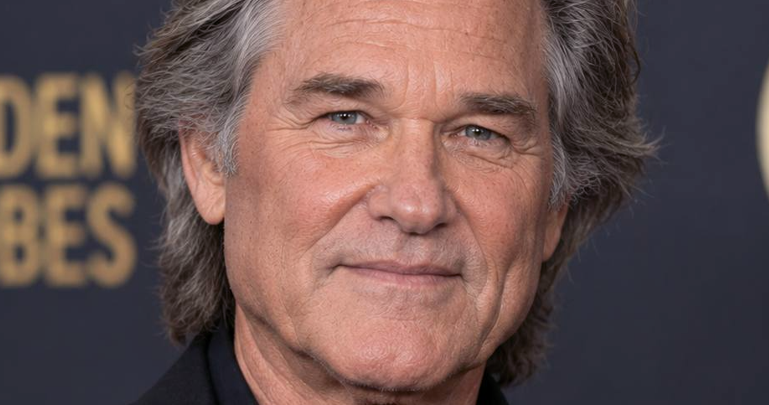
Kurt Russell has spent more than six decades in the entertainment industry, building a career that few actors can match. From his early television appearances to memorable performances in action films, westerns, dramas, comedies, and science-fiction stories, he has remained one of Hollywood’s most recognizable figures.
That long career has also made Russell a frequent subject of online discussion.
In recent years, however, some of the attention surrounding the actor has moved away from his work and toward claims about his health. Posts circulating online have suggested that Russell has suffered from serious medical conditions, including necrotizing fasciitis and Peutz-Jeghers syndrome.
Those claims can sound alarming when presented in dramatic headlines.
But there is an important distinction between something being repeated online and something being independently confirmed.
At present, there is no reliable public confirmation establishing that Kurt Russell has either of those conditions. Several online sources have specifically identified the claims as unsubstantiated rumors rather than verified medical news.
That distinction matters, particularly when discussing someone’s health.
Rather than repeating an alarming claim as fact, it is more useful to look at Russell’s career, understand where the rumors come from, and examine the medical conditions that have been associated with his name online.
A Career That Began Long Before Hollywood Fame
Kurt Vogel Russell was born on March 17, 1951, in Springfield, Massachusetts.
Acting was already part of his family environment. His father, Bing Russell, was an actor who became especially familiar to television audiences through his role as Deputy Clem Foster on Bonanza. His mother, Louise Julia Russell, was a dancer.
Kurt Russell entered show business while he was still a child.
That early start became the foundation for a career that would eventually stretch across generations. Unlike actors who become famous through one defining role, Russell developed a reputation through a long series of very different performances.
His career has included television work, dramatic films, action movies, westerns, comedies, and science-fiction projects.
That versatility became one of his greatest professional strengths.
Rather than remaining associated with one particular type of character, Russell repeatedly reinvented himself.
From Child Actor to Leading Man
Russell’s early television career gave him valuable experience before he became a major film star.
During the 1960s, he appeared in a number of television productions and films. Working from such a young age meant that by adulthood he already understood the demanding nature of professional acting.
One of the major turning points came in the 1980s.
Russell became particularly associated with director John Carpenter, appearing in several films that eventually developed devoted audiences.
His role as Snake Plissken in Escape from New York became one of his signature performances.
He later worked with Carpenter again in The Thing and Big Trouble in Little China.
These movies helped establish a distinctive screen identity: confident, physical, charismatic, and capable of combining humor with intensity.
A Career Beyond Action Films
Although many fans remember Russell for action and adventure movies, his career has never been limited to that genre.
In 1983, he appeared in Silkwood, the drama directed by Mike Nichols and starring Meryl Streep and Cher.
Russell’s performance earned him a Golden Globe nomination.
The recognition demonstrated that he was capable of much more than the action roles that later became closely associated with his name.
He subsequently appeared in films including Tango & Cash, Backdraft, Tombstone, Stargate, and Miracle.
Later generations of moviegoers also saw him in the Fast & Furious franchise and as Ego in Guardians of the Galaxy Vol. 2.
His career therefore represents a remarkable journey through several eras of American filmmaking.
Why Celebrity Health Rumors Spread So Quickly
The rumors surrounding Russell are part of a much larger internet phenomenon.
Celebrity health stories can spread extremely quickly because they combine several things that attract attention: a familiar face, an emotional subject, uncertainty, and the possibility of breaking news.
A headline claiming that a famous actor is facing a serious medical crisis can receive thousands of clicks before anyone has checked whether the claim is true.
Social media makes the process even faster.
One website publishes an unverified statement.
Someone copies the headline.
Another account posts a shortened version.
A video creator repeats it.
Then users share the story because they believe other people should know about it.
Within hours, repetition can create the illusion of confirmation.
But repetition is not evidence.
A claim does not become factual simply because hundreds of websites or social media accounts repeat the same wording.
The Claims About Necrotizing Fasciitis
One of the most alarming claims associated with Russell involves necrotizing fasciitis.
Necrotizing fasciitis is a genuine and very serious medical condition.
It is a rapidly progressing soft-tissue infection that can cause extensive tissue damage and requires urgent medical treatment. Medical literature describes early recognition, appropriate antibiotics, and surgical treatment as important components of management.
But explaining the disease is very different from saying that a particular celebrity has it.
There is no reliable public evidence establishing that Kurt Russell has been diagnosed with necrotizing fasciitis.
Some online stories have presented the claim as though it were a confirmed medical development, but available reporting has identified it as an unsubstantiated rumor.
That distinction should remain clear.
A medical condition can be real while the claim that a particular person has that condition is completely unverified.
What About Peutz-Jeghers Syndrome?
Another condition repeatedly mentioned in online stories about Russell is Peutz-Jeghers syndrome, commonly abbreviated as PJS.
This is also a real medical condition, but there is no credible public confirmation that Russell has it.
According to the Mayo Clinic, Peutz-Jeghers syndrome is a rare inherited condition associated with polyps in the digestive tract and characteristic dark spots that can appear on areas such as the lips and inside the mouth.
The condition can be medically significant.
People with PJS have an increased risk of several types of cancer and require appropriate medical monitoring. Complications can also occur when polyps bleed, grow, or cause intestinal obstruction.
But none of those medical facts establishes that Kurt Russell has PJS.
This is an important lesson in responsible health reporting.
Medical information should not be converted into a celebrity diagnosis without evidence.
How a Photograph Can Become a Medical Rumor
One reason celebrity health rumors can become especially confusing is that photographs are frequently used as supposed evidence.
A photograph may show an actor with bruising, facial marks, swelling, fatigue, or another unusual appearance.
But there can be many explanations.
Actors work with makeup artists.
Films require prosthetics.
Lighting can change someone’s appearance dramatically.
A photograph can also capture a person at an unflattering moment.
In Russell’s case, previous online rumors have reportedly used images or appearances from movie projects to support health claims that were not actually connected to his personal medical condition.
This is why a photograph should never be treated as a medical diagnosis.
Even doctors generally require a medical history, examination, and appropriate testing before determining what is happening with a patient.
A social media photograph cannot provide that information.
Russell’s Real History Includes Physical Injuries
Although dramatic claims about serious diseases remain unverified, Russell has had real physical challenges throughout his life.
Before becoming one of Hollywood’s best-known actors, Russell pursued professional baseball.
A rotator cuff injury during his minor-league baseball career in 1973 ended that path.
His career in film later involved physically demanding roles, action sequences, stunts, and performances that required considerable athletic ability.
That history helps explain why discussions about Russell’s physical condition sometimes attract attention.
An actor known for performing physically demanding roles naturally becomes associated with injuries and physical wear.
But physical injuries are not the same thing as the serious diseases claimed in some online rumors.
The Importance of Verified Information
When a celebrity health story appears online, there are several simple questions readers can ask.
Who originally reported it?
Is the source identifiable?
Has the actor or a representative made a statement?
Have established news organizations independently reported the same information?
Is there a specific date, hospital, medical statement, or other verifiable evidence?
Or is the entire story based on anonymous social media posts?
These questions can prevent people from accidentally spreading false information.
They are particularly important when the subject is someone’s health.
A false story about a movie release may be inconvenient.
A false story about a person’s illness can cause genuine distress for the individual, their family, and their fans.
Why Dramatic Headlines Can Be Misleading
Words such as “shocking,” “devastating,” “catastrophic,” and “time is running out” are powerful.
They are also frequently used to encourage clicks.
The problem begins when the emotional language becomes stronger than the available evidence.
A headline can make readers believe that a confirmed medical emergency has occurred when the underlying article only contains speculation.
That is not responsible reporting.
A more trustworthy approach is to explain exactly what is known and what remains uncertain.
For example, instead of stating that Russell is “fighting for his life,” a responsible article can say that health rumors have circulated online and that there is no reliable public confirmation supporting those claims.
That approach may be less sensational.
It is also far more useful to readers.
Why Fans Should Be Careful With Social Media Posts
Fans naturally care about actors they have watched for decades.
Someone who grew up watching Escape from New York, The Thing, Tombstone, or another Russell film may feel a personal connection to his work.
That emotional connection can make alarming stories especially powerful.
A post claiming that a favorite actor is seriously ill can immediately trigger concern.
Some people share the story because they want friends to know.
Others comment with messages of support.
Still others create additional posts repeating the original claim.
The cycle continues.
Unfortunately, the original information may never have been verified.
The best response to an alarming celebrity-health story is therefore not immediate sharing.
It is checking.
The Difference Between Privacy and Silence
Another reason celebrity health rumors persist is that public figures are not required to disclose every aspect of their private lives.
An actor may choose not to discuss a medical appointment.
A family may decline to comment.
A representative may simply refuse to discuss private matters.
None of those things confirms a rumor.
Silence should not automatically be interpreted as evidence.
This is particularly important for health information because medical privacy is personal.
Fans can care deeply about someone while still respecting their right to keep private matters private.
Kurt Russell’s Legacy Remains the Bigger Story
When looking at Kurt Russell’s career as a whole, the health rumors represent only a small part of the story.
His professional life spans generations.
He began acting as a child and continued developing his career long after many performers from his generation had left the spotlight.
His filmography demonstrates unusual range.
He has played heroes and villains, ordinary people and larger-than-life characters, serious dramatic roles and deliberately humorous ones.
He has worked with some of the industry’s most respected directors and actors.
His performances have also remained popular with audiences long after many of the films were released.
That longevity is arguably one of his greatest achievements.
A Reminder About Responsible Celebrity Coverage
The story surrounding Kurt Russell is a useful example of why responsible entertainment reporting matters.
Celebrity news can be interesting without being sensational.
Health stories can be informative without making unsupported diagnoses.
And readers can remain curious without being encouraged to believe every alarming headline they encounter.
At this time, claims that Kurt Russell is suffering from necrotizing fasciitis or Peutz-Jeghers syndrome should not be presented as established facts. Available sources discussing these rumors have found no credible confirmation of such diagnoses.
That does not mean every future health report should automatically be dismissed.
If Russell, his representatives, or a reliable source makes a verified statement in the future, the situation could be reported based on that information.
Until then, caution is appropriate.
The Best Way to Remember a Hollywood Icon
For fans, there is something reassuring about stepping away from the noise of social media and looking at the larger picture.
Kurt Russell’s career is not defined by an unverified internet rumor.
It is defined by decades of work.
It is defined by characters that audiences still remember.
It is defined by films that continue to attract new viewers.
And it is defined by an ability to remain relevant across dramatically changing eras of Hollywood.
The internet moves quickly.
Facts should move carefully.
When a dramatic celebrity health story appears, taking a moment to verify it can make all the difference.
In Russell’s case, that simple step changes the story considerably.
Rather than reporting an unconfirmed medical crisis as fact, the responsible conclusion is that serious health claims circulating online remain unverified.
The medical conditions mentioned in those rumors are real and deserve accurate discussion, but there is no sound basis for assigning those diagnoses to Kurt Russell without reliable confirmation.
For now, the most meaningful part of Russell’s public story remains the career he has built over more than sixty years.
And for fans who have followed him throughout that journey, that legacy is worth remembering with respect, accuracy, and a little less internet panic.