Uncategorized
I Married My First Love After 45 Years Apart—Eight Days Later, Her Final Letter Changed My Life

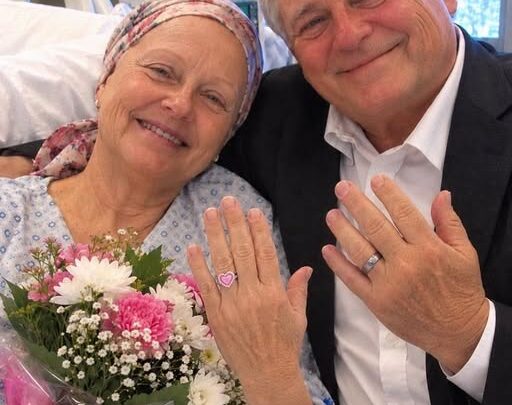
I thought life had given me one last chance at happiness.
At 63, I had never expected to fall in love again. I certainly hadn’t imagined marrying my high school sweetheart after 45 years apart. Yet, for eight precious days, I was Margaret’s husband.
Then she was gone.
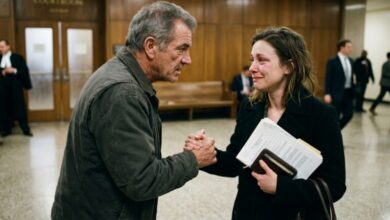
We had just buried her when her son, Wade, approached me outside the church. He looked nervous, and he was holding a sealed envelope.
“Mom warned me you might faint when you read this,” he said.
I stared at the envelope.
“What is it?”
Wade swallowed before answering.
“There’s something you need to know about Mom. You never knew the whole truth. She left this for you and asked me to give it to you only after she was gone.”
I slowly opened the envelope. Inside was a handwritten letter, folded carefully in half.
The first sentence made my knees weaken.
“Tommy, congratulations! You’re now the owner of the business I spent 30 years building. Please sit down before you embarrass yourself.”
I grabbed the church railing.
“Good Lord!”
Wade caught my arm.
“Are you okay?”
I looked at him, then back at the letter.
“Your mother did WHAT?”
He gave me a nervous smile.
“She thought you’d say something like that.”
I was a 63-year-old pastor who had spent more than two decades helping other people through difficult moments. I had comforted grieving families, visited hospital patients, and delivered countless sermons about faith, love, and the unexpected turns life can take.
But standing outside that church, I was completely speechless.
Even after her death, Margaret had found a way to surprise me.
And before I explain what she left behind, you need to understand how two people who had spent nearly half a century apart found their way back to each other.
The Hospital Visit That Changed Everything
For 23 years, I had served as the pastor of a small community church. It wasn’t a large congregation, but the people there had become like family.
Several times a week, I visited patients at the local hospital. Some were recovering from surgery. Others were facing illnesses that had changed their lives.
Sometimes we prayed together. Sometimes we talked about ordinary things. And sometimes, people simply needed someone who would sit beside them and listen.
One Tuesday, a nurse named Helen mentioned a new patient.
“She has stage four cancer,” Helen explained. “But she’s quite a character. Yesterday, she told the doctor his handwriting looked like a spider had fallen into an ink bottle.”
I laughed.
“Sounds like someone I should meet.”
When I entered the room, I stopped in the doorway.
The woman lying in the hospital bed looked older than I remembered, naturally. Her hair was different, and the years had left their marks on her face.
But those eyes were unmistakable.
That smile was unmistakable.
“Margaret?”
She looked up and studied me for several seconds. Then her face transformed.
“Wow! Tommy? Is that you? This can’t be real!”
I stood there, unable to find the right words.
She began laughing.
“Well, don’t just stand there! Come hug me before I start charging admission.”
I crossed the room and embraced her.
For the first time in 45 years, I was holding the girl I had once believed I would marry.
Neither of us could have imagined that a simple hospital visit would change the final chapter of our lives.
A Love Story That Never Completely Disappeared
Margaret had been my high school sweetheart.
We met when we were teenagers, back when our biggest concerns were exams, weekend plans, and whether we had enough money for milkshakes.
We went to prom together. We spent afternoons talking about our dreams. We made promises about a future that seemed so certain because we were young enough to believe nothing could change it.
I had even promised to marry her.
She always teased me about it.
“I’ll consider it when we’re older, Tommy,” she once told me.
Unfortunately, life had other plans.
We attended different colleges, and the distance gradually changed our relationship. Phone calls became less frequent. Letters stopped arriving. Eventually, we went in separate directions.
There was no terrible argument. No dramatic betrayal. We simply grew apart as life carried us toward different responsibilities.
I eventually married a wonderful woman named Susan. We shared 30 happy years together before she passed away six years earlier.
Margaret also built a life of her own. She married a man named Kade, whom she loved deeply. Together, they raised their son, Wade. Kade passed away four years before I met Margaret again.
We had both experienced love, marriage, family, and loss.
Neither of us had spent our lives waiting for the other.
Still, when I saw Margaret in that hospital room, it felt as though someone had opened a missing chapter of my past.
We started talking about everything.
Our school years. Our old friends. The places that had disappeared. The people who had changed. The dreams we had once shared.
I began visiting her every day.
Even when she was tired, she found something to laugh about.
One afternoon, she asked whether I still burned toast.
“I’ve improved,” I assured her.
Margaret raised an eyebrow.
“Tommy, the last time you cooked for me, the smoke alarm practically begged for mercy.”
I laughed.
Some things, apparently, never changed.
The Son Who Knew More Than He Let On
Margaret’s son, Wade, often joined us during my visits.
He was 42, worked as an accountant, and had inherited his mother’s mischievous smile. He was kind, thoughtful, and clearly devoted to her.
I enjoyed having him around.
One afternoon, I asked Margaret what she had done professionally over the years.
“Oh, I kept myself busy,” she replied.
Wade immediately snorted.
Margaret shot him a warning look.
“Don’t start.”
I raised an eyebrow.
“What’s funny?”
“Nothing,” Margaret answered quickly. “Tommy, do you remember falling into the punch bowl at prom?”
“I didn’t fall into it!”
She grinned.
“You wore enough punch home to prove otherwise!”
Wade laughed.
I joined them, but something about the exchange stayed with me. Margaret had changed the subject so quickly that I wondered what she hadn’t wanted to discuss.
I didn’t push her.
At the time, I had no idea that she had spent decades building a successful business. She never mentioned owning a bakery, managing employees, or making the kind of decisions that could affect an entire community.
To me, she was simply Margaret.
The girl I had loved at 17.
The woman I had unexpectedly found again.
A Promise Made 45 Years Earlier
A few weeks after our reunion, Margaret received difficult news from her doctors.
Her condition had progressed, and they believed she might have only about a week left.
I sat beside her bed, holding her hand. I tried to remain calm, but I could feel a lump forming in my throat.
She noticed immediately.
“Oh, don’t look so sad, Tommy!”
“Margaret…”
She squeezed my fingers.
“Remember how you promised to marry me when we were 17?”
I nodded.
“Well, you’re 45 years late, mister. How about we finally do it?”
For a moment, I thought she was joking.
Then I saw her expression.
She was smiling, but her eyes were serious.
“Are you asking me to marry you?” I whispered.
“Yes,” she replied. “It would mean everything to me. Maybe it sounds strange, but I would really love that. Would you do that for me?”
My heart ached.
I thought about the years we had spent apart. I thought about the lives we had built, the people we had loved, and the unexpected circumstances that had brought us together again.
I also thought about the time we had left.
“Margaret, yes,” I said. “Absolutely.”
She smiled as though I had just given her the greatest gift in the world.
That evening, I went to the hospital chapel and prayed.
I didn’t ask for a miracle. I didn’t ask for more years or pretend I could change what the doctors had told us.
I simply asked God to give me the strength to cherish whatever time we had.
I was frightened of losing Margaret so soon after finding her. But I knew I didn’t want fear to take away the happiness we could still share.
When I returned to her room, she studied my face.
“You’ve been crying.”
“A little.”
“Good! I was worried I’d lost my charm.”
I laughed.
Even then, Margaret knew how to make a difficult moment feel lighter.
A Hospital Wedding With Two Simple Rings
Arranging a wedding in a hospital within three days wasn’t easy.
I contacted the county clerk, completed the marriage license paperwork, and worked with the hospital staff to organize a small ceremony.
My friend Pastor George agreed to officiate.
I wore my usual church suit because I didn’t own another decent one. I also bought two simple wedding bands at a flea market.
Margaret’s ring had a little pink heart.
When I showed it to her, she laughed so hard that Helen, the nurse, came to check whether everything was all right.
“Tommy! A flea-market wedding ring?”
“It’s the nicest one I could find!”
Margaret held up her hand and admired it.
“It’s perfect. My favorite ring in the world!”
Then she leaned closer.
“If anyone asks, tell them it’s a rare Italian design.”
“Is it?”
“No, you fool! But nobody needs to know!”
Three days after she proposed, we were married in her hospital room.
Wade stood beside his mother. Pastor George led the ceremony, and a few hospital staff members joined us to witness the occasion.
There were no expensive decorations, no elaborate reception, and no grand wedding plans.
There was simply a hospital room, two wedding rings, and two people who had finally kept a promise made decades earlier.
When George asked whether I took Margaret as my wife, she interrupted.
“Make him promise to wash the dishes too!”
Everyone laughed.
Then George asked her the same question.
Margaret looked directly at me.
“I do, Tommy.”
Those two words meant more than I could ever explain.
For a few precious days, I was her husband.
We held hands, prayed together, and remembered our teenage years. We talked about the lives we had lived and the happiness we had found in one another’s company.
Eight days after our wedding, Margaret passed away.
I was holding her hand when she took her final breath.
Her pink-hearted wedding ring was still on her finger.
My heart was broken, but I was also grateful. We hadn’t received the lifetime together we once imagined, but we had received something neither of us expected.
We had found each other again.
And for that, I would always be thankful.
The Letter That Revealed Margaret’s Secret
After the funeral, Wade approached me outside the church and handed me the envelope.
Now you understand why I nearly collapsed when I read the opening sentence.
I looked at him.
“What business is she talking about?”
Wade guided me toward a nearby bench.
“Keep reading.”
I looked down at the letter again.
“You’re now the proud owner of my bakery. And before you panic, the muffins are already trained.”
I stared at him.
“Your mother owned that bakery?”
He nodded.
The bakery Margaret had named was one of the busiest in our county. I had eaten there dozens of times.
Every Saturday, customers lined up for its cinnamon rolls, fresh bread, and pastries.
I had never known that the woman I had just married was the owner.
“She never told me,” I whispered.
Wade smiled.
“Mom said she wanted you to marry her, not her cinnamon rolls.”
I couldn’t help laughing.
Then I continued reading.
Margaret explained that she and Kade had built the bakery together. After his death, she continued running it, eventually turning it into a successful local business.
Wade had his own career, and Denise, the bakery’s manager, understood the daily operations better than anyone.
Margaret had arranged everything with her son before her death. Wade would help explain the business to me, and Denise would continue managing the bakery.
But the letter contained one more instruction.
“There’s something waiting for you at the bakery,” Margaret had written. “Ask Denise about the toast.”
I frowned.
“The toast?”
Wade burst out laughing.
“Oh, you’re going to love this.”
The Bakery’s Most Popular Surprise
Two days later, I visited the bakery.
Denise greeted me at the entrance.
“So you’re Tommy.”
“That’s me.”
She studied my face for a moment, then suddenly laughed.
“Margaret wasn’t exaggerating about your ears.”
I sighed.
“Wonderful. My reputation arrived before I did.”
Denise led me behind the counter. Employees were preparing trays of pastries while customers ordered coffee and fresh bread.
Then she pointed toward the menu.
I froze.
Halfway down the board, written in large letters, were the words:
TOMMY’S TERRIBLE TOAST.
I stared at the sign.
“What on earth?”
Denise grinned.
“It’s one of our bestsellers.”
Underneath the name was a description:
“Sweet cinnamon toast inspired by the only boy who could burn bread and still convince Maggie to kiss him.”
My face grew hot.
“She named a pastry after me?”
“Years ago,” Denise replied.
She handed me a piece.
I took a bite.
It was delicious.
“Margaret invented this?”
“Yes,” Denise said. “She used to tell everyone the original version was considerably less edible.”
I laughed until tears rolled down my cheeks.
Then Denise showed me a framed photograph hanging behind the counter.
It was a picture of Margaret and me at 17.
We were standing together at school, smiling as though the world belonged to us.
Underneath the photograph, Margaret had written:
“Some people are worth waiting for. Others should stay away from the stove.”
I stood there for a long time, looking at that picture.
Even after more than four decades apart, she had remembered my terrible cooking.
And somehow, she had turned one of our oldest jokes into something people enjoyed every day.
Learning to Carry On Without Her
Owning a bakery turned out to be considerably more complicated than receiving free cinnamon rolls.
I knew almost nothing about running a business.
My first meeting with Wade and Denise involved payroll, suppliers, equipment maintenance, tax paperwork, and daily operating costs.
I stared at the documents.
“Would it help if I prayed over these?”
Wade grinned.
“Only if your prayers include bookkeeping.”
I laughed, but underneath the humor, I was worried.
Margaret had spent 30 years building the bakery. She had worked hard to make it successful, and I didn’t want to destroy something that meant so much to her.
For several days, I considered selling it.
The responsibility seemed overwhelming. I was already 63, still serving as a pastor, and suddenly responsible for a business with employees, customers, suppliers, and financial obligations.
Then I remembered something in Margaret’s letter.
I turned the paper over and noticed a sentence written on the back.
“Tommy, don’t let fear make your decisions. You’ve always been braver than you think.”
I read it several times.
Finally, I decided to give myself time.
Wade helped me understand the finances. Denise explained the daily operations. I met every employee and learned their names.
Slowly, the bakery began to feel less like a responsibility Margaret had left behind and more like an opportunity to continue something she had created.
During those first weeks, I also discovered another side of my late wife.
For years, Margaret had quietly donated leftover bread to a nearby community center.
She never advertised it. She never made a public announcement or asked anyone to praise her.
She simply made sure that food that might otherwise have gone to waste reached people who needed it.
That discovery stayed with me.
Our church had been discussing a community meal program, but we hadn’t found a practical way to organize it.
Suddenly, I wondered whether the bakery could help.
Turning Margaret’s Bakery Into a Place of Hope
One morning, I sat down with Denise.
“What if we prepared meals for older people who live alone?” I asked.
She considered the idea.
“We could use the kitchen during quieter hours,” she replied. “But we’d need volunteers, ingredients, and a proper budget.”
It wasn’t going to be simple.
I met with our church board and explained the idea. I recruited volunteers and asked Wade to help calculate the costs.
Denise worked on a menu that would be affordable, practical, and suitable for preparing in larger quantities.
Our first estimates were too expensive.
Some volunteers couldn’t commit to a regular schedule. We also had to work out delivery arrangements and kitchen availability.
I quickly discovered that feeding 30 people required considerably more planning than telling everyone to bring a casserole.
But we kept working.
The church raised money for ingredients. Denise organized kitchen schedules, and I coordinated volunteers and deliveries.
We decided to call the project Margaret’s Table.
Our first community lunch would take place on what would have been Margaret’s 64th birthday.
I wanted the day to be special, not because it would erase the sadness of losing her, but because it would celebrate the kindness she had quietly shown for years.
On opening day, I arrived wearing an apron.
Denise looked horrified.
“Please tell me you’re not cooking.”
“Absolutely not.”
“Thank goodness. We don’t have enough insurance.”
I laughed.
We served 32 meals that afternoon.
One elderly gentleman named Frank told me he hadn’t shared lunch with anyone in three weeks.
A woman named Dorothy said she had come for the company but planned to return for the cinnamon rolls.
Wade helped carry trays and spoke with several of the guests.
When the afternoon was over, I found him standing quietly in front of his mother’s photograph.
“You okay?” I asked.
He nodded.
“Mom would’ve loved this.”
I smiled.
“She would’ve complained about my apron.”
Wade laughed.
“Definitely.”
For a moment, we stood together without saying anything.
We both missed her.
But there was something comforting about knowing that the place she had built was still bringing people together.
One More Letter From Margaret
Just as I thought the surprises were over, Denise approached us carrying a small wooden box.
“Margaret asked me to give you this when the time was right,” she said.
I stared at the box.
“Another surprise?”
Denise smiled.
“She said you’d probably complain.”
Inside was another handwritten letter.
I carefully unfolded it.
“Dear Tommy,
If you’re reading this, congratulations. You’ve finally done something useful with my bakery.
I knew you’d worry about running it. You worry about everything, including whether your sermons are too long. They are, by the way.
But I also knew you’d find a way to help people with it.
Kade and I built this bakery together. He was a good man, and he would’ve liked you. Mostly because you’d make him look like a better cook.
I loved my life with him. And I loved finding you again.
Being your wife was a gift I never expected.
Don’t spend the rest of your life wishing we had more time. Be grateful we found each other at all.
Love isn’t something you finish giving, Tommy.
Keep going.
Your loving wife,
Margaret.
P.S. If you ever change the name of Tommy’s Terrible Toast, I’ll haunt you.”
I folded the letter carefully.
My eyes filled with tears, but this time I was smiling.
For the first time since her funeral, I didn’t feel quite so alone.
Margaret had left me more than a bakery. She had left me a purpose, a connection to her family, and a way to help people.
Her final message wasn’t asking me to spend the rest of my life grieving.
It was asking me to keep living.
Six Months Later, Her Love Was Still Everywhere
Six months after Margaret’s passing, Margaret’s Table was serving meals twice a week.
Denise continued managing the bakery. Wade helped oversee the finances, and I remained the pastor of our church.
The arrangement worked because everyone understood their role.
I didn’t need to become an expert baker or accountant. I simply needed to help protect what Margaret had built and support the people who knew how to run it.
Every Saturday, I stopped by for coffee and a piece of Tommy’s Terrible Toast.
Sometimes I brought flowers for Margaret’s photograph.
Other times, I simply sat at a table and remembered her laughter.
One morning, Wade joined me.
“Do you think Mom knew we’d end up doing this together?” he asked.
I smiled.
“Your mother knew more than she ever admitted.”
He pointed toward my plate.
“Another piece of toast?”
“Of course.”
I looked at Margaret’s photograph.
“After 45 years apart, she finally got me back. Then she left me a bakery with a dish named after my greatest cooking failure.”
Wade burst out laughing.
I laughed too.
We hadn’t been given the lifetime together we once imagined. We hadn’t grown old side by side or celebrated decades of wedding anniversaries.
But Margaret had given me something I never expected.
She had reminded me that love can return when we least expect it. She had shown me that a short chapter can still be meaningful, and that the people we lose can leave behind gifts that continue helping others.
I still wear my flea-market wedding band.
It has a simple design, and it isn’t worth much money. But to me, it is priceless.
Whenever someone orders Tommy’s Terrible Toast, I smile.
I think about a teenage girl who once teased me about burning bread.
I think about a woman who built a bakery, loved her family, and quietly helped people who needed a meal.
And I remember the eight days when I was lucky enough to call her my wife.
Margaret and I didn’t get the lifetime we once dreamed about.
But she left me a family connection, a purpose, and a place where lonely people could sit together and share a meal.
She taught me that love doesn’t end when someone dies.
Sometimes, it changes shape.
Sometimes, it becomes a meal delivered to an elderly neighbor, a warm loaf of bread, or a table where someone who has been alone for weeks finally finds company.
And sometimes, it becomes a piece of cinnamon toast with a ridiculous name.
I still smile whenever I see that menu.
Because after 45 years apart, my first love finally taught me how to feed people.
Without burning anything.