News
Found This Heavy Iron Spoon in an Old Toolbox? Here’s What It Was Actually Used For
Found This Heavy Iron Spoon in an Old Toolbox? Here’s What It Was Actually Used For


You are digging through a wooden crate at a weekend flea market, or rummaging through your grandfather’s garage shelves, when you feel it. Heavy, cold, and dark as slate. At first glance, you might mistake it for an old Dutch oven ladle, something meant for dishing out Sunday rabbit stew over a campfire. But turn it over in your hands, and things feel curious. The bowl is thicker than standard kitchenware, often sporting a tiny pouring notch or a scorch mark around its underside that no bowl of soup could ever produce.
That hefty tool is an antique cast iron lead melting spoon, often called a smelting ladle. Before local hardware stores stocked neat boxes of fishing sinkers and sport shops sold ammunition in bulk boxes, self-sufficient homesteaders turned to this unassuming piece of metal to forge what they needed right by the family hearth.
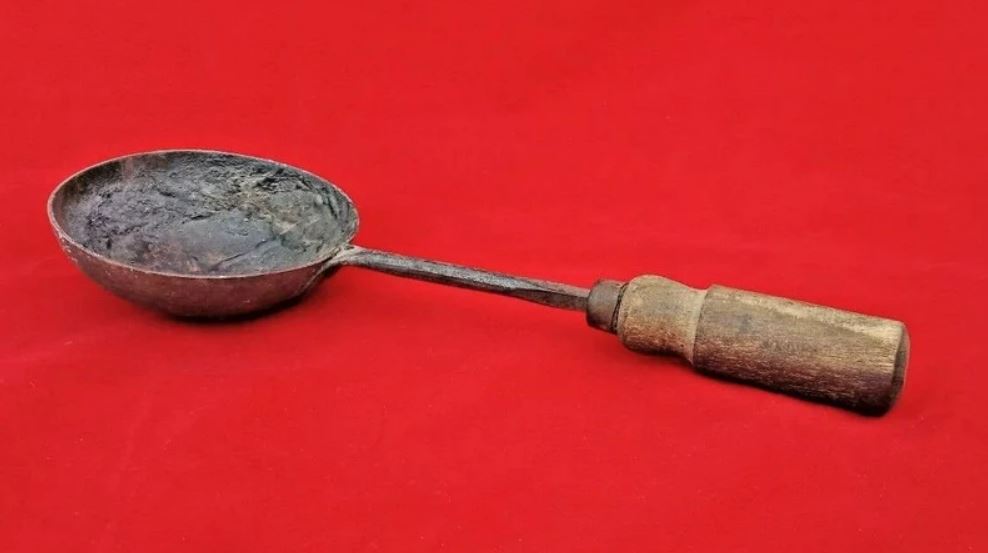
At first glance, it resembles an oversized soup ladle, but the heavy iron bowl and thick heat-resistant wooden handle reveal its working-class past as an antique lead melting spoon.
What Exactly Is an Antique Lead Melting Spoon?
To understand why this tool exists, we have to look past our modern era of next-day package deliveries. In 19th- and early 20th-century households, buying factory-made ammunition or commercial tackle was an unnecessary expense. Families saved scrap metal the way we save spare change today. Plumbers’ pipe cutoffs, spent wheel balance weights, and scraps of lead seals went into a battered metal tin in the barn.
When the supply of round balls for the family rifle or weights for trotline fishing ran low, out came the heavy cast iron ladle. Its purpose was straightforward: heat scrap metal over open flames until it reached its liquid phase, then smoothly transfer that boiling silvery liquid into specialized molds. Because lead melts at a modest 621°F (327°C), a domestic woodstove, coal grate, or charcoal forge generated plenty of heat to get the job done in minutes.
Many folks confuse the melting spoon itself with the mold. While they worked as companion pieces, they performed two distinct roles. The spoon acted as the mobile crucible, while a secondary hinged tool, shaped like heavy iron pliers, held the spherical or cylindrical cavities that formed the final projectile.
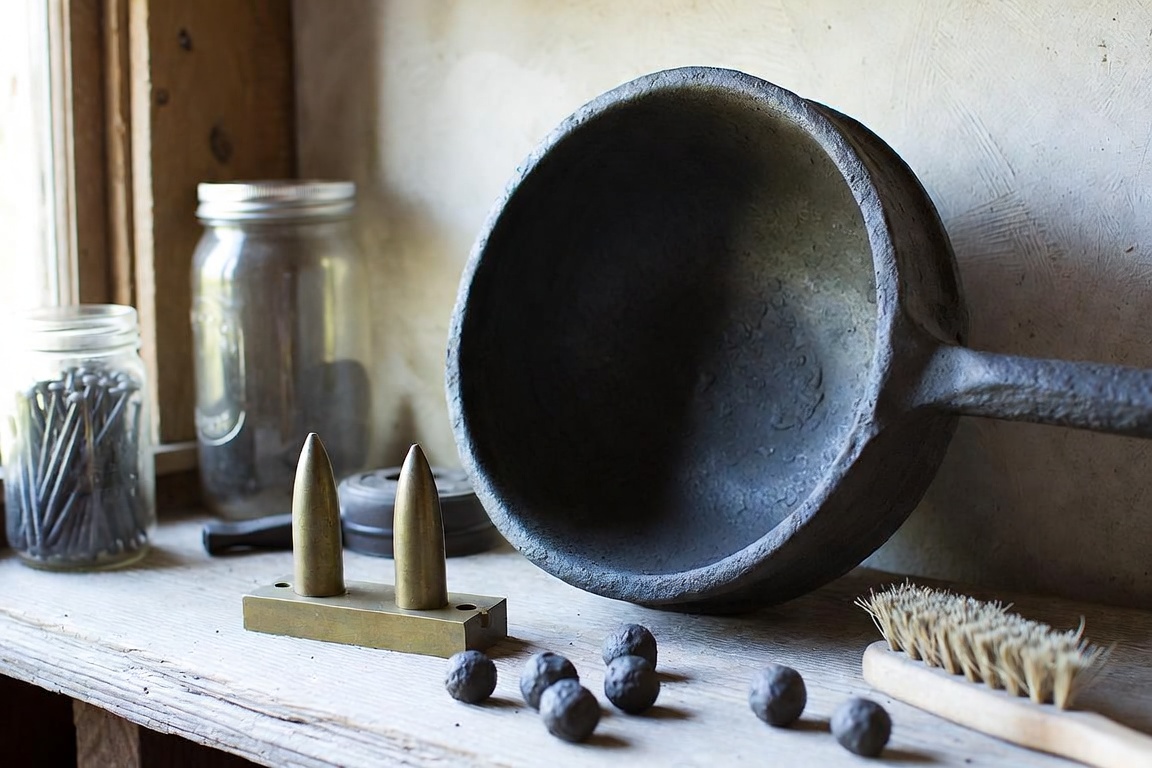
Pair an antique melting ladle with a vintage hinged mold, and you have the complete homesteading setup used across 19th-century workshops.
The Homestead Tradition of Homemade Supplies
Picture a drafty cabin during late autumn. The wind howls against cedar siding, while the woodstove radiates dry warmth across the floorboards. Smelting day was a routine chore of domestic maintenance, woven into the calendar right alongside canning garden apples and mending horse harness leather.
A steady hand held the ladle handle over the red-hot coals. As the scrap chunks settled, surface impurities known as dross would float to the top like frothy gray foam. Homesteaders used a flattened metal strip or a secondary iron scrap to skim away these oxides, ensuring that only clean, dense metal filled the pouring spout. A quick tilt of the wrist filled the mold channel. Within seconds, the soft ping of newly cast shot dropped onto a cool wooden bench.
Self-reliance was not an aesthetic trend back then; it was the baseline requirement of daily life. If your fishing line lacked weight or your musket had no ball, putting fresh meat on the table became a far harder task.
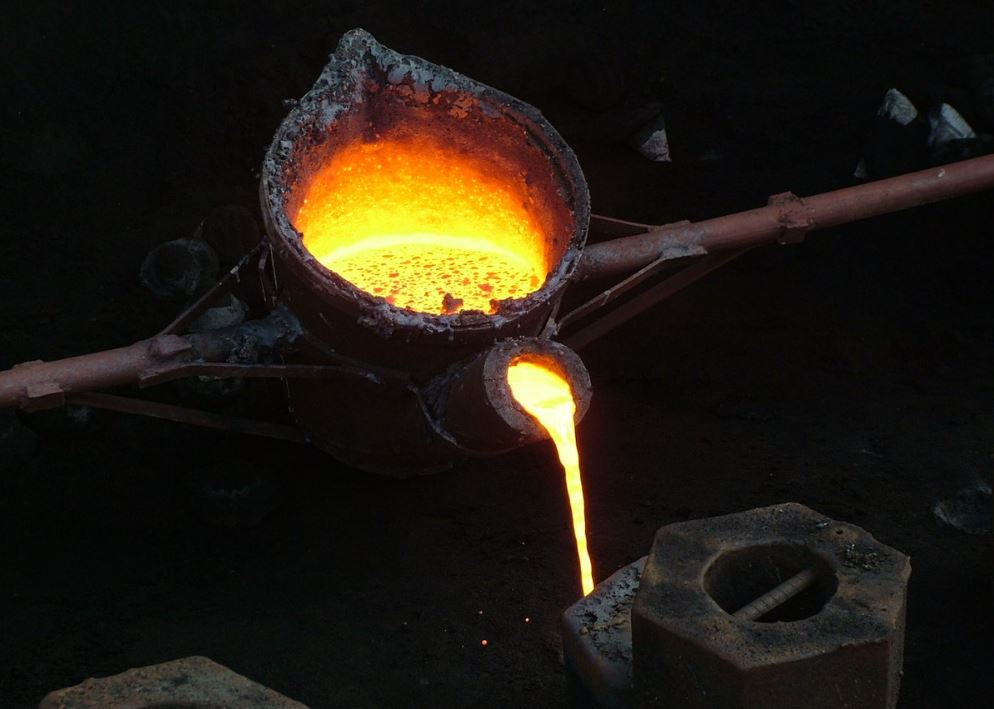
Watching metal turn liquid under steady heat never fails to captivate, showing the raw household grit required to cast everyday essentials by hand.
Why You Must Never Use This Tool for Food
Here is where antique charm meets modern health reality. When picking through estate sales and antique barns, hobbyists often hang rustic iron spoons on their kitchen pot racks or consider using them as punch ladles for autumn parties. Doing so is an invitation to serious poisoning.
Cast iron is porous. Over decades of heating, molten lead penetrates microscopic crevices throughout the metal basin. Even if an iron ladle looks scrubbed down, free of rust, or thoroughly washed with dish soap, hazardous heavy metal residues remain permanently bound to the crystalline structure of the iron. Simmering an acidic tomato sauce, stirring soup, or scooping mulled apple cider with one of these tools leaches that toxic residue straight into your food.
- Assume Contamination: Treat every unidentified, heavy, deep-bowled iron spoon as an industrial metallurgical tool until proven otherwise.
- Run an Inexpensive Swab Test: Quick chemical lead test swabs from your local hardware store reveal trace residues in seconds.
- Keep It Out of the Pantry: Hang these primitives on workshop walls, in home libraries, or on entryway hooks, far away from plates, pots, and pantry items.
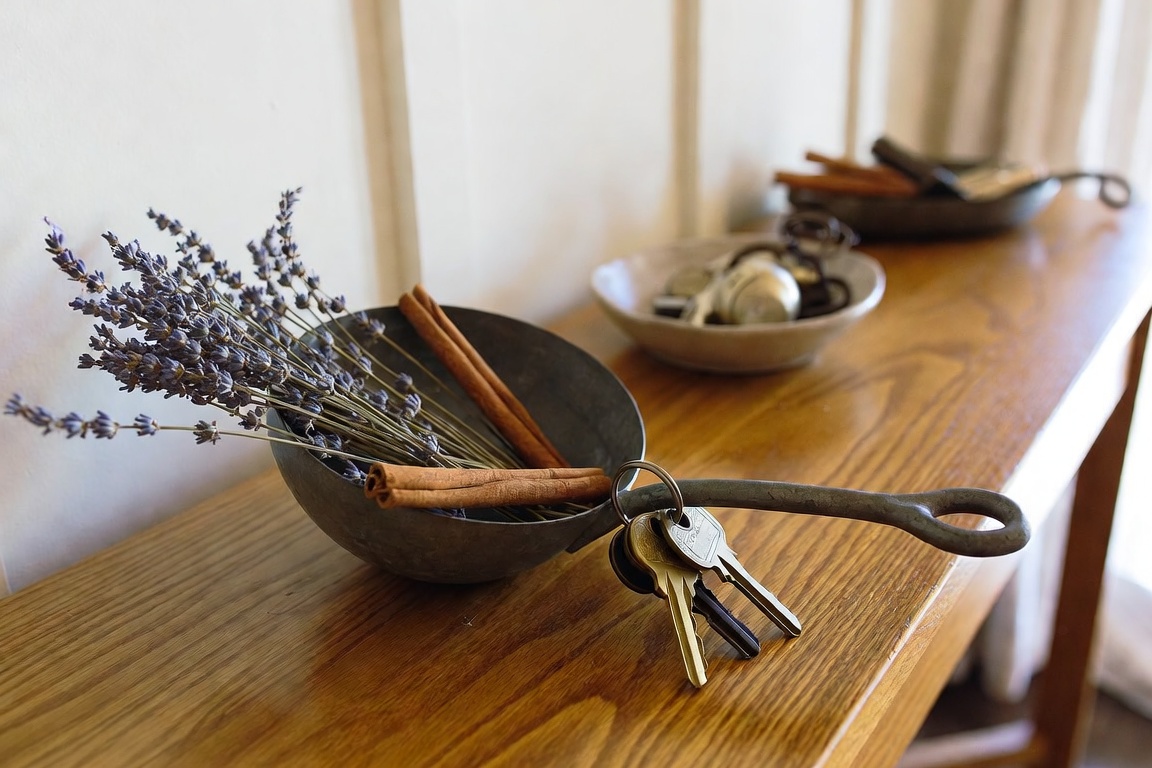
Displaying antique iron tools around the home brings rich historic warmth to modern shelving—just keep them well away from your cookware.
How to Identify a Real Smelting Ladle at Flea Markets
Hunting for primitive artifacts is half the thrill of thrifting. But how do you tell an authentic lead-casting spoon apart from a standard culinary iron basting ladle or a fireplace ash tool? Several unmistakable physical traits will give away its original job.
1. Distinct Pouring Spouts and Rim Lips
A culinary spoon generally features smooth, symmetrical round edges designed to skim gravy or stir broths. Smelting spoons almost always feature at least one pinched pouring spout along the rim, and frequently two, allowing left- or right-handed pouring into narrow mold holes without accidental splashing.
2. Extreme Weight and Bottom Thickness
Pick the spoon up by its handle. Smelting ladles have notably thick, heavy bottoms designed to retain heat. If molten lead cooled down before the pour was complete, it would clog the mold sprue, ruining the batch. That extra iron density functioned as a mini heat battery.
3. Scorched Handles and Heat Shields
Because these ladles spent hours directly over fiery coals, their handle designs differ from domestic spoons. Look for turned hardwood handles fitted over forged iron tangs, threaded iron sockets, or coiled wire grips designed to dissipate heat before it blisters a palm.
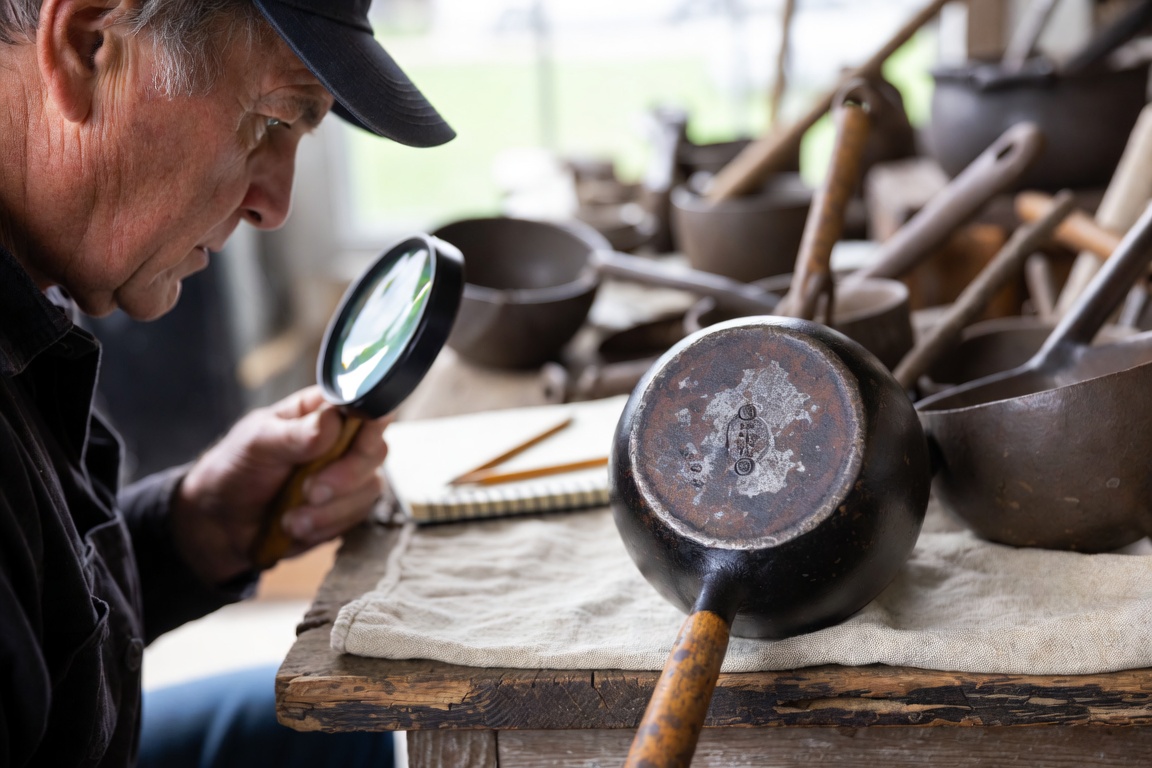
Look closely near the handle base or bowl underside; stamped foundry letters or size numbers often separate mass-produced pieces from blacksmith-forged treasures.
Caring for and Styling Antique Primitive Iron
If you have inherited one of these fascinating relics or rescued one from a flea market bin, restoring its visual character is a rewarding afternoon project. You do not need harsh chemicals or commercial sealants to bring out its natural dark beauty.
Start by scrubbing loose surface debris with a stiff brass bristle brush and dry rag. Avoid soaking the piece in water, especially if the wooden handle shows signs of age or hairline cracks. If heavy active orange rust clings to the bowl, rub it down with fine steel wool dabbed with light mineral oil. Once the iron shows its soft gunmetal gray skin, wipe away excess grime and buff the surface with a lint-free cotton cloth.
Styling these rugged artifacts around your living space bridges early American resourcefulness with cozy contemporary decor. Let them rest atop stacks of aged vintage books on your bookshelf, display them inside a shadow box beside antique fishing lures, or arrange them on a reclaimed timber mantelpiece. They carry the gritty character of early workshops, quiet testaments to days when households built their world from the flame up.
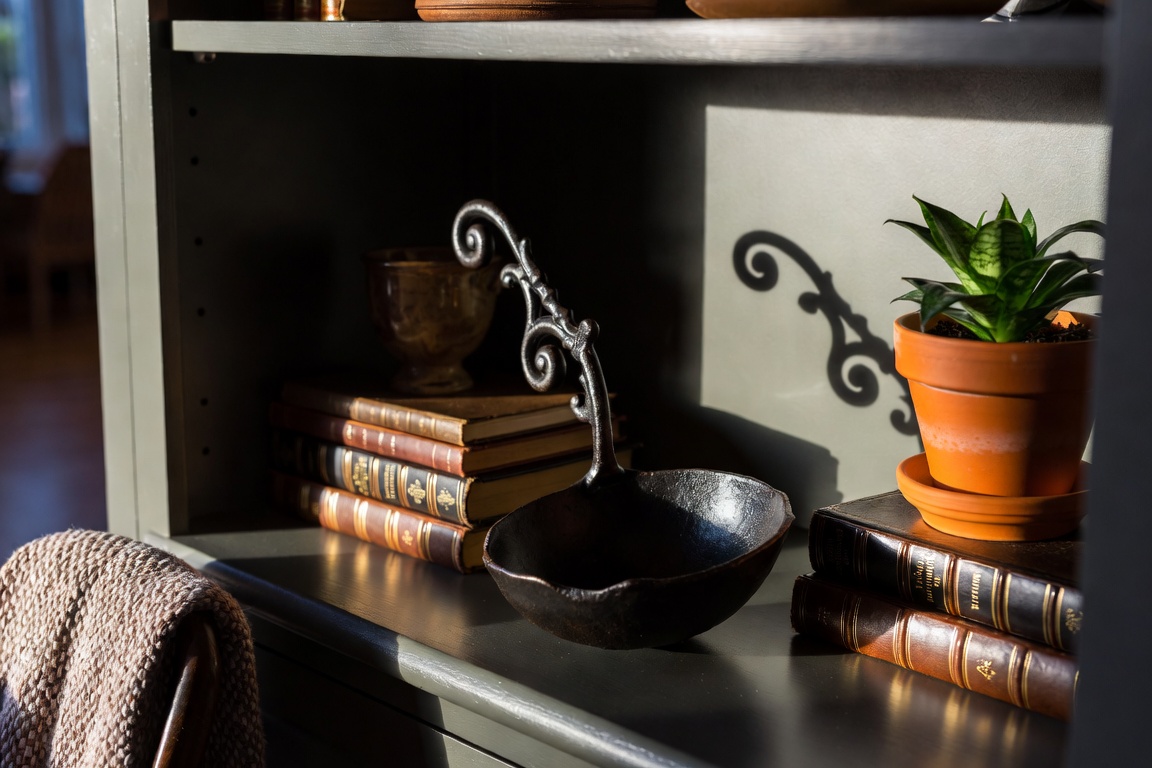
Give worn primitives a second life by pairing dark cast iron against vibrant houseplant greens and aged book spines.