News
Animal Optical Illusion: A Just-for-Fun Conversation Starter
Animal Optical Illusion: A Just-for-Fun Conversation Starter

Which Animal Do You See First? A Playful Optical Illusion With More Than One Way to Look
Some pictures invite you to look once. Others encourage you to return because the scene seems different each time you focus on another detail.
This animal optical illusion belongs to the second kind.
The green-toned collage combines animal outlines within a larger, face-like composition. You might notice an individual creature immediately, while someone beside you begins by describing the overall face.
That difference can make an enjoyable conversation.
However, the supplied material does not provide evidence that the first animal you notice reveals your greatest weakness or a hidden personality trait.
There is no need to attach that promise to the picture.
Instead, treat it as a chance to compare observations. Name what catches your attention, look again, and see whether another shape becomes clearer.
The discovery can be interesting without becoming a judgment about who you are.
Begin With Your First Impression
Look at the complete picture before reading suggestions about where to focus.
What do you notice?
You might recognize a large outline, a small shape near an edge, or the face-like arrangement formed by the whole collage.
Keep that first impression simple.
There is no requirement to explain it or connect it with an aspect of your life.
If you want to compare experiences with friends, make a short note before discussing the picture together. That preserves what you noticed independently.
Afterward, you can explore other parts of the image without feeling that your first answer has to remain your only interpretation.
Look Again With a Different Focus
Once you have named your first impression, choose another part of the collage.
You could inspect the edges, follow a particular curve, or look at the relationship between neighboring shapes.
The aim is to explore the drawing rather than force a particular answer.
A detail that seemed unclear at first may become easier to describe when you examine the area around it.
Alternatively, you may decide that a possible animal is not convincing after all.
That is a reasonable part of the activity.
Changing your interpretation does not spoil the game. It simply gives you another observation to compare.
Separate the Whole Image From Its Smaller Parts
The larger face-like composition and the smaller animal outlines offer two ways to approach the picture.
Try describing the whole arrangement first. Then concentrate on individual details.
Notice whether focusing on one level makes the other less prominent for you.
This is a question about your experience of the artwork.
It does not need to become a conclusion about your character, relationships, or future behavior.
The picture provides something specific to examine. Staying close to those visible details keeps the discussion clear and allows different viewers to describe what they actually notice.
Follow an Outline Before Naming It
When a shape reminds you of an animal, follow its outline carefully.
Can you identify connected features, or does the idea depend on joining marks that do not fit together clearly?
A possible interpretation can remain tentative.
Try explaining what you see without immediately insisting that everyone else must recognize it.
For example, describe the part you think forms a head and how it connects with the surrounding shape.
That gives another viewer a fair chance to understand your observation.
The useful discovery is a shared understanding of the drawing, even when the two of you eventually disagree about what it represents.
Adjust the Picture to a Comfortable Size
The image should be large enough to inspect without losing the overall composition.
If it appears small on your phone, a modest enlargement may make the details easier to examine.
However, excessive zoom can make the original lines less clear and remove the context around a possible shape.
Move between a closer view and the full picture if that feels useful.
You can also pause rather than repeatedly studying the same uncertain area.
There is no need to complete the activity in one sitting. Choose the viewing approach that makes the picture enjoyable rather than turning it into a frustrating task.
Why This Article Does Not Provide an Animal-to-Flaw Key
The supplied material discusses broad themes such as impatience, stubbornness, sensitivity, overthinking, and perfectionism.
However, it does not establish a reliable mapping between specific animals and those traits.
Therefore, this article does not invent one.
A list that assigns a weakness to each creature would introduce an extra game rule. It would not demonstrate that the picture had measured anything about the viewer.
If you encounter such a list elsewhere, distinguish the entertainment format from the evidence supporting it.
An appealing description can feel familiar without proving that a visual choice produced an accurate personal assessment.
Impatience Can Be Discussed Without the Picture
If impatience is a subject you want to explore, begin with an actual example.
Think about a recent situation in which waiting felt difficult. What happened, and how did you respond?
That gives you something specific to consider.
You do not need a pictured animal to decide whether the situation matters to you.
Likewise, recognizing one moment of impatience does not require adopting it as a complete description of yourself.
The conversation can remain practical: what worked, what did not, and what would you prefer to do differently next time?
Those questions stand on their own, separate from the collage.
Stubbornness Depends on the Situation
The word stubborn can describe very different experiences.
Someone may use it when a person refuses to reconsider a decision. In another conversation, similar determination might be described as persistence.
A picture cannot supply the missing context.
If this theme interests you, discuss a particular decision and the information available at the time.
Did you listen to another view? Was there a reason to remain firm? Did circumstances change?
These questions are more useful than assigning a label because of the first outline someone noticed.
They also leave room for an explanation rather than reducing a complicated situation to a single word.
Thinking Carefully Is Different From Accepting a Label
Overthinking is another broad theme mentioned in the supplied material.
You can reflect on that idea without letting the image decide whether it applies to you.
For example, consider how you approach a decision. Do you feel ready after gathering the information you need, or do you keep returning to the same questions?
The purpose is to describe your own experience.
There is no need to offer a private answer in a group or treat the discussion as an obligation.
The collage remains available for anyone who would rather enjoy the shapes and leave personal reflection for another time.
Keep Conversations About Sensitivity Respectful
A casual game should not become an opportunity to criticize someone.
If a participant mentions that a description feels uncomfortable, listen rather than using the picture as evidence against them.
Comments such as “That explains everything about you” can turn a light activity into an unwanted personal discussion.
Instead, keep the focus on the drawing unless everyone freely chooses another topic.
People can notice different shapes without having to reveal their feelings or defend their reactions.
A welcoming activity gives participants room to enjoy it, ask for help, disagree, or simply pass.
You Do Not Need to Find Everything
The theme of perfectionism can also be discussed without creating a score for the picture.
There is no requirement here to identify every possible outline or agree with every interpretation another person proposes.
If a shape remains unclear, it can stay unclear.
You can stop after a few observations or return later.
That freedom is part of treating the collage as entertainment.
Rather than asking what a missed detail supposedly says about you, consider whether you are still enjoying the search.
If you are, continue. If another activity sounds better, there is no unfinished obligation waiting inside the image.
A Friendly Way to Compare Observations
Show the picture before reading any suggested interpretation aloud.
Let each person describe what they notice independently.
Then compare the areas that attracted attention.
One viewer may begin with the overall face, while another may have focused on an individual outline. Ask each person to explain the visible details behind their observation.
If someone wants help, offer a broad direction before revealing everything you see.
That preserves the discovery for people who prefer more time.
The aim is a conversation about the artwork, with enough room for different experiences and no pressure to produce the same response.
Keep Suggestions Separate From Confirmation
Once someone names an animal, you may begin examining the corresponding area.
If you then recognize it, you can say that their explanation helped you see the outline.
However, agreement is not automatically an official answer key.
The distinction is simple: a shared observation explains what you both see, while a confirmed key establishes the creator’s intended identification.
The supplied material does not provide that complete confirmation.
Therefore, describe uncertain shapes honestly.
A conversation can remain satisfying even when some interpretations are unresolved. The image does not need a final verdict on every line to be enjoyable.
Make Personal Reflection Optional
If the group wants to discuss habits afterward, let that be a separate choice.
A useful invitation might be:
“Is there a habit you would like to approach differently?”
That question gives the participant control over the subject.
It does not require pretending that an animal has exposed a hidden flaw.
Someone may wish to answer thoughtfully, while another may prefer to keep the activity light.
Both responses should fit comfortably.
A picture can introduce a conversation, but the people involved should decide how personal that conversation becomes.
Do Not Use the Game to Explain a Real Disagreement
If you have a concern about someone’s behavior, address the actual situation.
The collage should not become a shortcut for deciding why a person was late, upset, uncertain, or unwilling to agree.
A playful label cannot replace hearing their explanation.
Likewise, noticing a particular animal does not give another viewer special access to someone’s motives.
Keeping that boundary clear protects the activity from becoming unfair.
The picture can remain a shared diversion, while real disagreements receive the specific attention they deserve.
That makes room for both fun and more thoughtful conversation without confusing their purposes.
Share the Image With a Clear Invitation
When posting the collage, invite readers to describe what they see.
Avoid promising that the image reveals a secret weakness or provides a definitive personality result.
A clear caption can be engaging on its own:
“Which shape caught your attention first? Look again and compare your answer with a friend.”
That wording tells readers what to do without adding an unsupported claim.
Also, keep the supporting illustrations distinct from the original puzzle image.
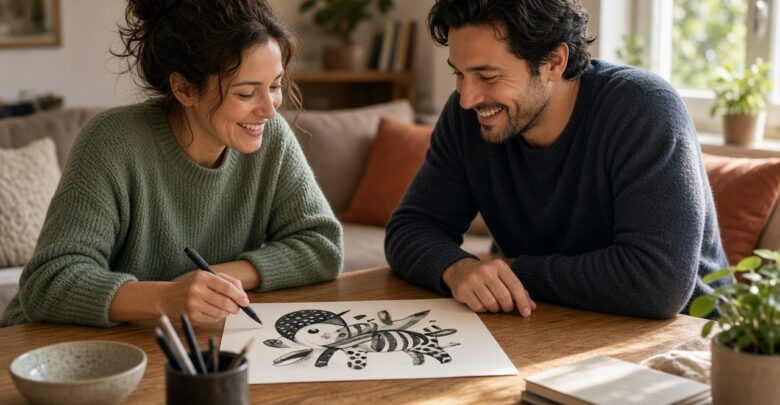
The bird, cat, notebook, and discussion scenes provide context. They do not establish hidden locations or supply a psychological interpretation.
Enjoy the Discovery Without the Verdict
The appeal of this animal collage is the opportunity to look, reconsider, and compare.
You may notice a large face first, identify an animal, or spend time following outlines that remain uncertain.
None of those experiences needs an attached personality label.
The supplied material does not provide evidence for treating the first observation as a measure of someone’s greatest flaw.
Fortunately, the picture does not need that promise.
A friend may show you a shape you missed, or your second look may reveal a different way to understand the whole composition.
That is enough of a small discovery to share.
👀 What caught your attention first: an animal, the larger face, or another shape? Describe what you noticed in the comments—and keep the conversation curious and kind.